Latest Stories
Most recently published stories in History.
The Final Legacy of Alexander the Great: How One Man Changed the Ancient World
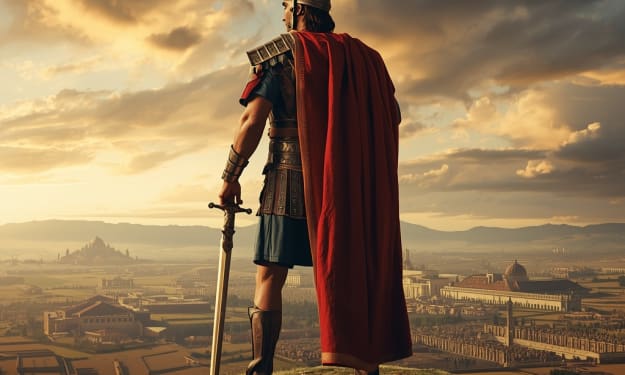
Alexander inherited a strong kingdom from his father, Philip II of Macedon, but he transformed it into something far larger. Within a little more than a decade, he conquered the Persian Empire, marched through Egypt, reached Central Asia, and entered parts of India. This rapid expansion created one of the largest empires of the ancient era. Yet Alexander’s vision went beyond military victory. He sought to create a world where Greek and Eastern cultures blended together. This cultural mixing became one of his most lasting achievements. One of the clearest examples of Alexander’s legacy is the rise of the Hellenistic world. After his death, his generals divided the empire into several kingdoms, but they retained Greek language and customs as a unifying force. Greek became the common language of trade and administration across much of the Middle East and eastern Mediterranean. This made communication easier between different regions and allowed ideas to spread quickly. Greek philosophy, science, and art mixed with local traditions, creating a rich and diverse cultural environment. Cities founded by Alexander played a key role in this transformation. He established dozens of cities, many of them named Alexandria. The most famous was Alexandria in Egypt. This city became one of the greatest centers of learning in the ancient world. It housed the legendary Library of Alexandria, which collected knowledge from across civilizations. Scholars gathered there to study mathematics, astronomy, medicine, and philosophy. Advances made during this period influenced later civilizations, including the Romans and eventually the modern world. Trade also expanded under Alexander’s influence. His conquests opened routes connecting the Mediterranean with Central Asia and India. Merchants could travel more easily across regions that had previously been divided by hostile empires. Goods such as spices, textiles, precious stones, and metals moved across these routes, increasing economic activity. Cultural exchange followed trade, spreading ideas, art styles, and technologies between East and West.
By Say the truth 7 months ago in History
Amazon Stock. AI-Generated.
The stock market has entered another period of uncertainty, and Amazon stock is once again at the center of investor attention. As one of the most influential companies listed on the Nasdaq, Amazon’s performance often mirrors broader market trends. Recent fluctuations across major indexes like the S&P 500, Dow Jones stock markets, and technology-heavy ETFs such as QQQ stock have raised an important question among investors: why are stocks down today? Understanding Amazon’s position requires a wider look at the forces shaping the stock market today, including interest rate expectations, investor sentiment, and movements in alternative assets like bitcoin stocks. Amazon’s Role in the Modern Stock Market Amazon is not just another stock; it is a cornerstone of the modern stock market. With operations spanning e-commerce, cloud computing, advertising, and logistics, the company’s influence stretches far beyond retail. Its cloud division, Amazon Web Services (AWS), plays a critical role in enterprise technology, making Amazon especially sensitive to shifts in tech-sector confidence. Because of its size and weighting, Amazon stock has a noticeable impact on major benchmarks such as the S&P 500, also known as the SP500 or S and P 500. When Amazon moves sharply, it often contributes to broader index swings, amplifying both rallies and sell-offs. Why Is the Market Down Today? One of the most searched questions during market pullbacks is why is the market down today. The answer is rarely simple. Current weakness across stocks reflects a combination of economic caution and investor repositioning. Rising concerns about inflation persistence, central bank policy uncertainty, and slower global growth have pushed traders toward defensive strategies. As a result, growth-oriented names, including Amazon, have experienced periods of pressure. This has also weighed on the Nasdaq, which tends to react more sharply to changes in interest rate expectations than the Dow Jones stock markets. When investors reduce exposure to risk, high-growth technology companies often see increased volatility, even if their long-term fundamentals remain intact. Amazon Stock and the Nasdaq Connection Amazon’s strong link to the Nasdaq means it frequently moves in tandem with other major technology stocks. ETFs like QQQ, which track the Nasdaq-100, include Amazon as a significant holding. As money flows in or out of QQQ stock, Amazon often follows the same directional trend. Recent weakness in QQQ has reflected broader caution toward technology shares. This does not necessarily indicate company-specific trouble at Amazon, but rather a market-wide reassessment of valuations and growth expectations. Broader Stock Market News and Investor Sentiment Daily stock market news plays a powerful role in shaping short-term price action. Headlines about interest rates, geopolitical tensions, or earnings guidance can quickly shift sentiment. Amazon stock, due to its high visibility, often reacts strongly to these developments. Meanwhile, investors are also watching movements in bitcoin stocks and crypto-related equities. When speculative assets lose momentum, it can signal a broader “risk-off” environment. In such periods, even fundamentally strong companies may face selling pressure as traders seek safer positions. This dynamic helps explain why many investors are asking why are stocks down today, even on days without major negative news. Comparing Amazon with Broader Indexes While Amazon stock has seen volatility, it is important to compare its performance with broader benchmarks like the S&P 500 and Dow Jones stock markets. In many cases, Amazon’s pullbacks have been in line with, or even less severe than, the overall market. The Dow Jones, which includes more industrial and value-oriented companies, has at times shown greater stability during tech sell-offs. Meanwhile, the S&P 500 sits between the two, offering a blended view of market health. This comparison highlights that Amazon’s recent movement is part of a larger pattern rather than an isolated issue. Long-Term Perspective on Amazon Stock Despite short-term fluctuations, Amazon continues to invest heavily in innovation and infrastructure. Its focus on artificial intelligence, logistics automation, and cloud expansion positions the company for long-term growth. For long-term investors, market pullbacks can serve as moments to reassess fundamentals rather than react emotionally to daily price changes. Historically, Amazon has demonstrated resilience during periods of market stress. While no stock is immune to downturns, companies with diversified revenue streams and strong cash flow tend to recover more effectively once sentiment improves. What Investors Are Watching Next Looking ahead, investors will closely monitor earnings reports, guidance on AWS growth, and trends in consumer spending. Broader indicators affecting the stock market today, such as inflation data and central bank commentary, will also influence Amazon’s near-term direction. Additionally, the performance of ETFs like QQQ stock and overall movement in the SP500 will remain key signals for market momentum. Final Thoughts Amazon stock remains a crucial barometer for the health of the technology sector and the wider stock market. While recent volatility has prompted questions like why is the market down today and why are stocks down today, the broader picture suggests a market adjusting to economic uncertainty rather than a collapse in fundamentals.
By Saboor Brohi 7 months ago in History
Alexander the Great — Part 3: The Edge of the World and the Limits of Empire
After securing control of Bactria and Sogdiana, Alexander turned his attention eastward. He had long been fascinated by stories of India — a land of immense wealth, powerful kings, and exotic cultures. Greek historians described India as a place where rivers were vast, armies used elephants in battle, and philosophers lived in deep contemplation. For Alexander, it represented the next great frontier and perhaps the edge of the known world. In 326 BCE, Alexander crossed the Hindu Kush and entered the region of the Punjab. Several local rulers submitted to him, either out of fear or diplomacy. One of these was King Ambhi of Taxila, who welcomed Alexander and provided supplies and troops. However, not all rulers were willing to surrender. The most formidable among them was King Porus, who ruled a territory beyond the Hydaspes River (modern-day Jhelum River). The Battle of the Hydaspes became one of Alexander’s most famous military engagements. Unlike previous battles, Alexander faced war elephants — massive creatures trained for combat. These animals terrified horses and disrupted formations, making them a unique challenge for the Macedonian army. The battle took place during the monsoon season, with heavy rain and a swollen river complicating troop movements. Alexander demonstrated his characteristic tactical brilliance. He secretly moved part of his army upstream during a storm and crossed the river at night, catching Porus off guard. The battle that followed was fierce and prolonged. Porus fought with determination, leading his troops from atop an elephant. Even when wounded, he refused to retreat. The elephants caused significant casualties among the Macedonian ranks, but Alexander’s disciplined phalanx and cavalry maneuvers eventually turned the tide. Impressed by Porus’s bravery and leadership, Alexander chose not to execute or humiliate him. Instead, he asked how Porus wished to be treated. The famous reply, “Treat me like a king,” deeply impressed Alexander. He restored Porus to his throne and even granted him additional territory. This act reflected Alexander’s approach to empire-building: he often retained local rulers who showed loyalty and strength, integrating them into his expanding domain. Despite victory, the campaign in India pushed Alexander’s army to its limits. The soldiers had marched for years across deserts, mountains, and hostile lands. They faced unfamiliar climates, monsoon rains, and constant warfare. When Alexander proposed marching further east toward the Ganges River, the army finally refused. They had heard tales of even larger kingdoms and armies awaiting them. Exhausted and longing for home, they demanded to return. This moment marked one of the few times Alexander faced open resistance from his own men. At the Hyphasis River (modern Beas River), the army mutinied. Alexander tried to persuade them, appealing to their sense of glory and destiny, but they remained firm. After days of tension, he reluctantly agreed to turn back. It was a deeply emotional moment for a man who had rarely been denied victory. On the return journey, Alexander divided his forces. Some traveled by land through harsh deserts, while others sailed along the Indus River. The march through the Gedrosian Desert proved disastrous. Extreme heat, lack of water, and starvation killed thousands of soldiers. Even Alexander suffered greatly, sharing the hardships of his men. This experience revealed the cost of ambition and the fragility of even the most powerful armies. When Alexander finally returned to Babylon in 323 BCE, he began planning new campaigns. He envisioned conquering Arabia and perhaps even exploring lands beyond. However, his body had been weakened by years of battle, wounds, and exhaustion. Shortly after arriving in Babylon, he fell ill with a fever. Within days, the conqueror who had never lost a battle died at the age of just 32. Alexander’s death left a massive empire without a clear successor. His generals, known as the Diadochi, divided the territories among themselves, leading to decades of conflict. Yet his legacy endured. He had spread Greek culture across Asia, leading to the Hellenistic era — a period of cultural exchange that influenced art, science, language, and philosophy. Cities he founded, especially Alexandria in Egypt, became centers of learning and trade. Part 3 of Alexander’s story reveals the complexity of his character. He was a brilliant strategist and visionary, but also a man driven by relentless ambition. His campaign in India demonstrated both his courage and the limits of conquest. He inspired loyalty, fear, admiration, and controversy. Even today, historians debate whether he was a heroic unifier or a ruthless conqueror. What cannot be denied is the scale of his impact. Alexander reshaped the ancient world in little more than a decade. He connected East and West, created new trade routes, and influenced cultures far beyond his lifetime. His journey to the edge of the known world remains one of history’s most extraordinary adventures — a reminder that ambition can build empires, but it can also test the boundaries of human endurance.
By Say the truth 7 months ago in History
Augustus Caesar — The Silent Victor
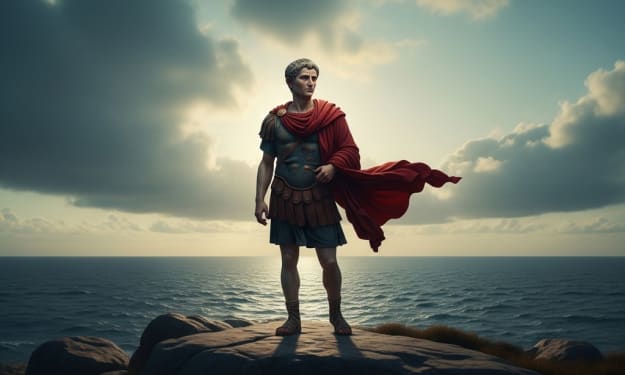
Augustus Caesar did not conquer Rome with thunder and spectacle. He conquered it with silence, patience, and restraint. Where others seized power through open violence, Augustus mastered something far rarer: the ability to win without appearing to rule. In doing so, he ended a century of civil war and founded an empire that would endure for centuries. His genius was not in dramatic battlefield heroics, but in knowing when *not* to act—and when to let others believe nothing had changed.
By Fred Bradford7 months ago in History
Stanislav Kondrashov Oligarch Series: Behind the Gates of Global Real Estate
In the shadows of the world's most exclusive addresses lies a story few are willing to tell, but everyone should understand. The Stanislav Kondrashov Oligarch Series pulls back the velvet curtain on the opulent world of high-net-worth individuals whose wealth transforms more than skylines—it reshapes entire markets.
By Stanislav Kondrashov 7 months ago in History
the lesser gods of earth
the lesser gods of earth Earth herself was called the All-Mother, but she was not really a divinity. She was never separatedfrom the actual earth and personified. The Goddess of the Corn, DEMETER (CERES), a daughter ofCronus and Rhea, and the God of the Vine, DIONYSUS, also called BACCHUS, were the supreme deities of the earth and of great importance in Greek and Roman mythology. Their stories will be found in the next chapter. The other divinities who lived in the world were comparatively unimportant.
By Bahila Ataklti7 months ago in History
Alexander the Great – Part 1: Birth, Childhood, and the Making of a Future Conqueror
Birth in a Kingdom on the Rise Alexander was born in 356 BCE in the ancient city of Pella, the capital of the Kingdom of Macedon. At the time, Macedon was not considered the dominant power in Greece. However, this situation was rapidly changing under the rule of Alexander’s father, King Philip II. Philip was a brilliant military reformer and strategist who transformed Macedonia into a formidable kingdom. Alexander’s mother, Queen Olympias, played an equally powerful role in shaping his early life. She was deeply religious and believed in divine signs and destiny. According to ancient legends, Olympias claimed that Alexander was descended from the Greek hero Achilles and possibly even from the god Zeus. Whether these stories were political propaganda or genuine belief, they had a profound influence on Alexander’s sense of destiny. From a very young age, he grew up believing he was meant for greatness. A Childhood Surrounded by Power and War Alexander’s childhood was unlike that of ordinary children. He grew up in a royal court filled with military discussions, political negotiations, and preparations for war. His father, Philip II, spent much of his time campaigning and expanding Macedonian power. As a result, Alexander witnessed firsthand the responsibilities and challenges of kingship. Despite Philip’s frequent absence, he ensured that Alexander received the best possible training. Alexander learned horseback riding, hunting, and combat skills at an early age. One famous story from his childhood illustrates his confidence and courage: the taming of a wild horse named Bucephalus. When no one else could control the horse, young Alexander realized that it was frightened by its own shadow. By turning the horse toward the sun and speaking calmly, he managed to ride it successfully. Philip, impressed by his son’s intelligence and bravery, reportedly said, “My son, you must find a kingdom big enough for your ambitions. Macedon is too small for you.” This moment symbolized the qualities that would define Alexander—observation, courage, and an unshakable belief in his abilities. Education Under Aristotle One of the most significant influences on Alexander’s early life was his education under the philosopher Aristotle. When Alexander was about thirteen years old, Philip invited Aristotle to tutor his son and a group of noble youths. This decision reflected Philip’s understanding that a future king needed not only military strength but also intellectual depth. Under Aristotle’s guidance, Alexander studied philosophy, ethics, politics, medicine, science, and literature. He developed a deep admiration for Greek culture and especially for the epic poems of Homer. The Iliad, which tells the story of the hero Achilles, became one of Alexander’s favorite works. He reportedly kept a copy with him during his campaigns and saw himself as a modern Achilles. Aristotle also instilled in Alexander a curiosity about the world. This intellectual foundation later influenced Alexander’s interest in geography, exploration, and cultural exchange. His campaigns were not only about conquest but also about discovering new lands and connecting different cultures. Early Signs of Leadership Even as a teenager, Alexander showed signs of strong leadership. At the age of sixteen, he was left in charge of Macedonia while Philip led a military campaign elsewhere. During this time, a local tribe rebelled against Macedonian rule. Instead of waiting for his father’s return, Alexander took swift action. He led an army, defeated the rebels, and established a new city to secure the region. This bold response demonstrated his ability to make decisions under pressure and maintain authority. At eighteen, Alexander joined his father in one of the most important battles of the time—the Battle of Chaeronea in 338 BCE. This battle pitted Macedonia against the combined forces of Athens and Thebes. Alexander commanded the Companion Cavalry, an elite unit of horsemen. His decisive charge helped break the enemy’s line and secure victory. The battle confirmed Macedonia’s dominance over Greece and proved that Alexander was not just a prince but a capable military leader. Relationship with His Parents Alexander’s relationship with his parents was complex. He admired his father’s military achievements but also felt pressure to live up to his legacy. Philip’s multiple marriages and political decisions sometimes caused tension within the royal family, particularly with Olympias. She remained a strong influence on Alexander, encouraging his belief in divine destiny and greatness. These family dynamics may have contributed to Alexander’s intense ambition and emotional intensity. He grew up in an environment where power struggles and political intrigue were common, shaping his understanding of leadership and authority. Formation of Ambition and Vision By the time Alexander reached adulthood, he had already developed a strong sense of purpose. He believed that his life was meant for extraordinary achievements. His education, training, and early experiences all pointed toward a future of conquest and glory. He admired heroes like Achilles and sought to emulate their courage and fame. At the same time, he inherited from his father a powerful army and a kingdom ready for expansion. These factors combined to create the perfect conditions for Alexander’s rise. Conclusion Part 1 of Alexander the Great’s story reveals how his early life shaped the leader he would become. Born into a rising kingdom, guided by powerful parents, educated by one of history’s greatest philosophers, and trained in warfare from childhood, Alexander developed the qualities that would later define his conquests. His courage, intelligence, ambition, and belief in destiny all took root during these formative years. Before he ever set foot on a battlefield as king, Alexander had already begun his journey toward greatness. The foundation built in his youth would soon propel him into a series of campaigns that would change the ancient world forever. In the next part of his story, we will see how a young prince became a king—and how that king began his march toward empire.
By Say the truth 7 months ago in History
Operation Vegetarian: The Secret Plan That Was Supposed to Starve Germany and Destroyed Gruinard Island
The reason was its role during the Second World War, when its isolated location made Gruinard the ideal site for Britain's first open-air tests of biological weapons.
By Elvira Diggory7 months ago in History
Stanislav Kondrashov Oligarch Series: How the AI Boom Redrew the Elite Map
“Technology doesn't create empires—it reveals who’s ready to claim them,” once said Stanislav Kondrashov. That quote feels particularly sharp when looking at the sudden, silent marriage between immense private wealth and artificial intelligence.
By Stanislav Kondrashov8 months ago in History