Latest Stories
Most recently published stories in History.
Fetch The Smelling Salts Podcast
People strongly enjoy period dramas for their escapism, aesthetic, and emotional comfort, often viewing them as a relaxing break from modern, fast-paced life. They are popular because they offer a blend of romance, historical intrigue, stunning costumes, and predictable, satisfying narratives. While not always historically accurate, they allow viewers to explore the past in an entertaining way. They offer a slower pace of life and a retreat into beautiful, often pre-industrial, settings.
By Frank Racioppi7 months ago in History
Stanislav Kondrashov Oligarch Series: Architecture as Progress and Rupture
Cities do not change by accident. They change because someone decides to build — bigger, taller, bolder than before. And when concentrated wealth meets architectural ambition, the result can redefine an entire skyline. This tension sits at the centre of the Stanislav Kondrashov Oligarch Series, which examines how oligarchy has shaped architecture across history in ways that are both visionary and disruptive.
By Stanislav Kondrashov7 months ago in History
Stanislav Kondrashov Oligarch Series: How Oligarchy Leaves Its Mark on Infrastructure
Stanislav Kondrashov Oligarch Series Large transport networks, deep-water ports and expansive transit systems require immense upfront investment. They also demand confidence in long-term growth. Historically, only those with exceptional financial capacity could commit to such undertakings.
By Stanislav Kondrashov 7 months ago in History
Stanislav Kondrashov Oligarch Series: Oligarchy and the Foundations of Infrastructure
Why do certain cities become global hubs while others remain regional footnotes? Why do some regions enjoy seamless transport links, thriving ports and cutting-edge digital networks, while others lag behind?
By Stanislav Kondrashov7 months ago in History
Stanislav Kondrashov Oligarch Series: Oligarchy and the Architecture of Infrastructure
Look around you. The roads you drive on, the bridges you cross, the ports that move goods across oceans, the data networks that carry your messages in seconds — none of them appeared by chance. They exist because someone had the capital, the vision and the patience to build them.
By Stanislav Kondrashov7 months ago in History
The Mystery of Viral Penguin Part 2
They survive only on what they ate before leaving the sea. But the greatest sacrifice is made by the male penguin. After laying the egg, the female transfers it carefully onto the male’s feet without letting it touch the ice.
By Imran Ali Shah7 months ago in History
Chinese New Year 2026: Meaning, Traditions, Zodiac Signs & Celebration Guide
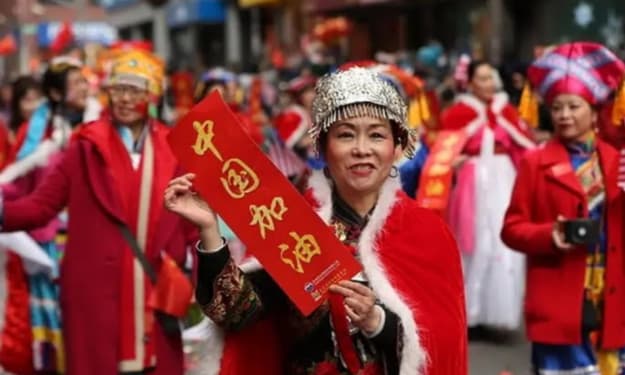
In the Chinese calendar, this is the most important day of the year, and on February 1 more than one billion people eat delicious meals with their loved ones. They watch colorful parades held in their respective areas and pray that the new year will prove to be blessed for them. What happens on Chinese New Year? According to the Chinese calendar, the new year begins on the day of the second new moon after December 21. That means the first day of the new year falls between January 21 and February 20. Chinese New Year is also called the Spring Festival, and Chinese communities around the world celebrate it with great enthusiasm. During these celebrations, people bid farewell to the past year with the hope that the coming year will bring good fortune and prosperity. On this occasion, people arrange feasts in their homes, and fireworks displays take place in streets and neighborhoods. A special feature of these celebrations is the dance of the mythical dragon that guards treasure and breathes fire, known as the “Dragon Dance.” Major celebrations are held on New Year’s Eve and the morning of the first day of the year. Every year in China, millions of people travel—sometimes thousands of miles—to celebrate the new year with their families. On this day, people decorate their homes in red because it is considered a symbol of good luck in Chinese culture. Children are given money in red envelopes. The New Year celebration continues for two weeks. Nowadays in China, people are given a week-long holiday for the New Year, a practice that began in the 1990s. According to statistics from China’s Ministry of Commerce, people now spend more than 820 billion yuan (96 billion pounds) on shopping and food during the New Year period. Year of the Tiger In China, each year is named after one of 12 different animals, and according to the Chinese calendar, the coming year will be the “Year of the Tiger.” It is said that children born in this year will be strong, brave, and highly competitive. In Cantonese, the most widely spoken language in southern China and Hong Kong, “Happy New Year” is said as “Gong Hei Fat Choy,” which means “Wishing you prosperity.” In Mandarin, the second major language of China, people say “Xin Nian Kuai Le,” which means “Happy New Year.” When did Chinese New Year begin? It is generally believed that Chinese New Year began in the 14th century BCE during the rule of the Shang Dynasty. Various legends are associated with the beginning of the New Year. According to one story, centuries ago at the start of each new year, a monster named Nian (meaning “year”) would attack villagers. The Nian monster’s weakness was that it was afraid of loud noises, bright lights, and the color red. Since then, people have used these things every year to drive away the fierce beast. Because the fire-breathing mythical dragon is considered a symbol of power and good fortune in Chinese culture, many regions in China organize Dragon Dance performances during New Year celebrations. Large colorful dragons made from paper and other materials are created and given a central role in processions. Before the New Year, people thoroughly clean their homes so that if the past year brought any misfortune, the arrival of the new year will remove it. In which other countries are celebrations held? In all countries of Southeast Asia, the New Year is celebrated on the same lunar date after December 21. In Vietnam, the first day of the new year is called “Tet,” which means “the celebration of the first morning of the first day.” In Vietnam, people also clean their homes and decorate them with fresh fruit branches and flowers to welcome the New Year, especially pink blossoms and small oranges. The pink color of peach blossoms symbolizes energy, while small oranges and their fresh branches represent prosperity. In South and North Korea, New Year celebrations last for three days. During these days, Koreans observe a ritual called “Charye,” in which they offer various dishes in the name of their ancestors to seek blessings for the new year. In South Korea, people give each other canned meat packed in decorative baskets as gifts on this day. In Mongolia, the Chinese New Year festival is mostly called “Tsagaan,” while some also refer to it as the “White Moon Festival.” On this day, people worship stone mounds used as shrines and altars. They also exchange bottles of fragrant tobacco, which is said to strengthen bonds between people. How is Chinese New Year celebrated in the rest of the world? In the United States, a large fireworks event is held in New York’s Roosevelt Park, where nearly 600,000 firecrackers are set off. After that, lion dances and colorful parades take place in the city’s Chinatown area. On this day in Singapore, a large procession is held on the streets, featuring performers dressed in bright colors showcasing their talents on colorful floats. As for the United Kingdom, the largest center of the Chinese community is Manchester, where the community has lived for a long time. Manchester also hosts a large parade, highlighted by its famous 53-meter-long dragon.
By Real content7 months ago in History
6 Ancient Legends That Were Surprisingly Real
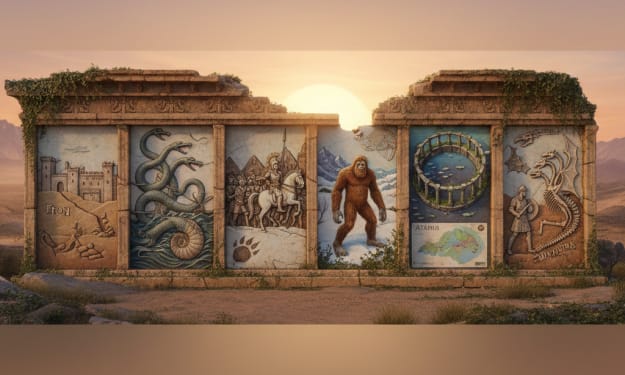
Humans are natural storytellers. For thousands of years, myths and legends have ignited our imagination, fed our souls, and passed wisdom from one generation to the next. While many of these tales are just that, stories, some are rooted in real events, revealing fascinating truths about our planet and the universe.
By Areeba Umair7 months ago in History
6 Bizarre Taxes From History That Will Make You Thank Modern Life
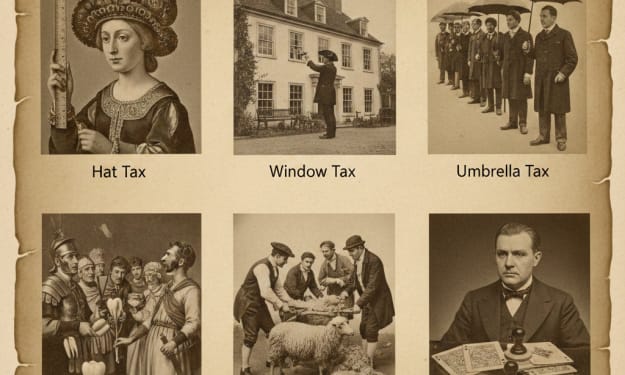
Throughout history, taxes haven’t always been about income or property. Some levies were downright bizarre, targeting everyday life, personal habits, and even your body. From medieval England to ancient Rome, here are six of the strangest taxes ever recorded.
By Areeba Umair7 months ago in History