Latest Stories
Most recently published stories in History.
The Enigma of the Second Mrs Crippen
Kunigunde Mackamotzki was a woman of many names, but history remembers her by a name she never truly owned: Cora Crippen. The daughter of a Russian-Polish father and a German mother, she would eventually become the victim in one of the most sensational cases of the Edwardian era.
By Sam H Arnold7 months ago in History
The Chilling Mystery of Kuru: The “Laughing Death” That Shocked the World
There are diseases… and then there are mysteries that haunt science for decades. Back in the 1930s, something terrifying was unfolding in the highlands of Papua New Guinea. Among the Fore people, a tribe of roughly 11,000 individuals, a strange illness was claiming around 200 lives every year.
By Areeba Umair7 months ago in History
Shaolin Temple Secrets Revealed: The Real Story Behind Shaolin Kung Fu
When most people hear Shaolin Kung Fu, they picture flying kicks, shattered bricks, and warriors who move like something straight out of a movie. Maybe even someone like Bruce Lee dominating the screen with lightning-fast strikes.
By Areeba Umair7 months ago in History
Why America Throws Away Shipping Containers from China Part 1
What is the reason that even though America is the world’s largest oil producer, it still cannot fully use its own oil? It’s almost like a person grows wheat on his own land, yet still has to beg others for food.
By Imran Ali Shah7 months ago in History
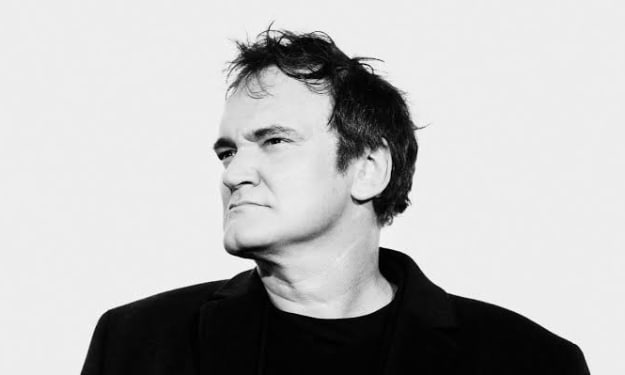
Quentin Tarantino. AI-Generated.
Few contemporary filmmakers have left as unmistakable a mark on cinema as Quentin Tarantino. Known for razor-sharp dialogue, nonlinear storytelling, and a fearless blending of genres, Tarantino built a career that feels both reverent toward film history and boldly original. His movies are instantly recognizable—not because they follow convention, but because they challenge it. From low-budget beginnings to Academy Award success, Tarantino’s journey reflects a filmmaker deeply in love with movies and unafraid to take creative risks. Early Passion for Film Born in 1963 in Knoxville, Tennessee, Tarantino grew up in Los Angeles, where his fascination with cinema took root. Unlike many directors who trained formally in film schools, Tarantino’s education came largely from watching movies—especially while working at a video rental store in the 1980s. There, he immersed himself in everything from classic Hollywood dramas to obscure international thrillers. This wide-ranging exposure shaped his artistic voice. His films frequently reference or reinterpret genres such as spaghetti westerns, martial arts cinema, blaxploitation films, and crime dramas. Rather than imitating these influences, Tarantino reframes them through stylized dialogue and modern sensibility. Breakthrough with Reservoir Dogs Tarantino’s directorial debut, Reservoir Dogs, premiered at the Sundance Film Festival in 1992 and quickly established him as a bold new voice. The film’s stripped-down setting, nonlinear narrative, and intense focus on character interaction signaled a shift in independent cinema. Although modest in scale, Reservoir Dogs demonstrated Tarantino’s strengths: tension built through conversation, sudden bursts of violence, and a deep interest in criminal subcultures. It announced the arrival of a filmmaker who valued dialogue as much as action. Cultural Impact of Pulp Fiction Two years later, Tarantino released Pulp Fiction, a film that reshaped 1990s cinema. Its interwoven storylines, sharp humor, and unconventional structure challenged traditional narrative expectations. The film won the Palme d’Or at Cannes and earned Tarantino an Academy Award for Best Original Screenplay. Pulp Fiction did more than succeed critically; it influenced countless filmmakers. Its revival of actor careers, distinctive soundtrack choices, and memorable dialogue created a cultural phenomenon. Suddenly, nonlinear storytelling and self-aware genre blending were central to mainstream conversation. Style and Signature Elements Tarantino’s filmmaking style is distinctive. Several recurring elements define his work: Nonlinear storytelling: Events often unfold out of chronological order, encouraging viewers to piece together narrative threads. Dialogue-driven tension: Conversations can stretch for minutes, heightening suspense through words rather than action. Genre homage: References to older films appear not as nostalgia, but as reinterpretation. Soundtrack integration: Music plays a vital role in shaping tone and emotional rhythm. Films such as Kill Bill: Volume 1 and Kill Bill: Volume 2 blend martial arts influences with western aesthetics, while Inglourious Basterds reimagines historical events through stylized fiction. Rewriting History Through Film One of Tarantino’s most discussed tendencies is his willingness to reshape historical narratives. In Inglourious Basterds, he creates an alternate ending to World War II. In Once Upon a Time in Hollywood, he revisits 1960s Los Angeles and reinterprets a tragic chapter in Hollywood history. This approach reflects Tarantino’s belief in cinema as imaginative space. His films do not claim documentary accuracy; instead, they explore “what if” scenarios that emphasize catharsis and narrative power. Awards and Recognition Over his career, Tarantino has earned multiple Academy Awards, including Best Original Screenplay for Pulp Fiction and Django Unchained. Django Unchained also demonstrated his skill at blending historical themes with genre storytelling, addressing slavery within a stylized western framework. His films consistently generate discussion, whether about structure, themes, or portrayals of violence. Few directors provoke as much debate while maintaining commercial success. Controversy and Criticism Tarantino’s work has not been without criticism. Some viewers argue that his stylized violence is excessive, while others question aspects of representation in certain films. These debates are part of his broader impact. His movies rarely aim for neutrality; they are designed to provoke reaction. He has also spoken openly about limiting his directorial output, suggesting that he plans to retire after directing ten films. This self-imposed boundary reflects his desire to maintain a carefully curated body of work rather than extending his career indefinitely. Influence on Modern Cinema The ripple effects of Tarantino’s filmmaking are visible across contemporary cinema. Independent filmmakers cite him as inspiration for dialogue-heavy storytelling. Mainstream directors adopt nonlinear structures more freely. Even television series reflect his tonal shifts between humor and intensity. Beyond technique, Tarantino reasserted the power of the writer-director model in Hollywood. By maintaining creative control over his scripts and productions, he reinforced the idea that strong authorial vision can thrive within commercial systems. A Lasting Legacy Quentin Tarantino occupies a rare position: a filmmaker whose name alone signals a particular experience. Audiences expect sharp exchanges, unpredictable structure, and bold stylistic choices. Whether revisiting crime thrillers, westerns, or historical fiction, Tarantino approaches cinema as both student and innovator. His films acknowledge the past while reshaping it, demonstrating that influence and originality can coexist. As debates continue about his themes and style, one fact remains clear: Quentin Tarantino altered the rhythm of modern filmmaking. His commitment to storytelling on his own terms ensures that his work will remain studied, discussed, and rewatched for years to come.
By Saboor Brohi 7 months ago in History
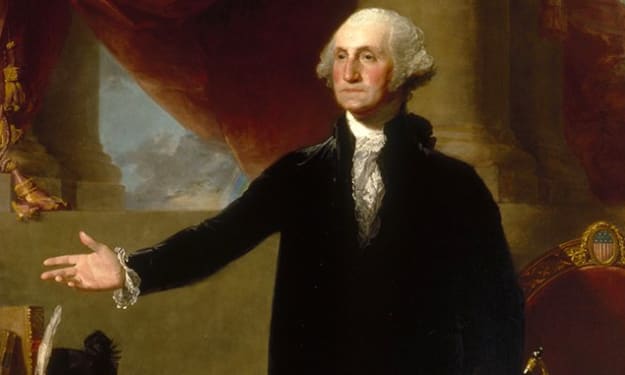
George Washington. AI-Generated.
In the story of the United States, few figures loom as large as George Washington. His name is etched into the country’s capital, memorialized in monuments, and woven into the national identity. Yet beyond the marble statues and textbook summaries lies a more nuanced portrait: a man defined not only by battlefield courage, but by restraint, discipline, and an acute awareness of power’s dangers. Writing about Washington today requires moving past myth while still acknowledging the scale of his influence. He was neither flawless hero nor simple symbol. He was a leader navigating uncertainty in a fragile new republic. Early Life and Formation Born in 1732 in colonial Virginia, Washington grew up in a society shaped by agriculture, trade, and British imperial rule. Unlike some of his contemporaries, he did not receive extensive formal education abroad. Instead, he developed practical skills in surveying and land management, experiences that strengthened his understanding of the American frontier. Military service during the French and Indian War introduced him to leadership under pressure. Though the campaigns were difficult and sometimes controversial, they forged a reputation for resilience and determination. These early trials would later inform his approach to command during the American Revolution. Commander of the Continental Army When tensions between the American colonies and Britain escalated into open conflict, the Continental Congress appointed Washington commander-in-chief in 1775. The task before him was daunting. The Continental Army faced shortages of supplies, inconsistent training, and uncertain morale. Washington’s leadership was less about dramatic battlefield victories and more about endurance. He understood that survival itself could be strategic. By avoiding catastrophic defeat and sustaining the army through brutal winters—most famously at Valley Forge—he kept the revolutionary cause alive long enough for diplomatic alliances, particularly with France, to shift the balance. His military career was not defined by perfection. There were losses and tactical missteps. Yet his ability to hold the army together during years of instability proved decisive. Leadership, in this context, meant persistence. The Precedent of Power After the war ended in 1783, Washington made a decision that may be as important as any battlefield action: he resigned his commission and returned to private life. In an era when victorious generals often consolidated power, his voluntary surrender of authority signaled commitment to civilian governance. This act strengthened trust in republican principles. When the Constitutional Convention met in 1787, Washington’s presence lent legitimacy to the process of designing a new framework of government. The First President In 1789, Washington was unanimously elected as the first president of the United States. There was no blueprint for the office. Every action he took would establish precedent. He assembled a cabinet that included diverse perspectives, including Alexander Hamilton and Thomas Jefferson, demonstrating a willingness to manage ideological differences within his administration. He supported the creation of financial systems that stabilized the young nation’s economy and sought to maintain neutrality in foreign conflicts. Perhaps his most enduring contribution as president was his decision not to seek a third term. By stepping down after two terms, he reinforced the principle that leadership in a republic must be temporary. This tradition lasted until it was formally codified in the 22nd Amendment more than a century later. A Complex Legacy Modern discussions of Washington must also address the contradictions of his life. As a Virginia plantation owner, he enslaved hundreds of people. This reality stands in tension with the ideals of liberty expressed during the American Revolution. In his later years, Washington’s views on slavery evolved, and he arranged in his will for the emancipation of those he directly owned. However, the institution itself remained deeply embedded in the nation he helped found. A full understanding of Washington requires holding these truths together: visionary leadership alongside participation in a system of injustice. Acknowledging this complexity does not diminish historical importance. Instead, it allows for a more honest engagement with the past. Leadership Style and Character Washington’s leadership style combined discipline with caution. He was not known for fiery speeches or flamboyant charisma. Instead, he cultivated authority through steadiness and personal integrity. Observers often described his presence as commanding yet reserved. He understood the symbolic weight of his actions. Even details—such as formal attire at public events—were carefully considered, reinforcing the dignity of the office without embracing monarchy. His farewell address in 1796 offered reflections on unity, political factions, and foreign entanglements. Though written with assistance, its themes reflected his concerns about the nation’s long-term stability. Washington in Public Memory Over time, Washington has been elevated into a national symbol. Monuments in Washington, D.C., and his image on currency underscore his foundational role. The capital city itself bears his name, reinforcing his association with the nation’s beginnings. Yet public memory continues to evolve. Historians reassess his decisions, examine archival evidence, and place his life within broader global contexts. This ongoing scholarship keeps his legacy dynamic rather than static. Why Washington Still Matters More than two centuries later, Washington’s influence persists not only in institutions but in expectations of leadership. His example of relinquishing power remains a defining feature of American democratic tradition. In a world where authority can easily concentrate, Washington’s restraint offers a reminder that leadership is not solely about gaining power, but about knowing when to step away from it. To study George Washington is to explore the fragile beginnings of a nation and the choices that shaped its political culture. He was a product of his time, marked by its limitations and achievements. Yet his commitment to establishing durable civic norms helped guide a new republic through its earliest and most uncertain years. In that sense, Washington’s story is not merely about the past. It is about the enduring responsibilities of leadership and the ongoing effort to balance power with principle
By Saboor Brohi 7 months ago in History