
Laila and Majnun: A Love That Chose Pain Over Forgetting
Laila and Majnun: A Love That Chose Pain Over Forgetting
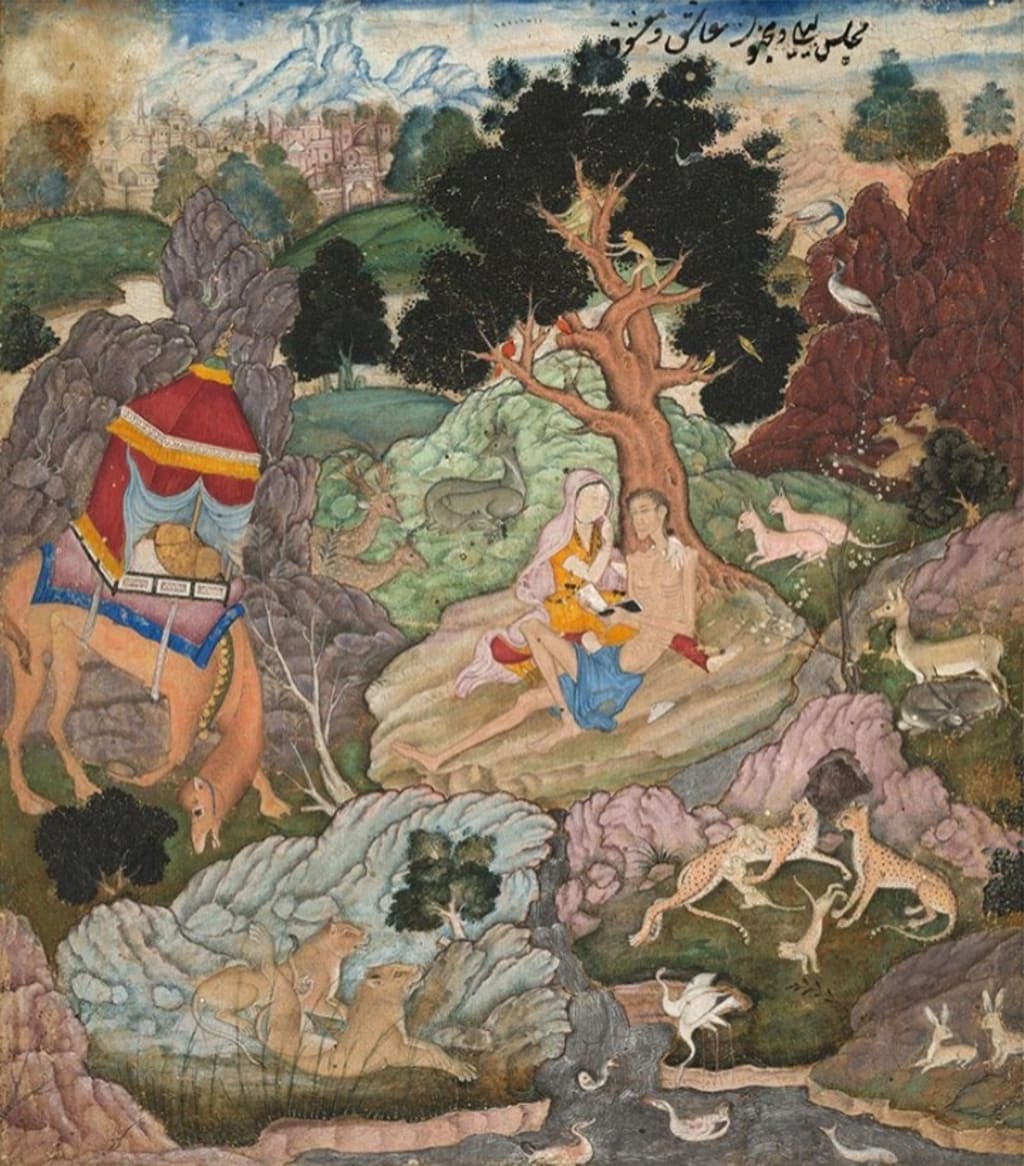
There are love stories that make people smile, and then there are those that leave a quiet ache in the heart. The story of Laila and Majnun belongs to the second kind—a story that does not promise happiness, yet stays with you forever.
Long before cities grew loud and crowded, in the open deserts of Arabia, there lived a boy named Qays. He was not known for strength or wealth, but for something far more fragile—his sensitivity. Qays felt things deeply. He noticed the way the wind moved across the sand, the silence of the night, and the meaning hidden in simple moments.
It was in a small village school that he met Laila.
She was different. Not just because of her beauty, but because of the calmness she carried with her. While others spoke loudly, she listened. While others laughed carelessly, she smiled softly. Somehow, without effort, she became the center of Qays’ world.
Their friendship began simply. Shared lessons, exchanged glances, small conversations that stretched longer than they should have. But as time passed, those little moments began to carry weight. Qays found himself waiting for her voice, her presence, even her silence.
He didn’t realize when friendship turned into love. Perhaps it happened slowly. Or perhaps it was always there.
Qays began to write. Not because he wanted to be a poet, but because he had no other way to hold his feelings. His words were not perfect, but they were honest. He wrote about Laila as if she were not just a person, but a part of his soul.
People started noticing.
At first, they smiled at the innocence of young love. But soon, Qays’ affection grew impossible to ignore. He spoke her name too often, too openly. In a society where love was expected to stay quiet and controlled, his devotion felt dangerous.
Laila’s family heard the whispers.
And with that, everything changed.
They decided that their daughter would not be part of a story they could not control. Without asking her heart, without considering her feelings, they arranged her marriage to someone else—someone respectable, someone acceptable.
When the news reached Qays, it did not arrive like a storm. It arrived quietly. And somehow, that made it worse.
For a while, he said nothing.
Then, slowly, the world around him began to fade.
Qays walked away from the village, from people, from everything that once felt familiar. He entered the desert as if it were the only place that could understand him.
Days passed. Then weeks.
He stopped caring about food, about sleep, about direction. The only thing that remained constant was Laila’s name. He whispered it, repeated it, carried it like a prayer.
“Laila…”
The sound of it became his identity.
People who saw him no longer called him Qays. They called him Majnun—the mad one. But what they saw as madness was, in truth, a kind of loyalty they could not understand.
He was not lost.
He had simply chosen love over everything else.
Far away from the desert, Laila lived a different kind of suffering.
She fulfilled her duties. She spoke when spoken to. She lived the life that had been decided for her. But inside, something remained unfinished.
At night, when the world grew quiet, she allowed herself to remember.
The school. The laughter. The boy who looked at her as if she mattered more than anything else in the world.
She heard stories about Majnun—how he wandered, how he spoke to the wind, how he had forgotten everything except her name.
Each story felt like both comfort and pain.
She wanted to see him.
But she never did.
Time, as it always does, moved forward.
Years passed quietly.
Then one day, the desert carried a different kind of silence.
Laila was gone.
No loud tragedy, no dramatic ending—just a quiet departure from a life that had never fully been hers.
When the news reached Majnun, he did not cry out.
For the first time, there was no voice, no repetition of her name.
He simply sat in the stillness, as if something inside him had finally come to rest.
Not long after, he too left the world.
Some say he was found near her grave. Others say he simply disappeared into the desert that had once held his sorrow.
But everyone agrees on one thing—
Their story did not end.
❤️ Closing Thought
Laila and Majnun were never meant to have a perfect ending.
And perhaps that is why their story feels so real.
Because not all love stories are about being together.
Some are about holding on, even when everything else is taken away.
And sometimes, love does not need a happy ending to be unforgettable.
About the Creator
Enjoyed the story? Support the Creator.
Subscribe for free to receive all their stories in your feed.
Comments
There are no comments for this story
Be the first to respond and start the conversation.