
How Nuclear Weapons are Transported & Guarded
Nuclear Weapons are Transported

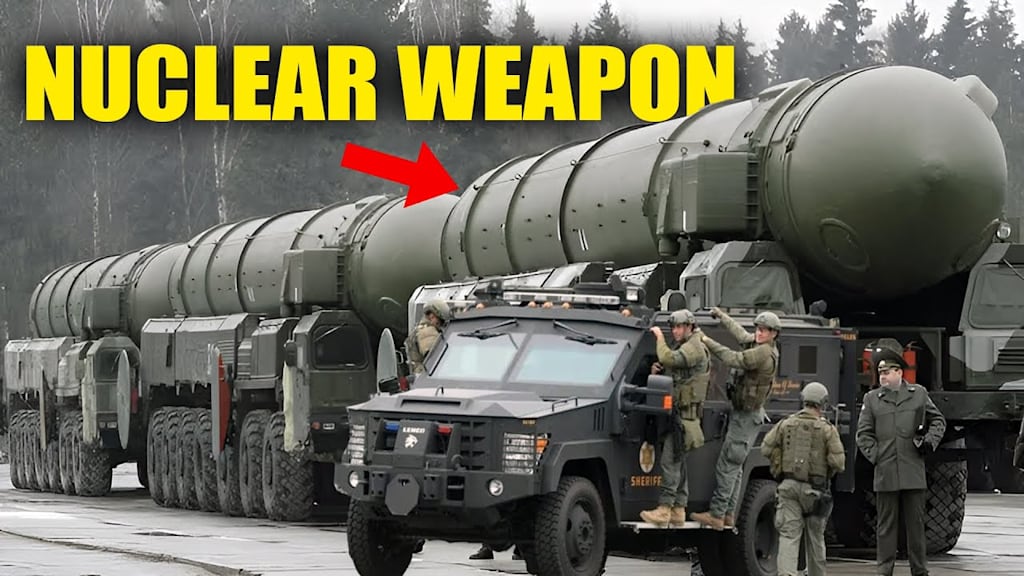
This is the world’s most secured convoy. The level of protection being given to it is probably greater than even that of the President of the United States. This convoy is transporting a weapon from one location to another, and if the convoy were attacked during transport, the world’s most dangerous weapon could fall into the wrong hands. The consequences would not affect just one country, but the entire world. That’s why no compromise can ever be made with its security.
How does a superpower like the United States transport its nuclear weapons? What exactly is inside these convoys, and how do federal agents respond if an attack takes place?
Welcome once again to Jam TV videos.
There are around 12,515 nuclear weapons in the world, and more than 4,000 of them belong to the United States alone. These weapons are spread across different parts of the country. Active nuclear weapons are deployed with the Air Force, military bases, and submarines, while thousands more are stored as backup weapons across North America.
But why are nuclear weapons spread out across different locations instead of being kept together?
The reason is simple: security. Nuclear weapons are hidden in different parts of the country so that if an enemy launches an attack, they cannot destroy all of them at once. Even if some are destroyed, others would survive for self-defense.
If these weapons are already stored safely, then why do they need to be transported at all?
The biggest reason is maintenance. Just like ordinary military weapons require regular maintenance, nuclear weapons also need constant inspection and servicing. Their mechanical systems can deteriorate over time, and the plutonium or uranium inside them must also be checked regularly to ensure they still function properly if ever needed.
In the case of the United States, a special federal agency called the National Nuclear Security Administration is responsible for the security and maintenance of nuclear weapons.
There can also be other reasons for moving these weapons, such as security threats. If intelligence agencies receive information that the location of a nuclear weapon has been leaked, it can immediately be relocated elsewhere.
The facilities where these weapons are stored have extremely strict security, and ordinary people cannot even get close to them. But when they are transported from one place to another, they must travel on the same public roads everyone else uses every day. That’s where security becomes far more complicated.
To handle this challenge, the U.S. government created a dedicated agency specifically tasked with protecting nuclear weapons during transportation.
The convoy used for these missions looks enormous. To an ordinary person, it might seem like the security detail of a very important VIP. The size of the convoy depends on the size of the weapon being transported and the destination.
At the front are police vehicles responsible for clearing traffic and ensuring the convoy moves without stopping. Behind them are heavily armored escort vehicles known as BearCats.
Calling these vehicles merely “bulletproof” would actually be an understatement. Each armored vehicle carries four to six highly trained federal agents whose job is to protect the convoy and immediately launch counterattacks if necessary.
The vehicles contain firing ports that allow agents to shoot from inside without exposing themselves. These agents are elite commandos equipped with handguns, shotguns, assault rifles, and massive amounts of ammunition. Some vehicles even carry mounted automatic machine guns.
However, these weapons are only used if there is an actual threat.
During normal operations, the agents constantly monitor every small detail and share updates through radio communication systems. The convoy uses three separate communication channels.
One channel is used by the armored vehicles to coordinate during an attack. Another channel connects agents with the main convoy for operational updates. According to standard operating procedures, there are usually armored vehicles both ahead of and behind the main transport truck.
The communication system is divided into separate channels so that if attackers jam one radio frequency or disable part of the convoy, the remaining vehicles can still communicate and request help.
The convoy also remains connected at all times to an emergency control center. If something goes wrong, the control center immediately organizes backup forces from the police or military.
To prevent attackers from pretending to be law enforcement officers, special encrypted code words are used. The responding forces and convoy agents must verify matching secret codes before trusting each other.
The truck carrying the nuclear weapon is itself a highly specialized vehicle. It is custom-built specifically for nuclear transport missions.
Its body is made from hardened steel that cannot easily be cut with normal tools, grinders, or drills. Even during major accidents, the body is designed not to crack. If exposed to fire, it can protect the weapon inside for hours.
The driver’s cabin is both bulletproof and bombproof, and its doors can only be opened from the inside.
The truck weighs around 25,000 kilograms, making it far heavier than an ordinary truck. Because of this, it cannot move very fast or make sharp turns during an emergency.
But this weakness also serves as another security feature. If attackers somehow capture the truck and try to drive it away, explosive systems attached to the axle can disable the wheels, causing the heavy vehicle to collapse onto the ground, making it nearly impossible to move.
As for the nuclear weapon itself, even convoy agents cannot access it directly. The container is protected with electronic locks whose keys are controlled only by the National Nuclear Security Administration.
According to the story, if someone somehow forced their way inside the cargo compartment, they could face automated defensive systems such as sticky incapacitating sprays and electric shock systems designed to stop intruders.
Throughout the journey, helicopters constantly monitor the convoy from above. When one helicopter runs low on fuel, another immediately replaces it so surveillance never stops. These helicopters also carry backup response teams ready to protect the nuclear weapon at any cost.
Because of all these security measures, the world’s most dangerous weapons are extremely difficult to steal or hijack during transport in the United States.
According to the video, thousands of nuclear weapon transports have taken place in American history, and no convoy has ever been successfully hijacked.
About the Creator
Imran Ali Shah
🌍 Vical Midea | Imran
🎥 Turning ideas into viral content
✨ Watch • Share • Enjoy
Enjoyed the story? Support the Creator.
Subscribe for free to receive all their stories in your feed.
Comments
There are no comments for this story
Be the first to respond and start the conversation.