
History of Chocolate
Who Invented It – Where Does It Come From?


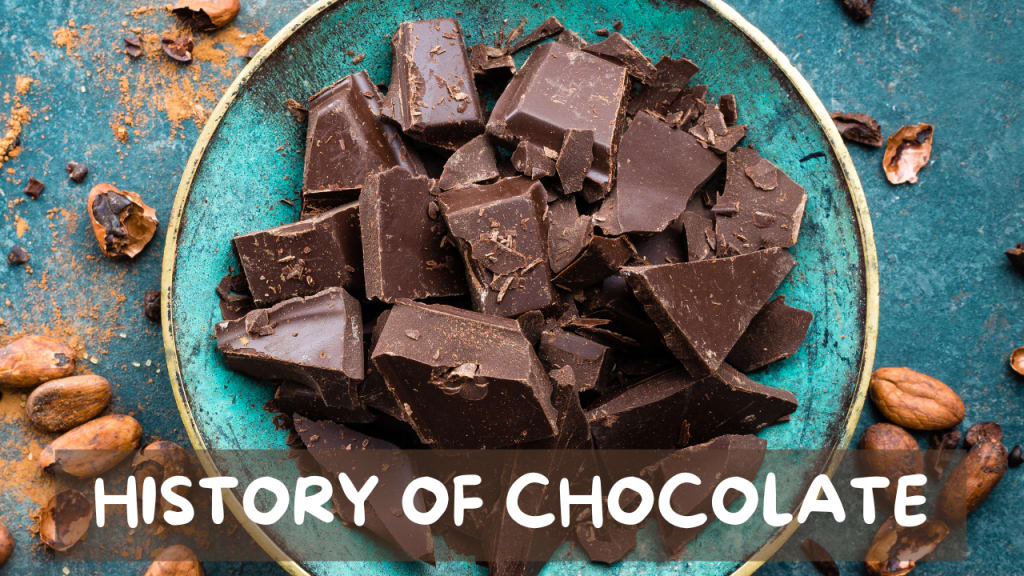
At the beginning of the article, you are going to read a short history of chocolate here. Move back to the past about 4000 years, where you can find the initial point of chocolate. It is obtained from a plant named cacao. These plants were initially found in Mesoamerica. From there, chocolate traveled to Spain and then to Europe. Afterward, it came back to America and the rest of the world.
As time passed, the taste of chocolate has been developed. Do you know that the chocolate we eat nowadays, is quite different from what was invented the first time? Many people were using chocolate initially as a treatment for many diseases.
What is the true history of chocolate?
The story of chocolate began in Mesoamerica. Many of us do not know that from 1900 BC to 1500 BC, people used chocolate as the main ingredient in the making of drinks. These chocolate drinks were quite popular and so on today. The Mexica believed that the seeds of cacao were a gift from the wise god. This god was known as Quetzalcoatl.
At first, chocolate was only a drink. It was bitter and mixed with spices or corn paste. Do you know that chocolate was considered a drink that cause feel romantic and strong? But in today’s time, these drinks are known as “Chilate.”
People in southern Mexico and the northern part of Central America (El Salvador, Guatemala, and Honduras) still make them.
The 16th century was the era when chocolate become sweet when people added sugar to it. Initially, it was popular among the rich communities but later on, it is enjoyed by everyone. Moreover, nowadays, Businesses use customized gift boxes to give chocolates to their customers and to attract more customers in order to increase Chocolate business sales.
In the 20th century, chocolate was seen as important for United States soldiers during wars.
Who invented chocolate and why?
The initial source of chocolate is cacao trees. These trees are available in Central and South America. People collect fruits from these trees called pods, each holding about 40 cacao beans. These beans are dried and roasted to make cocoa beans.
The exact start of cacao's story and its inventor are not clear. Hayes Lavis, who looks after cultural arts at the Smithsonian's National Museum of the American Indian, tells us that ancient Olmec pots from around 1500 B.C. had traces of theobromine. This is a stimulating part found in chocolate and tea.
It's believed the Olmecs might have used cacao to make a special drink for ceremonies. Since they didn't write down their history, people disagree on whether they used cacao beans in their mixtures or only the pulpy part of the cacao pod.
Mayan Chocolate
The Olmecs surely shared their cacao knowledge with the Maya people of Central America. The Maya folks not only enjoyed chocolate, but they also held it in high regard. The writings of the Maya talk about using chocolate drinks during celebrations and for sealing important deals and ceremonies.
Even though chocolate was significant in Mayan culture, it wasn't just for the rich and powerful; almost everyone could get it. In lots of Mayan homes, chocolate was a part of every meal. Mayan chocolate was thick and bubbly, and they often mixed it with chili peppers, honey, or water.
Spanish Hot Chocolate
Different stories exist about when chocolate reached Europe, but everyone agrees it first came to Spain. One version says Christopher Columbus found cacao beans on a trade ship during his trip to America in 1502, and he took them back to Spain.
Another tale involves Hernan Cortes, a Spanish conqueror. He apparently learned about chocolate from the Aztecs in Montezuma's court. When he returned to Spain, he brought cacao beans and kept his chocolate discovery a secret. Another story suggests that in 1544, friars who met Guatemalan Mayans gifted cacao beans to Philip II of Spain.
No matter how it happened, by the late 1500s, chocolate was a much-loved treat at the Spanish court. Spain began importing chocolate in 1585. Italy and France, during their visits to Central America, also learned about cacao and brought chocolate back to their countries.
Europe quickly got excited about chocolate. To meet the demand, chocolate plantations appeared, often with enslaved workers. However, Europeans wanted more than the traditional Aztec chocolate. They created their own hot chocolate recipes with sugar, cinnamon, and other flavors.
Before long, posh chocolate houses emerged in places like London and Amsterdam, where wealthy people could enjoy this delightful treat.
Chocolate in the American Colonies
Chocolate reached Florida aboard a Spanish ship in 1641. The first American chocolate house is believed to have started in Boston in 1682. By 1773, cocoa beans were a big import for American colonies, and chocolate was liked by everyone, no matter their class.
In the Revolutionary War, soldiers got chocolate as part of their rations, and sometimes it was given to them instead of money. (Even during World War II, soldiers were given chocolate as part of their rations.)
The First Chocolate Bar
The chocolate bar we know today wasn't invented until 1876. Henri Nestlé (yes, the Nestlé guy) came up with the idea and process to mix milk, and that's how milk chocolate entered the mass market.
Thanks to these new methods and tools, chocolate could be mixed in precise ways to make many different tastes, flavors, and textures. This led to the first "eating chocolate," also known as the chocolate bar. After this change, all kinds of chocolate options appeared. The ability to shape "eating chocolate" allowed it to be used in more creative ways and molded into the chocolate forms we know today.
Fair-Trade Chocolate
Making chocolate today has its challenges. Lots of cocoa farmers find it hard to earn enough money, so some resort to hiring workers for low wages or even using slavery (which can involve trafficking children) just to stay in the game. To make more space for cocoa farms, many businesses are cutting down rainforests, especially in West Africa.
This has led to local movements pushing big chocolate companies to think again about where they get their cocoa and how it affects the environment. People are also asking for more fair-trade chocolate, which is made in a way that's fairer and better for the planet.
FAQs
When Was Chocolate First Invented?
Chocolate has its roots in the old Olmecs, Mayans, and Aztecs who called Mexico home. These groups found cacao beans around 1900 BC. These beans come from the fruit trees named Theobroma.
What are 3 facts about the origin of chocolate?
· Switzerland loves chocolate the most globally.
· People first drank chocolate as a bitter liquid.
· The Spanish introduced cocoa to Europe.
What are some hidden facts about chocolate?
Long ago, chocolate was like tree money. The Mayans used cacao beans as their money, even more valuable than gold dust. It took eight years to make the recipe for milk chocolate.
About the Creator
lary michael
I am an expert in the bakery business with over 15 years of experience in the industry. I have a passion for creating delicious treats and running a successful bakery led her to become a sought-after consultant and speaker in the field.
Enjoyed the story? Support the Creator.
Subscribe for free to receive all their stories in your feed.
Comments
There are no comments for this story
Be the first to respond and start the conversation.