
Historic Newspaper Accounts Tell of Vampirism and Mass Possessions
Real Monsters and Mass Hysteria Plague the People


One of the most disturbing and recent cases of real vampirism was reported by the New York Times on Dec. 24, 2002.
The Times reported that a rumor that the African country of Malawi’s government was colluding with “vampires to collect human blood for international aid agencies in exchange for food” had sparked a surge in vigilante violence.
Although the president of this small nation at the time, Bakill Muluzi, blamed the rumors on his political opponents, terrified villagers took the law into their own hands. They stoned one man to death they suspected of helping the vampires. They also beat three Roman Catholic priests because they also suspected them of vampirism.
In an attempt to quell the rising violence, Mr. Muluzi assured the people through a hastily called press conference that “no government can go about sucking the blood of its people,” but the rumors would not go away because they were based on the eyewitness accounts of women and children, who claimed they were victims of these strange bloodsuckers.
The Jan. 14, 2003, edition of the Times shed much more light on the so-called vampires of Malwai by describing them in detail.
Nefarious Nocturnal Bloodsuckers

“They wear dark clothing, it is said, and carry syringes to draw blood from their drugged victims, who sicken or die,” the Times reported eyewitnesses saying.
“The creatures have magical powers and a fondness for vanishing in graveyards, but no one has heard of them changing into bats.”
New York Times
Although these modern-day monsters had not been seen drinking blood, in a nation where AIDS is rampant, they were seen carrying flashlights and sleeping gas to force themselves on their helpless victims.
Abandoned Syringes Fuel Vampire Stories
In a further attempt to counter the growing violent pushback from the villagers, the government arrested nearly 40 people. However, the discovery of abandoned syringes fueled even more anger among the villagers, who believed they now had proof they were not delusional.
For example, Elesi Makwinja told the Times she narrowly escaped a vampire attack and watched them vanish into thin air. Relatives of a woman in one of the villages also attributed her death to being slowly bled by the vampires.
“We don’t know whether they are real people or spirits, but we know they are attacking,” said Peter James, the brother of the now-deceased woman.
New York Times
Others believe the villagers were not imagining things.
Charles Kaiya said he remembers a similar vampire scare about 30 years ago. Eventually, the police arrested a man caught with syringes and bottles of blood. Mr. Kaiya added that some theorized the vampires are really government agents drawing the blood of villagers in return for financial aid.
“Maybe it’s going to Saudi Arabia to get money,” he told the Times.
New York Times
Real Vampire Attacks Reported by Washington Post in 1913
While today most believe legends of vampires like those that inspired Bram Stoker’s “Dracula” are nothing but sick fairy tales — sexually suppressed myths, in reality, the plague of vampirism is no joke.
One only has to search the archives of major, reputable newspapers to find scores of eyewitness accounts of real people shivering in the shadows fearing the wrath of these night predators we call vampires.
For example, a story reported in the Washington Post on Aug. 10, 1913, tells of such a chilling encounter with the creatures of the night chronicled in Russia.
Villagers Cowered in Fear

“Some three years ago the head of a family resident there died, and since that date, nine other members of the family have also died.”
Washington Post
Is it any wonder that these villagers believed their deaths were the result of the “roving spirit” of their evil chief? Is it surprising that after huddling together for a few evenings they decided to dig up the chief’s body and cut off his head?
According to the Post, these bloodsuckers, whether they are described as the walking dead or ghostly apparitions, have been vexing mankind for more than 2,000 years. Can it be just an accident that vampirism in historical news archives usually occurs in Russia, Serbia, and Hungary?
In fact, according to the Post, in 1863, local officials reported and documented an epidemic of vampirism in a Bulgarian village.
“The inhabitants became so frightened that when night set in instead of retiring to rest in the usual manner they all assembled in one central hall to pass the night in company. While they were away from their houses, however, the enraged vampires entered them, turned everything topsy-turvey, smearing blood all over the walls and furniture.”
Washington Post
On Sept. 6, 1914, the New York Times reported another vampire account in a matter-of-fact presentation.
“Mr. Tulip was an extraordinarily strong well-built and healthy man, but at the beginning of December last, he suddenly began to fail in health. The doctors could not locate his disease, and he grew thinner and weaker, complaining of nothing but extreme lassitude and feeling like a person who was daily bled.”
New York Times
The man died a few weeks later but only after saying that a “stranger was troubling him, and the description of that personage fitted a certain Mr. Helleborus, who had been very ill, but who suddenly gaining in health and strength — and recovering from his illness in a most remarkable manner.”
New York Times
These sort of cases go reported year after year, decade after decade — yet those who believe there could be something to them, or those who want to at least explore the possibility of something preternatural at work, are called fools and superstitious idiots.
What a perfect defense such an attitude lends to the evil ones who lurk in the dark alleys and subterranean nests of our world waiting to pounce on their next human meal.
Hunter Attacked By Strange Vampire-Like Creature
Imagine going hunting and then suddenly becoming hunted by a vampire creature that’s a mix between a huge flying squirrel and a wild cat.
That’s exactly what happened to W.D. Newman as witnessed by his two hunting companions Jesse Cox and Frank Hotler near Montgomery, Alabama, on Oct. 5, 1888, as reported by the Washington Post.
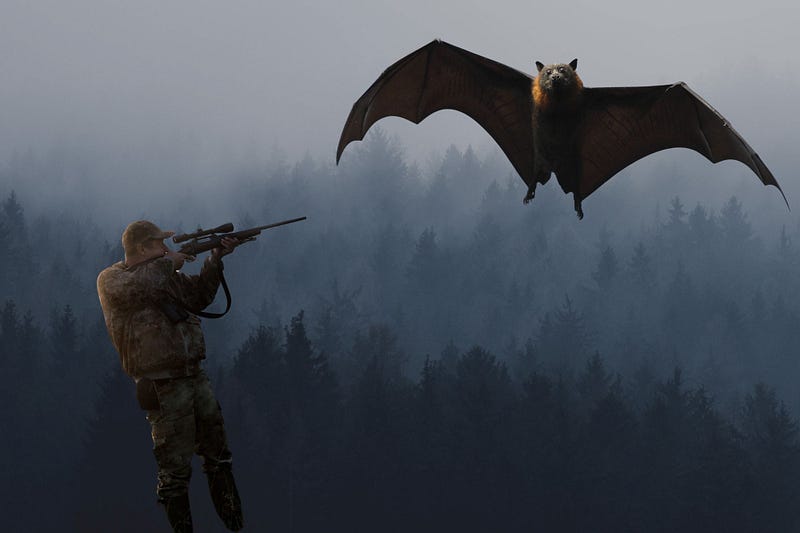
According to the story, while walking through the woods, a creature that had been in a tree suddenly swooped down on Newman bit off his ear, and tried to plant its 3-inch-long fangs into his jugular vein.
If it hadn’t been for his friends and their hunting dogs, Newman would have been sucked dry on the spot, according to the account.
Newman’s hunting companions described the creature as having a “web from front to hind quarters, something like a flying squirrel. The creature also had a face almost flat, a little concave, and teeth 3-inches long and very large, protruding eyes. Furthermore, this creature from Hell had short, stiff hair, a web foot like a duck, but long sharp claws and very short legs. It weighed 26 pounds after being killed.”
Newman was seriously injured and taken to the nearest hospital. Unfortunately, there was no mention of whatever became of him or the vampire-like creature. They both disappeared from the news.
Account of Mass Demon Possession in Europe

There are many unexplained events in history, but perhaps one of the most bizarre and puzzling is the epidemic of mass hysteria or mass possession that gripped Europe in the 16th century.
The strange malaise is documented in the Aug 18, 1896 edition of the New York Times.
“Troops of men and women from Germany were seen laboring under a common madness and displaying in the streets and churches this singular spectacle.
New York Times
With clasped hands and carried away by the inward compulsion which they could not master they danced for hours and kept up the spectacle until they fell exhausted to the ground.
New York Times
Then they would complain of their great agony, and would groan as though they were going to die, until people wrapped their abdomens with linen cloths whereupon they would come to themselves and be free for a time from their sufferings.”
New York Times
The Times continued describing the weird hysteria that spread from town to town:
“During their dance the subjects had visions. They did not see or hear, but in their imagination, they beheld spirits whose names they pronounced, or rather shrieked out: fell snorting to the ground without consciousness and began to foam at the mouth.”
New York Tiems
About Chet Dembeck:
Chet is an award-winning print journalist who has covered technology, government, and the Pentagon for various news organizations in the Baltimore/Washington corridor for several decades. Chet has completed stints as a reporter for the Washington Business Journal, the Federal Times, and the Baltimore Daily Record.
About the Creator
Chet Dembeck
Chet is an award-winning print journalist who has covered technology, government, and the Pentagon for news organizations across the Baltimore/Washington corridor for decades. He also edited a healthcare newsletter.
Enjoyed the story? Support the Creator.
Subscribe for free to receive all their stories in your feed. You could also become a paid subscriber, letting them know you appreciate their work.
Comments
There are no comments for this story
Be the first to respond and start the conversation.