
Five Key Events of World War II's Pacific War
Remembering the Decisive Events of World War II in the Pacific
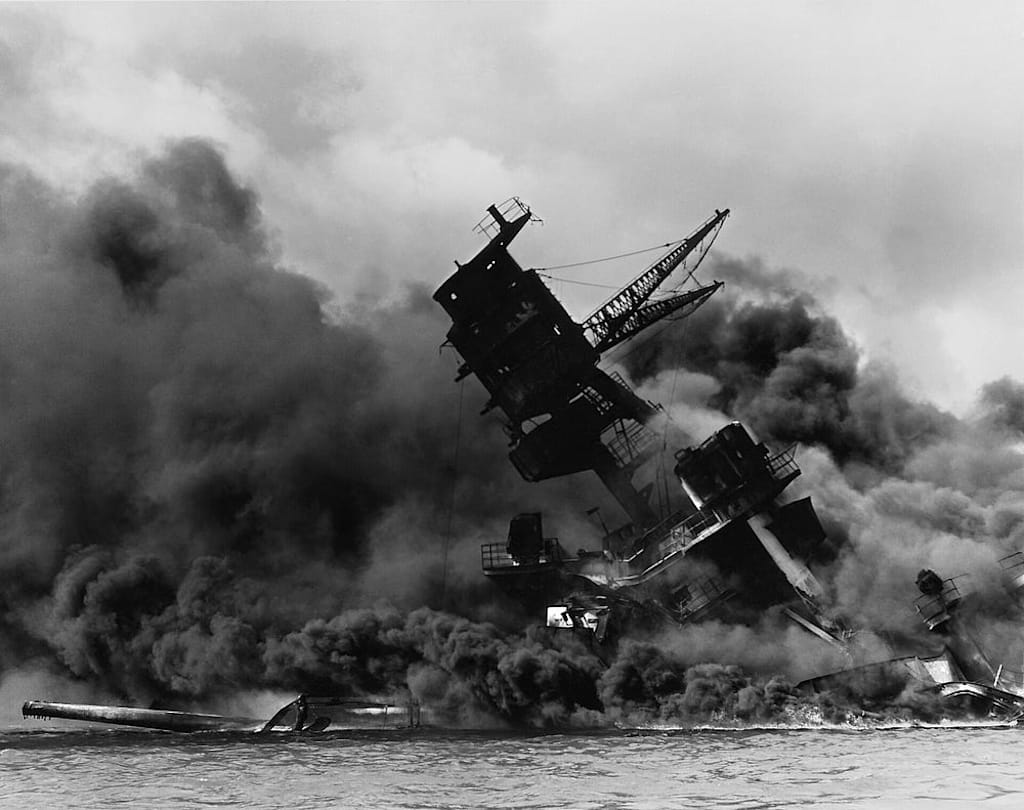
The Pacific War was one in which the Japanese Empire was defeated from 1941 to 1945. That defeat was ensured by a string of Allied victories after 1942. These were a few of the key events of the Pacific War.
Pearl Harbor
To wipe out the U.S. Pacific Fleet, the Imperial Japanese Navy drafted Operation Z. The operation outlined how they would bombard the U.S. naval base at Pearl Harbor and its nearby airfields with a fleet of aircraft carriers. On December 7, 1941, the operation went ahead, and hundreds of Japanese planes flew towards the harbor.
During the airstrike, the eight battleships of Battle Row were ravaged. The nearby airfields were also set ablaze as U.S. planes were wiped out on the ground. Hundreds were lost, leaving the skies dominated by Japanese aircraft. But their planes could not locate any U.S. aircraft carriers at the harbor, quite simply because there weren’t any present during the raid. After the second wave, the airstrike was called off, even though a potential third wave had been drafted to take out the oil storage depots located at the harbor.
Then the Japanese Empire declared war on the Allies. Whilst they had triumphed at Pearl Harbor, the targets they missed limited the impact of the raid. However, soon after, they began a series of swift and effective advances that would greatly expand their empire.
Dutch East Indies Campaign
Among the primary targets of the expanding empire was the Dutch East Indies. This region of the Pacific had the oil Japan required to replenish its own dwindling supplies. Had the Netherlands East Indies Company not joined the Allied economic embargo and exported oil to Japan, then the IJN may not have drafted Operation Z.
The Dutch East Indies were a maze of islands that the Japanese army occupied during 1942. The most essential of naval battles came at the Battle of the Java Sea when the IJN took on a combined ABDA naval fleet consisting of cruisers and destroyers. Most of the ABDA ships were lost during the battle, which was a clear Japanese victory.
After that battle, Japan began to land its troops along the coastline of Java. It was here that most of the Allied troops were stationed. In Java, the Allied forces were defeated by the advancing Japanese army, as they surrendered in Sumatra. Then the Japanese Empire had all but won the Dutch East Indies Campaign.
Battle of Midway
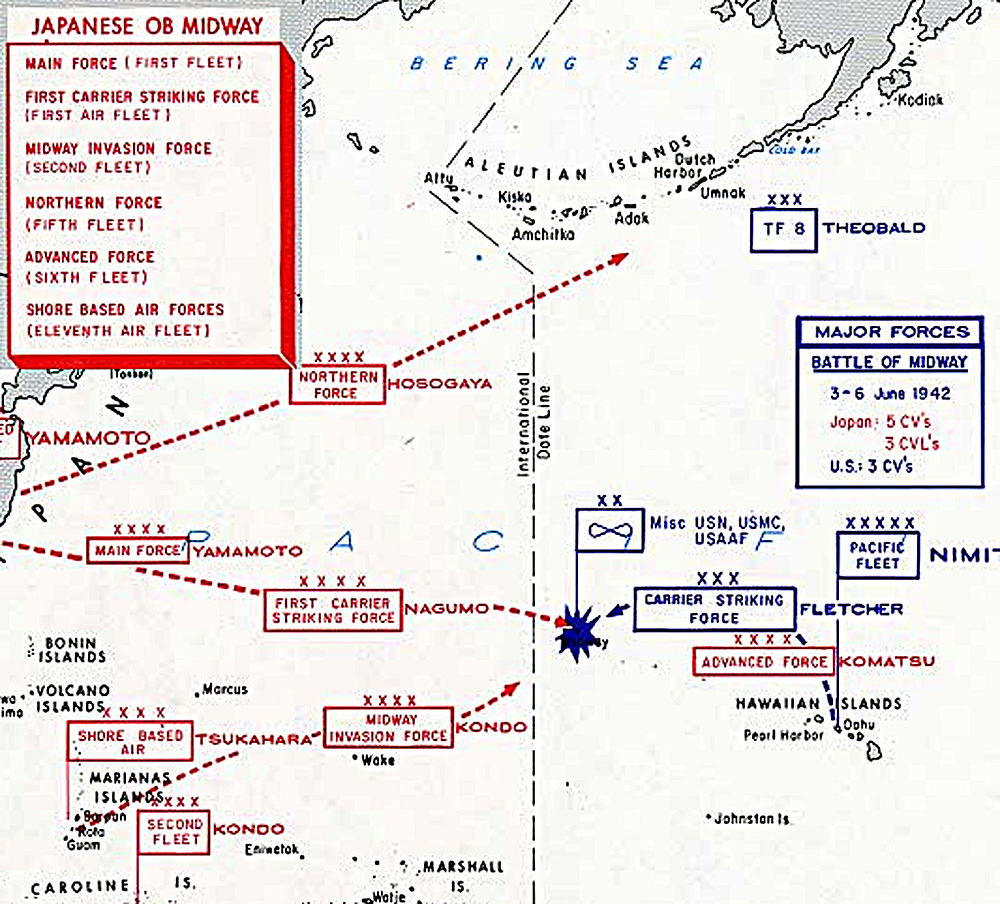
The Japanese Empire peaked in 1942, but the Allies were far from defeated. The U.S. Pacific Fleet still possessed three fleet aircraft carriers, and it was those that Japan planned to trap and wipe out around Midway Island. For the operation, they sent thousands of troops that were supposed to invade and occupy Midway Island, and a fleet of four aircraft carriers to take out the U.S. naval presence in the region. Submarines were also dispatched to intercept their ships.
However, the Japanese naval codes had been broken by Station HYPO. They passed on the intercepted Japanese messages, which highlighted the Midway operation, to the U.S. Navy. Three U.S. aircraft carriers were hastily dispatched to rendezvous at Point Luck, en route to Midway.
When they arrived, their scout planes were the first to spot the Japanese ships. Soon after, the Japanese aircraft bombarded Midway Island. U.S. planes at the Midway airstrip flew to intercept, but most were shot down by the proficient A6M Zeros. A few U.S. planes also targeted the Japanese aircraft carriers, but with no impact.
Once the IJN detected the presence of U.S. carriers, they had to switch targets. But the U.S. carriers were the first to strike with some SBD dive-bombers. These planes found their way through to three of the IJN carriers, setting them ablaze with their bombs. The impact of the sortie all but won the Battle of Midway as the three aircraft carriers, along with their supporting planes, went down.
Later, the fourth remaining Japanese aircraft carrier was also ravaged by U.S. aircraft. Its planes had bombarded the USS Yorktown, which was also lost at sea, but the Battle of Midway was lost. The IJN had lost four of its aircraft carriers and hundreds of supporting planes. It was a bitter blow for the IJN and the empire.
Fall of the Marianas
The Marianas were one of the more essential outposts of the Japanese Empire. It was here that the Japanese had a variety of airfields, and taking the Marianas would put U.S. aircraft within range of the Japanese home islands. As such, in 1944, they sent a fleet of warships, escorting hundreds of thousands of troops, for the Mariana Campaign.
That campaign began with the Battle of the Philippine Sea shortly after the first Marines had landed in Saipan. During this battle, the IJN expected to defeat the U.S. invasion fleet with their aircraft carriers. However, they lost hundreds of aircraft during the battle. Their planes were not a great match for the new Allied models, such as the F6F, which dominated the battle. When the Japanese fleet aircraft carriers were intercepted by U.S. submarines, two were torpedoed out of the water. A third was also discovered by a U.S. aircraft carrier and was also lost at sea after an air bombardment. With heavy losses, the IJN withdrew from the Marianas.
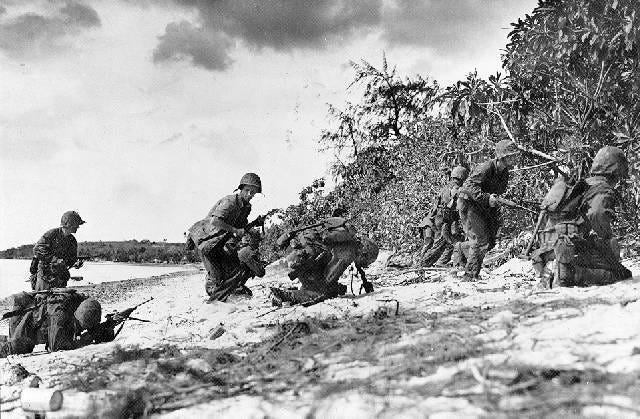
That left the Allied navy dominant around the Marianas for the remainder of the campaign. On land, the U.S. Marines made steady advances in Saipan, which was all but taken after they had cleared the Japanese mountain strongholds such as Mount Tapotchau. Once Saipan had fallen, they landed on other Mariana Islands, such as Guam, where the Japanese garrisons were also defeated.
Having lost the Marianas, the Japanese Empire was crumbling. They had also lost most of their carrier fleet air arm. What carriers they had left had only a few planes and could no longer provide any notable naval support in the Pacific.
Battle of Okinawa
The penultimate battle of the Pacific War came at Okinawa in 1945. During this battle, the Allies landed at Okinawa, where they came up against a large number of Japanese troops. The last great Japanese battleship, the Yamato, was blown out of the war by Allied aircraft en route to Okinawa. The battle ended with the expected Allied victory, providing essential airfields and anchorages for the Allies.
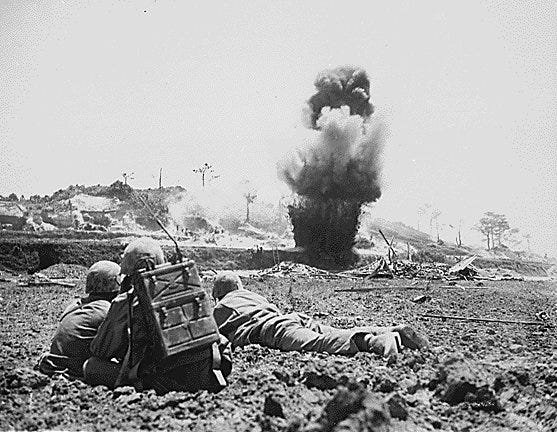
Soon after the Battle of Okinawa, the Japanese Empire surrendered to the Allies. But only after two A-bombs were dropped over Japan. The Emperor informed the Allies and Japan that they would surrender. In September, Japanese delegates boarded the USS Missouri, where they surrendered.
This article of mine was previously submitted to Medium.com, where you can read it here.
About the Creator
Matthew A
Matthew is the author of Battles of the Pacific War 1941-1945. Battles of the Pacific War is available on Amazon and Lulu in e-book and paperback formats. Check out the book’s blog at battlesofthepacificwar.blogspot.co.uk.
Enjoyed the story? Support the Creator.
Subscribe for free to receive all their stories in your feed.
Comments
There are no comments for this story
Be the first to respond and start the conversation.