


“Formosa"—meaning "beautiful island" in Portuguese—is the historic name given to the island in 1542, representing a legacy of indigenous inhabitation, European colonization (Dutch/Spanish), and its transformation into a major trade hub. The island shifted from Qing Dynasty rule to Japanese colonization (1895–1945) before becoming the base for the (nationalist) Republic of China in 1949.Here is a breakdown of the history of Formosa:16th Century – Naming: Portuguese sailors in 1542 spotted the island and marked it on maps as Ilha Formosa.17th Century – Colonial Era:Dutch Formosa (1624–1662): The Dutch East India Company established its headquarters at Fort Zeelandia (modern-day Tainan), focusing on trade with China and Japan.Spanish Formosa (1626–1642): Spain established a colony in the north, but was expelled by the Dutch.Kingdom of Tungning (1662–1683): Ming loyalist Koxinga defeated the Dutch, establishing a loyalist regime.Qing Dynasty Rule (1683–1895): The island was incorporated into China's Qing dynasty, experiencing major influxes of Hoklo and Hakka immigrants from Fujian and Guangdong.Japanese Colonial Period (1895–1945): Following the Sino-Japanese War, China ceded the island to Japan. Japan developed the island's industry, infrastructure, and agriculture, while suppressing local opposition, turning it into a key military base during World War II.Post-War to Modern Day:In 1945, control was transferred to the Republic of China (ROC).Following the Chinese Civil War in 1949, ( nationalist Chinese vs communist Chinese), and ever since the CCP (Chinese Communist Party) wants to take control of Taiwan.
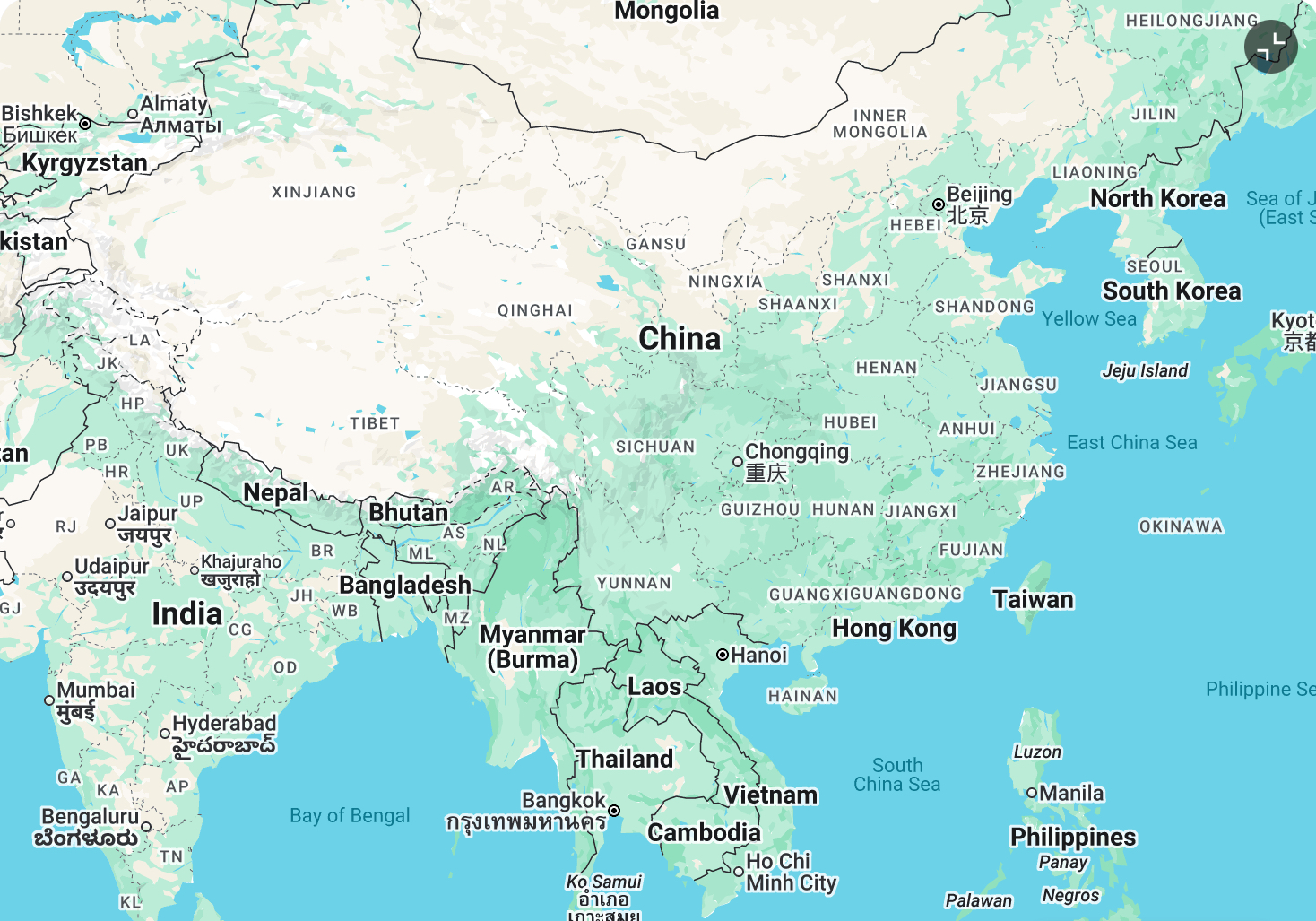
The U.S.A. Supports Taiwan as an independent country, but has not officially stated it. The United States maintains a "one China" policy, recognizing the People's Republic of China (PRC) as the sole legal government of China while maintaining robust, unofficial relations with Taiwan. The U.S. does not officially recognize Taiwan's sovereignty, but opposes unilateral changes to the status quo and insists on a peaceful resolution of cross-strait differences.Core Components of U.S. Stance (as of May 2026):One China Policy: This policy acknowledges the Chinese position that Taiwan is part of China, but this is distinct from Beijing’s "one China principle". The U.S. officially "acknowledges" rather than accepts Beijing’s claim over Taiwan.Legal Framework: The policy is guided by the Taiwan Relations Act (TRA), which mandates the U.S. provide Taiwan with the means to defend itself; the Three Joint Communiques; and the Six Assurances.Strategic Ambiguity: The U.S. intentionally maintains a policy of "deliberate ambiguity," neither confirming nor denying whether it would intervene militarily if the PRC attacks Taiwan, aiming to deter both sides from altering the status quo.Support for Taiwan: Despite lacking formal diplomatic ties, the U.S. is Taiwan's main arms provider and views it as a key democratic partner in the Indo-Pacific.Recent Developments: Despite efforts to deepen ties, the policy remains focused on preventing conflict, with ongoing debates on whether to shift toward stronger explicit security guarantees.The American Institute in Taiwan (AIT) conducts these unofficial relations, functioning as a de facto embassy.
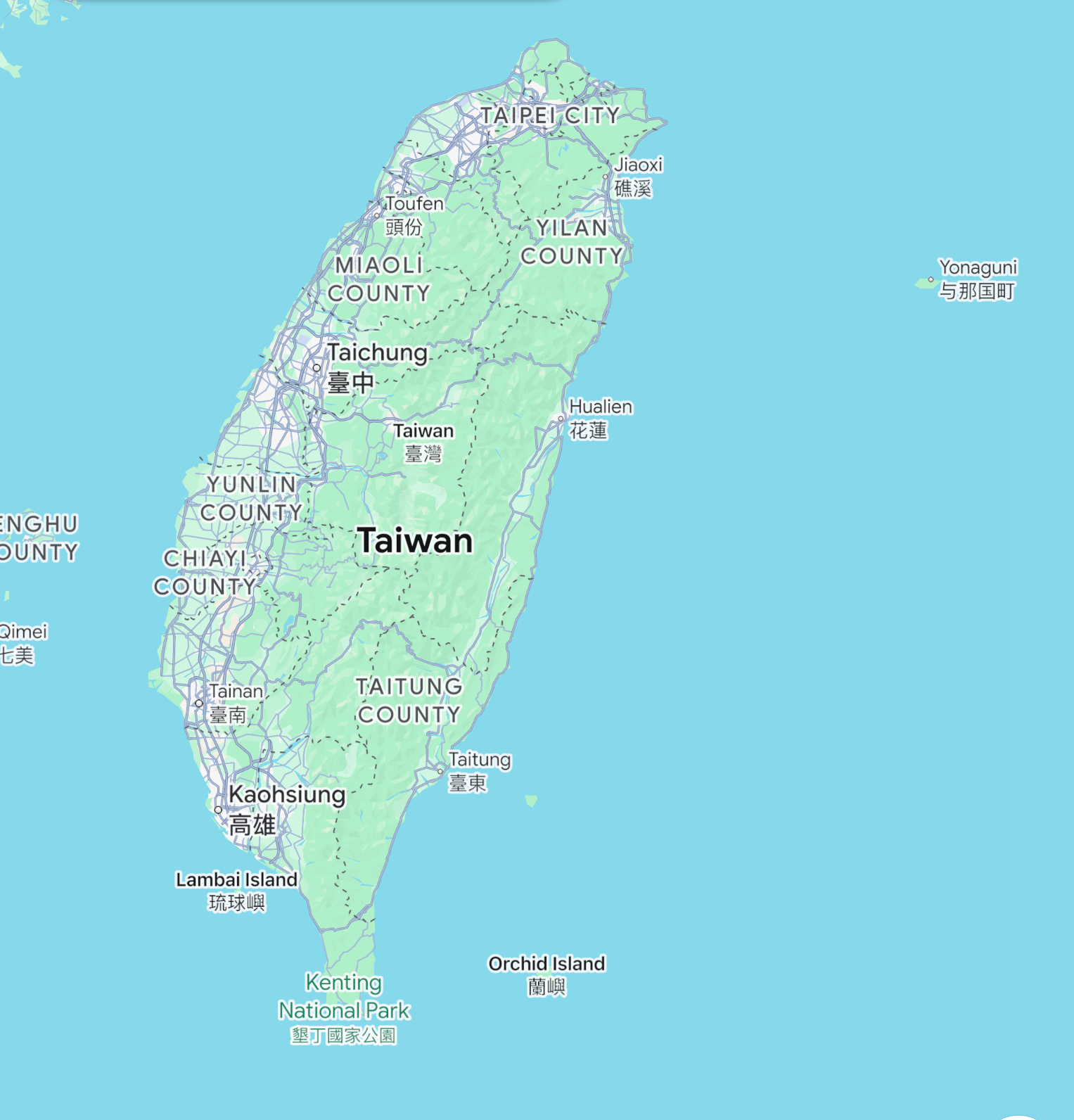
Map of Taiwan
At the adoption of Additional Articles of the Constitution of the Republic of China in the 1990s, these islands collectively form the "Free area of the Republic of China" or known alternatively as "Taiwan Area", which legally defines the territorial extent under the actual control of the ROC government.
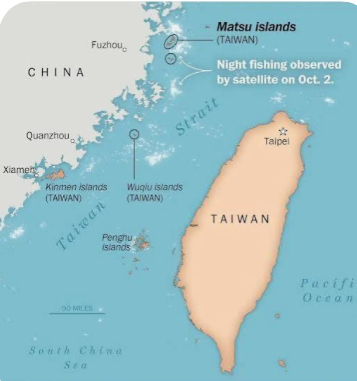
Some Taiwanese islands have various translations in English due to different systems of romanization in Chinese language in use, or derivation of differing linguistic origins from Mandarin, Hokkien, indigenous languages or other foreign languages. Some islands also have different names derived from particular historical periods which remain in use to this day. There are 168 islands in the Taiwan Area. Taiwan, officially the Republic of China (ROC), consists of the main island of Formosa and several key outlying island groups, including Penghu, Kinmen, and Matsu. These islands are popular tourist destinations known for their beaches, historical sites, and local delicacies, with a strategic presence near the Chinese coast.Key Island Groups (Offshore Islands)Penghu Islands (Pescadores): An archipelago in the Taiwan Strait known for its, beaches, the annual Spring/Summer Fireworks Festival, and columnar basalt formations.Kinmen Islands: Situated very close to the mainland Chinese coast (Xiamen), this group is known for its intense military history, fortifications, and tunnel systems, along with local specialties like sorghum liquor.Matsu Islands: Located in the northern Taiwan Strait, consisting of 19 islands/islets, including Nangan and Beigan, known for their steep terrain and military history.Orchid Island (Lanyu): A small volcanic island off the southeastern coast inhabited by the Tao people, known for their unique culture and the flying fish festival.Green Island (Lv Dao): A small volcanic island famous for scuba diving, hot springs, and its history as a penal colony.Xiaoliuqiu: A small coral island known for its dense sea turtle population and year-round diving.
About the Creator
Guy lynn
I’m interested in history, space travel and the possibilities, Americana,( where I live now), Africa (Southern Africa, where I was born and raised), and I write about things that interest me ( bead history) and I hope will interest you.
Enjoyed the story? Support the Creator.
Subscribe for free to receive all their stories in your feed.
Comments
There are no comments for this story
Be the first to respond and start the conversation.