

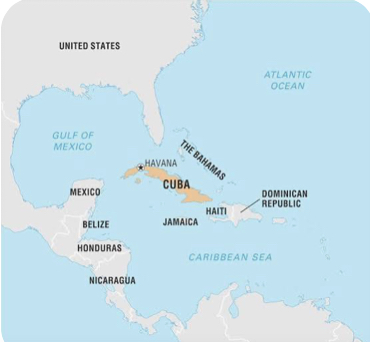
Cuba’s history features a complex narrative of Indigenous cultures, Spanish colonization, sugar and slavery, a fierce independence movement, and eventual transformation into the Western Hemisphere's first communist state during the Cold War.
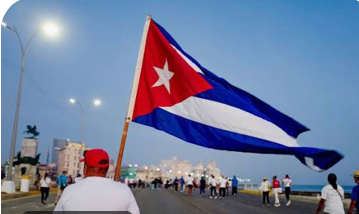
Indigenous and Colonial ErasPrior to European arrival, Cuba was inhabited by Indigenous groups, including the Taíno and Guanahatabey. Christopher Columbus claimed the island for Spain in 1492. Spanish settlement began in 1511, and the Indigenous population was rapidly decimated by forced labor and Eurasian diseases. To meet labor demands on emerging sugar and coffee plantations, Spain began importing hundreds of thousands of enslaved Africans.
Independence and U.S. InfluenceWidespread discontent with Spanish rule erupted into the Ten Years' War (1868–1878) and the War of Independence (1895–1898), spearheaded by nationalist figures like José Martí. The United States intervened in 1898 following the sinking of the USS Maine, leading to the Spanish-American War and the defeat of Spain.
Cuba gained formal independence in 1902 but remained heavily influenced by the U.S. under the Platt Amendment. This period was marked by wealth from the sugar industry, but also by political corruption and deep economic inequality.
The Cuban Revolution and the Cold War in 1952, Fulgencio Batista staged a military coup and established a dictatorship, which fueled growing unrest. A revolutionary movement led by Fidel Castro and Ernesto "Che" Guevara ultimately overthrew Batista on January 1, 1959. The new government nationalized U.S.-owned properties, prompting a strict U.S. trade embargo.
Cuba allied itself with the Soviet Union, leading to the failed CIA-backed Bay of Pigs invasion in 1961 and the Cuban Missile Crisis in 1962.
Modern Cuba.
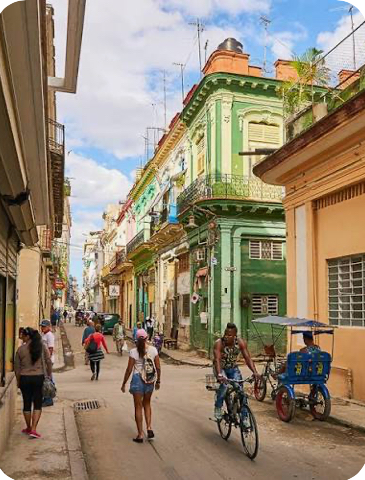
The 1990s brought severe economic hardship—known as the Special Period—following the collapse of the Soviet Union and the end of its vital subsidies. To survive, the country opened up to foreign tourism and implemented limited capitalist-style economic reforms. In 2008, Fidel Castro stepped down, transferring power to his brother Raúl Castro, who further modernized the economy and briefly restored diplomatic ties with the U.S.. Leadership later transitioned to Miguel Díaz-Canel, as the country continues to navigate economic challenges, balancing its socialist system with ongoing internal reforms and fluctuating global relations.
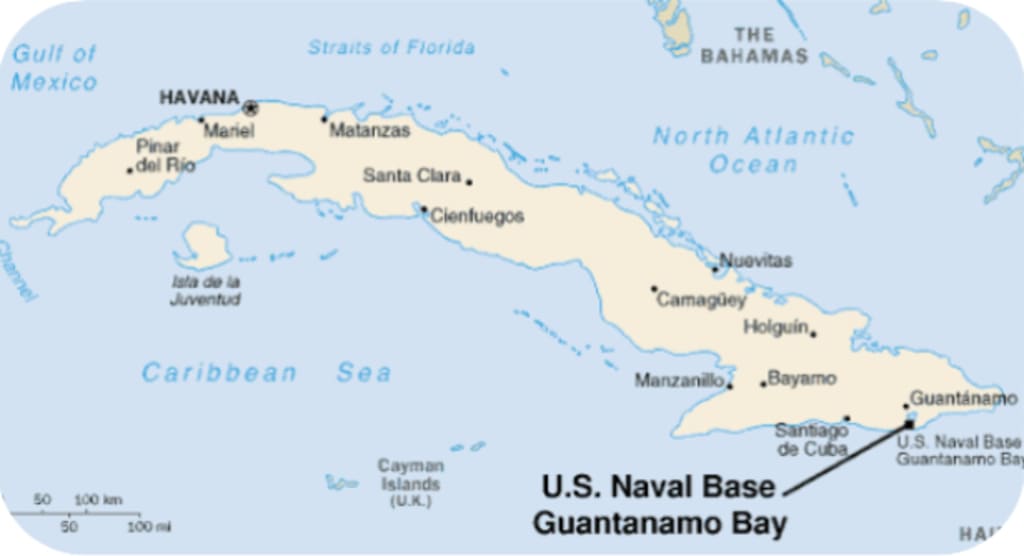
Guantánamo Bay ("Gitmo") is a bay in Guantánamo Province at the southeastern end of Cuba. It is the largest harbor on the south side of the island and it is surrounded by steep hills which create an enclave that is cut off from its immediate hinterland.
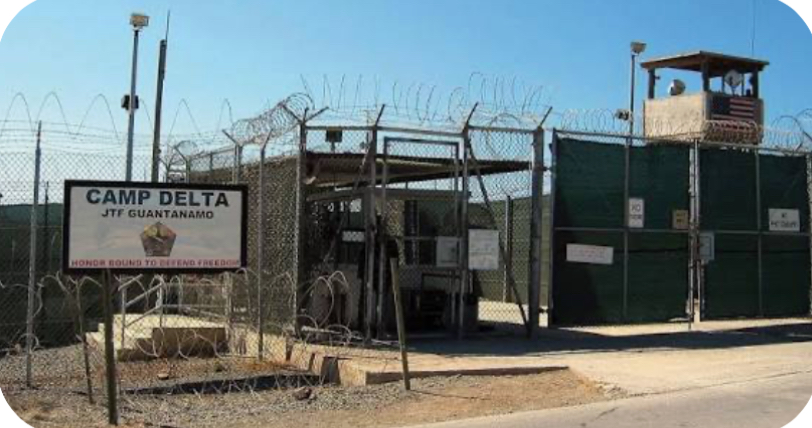
was established in 1898 during the Spanish-American War and formalized in 1903 by a perpetual lease with Cuba. Originally a U.S. Navy fleet sustainment base, its ambiguous sovereignty later led to it being used as a mass processing and detention camp for Haitian and Cuban asylum-seekers.Following the September 11 attacks, Gitmo gained global notoriety when the Bush administration opened a detention camp in 2002 to hold suspected terrorists. The facility housed nearly 800 detainees, drawing widespread international condemnation over indefinite detention without trial and the use of torture.Efforts to close the facility date back to the Obama administration, but they faced significant legislative and logistical challenges. The prison's population has since dwindled, with approximately 15 detainees remaining, including five men accused of orchestrating the 9/11 attacks who remain in protracted pre-trial proceedings.Guantánamo Bay - the naval naval base, nicknamed "GTMO" or "Gitmo", covers 116 square kilometres (45 sq mi) on the western and eastern banks of the bay. It was established in 1898.
The United States assumed territorial control over the southern portion of Guantánamo Bay under the 1903 Lease. The United States exercises jurisdiction and control over this territory as the home of Guantanamo Bay Naval Base, while recognizing that Cuba retains ultimate sovereignty.
Cuba has been in the news recently, with the economic collapse of the country following the collapse of the Soviet Union and now the collapse of Venezuel. With the indictment of Raoul Castro, regime change is close. Maybe soon Cuba won’t be a communist country, and can join the free world once again.
About the Creator
Guy lynn
I’m interested in history, space travel and the possibilities, Americana,( where I live now), Africa (Southern Africa, where I was born and raised), and I write about things that interest me ( bead history) and I hope will interest you.
Enjoyed the story? Support the Creator.
Subscribe for free to receive all their stories in your feed.
Comments
There are no comments for this story
Be the first to respond and start the conversation.