
Charlotte Mew: The Poet Who Defied Convention
The hidden life behind one of England's most compelling literary voices.

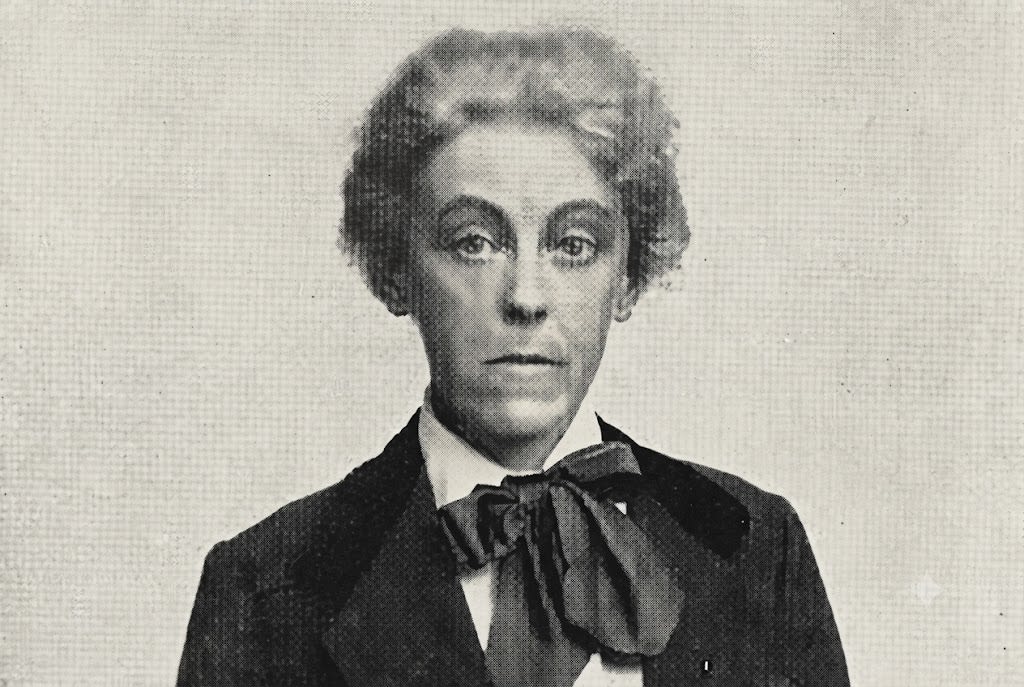
Every once in a while, I come across a poet who makes me wonder how someone so gifted could remain outside the spotlight for so long. Charlotte Mew sits near the top of that list. Her name rarely appears beside giants such as Thomas Hardy, W.B. Yeats, or Robert Frost, even though several of those writers admired her work. After spending time with her poetry, I found myself asking the same question again and again. How did a writer with such emotional depth become one of England's best-kept literary secrets?
Charlotte Mary Mew entered the world in London on November 15, 1869. Reading about her life, I find it difficult to separate the woman from the circumstances that surrounded her. Tragedy touched the Mew family again and again. Several of her brothers and sisters developed severe mental illness and spent much of their lives inside institutions. During the Victorian era, families often carried such burdens behind closed doors, fearing public shame almost as much as the illness itself.
As I learned more about Charlotte, one decision stood above nearly every other. She and her sister Anne believed mental illness might pass into another generation. Because of that fear, they chose lives without marriage or children. Reading her poems after discovering that part of her story changed the way I understood many of her lines. Longing, loneliness, and impossible love appear throughout her work, carrying the weight of lived experience rather than literary invention.
Life offered few financial comforts. Following her father's death, Charlotte helped support the household by writing stories, essays, articles, and children's fiction for magazines. Poetry remained her greatest passion, even though publishers struggled to understand what she was doing. Many readers still expected polished Victorian verse with familiar rhythms and carefully arranged rhyme. Charlotte wrote with a freedom that felt fresh, allowing emotion to shape the movement of each poem rather than forcing every thought into a predictable pattern.
Photographs of Charlotte always catch my attention. She often wore tailored jackets, short hair, and clothing that challenged expectations placed upon women during her lifetime. She seemed determined to live according to her own values rather than the customs of the day. Friends described her as intelligent, witty, and engaging, though many also sensed an inner sadness that never drifted very far from the surface.
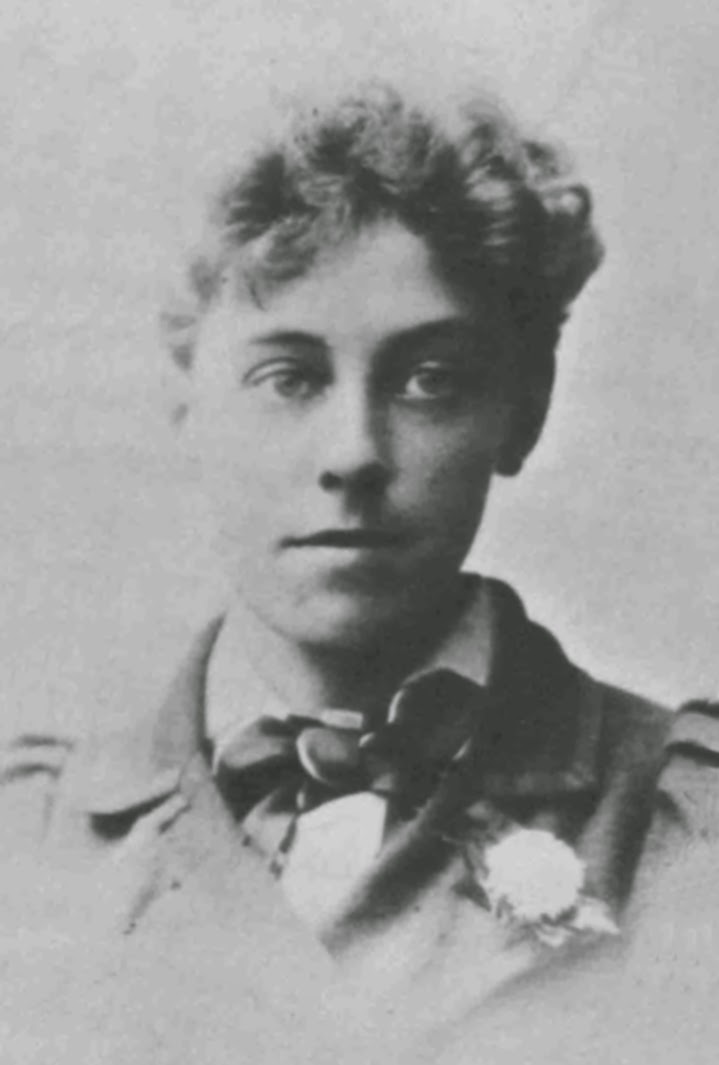
One part of her story continues to fascinate literary scholars. Charlotte formed deep emotional attachments to women during an era that offered little acceptance for such relationships. She guarded her private life carefully, leaving many feelings to find expression through poetry instead. Once I understood that part of her life, many of her poems seemed to open in entirely new ways. Desire, restraint, hope, and heartbreak gained an added layer of meaning.
Recognition came slowly. Thomas Hardy admired her poetry and encouraged publishers to take a closer look at her work. His support carried considerable weight. Virginia Woolf later praised Mew's originality, placing her among writers who expanded the possibilities of English poetry during the early twentieth century. Their admiration tells me something important. Great writers often recognize greatness long before the wider public catches up.
What impresses me most about Charlotte Mew's poetry comes from its honesty. She rarely reached for elaborate language or grand displays of emotion. Instead, she trusted ordinary places and everyday moments to carry extraordinary meaning. A country farmhouse becomes the setting for emotional isolation. A church reveals conflict between faith and desire. An empty room holds memories more powerful than any conversation. Every image feels purposeful, giving readers space to discover their own emotional connection rather than telling them exactly what to feel.
The Farmer's Bride remains her most celebrated poem, and every time I read it, I notice another layer beneath the surface. At first glance, it appears to tell the story of a frightened young wife living with her husband in the English countryside. Before long, something far deeper begins to emerge. The poem explores fear, misunderstanding, loneliness, and the distance that can exist between two people sharing the same home. Charlotte never offers simple heroes or villains. Instead, she allows every character to remain fully human, making the emotional tension far more powerful than any dramatic plot could achieve.
Her poem Madeleine in Church affected me in a different way. Here, spiritual devotion stands beside earthly longing, leaving the speaker caught between two powerful forces. Charlotte never forces a neat conclusion. She trusted readers enough to wrestle with uncertainty, and I believe that confidence explains why her work continues finding new audiences today.
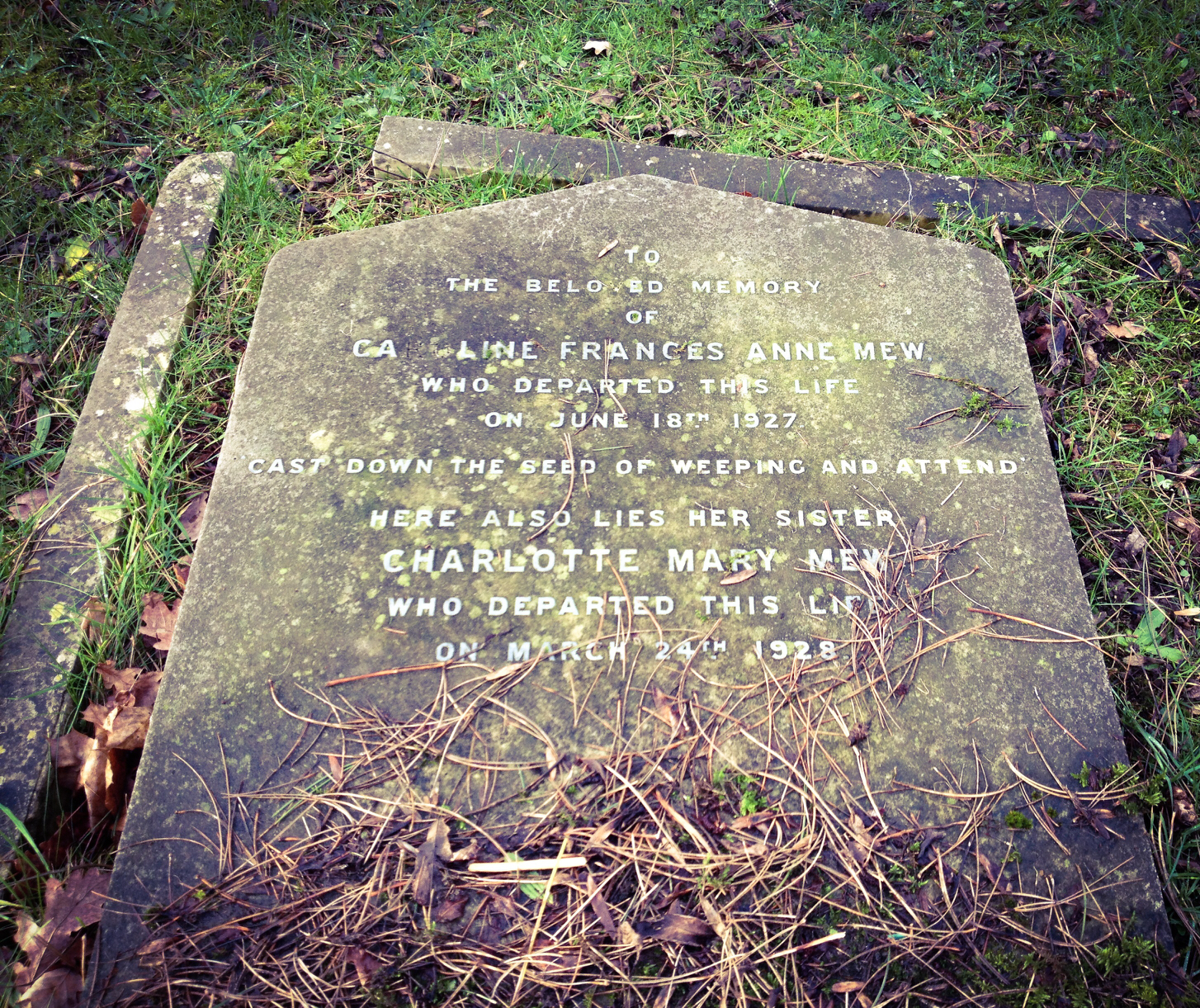
Charlotte Mew died on March 24, 1928, at the age of 58. After struggling with severe depression following the death of her sister Anne in 1927, she died by suicide after drinking disinfectant in a London nursing home.
She is buried in Hampstead Cemetery in northwest London, England, alongside members of her family.
Her grave remained relatively obscure for many years, much like her literary reputation. As interest in her poetry has grown, readers and scholars have increasingly sought out her resting place to pay their respects.
-*-*-*-*-*-*-*-*-*-*-*-*-*-*-*-*-*-
The Farmer’s Bride
By Charlotte Mew
Three summers since I chose a maid,
Too young maybe—but more’s to do
At harvest-time than bide and woo.
When us was wed she turned afraid
Of love and me and all things human;
Like the shut of a winter’s day
Her smile went out, and ’twadn’t a woman—
More like a little frightened fay.
One night, in the Fall, she runned away.
“Out ’mong the sheep, her be,” they said,
’Should properly have been abed;
But sure enough she wadn’t there
Lying awake with her wide brown stare.
So over seven-acre field and up-along across the down
We chased her, flying like a hare
Before our lanterns. To Church-Town
All in a shiver and a scare
We caught her, fetched her home at last
And turned the key upon her, fast.
She does the work about the house
As well as most, but like a mouse:
Happy enough to chat and play
With birds and rabbits and such as they,
So long as men-folk keep away.
“Not near, not near!” her eyes beseech
When one of us comes within reach.
The women say that beasts in stall
Look round like children at her call.
I’ve hardly heard her speak at all.
Shy as a leveret, swift as he,
Straight and slight as a young larch tree,
Sweet as the first wild violets, she,
To her wild self. But what to me?
The short days shorten and the oaks are brown,
The blue smoke rises to the low grey sky,
One leaf in the still air falls slowly down,
A magpie’s spotted feathers lie
On the black earth spread white with rime,
The berries redden up to Christmas-time.
What’s Christmas-time without there be
Some other in the house than we!
She sleeps up in the attic there
Alone, poor maid. ’Tis but a stair
Betwixt us. Oh! my God! the down,
The soft young down of her, the brown,
The brown of her—her eyes, her hair, her hair!
Mew used a Regional British Dialect: While these grammar rules sound like American folk styles to modern ears, Mew was actually mimicking the localized, rural accents of the English West Country or the colloquial "slang" of the London working class.
The "Persona" Technique: Mew was a master of the dramatic monologue. She rarely wrote in her own voice. Instead, she adopted the masks of marginalized figures—farmers, dock workers, and outcasts. This gives her poetry a raw, authentic, and musical rhythm that feels very close to 20th-century American folk and blues poetry
About the Creator
Tim Carmichael
Let your becoming be louder than your fear, and your smallest steps become the road you once thought impossible to walk. An Appalachian poet and cookbook author my book Beautiful and Brutal Things is on Amazon, Link 👇
Enjoyed the story? Support the Creator.
Subscribe for free to receive all their stories in your feed. You could also become a paid subscriber, letting them know you appreciate their work.
Comments
There are no comments for this story
Be the first to respond and start the conversation.