


Bohemia , historical country of central Europe that was a kingdom in the Holy Roman Empire and subsequently a province in the Habsburgs’ Austrian Empire. Bohemia was bounded on the south by Austria, on the west by Bavaria, on the north by Saxony and Lusatia, on the northeast by Silesia, and on the east by Moravia. From 1918 to 1939 and from 1945 to 1992, it was part of Czechoslovakia, and since 1993 it has formed much of the Czech Republic.
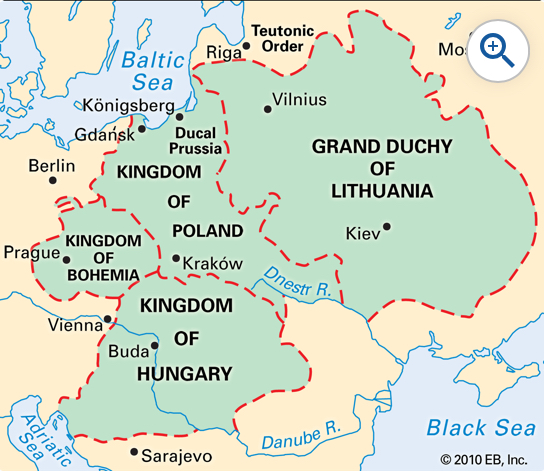
Bohemia’s name comes from a Celtic people known as the Boii, though the Slavic Czechs were firmly established in the region by the 5th or 6th century. Bohemia was briefly subordinated to Greater Moravia in the late 9th century. Saints Cyril and Methodius introduced Christianity into Bohemia from Moravia in the 9th century, and by the 10th century Bohemia had been Christianized and consolidated by the princes of the ruling Přemyslid dynasty. Although they gradually became dependent on the Holy Roman Empire, the Přemyslid rulers were able to attach Moravia to Bohemia and transform them into a viable kingdom. The Přemyslid prince Vratislav II (reigned 1061–92) was the first to obtain from the Holy Roman emperors the title of king of Bohemia as a personal (nonhereditary) privilege, and in 1198 the greatest of the Přemyslids, Otakar I, was named hereditary king of Bohemia, which became a kingdom within the Holy Roman Empire.
Bohemia reached a new peak of political power and economic prosperity under Otakar II, who consolidated control over parts of Austria and waged wars for territory with Hungary, extending Bohemia’s domain to the Adriatic Sea. After 1278, however, when Otakar was killed in an invasion of Austria, Bohemia was soon once again reduced in size and influence, and the Přemyslid dynasty itself came to an end in 1306.
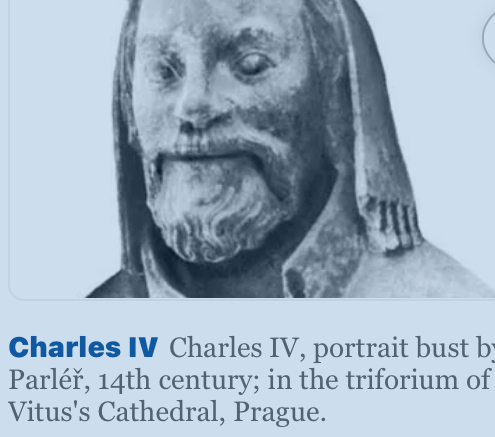
Charles IV.
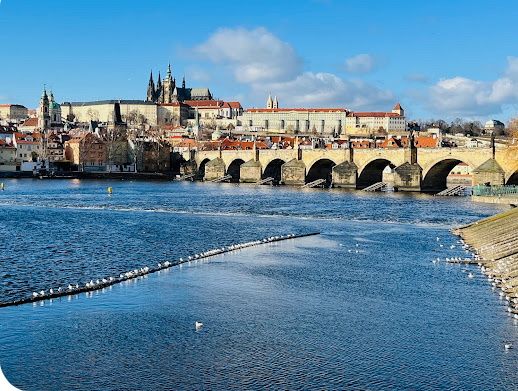
The Charles Bridge (Karlův most) is a historic stone arch bridge in Prague, Czech Republic, connecting the Old Town with the Lesser Town (Malá Strana) across the Vltava River. Construction began in 1357 under King Charles IV, replacing the Judith Bridge, and it features 30 Baroque statues (mostly replicas) and two towers, serving as a major pedestrian walkway with iconic views of Prague Castle.
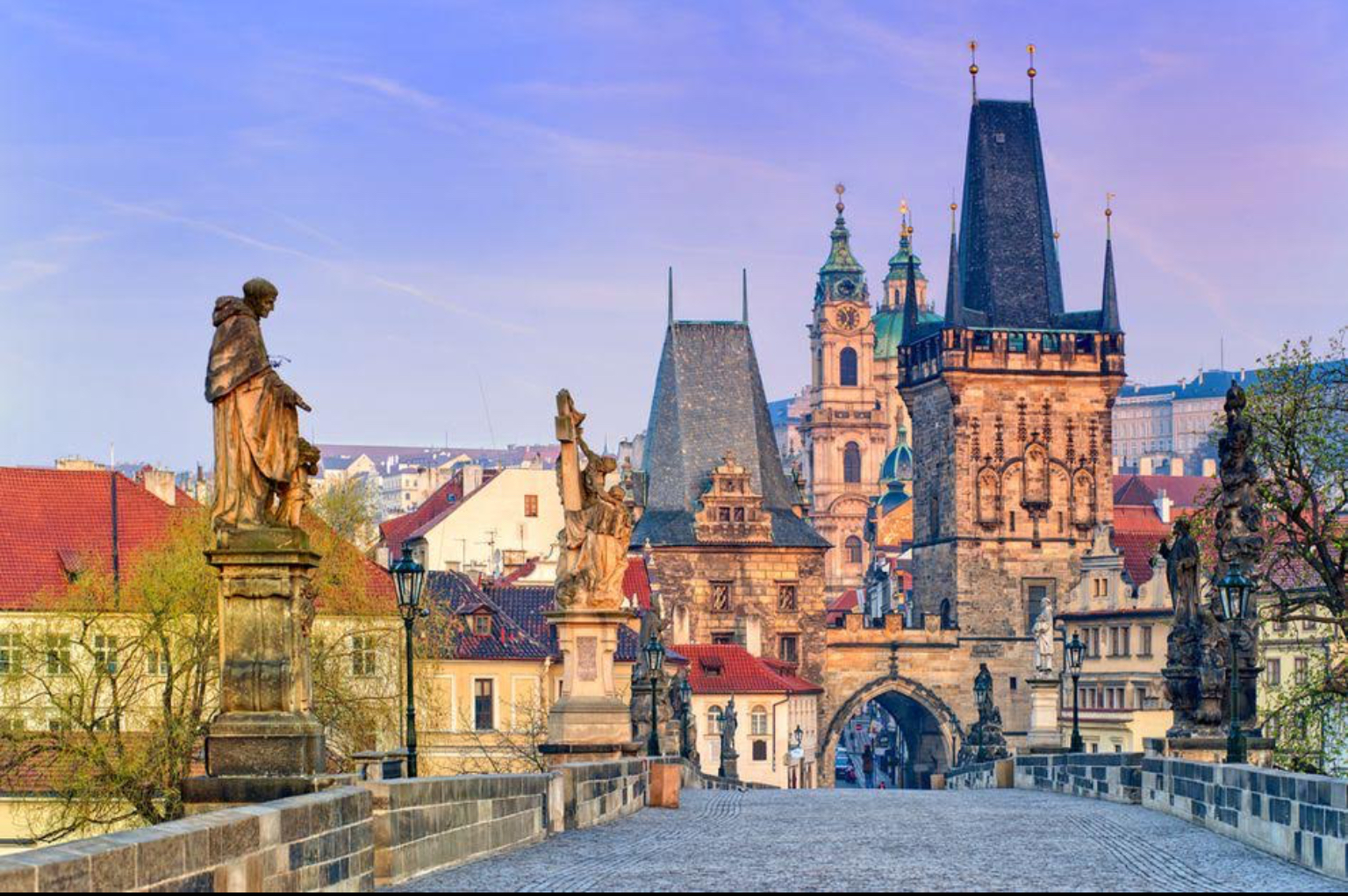
In 1310 the Luxembourg dynasty began its rule of the kingdom of Bohemia, which by the end of the 14th century included Moravia, Silesia, and Upper and Lower Lusatia as well as the province of Bohemia. In 1355 Charles of Luxembourg, the king of Bohemia, became Holy Roman emperor as Charles IV. He is remembered for founding the University of Prague (1348) and for greatly increasing the boundaries and importance of Prague, which he made the capital of the empire. From that time on Prague was a principal centre of intellectual and artistic activity in central Europe.
In the early 15th century, however, Bohemia fell victim to disputes between Roman Catholics and the followers of the Bohemian religious reformer Jan Hus, who was burned as a heretic in 1415. Wars between Bohemian Hussites and the Roman Catholics of Bohemia and Germany engulfed the kingdom until compacts were negotiated in 1436 that granted the more-moderate Hussites (known as Utraquists) some degree of religious freedom and reduced the power of the Roman Catholic Church.
The Luxembourg dynasty ended in 1437, and, in the disputes over succession that followed, the nobility gained power not only at the expense of the Bohemian monarchy but also over the townspeople and peasants. The latter were deprived of much of their freedom, some being reduced to the level of serfs. Bohemia was ruled rather ineffectively by the Jagiellon dynasty from 1471 to 1526, and in the latter year the Habsburg archduke Ferdinand I of Austria laid claim to the throne, thereby establishing Habsburg rule over Bohemia. A Roman Catholic himself, Ferdinand demonstrated moderation in religious affairs for a time, but eventually he was forced into a confrontation with Protestant forces—as were his immediate successors.
Conflicts between Protestants and Roman Catholics culminated in 1618 in a Protestant revolt against the Habsburgs. The Roman Catholic forces of the empire defeated the Bohemian Protestants at the Battle of the White Mountain (November 8, 1620), and the emperor Ferdinand II was able to reassert Habsburg authority over Bohemia. The country lost its status as a kingdom and was henceforth subjected to the absolutist rule of the Habsburgs. Protestantism was suppressed, and most of the population gradually converted to Roman Catholicism. Bohemia was stripped of the two Lusatias in 1635 and of Silesia in the mid-18th century, by which time it had been thoroughly absorbed into the Austrian Empire—a state of affairs that would last until the early 20th century.
The presence in western Bohemia of many German-speaking citizens (the Sudeten Germans) furnished a pretext for Nazi Germany to occupy Czechoslovakia in the wake of the Munich Agreement (1938), and Bohemia (together with Moravia) became a German protectorate until the Czechoslovak state was restored by the victorious Allies in 1945, at the end of World War II. From 1945 to 1949 Bohemia was once more the westernmost province of Czechoslovakia, but in the latter year it and the other provinces (Moravia and Slovakia) were replaced by new, smaller districts. Bohemia’s long administrative existence thus came to an end.
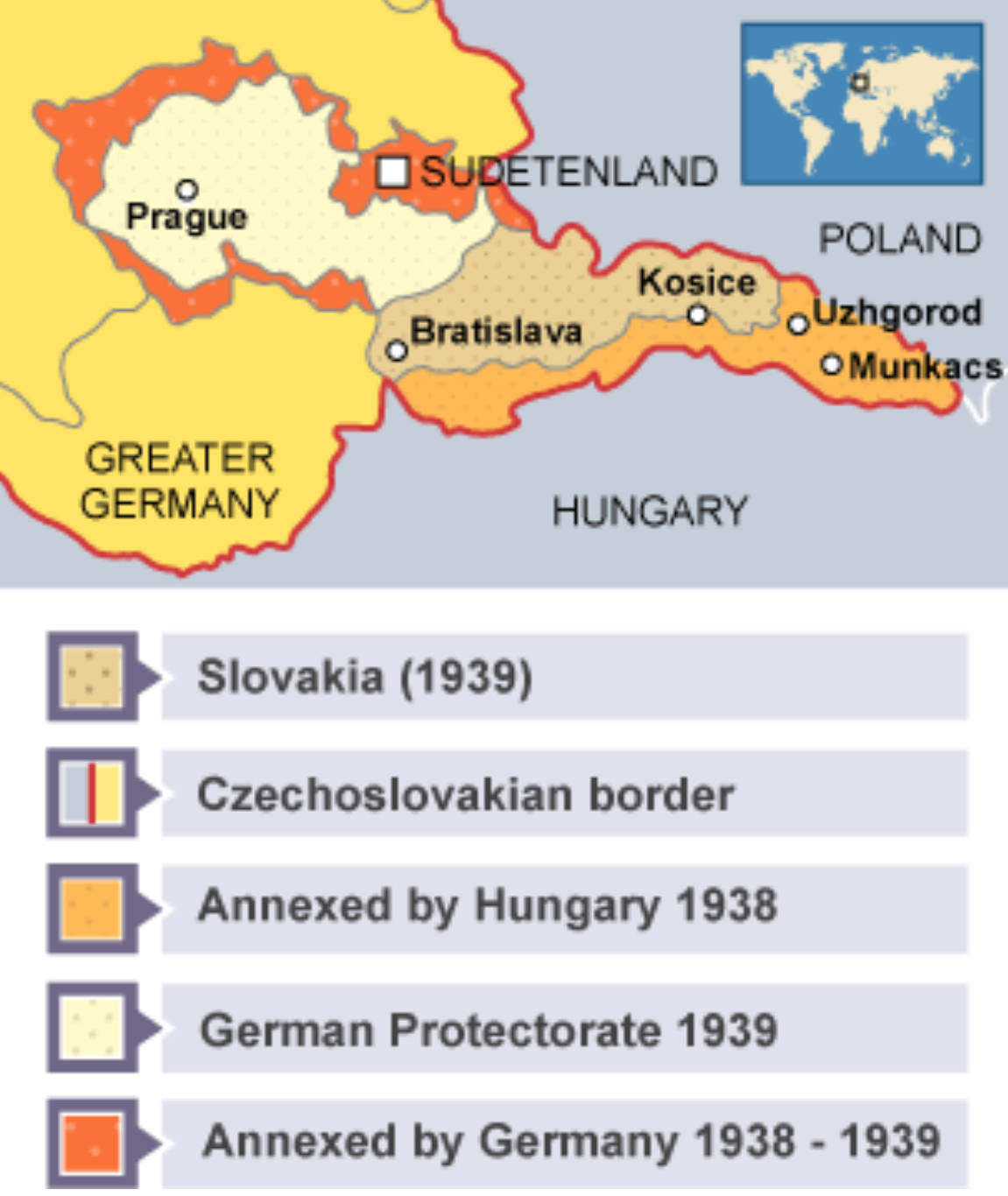
Czechoslovakia peacefully separated into the Czech Republic and Slovakia in 1993 (an act that came to be known as the Velvet Divorce), with Bohemia comprising the central and western portions of the former.
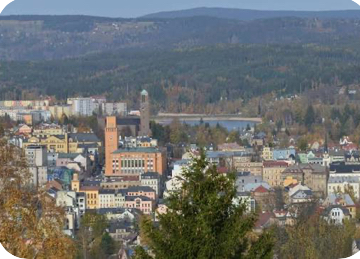
we, Wildthingsbeads, visited Czech Republic in 1996 to start importing beads, buttons and glassware, from the town of Jablonec and surrounding area in the northern part of the Bohemian province.
About the Creator
Guy lynn
I’m interested in history, space travel and the possibilities, Americana,( where I live now), Africa (Southern Africa, where I was born and raised), and I write about things that interest me ( bead history) and I hope will interest you.
Enjoyed the story? Support the Creator.
Subscribe for free to receive all their stories in your feed.
Comments
There are no comments for this story
Be the first to respond and start the conversation.