
A Manned Anti-Aircraft Rocket: The Strangest German Interceptor of the Second World War
Why the Bachem Ba 349 Natter looked less like a normal fighter and more like a desperate manned rocket built for the last months of the war.
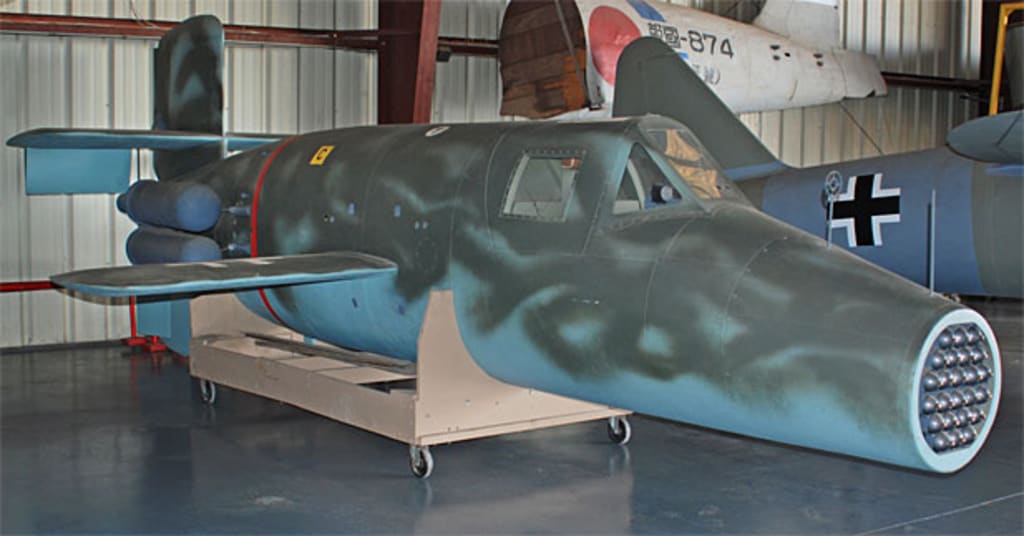
At the end of the Second World War, Germany was looking for a way to protect its cities, factories, and railway hubs from Allied air raids. Ordinary fighters were no longer enough, experienced pilots were becoming fewer, airfields were coming under attack, and there was not enough fuel or metal even for familiar aircraft. Against that background appeared the Bachem Ba 349 Natter, one of the strangest aircraft of the war. Formally, it was an interceptor. But in concept, it resembled a manned anti-aircraft rocket more than a conventional plane: a vertical launch, a rapid climb, a short attack, and a return to the ground only for the pilot and the valuable components.
Why Germany needed such a machine
By 1944, the air war had become almost hopeless for Germany. Allied bombers were striking industrial regions, oil refineries, and cities on a regular basis. Intercepting large formations of B-17s, B-24s, and British heavy bombers was becoming more and more difficult.
An ordinary fighter needed an airfield, a trained pilot, fuel, maintenance infrastructure, and time to take off. All of that was quickly turning into a luxury. Airfields were being smashed by air strikes, experienced pilots were dying, and production was operating under constant pressure.
The engineer Erich Bachem proposed a machine for point defense. It was not meant to patrol for long periods or engage in maneuvering combat. Its mission looked simpler and more dangerous: take off near the object being defended, climb sharply to the height of the bomber formation, attack, and then break away. The aircraft received the name Natter — “viper.”
Takeoff without an airfield
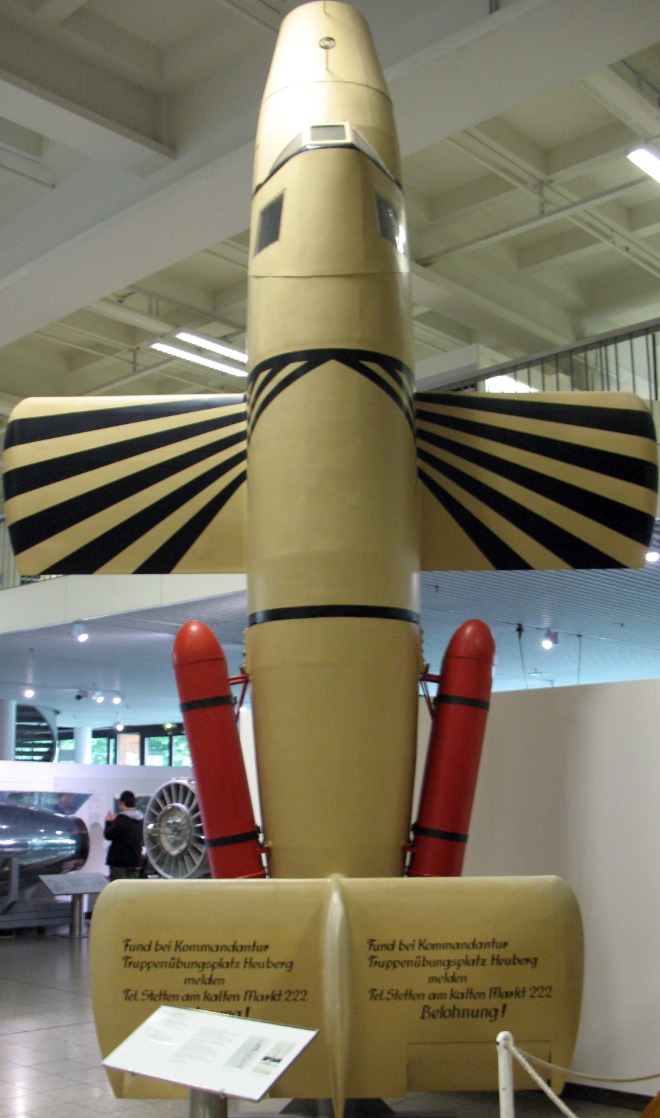
The main feature of the Ba 349 was its launch. It did not require a runway. The aircraft was placed almost vertically on a special tower about 24 meters high. Guide rails held the machine during the first seconds, while it gained speed and still could not be properly controlled in the air.
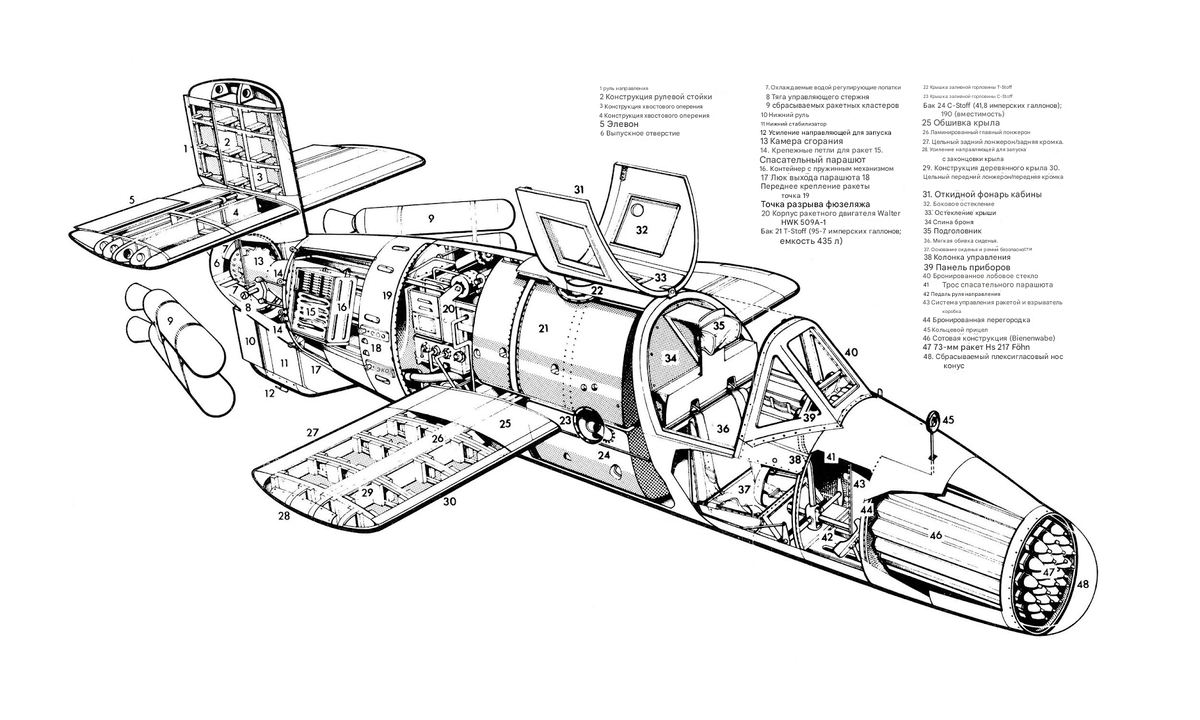
For launch, four Schmidding solid-fuel boosters were used. They worked for about ten seconds and provided the initial thrust. After burnout, the boosters were supposed to separate. Then the Walter HWK 109-509 liquid-fuel rocket engine came on, closely related to the one used on the Me 163 Komet.
The vertical launch removed dependence on airstrips. The machine could be positioned near a factory, a depot, or an important urban district. When bombers appeared, the Natter could be launched almost like a missile.
The first seconds of flight were not supposed to depend entirely on the pilot. The design included an autopilot and ground guidance, since manual control immediately after launch was considered too risky. The pilot took over closer to the target.
A wooden body and a single strike
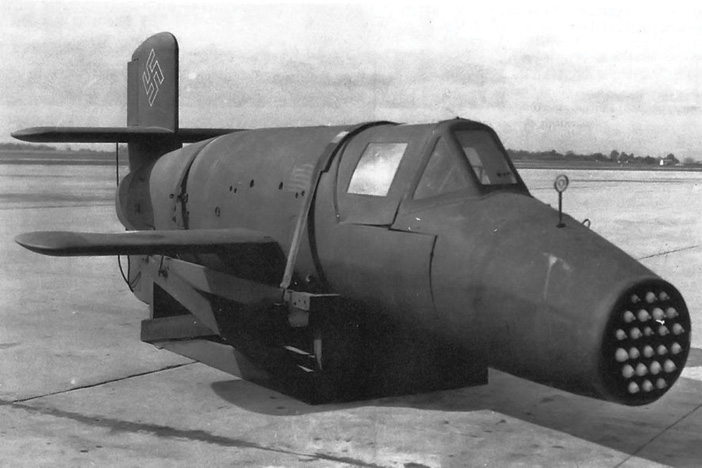
The Ba 349 was designed as a cheap aircraft that could be built quickly. It was never meant to be beautiful, durable, or comfortable. What mattered more was using less scarce metal and making it possible to produce the aircraft with workers who did not need advanced aviation training.
Much of the fuselage was made of wood. The wings were short and simple. For a normal fighter, such a layout would have looked crude, but the Natter was not supposed to fight an aerial duel. It was built for a short rush upward and one pass at the target.
The Walter engine was one of the strongest but also most dangerous parts of the project. It ran on fuel components that had to be handled with extreme care. Experience with the Me 163 had already shown that rocket thrust gave tremendous speed, but required a very high level of maintenance discipline.
The armament also reflected the idea of a single blow. In the nose of the Natter there was a block of 24 unguided Henschel Hs 217 Föhn rockets of 73 mm caliber. The pilot was supposed to close the distance, line the aircraft up on the bomber formation, and fire the entire package at once. There was almost no second chance.
A flight designed to last minutes
A typical Natter mission was conceived as a short chain of actions. The machine was launched from the tower, the boosters handled the first seconds, and the rocket engine drove the interceptor upward. The autopilot or commands from the ground helped keep the required course.
When the aircraft approached the altitude of the bombers, the pilot took control. He had to locate the target, reach the attack point, and fire the rockets. After that, the main task of the aircraft was considered complete.
The return was just as unusual. The Ba 349 was not supposed to land like an ordinary airplane. After the attack, the pilot descended to a safe height, then the nose section separated. The pilot left the aircraft and came down by parachute. The tail section with the rocket engine was also supposed to descend on a separate parachute so that the expensive engine could be used again.
For late-war Germany, this looked attractive: there was no need to preserve the whole aircraft, only the pilot and the engine. But in reality, the pilot had to survive the launch, the attack, and then leave the aircraft correctly after a very short flight.
Testing and the death of Lothar Sieber
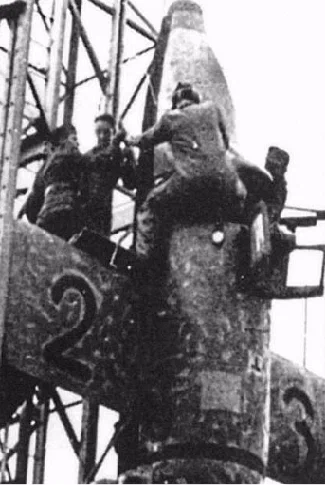
The Natter was not launched with a pilot from the very beginning. It was tested as a glider, towed, launched without a pilot, and used to check the behavior of the structure and the launch system. In December 1944, a successful unmanned vertical launch took place. That showed that the basic idea of launching from a tower was workable, even though it was still far from combat readiness.
But there was almost no time left. On March 1, 1945, at the test site near Stetten am kalten Markt, the first piloted vertical launch of the Ba 349 took place. In the cockpit was the 22-year-old pilot Lothar Sieber.
The first moments of the launch looked normal. The machine climbed upward, but then the flight quickly went out of control. According to one version, a problem arose with the cockpit canopy. The aircraft changed trajectory, entered unstable flight, and crashed. Sieber was killed.
The exact causes of the crash are still not fully clear. Usually several factors are mentioned: a possible canopy problem, the pilot losing consciousness, a control failure, abnormal engine behavior, or some combination of these. What matters more is that the test showed how narrow the margin of safety was in the entire concept.
Why the Natter never became a real weapon
At first glance, the Ba 349 had strong points. It did not require an airfield, could climb quickly to its target, used a simple wooden structure, and in theory made it possible to defend important sites with small groups of launch installations.
But those advantages depended on very severe conditions. The machine had to launch flawlessly. The pilot had to endure an unusual takeoff, orient himself quickly, find the target, fire the rockets, and still leave the aircraft in time. The ground crew had to service a dangerous rocket engine safely, while production had to continue under bombing and with scarce resources.
The Natter did not emerge as the calm result of a long engineering tradition, but as an urgent attempt to plug a hole in Germany’s defenses. It combined a bold idea, real technical ingenuity, and a desperate faith that risk could be overcome by speed.
The Ba 349 was never used in combat. Several aircraft were brought to different stages of readiness, and some were captured by the Allies. Today the Natter is remembered not only as an aviation curiosity, but also as a sign of the final months of the war.
It showed how far engineering thought could go when ordinary solutions no longer worked. Its logic was that of a rocket, but at the center of it there was still a human being entrusted with a task that was far too dangerous.
About the Creator
Enjoyed the story? Support the Creator.
Subscribe for free to receive all their stories in your feed.
Comments
There are no comments for this story
Be the first to respond and start the conversation.