
A Brief History of the American Aircraft Carriers
How the USA Expanded its Fleet Air Arm

Today, the US aircraft carrier fleet is largely unrivaled. As such, the US aircraft carriers have provided the bulk of the US Navy since the first US aircraft carriers set sail during the 1920s. Since then, they have had a great combat record, most notably in World War II, whereby they won the Pacific War for the Allies.
The USA built its first in 1920. The USS Langley was the first US aircraft carrier, converted from a collier. Further American fleet carriers entered service later in the 1920s, with the USS Saratoga commissioned in 1927.
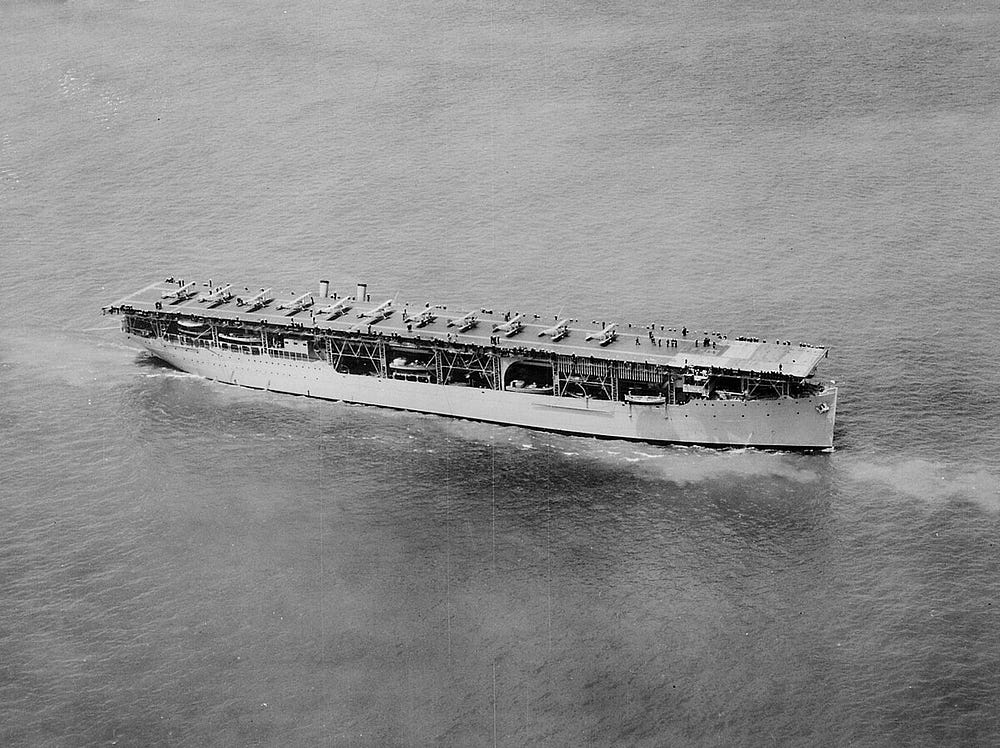
The launch of these first US aircraft carriers was a first sign of American naval ambitions. During the 1930s, the US Navy continued expanding, and before the outbreak of hostilities in 1941, the USA had four aircraft carriers stationed at Pearl Harbor. As such, Pearl Harbor would become the target for the Imperial Japanese Navy in late 1941, and the bombing of Pearl Harbor resulted in the loss of numerous US battleships and hundreds of aircraft.
However, the US had its aircraft carriers out of port during Pearl Harbor. As such, these four aircraft carriers remained at hand for Admiral Nimitz to take the war to the Japanese in the Pacific. Therefore, in 1942, the first aircraft carrier naval battle emerged at Coral Sea when US carrier fleets attempted to defend Port Moresby. They did that as the IJN withdrew from the Coral Sea.
Months later, a more conclusive aircraft carrier battle would emerge at the Battle of Midway. Admiral Yamamoto had planned on trapping US aircraft carriers off Midway Island. However, at the Battle of Midway, it was the Japanese who lost four of their own aircraft carriers. In comparison, the USA lost the Yorktown aircraft carrier during the battle.
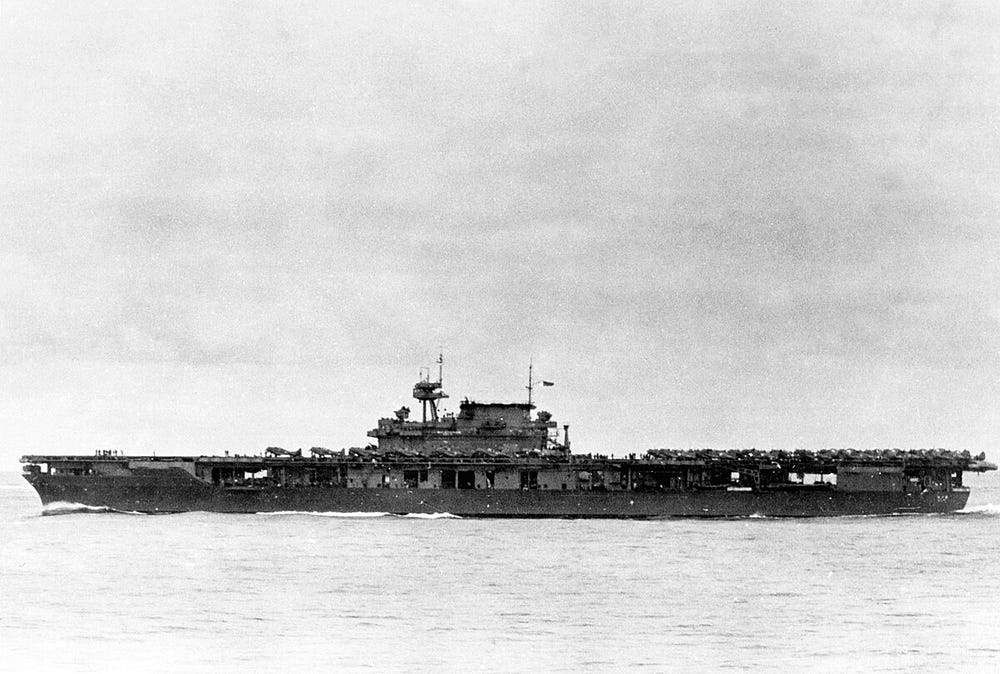
Victory at the Battle of Midway swung the Pacific War. From here on, the US would steadily expand its number of aircraft carriers, which by 1944 was giving the Allies naval superiority in the Pacific War. The Battle of the Philippine Sea only confirmed this when the Japanese lost a further three aircraft carriers in battle with the US Navy. As such, by this time, the US had the largest navy and clearly the most aircraft carriers by the time Japan surrendered to the Allies in 1945.
In the post-war era, the US aircraft carriers played their part in the Cold War. Cold War conflicts in Korea required US aircraft carriers, as part of the UN coalition, to provide air support during the Korean War. During the conflict, there were thousands of US aircraft carrier sorties.
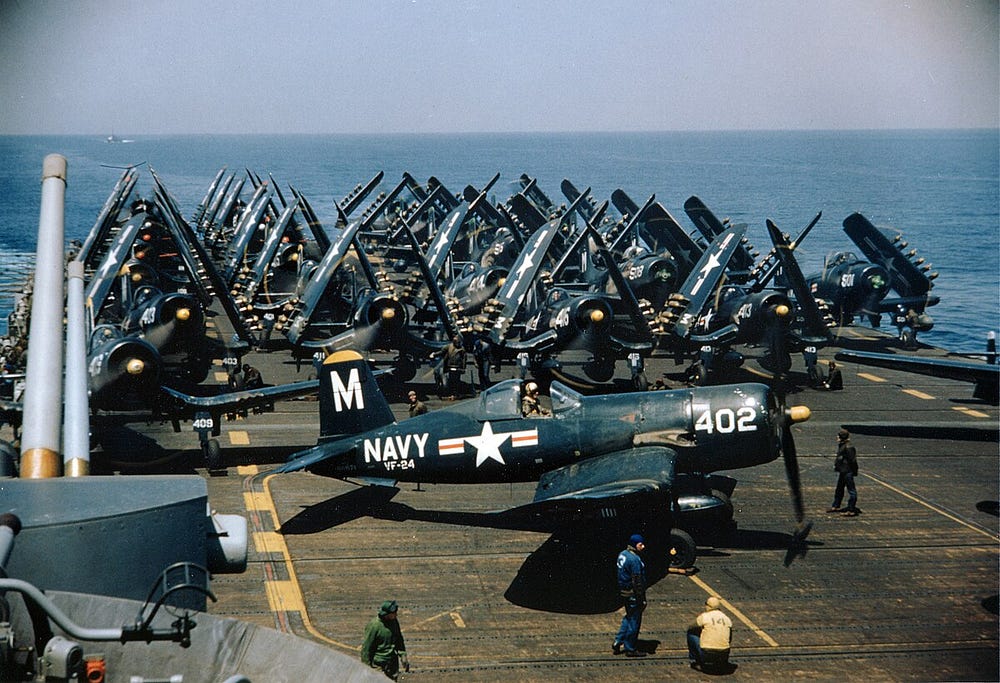
During the Vietnam War, the US aircraft carriers were also important. Here, the US aircraft carriers supported the army’s combat operations in South Vietnam. In addition to this, they supported bombing operations in North Vietnam.
After the Cold War, US aircraft carriers were called into action during the early 1990s, most notably in the Persian Gulf during the Gulf War. Iraqi positions were heavily bombed by US aircraft carrier-supported planes. They played an important role during the conflict.
Aside from this, US aircraft carriers have also provided more of a peacekeeping role for NATO and the UN. For example, in the Balkans, US aircraft carriers remained to provide reconnaissance patrols after the Balkan wars. In addition to this, US aircraft carriers also supported NATO bombing campaigns in Kosovo during the Kosovo War.
So, today, the US Navy has the most aircraft carriers of any navy. Equipped with some of the most advanced bomber aircraft, they have a formidable arsenal. As such, they provide the basis for NATO operations in addition to the Americans’ own defence commitments and requirements.
This article of mine was originally published on Medium.com, where you can read it here.
About the Creator
Matthew A
Matthew is the author of Battles of the Pacific War 1941-1945. Battles of the Pacific War is available on Amazon and Lulu in e-book and paperback formats. Check out the book’s blog at battlesofthepacificwar.blogspot.co.uk.
Enjoyed the story? Support the Creator.
Subscribe for free to receive all their stories in your feed.
Comments
There are no comments for this story
Be the first to respond and start the conversation.