
25 Years Later: How 9/11 Still Shapes America Today
A quarter-century later, the tragedy’s impact can still be felt in our wars, security, politics, and national identity.


There are certain days that divide time into a before and an after.
September 11, 2001, was one of them.
Twenty-five years later, the images remain almost impossible to separate from the emotions they created: smoke pouring from the World Trade Center, people staring upward from the streets of Manhattan, the Pentagon burning, and an empty field near Shanksville, Pennsylvania, where United Airlines Flight 93 came down. Nearly 3,000 people were killed. Thousands of families entered a new reality in the space of a few hours. Millions of others watched from classrooms, offices, living rooms, and military bases as the country they knew seemed to change in real time.
For those old enough to remember that Tuesday morning, the anniversary carries a deeply personal weight. Many can still recall where they were, who told them, and what they saw when they turned on the television. For younger Americans, however, 9/11 belongs to history. They know it through recordings, photographs, memorials, school lessons, and stories told by people who were there.
That generational shift matters. The attacks are moving from living memory into national memory. Yet the world built in their aftermath is still all around us.
We see it at airports. We hear it in political debates. We feel it in arguments about privacy, immigration, war, national security, and the power of government. We see it in the illnesses suffered by first responders and recovery workers. We see it in the lives of veterans who spent years fighting wars launched after the attacks. And we see it in the difficult question that still hangs over the anniversary: What did September 11 teach us, and what have we still failed to learn?
The Morning America Changed
The facts are familiar, but familiarity should never make them feel ordinary.
Nineteen al-Qaeda terrorists hijacked four commercial airplanes. American Airlines Flight 11 and United Airlines Flight 175 were flown into the North and South Towers of the World Trade Center. American Airlines Flight 77 struck the Pentagon. Passengers and crew members aboard United Airlines Flight 93 fought back after learning what had happened elsewhere. The plane crashed in Pennsylvania before reaching the hijackers’ intended target.
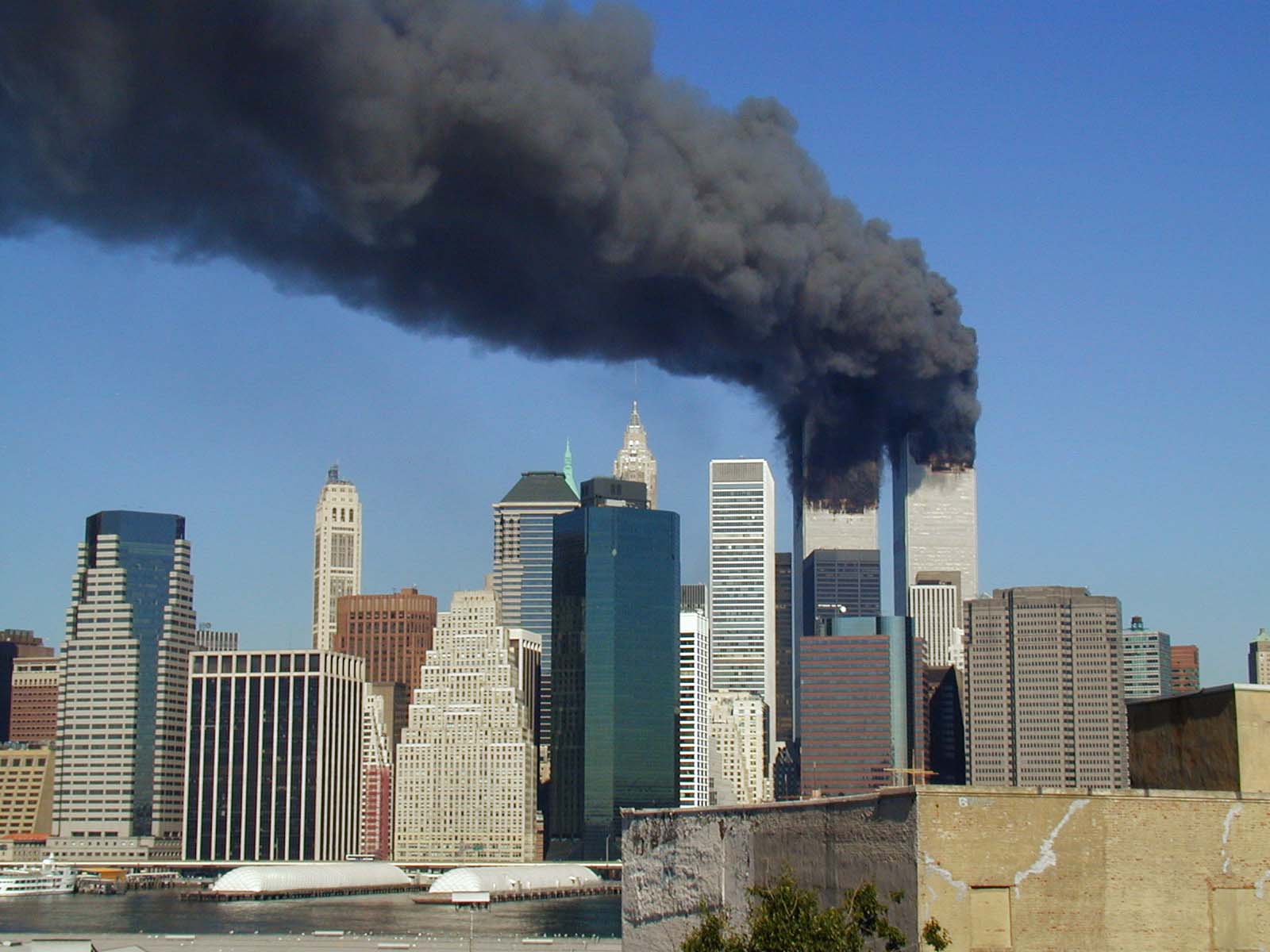
Behind those facts were thousands of individual lives. Office workers called their families. Firefighters climbed stairwells while frightened civilians moved downward. Police officers, paramedics, flight attendants, military personnel, and ordinary strangers made decisions without knowing whether they had seconds or hours left.
The attacks revealed humanity at its most brutal, but the response also revealed courage in its most immediate form. Some people ran toward danger because others needed help. Passengers aboard Flight 93 resisted because they understood that more lives were at risk. New Yorkers guided strangers through smoke and debris. Across the country, blood-donation centers filled and communities gathered for vigils.
That spirit of unity became one of the most powerful memories of the days after 9/11. Americans displayed flags, checked on neighbors, thanked first responders, and stood together across political and cultural lines. For a brief period, the country seemed to rediscover a shared identity.
But even that memory needs honesty. The unity was real, yet it was not universal. Muslim Americans, Sikhs, Arab Americans, South Asians, and others perceived to be Middle Eastern faced harassment, suspicion, and violence. In our fear, some Americans treated innocent neighbors as though they were responsible for crimes committed by terrorists.
Remembering 9/11 responsibly means holding both truths at once: the country showed extraordinary solidarity, and fear also brought out prejudice that caused further harm.
Security Became Part of Everyday Life
One of the clearest legacies of September 11 can be found every time Americans board an airplane.
Before the attacks, passengers could often reach airport gates without the elaborate screening procedures now considered normal. Afterward, aviation security was dramatically reorganized. The Transportation Security Administration was created, cockpit doors were reinforced, watchlists expanded, and passengers grew accustomed to identification checks, body scanners, restrictions on liquids, and long security lines.
An entire generation has never known air travel any other way.
The changes extended far beyond airports. Congress passed the USA PATRIOT Act, giving federal authorities broader surveillance and investigative powers. Intelligence agencies were reorganized, and the Department of Homeland Security was created. Local police departments received new training and equipment. Government buildings, sports venues, public events, and transportation systems adopted more visible security measures.
Some changes addressed genuine vulnerabilities. The country had learned, at a terrible cost, that agencies were not always sharing information effectively and that threats could move across bureaucratic boundaries.
Yet increased security came with a lasting argument over civil liberties. How much privacy should people surrender in exchange for protection? When does surveillance prevent violence, and when does it become an abuse of power? How should a democracy respond to danger without abandoning the rights it claims to defend?
Those debates did not end when the immediate shock faded. They expanded with smartphones, social media, facial recognition, data collection, and artificial intelligence. The technology has changed, but the central tension remains rooted in the post-9/11 world: the balance between safety and freedom.
The Long Shadow of War
The attacks also sent the United States into its longest war.
American forces entered Afghanistan in October 2001 to target al-Qaeda and remove the Taliban government that had sheltered it. Two years later, the United States invaded Iraq. The Iraq War was justified in large part by claims that Saddam Hussein possessed weapons of mass destruction. Those stockpiles were not found.
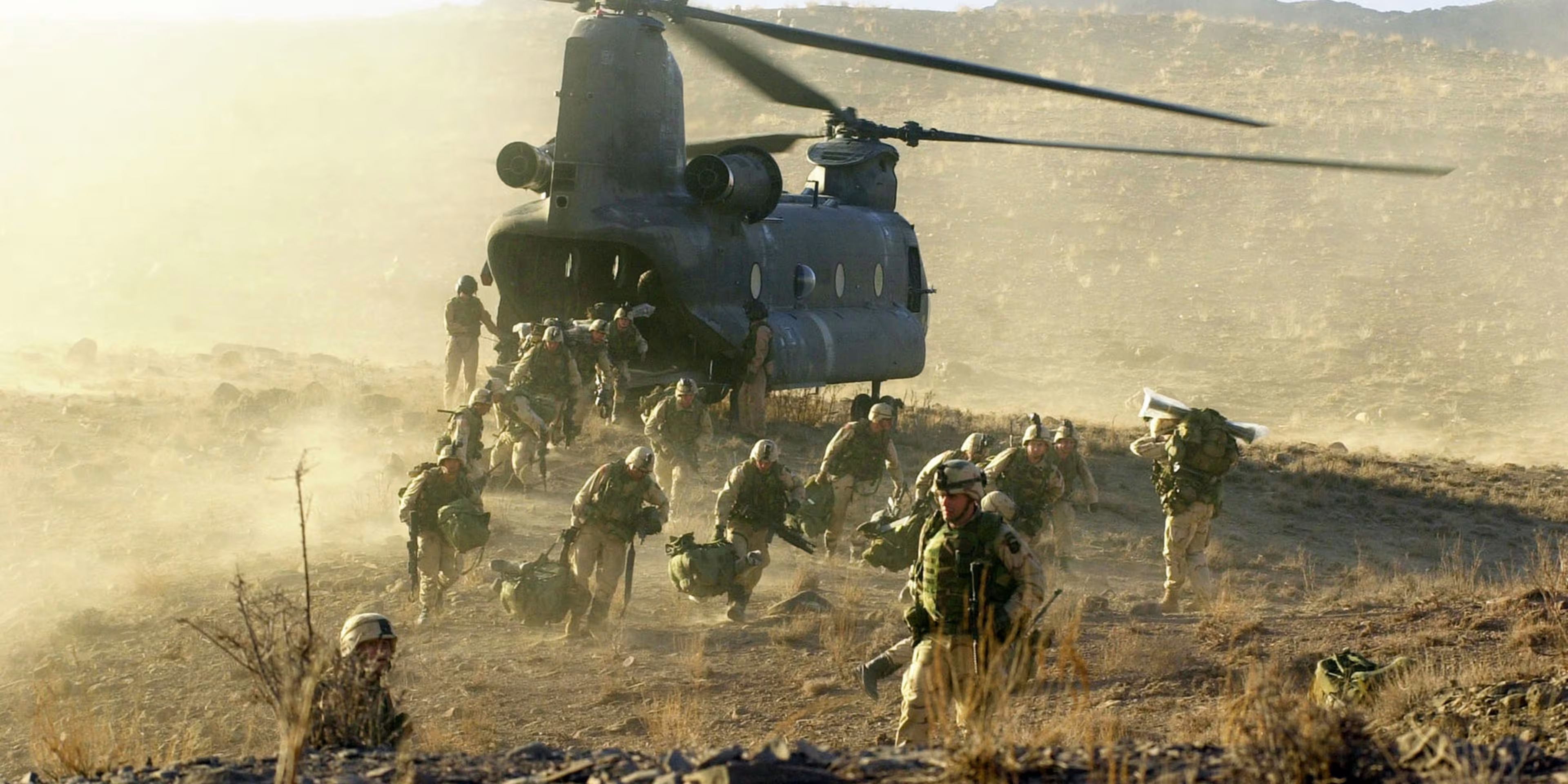
Over the next two decades, the phrase “War on Terror” shaped American foreign policy. Service members deployed again and again. Families endured long separations. Thousands of American troops were killed, many more were wounded, and countless veterans returned with post-traumatic stress, traumatic brain injuries, toxic-exposure illnesses, and other lasting burdens. Afghan and Iraqi civilians experienced death, displacement, instability, and trauma on a far greater scale.
The United States killed Osama bin Laden in Pakistan in 2011, but the wars did not produce the clean ending many Americans once imagined. The withdrawal from Afghanistan in 2021 closed one chapter with chaotic scenes from Kabul, while the Taliban returned to power.
For veterans and military families, these events are not abstract policy debates. They represent lost friends, altered bodies, missed birthdays, and years of service. Any honest assessment of the past twenty-five years must recognize their sacrifice while still examining the decisions that sent them into war.
Patriotism should never require silence. A nation can honor those who served and question whether its leaders used that service wisely. In fact, taking their sacrifice seriously demands exactly that kind of scrutiny.
The First Responders Are Still Paying the Price
The death toll from 9/11 did not stop rising when the fires were extinguished.
Firefighters, police officers, construction workers, volunteers, residents, office workers, and students were exposed to a toxic mixture of dust and debris around Ground Zero. In the years that followed, many developed cancers, respiratory diseases, and other serious conditions. Some spent years fighting not only for their health but also for official recognition and financial support.
The James Zadroga 9/11 Health and Compensation Act established federal support for eligible survivors and responders, but securing and maintaining that help required sustained public pressure. Advocates repeatedly reminded Washington that praise during an anniversary ceremony means little if sick responders must struggle for care afterward.
This may be one of the most important lessons of the anniversary. Public gratitude cannot be seasonal. The words “Never Forget” must refer not only to those who died on September 11, but also to the people still living with its physical and emotional consequences.
Memory without responsibility is only ceremony.
A Generation Raised in the Aftermath
Anyone born after September 11, 2001, has now reached adulthood. Many are old enough to work as teachers, nurses, journalists, firefighters, police officers, and members of the military. Some served in a war that began before they were born.
They inherited the consequences of an event they never witnessed.
They grew up with airport security drills, color-coded threat levels, news reports about terrorism, and active-shooter exercises at school. They came of age in a country where war often existed in the background—always happening, rarely commanding the entire public’s attention. They also entered a political culture marked by distrust, polarization, and a growing skepticism toward institutions.
For them, the challenge is different. They do not need to remember where they were on 9/11. They need to understand why it still matters.
That understanding cannot come from showing horrific footage once a year and repeating a few familiar phrases. It requires context: the rise of al-Qaeda, failures in intelligence and aviation security, the human stories of those killed, the bravery of responders, the policy choices that followed, the wars abroad, the erosion of trust at home, and the discrimination experienced by innocent communities.
History becomes useful only when it is taught in full.
What “Never Forget” Should Mean Now
After twenty-five years, “Never Forget” risks becoming something we say automatically. Its meaning depends on what we choose to remember.
We should remember the nearly 3,000 people who went to work, boarded airplanes, reported for duty, or began an ordinary morning and never came home. We should remember that every name carved into a memorial belonged to a full human life—not merely a number attached to a national tragedy.
We should remember the first responders who climbed while others escaped. We should remember the passengers and crew of Flight 93. We should remember the families who lived through unanswered phone calls, funerals without remains, birthdays without loved ones, and anniversaries that reopened wounds.
But remembrance should also make us wiser.
It should remind us that fear can make people accept policies they may later regret. It should warn us against confusing an entire religion or ethnic group with the actions of extremists. It should teach leaders to be careful with intelligence, transparent about evidence, and honest about the costs of war. It should push us to care for responders and veterans after the cameras leave. And it should remind citizens that unity is most meaningful when it protects people who are vulnerable, not only those who look or think like the majority.
The most valuable form of remembrance is not nostalgia for the brief unity that followed the attacks. It is a commitment to build a country worthy of the courage shown that day.
Twenty-Five Years Later
America in 2026 is not the America of September 10, 2001. It could never be.
The attacks changed how the United States travels, fights, gathers intelligence, discusses national security, and sees its place in the world. They changed individual families and entire communities. They helped define presidencies, elections, federal budgets, military careers, and public fears. Their consequences crossed borders and generations.
Yet anniversaries are not only about measuring what changed. They are opportunities to decide what endures.
The pain endures. So does the courage. The political mistakes remain part of the record, as do the moments of compassion. The duty to care for survivors continues. The obligation to teach the next generation grows more important as the event moves further into history.
Twenty-five years is long enough for memories to soften at the edges, for children to become adults, and for a day once experienced live to become a chapter in a textbook. It is not long enough for the consequences to disappear.
September 11 still lives in the security line at the airport, in the scars carried by veterans, in the medical files of first responders, in debates over surveillance, and in empty chairs at family tables. It lives in the questions we ask whenever tragedy tests the country again: Will fear control us? Will anger divide us? Will our leaders tell us the truth? Will we protect one another without losing ourselves?
That is why the anniversary matters.
We remember the lives that were taken. We honor the people who ran toward danger. We acknowledge the choices made in grief and fear, including the choices that produced consequences far beyond that morning. And we carry those lessons forward—not because the past can be changed, but because the future still can be.
Twenty-five years later, perhaps that is the most honest meaning of “Never Forget.”
About the Creator
Lawrence Lease
Alaska born and bred, Washington DC is my home. I'm also a freelance writer. Love politics and history.
Enjoyed the story? Support the Creator.
Subscribe for free to receive all their stories in your feed.
Comments
There are no comments for this story
Be the first to respond and start the conversation.