
When Fandom Becomes an Obsession: The Psychology Behind Swiftie Culture
You can appreciate Taylor Swift’s music, respect the comfort it brings to millions of listeners, and still question the unhealthy dynamics that sometimes develop around her fandom.

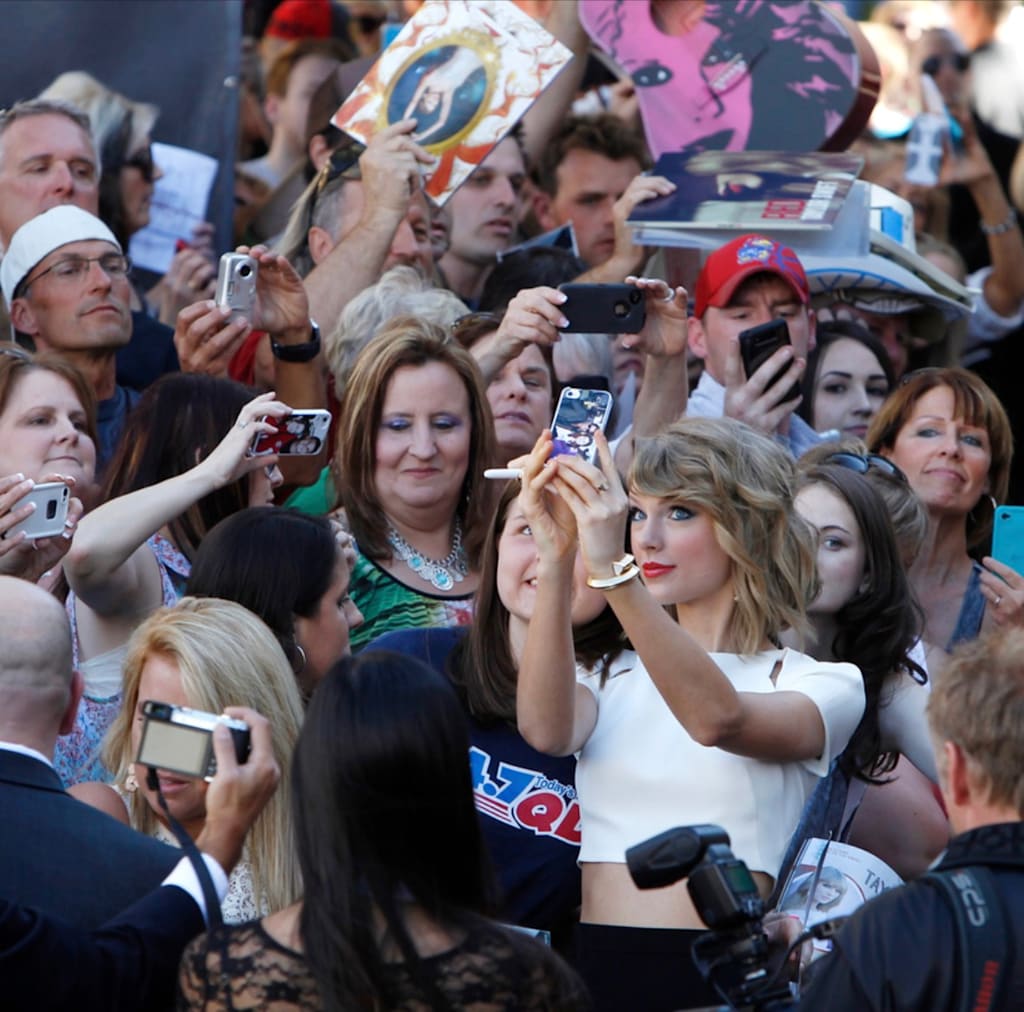
To many listeners, the songs of Taylor Swift serve as a mirror of their inner lives, helping them connect with others, push through hard times, and draw on their own strength. Delve into who they are. The community that forms at her concerts is one where people take solace in one another's company. Through her music, feelings that defy simple description are given expression, and it offers companionship when people face grief, the loss of someone dear, hopelessness, or isolation.
For this reason, her music and her concerts deserve respect; at times, a song can mend more than words ever could.
Yet set against these bright moments are difficulties that also merit our attention.
We need to grasp why the culture surrounding Taylor Swift and her followers does such harm, all without tarnishing the artist's image and reputation or blaming her for bringing that culture into being.
What caught my interest is the fan culture itself and the fierce, across-the-board defense of a beloved celebrity, extending even to matters that have nothing to do with the creative work. It is crucial to grasp what lies behind such fanaticism and which problems it may give rise to.
The questions raised call for examining this phenomenon within a broader frame: what drives people toward fanaticism for a figure they hardly know; how the launch of any product can swell into an astronomical event; and why any remark that is not praise for a celebrity may be taken as an assault on a piece of one's soul, prompting the condemnation of differing views.
The nature of the fan phenomenon and the conduct of the so-called Swifties surely warrant closer attention and fuller examination. There are numerous reasons why people enjoy the singer's music and keep up with her social media accounts. Still, the boundary between healthy fandom and obsession is a fine one, and stepping over it can bring harmful outcomes for the fan and for those nearby.
It is likewise important to view the matter from the artist's own perspective and to describe how her public statements shape the way her fans behave.
When A Celebrity Starts To Feel Like A Personal Friend
Within scholarship on contemporary fandom, parasocial relationships constitute a central analytical concept.
This phenomenon refers to a form of one-sided affinity in which an individual develops a positive or empathetic bond with a person who remains entirely unaware of that individual's existence. Research conducted over many years demonstrates that such relationships may form an entirely normal dimension of media consumption rather than a detrimental trait of the fan. Readers seeking further information on parasocial relationships are directed to the Oxford Handbook of Media Psychology.
Consider music as an illustration: a song about heartbreak may evoke memories of one's own painful experiences, a chorus about growing up may resonate with one's uncertainties on that same subject. An entire album heard during a difficult period may come to be cherished in much the same manner. This feeling is genuine, even when the person behind the song remains unknown to the listener.
Taylor Swift provides her listeners with abundant material for relationships of both kinds. Through her songs, storytelling, imagery, and Easter eggs, she creates a space for reflection and enables listeners to connect with her art on a personal level. Listeners are able to theorize about and speculate on. Interpret the meanings of lyrics and symbols in her music and video clips, discovering within them elements that mirror their own lives.
Such attachment becomes problematic, however, when affection for the artist's output turns into an unhealthy obsession. When individuals believe they understand Taylor Swift better than she understands herself, her actions can affect them as painfully as the dissolution of a romantic relationship. They may take offense at the singer's critics, come to her defense against insults, and generally respond with a feeling of personal loss.
Nevertheless, it is crucial to distinguish between recognizing oneself in another person and forming a parasocial relationship. A fan may love Taylor Swift, her music, and the persona she presents in her songs and videos without possessing much knowledge of the actual person. This is entirely acceptable, provided that fans do not regard this reflection as an intimate component of an actual relationship.
When Album Releases Become Rituals of Devotions
Part of what defines Swiftie culture is the excitement surrounding exclusive merchandise, rare collectible editions, and album drops.
Many fans build their schedules and commitments around release dates, focusing on the collectibles and the social media side of the music they adore. It is quite common for people to take leave from their jobs or skip school so they can queue outside a shop selling legacy-era merchandise or the newest vinyl pressing.
Taking days off for a concert or a sporting event should be perfectly acceptable, yet fans do exactly the same thing for the music they cherish. Plenty of fans relish the thrill that comes from limited-edition collectibles being exclusive.
Still, it is worth asking when this behavior stops being harmless and starts becoming unhealthy. What makes people feel they must buy every single variant that is released? Why do some people get anxious about the idea of not purchasing something? At what stage does buying shift from being a show of love into something entirely different?
People end up in this kind of relationship with limited-time offers and discontinued products for a range of reasons.
Some fans buy the merch out of FOMO—the fear of missing out—and for the social media approval that comes with posting about the purchase. Others buy into the culture of constant consumption and the feeling of belonging that comes from being part of the same community. For some, the excitement of the chase, the unboxing, and the big reveal work as a mood booster.
Gaming culture, streetwear, sneakers—there are plenty of communities where the same values are at play. What people are really buying is the experience, the sense of belonging, and the feeling of being part of something larger than themselves.
Yet the companies operating in these spaces do not necessarily have customers' well-being at heart, since they have every incentive to keep chasing higher revenues.
Maybe the most insidious part of this culture is the pressure to match the fanaticism of the surrounding community. It is often hard to distinguish whether the urge to buy stems from genuine love for the artist or from a fear of being left out of the community's exclusivity. Someone might feel inadequate because they cannot afford the required merchandise, or even because they cannot take time off work to pay for it. No fan should have to give up their life to show how much they love the music.
Someone ought to be able to appreciate an album without purchasing every version of it. No one should have to put their finances or their physical health on the line just to be part of the culture. The culture ought to keep its attention on the music — the very thing it all started with. Still, it is not always easy to recognize the moment admiration crosses into fanaticism—and once fanaticism has set in, the fan may not see anything wrong with it.
Why Some Fans Defend Taylor At All Costs
Social identity theory offers another lens that explains why people need to belong to groups, showing how a person's sense of self takes shape through relationships with others.
In this context, belonging to the in-group opens up more chances to see one's fandom as an extension of the self, connect with people who share the same interests, talk about and exchange favorite content, and gather at concerts. Enjoy numerous other advantages. In many ways, it deepens the sense of isolation when a fan is unable to find anyone who shares their interests.
Meanwhile, the more intense the fandom, the greater the likelihood that its members will take criticism personally. For those who are overly devoted to a particular celebrity, negative remarks about their favorite singer, musician, or actor are taken as aimed directly at the person who wrote them. This shows up most clearly in the hostility between fans of different celebrities, since excessive fandom makes people over-invested and triggers defensive aggression.
Likewise, the more a person admires a given performer, the more inclined they are to defend them and, in turn, to resent those who criticize or insult them, even when the fan was never directly involved in the matter. The more deeply someone commits to a fandom, the more it turns into their identity. Any insult aimed at their community becomes, by default, an insult aimed at them.
Conversely, it is also important to distinguish between healthy fandom and unhealthy obsession. Though it can be difficult to acknowledge, one's affection for an artist sometimes turns into something unhealthy, and recognizing the moment to stop is essential. Ultimately, the music stays the same no matter which album a person owns. Belonging to a fandom should never come at the cost of one's life, finances, or physical health.
Is Swifite Culture Becoming Cult-Like?
Although the term “cult” tends to be linked with the worship of celebrities, it is used far too loosely and is frequently not applicable at all.
Someone who takes an active interest in a celebrity’s career—attending her concerts, memorizing every lyric, purchasing T-shirts. Following her every move on message boards—is not thereby part of a cult.
Still, one ought to be cautious about behaviors commonly observed in genuine cults, since they may signal a potential danger.
Warning signs of this kind include unquestioning devotion to the leader, efforts to control and direct the thoughts and actions of fellow members, attempts to paint dissenters in a negative light, and the silencing of dissenting views. The exaltation of sacrifices made for the group’s sake.
Such traits can turn up in political parties, churches, and fan communities alike—for instance, among Swifties, the followers of Taylor Swift. It is important to determine which specific behaviors are actually harmful and unacceptable, because they cross the line into unwise fandom. One should recognize that millions of people have picked Taylor Swift as their favorite singer. Each of them has their own personal preferences and boundaries when it comes to her conduct. Some Swifties are happy simply to enjoy Taylor Swift’s music and share it with friends, whereas others may feel driven to promote her popularity to anyone willing to listen. In either case, the fact that some fans choose to tie their identity to a particular celebrity does not mean they have been brainwashed.
It is unfair to label the entire Swiftie community a cult and to accuse Taylor Swift of leading it. Doing so would require concrete proof that the singer manipulates and controls her fans. One needs to examine more closely how Swifties interact with one another and what views they voice on a controversial issue. This does not mean, however, that all Swifties are free of blind faith in Taylor Swift. Quite the opposite—there are many indications of it. That is no reason to condemn the fandom, since similar attitudes appear almost everywhere: in churches, in political parties, among football supporters, or among makeup enthusiasts.
In my view, studying the traits of a cult and setting them against the behavior of Swifties is a worthwhile exercise for pinpointing what exactly counts as excessive fanaticism. And if a red flag does exist within this system, blind faith should give way to critical thinking and to attentiveness to other people’s opinions.
The heart of the matter is that excessive fanaticism often leaves no room for critical thinking or for weighing other viewpoints, whether it is aimed at a politician, a singer, or a religious leader.
When A Celebrity’s Private Life Starts To Feel Personal
It is only natural that Taylor Swift's life events, public appearances, and romantic relationships draw considerable public interest. Since she is such a prominent figure, her personal life often becomes part of mainstream celebrity culture.
At the same time, following someone's life closely is not at all the same as genuinely caring about what happens in it.
When relationships and events involve high-profile people, they turn into public spectacles; fans may wait outside venues, track every online update, or treat the occasion as their own, as though it were a shared experience. People feel drawn to take part for all sorts of reasons — plain curiosity, excitement, the chance to catch a glimpse of the celebrities, or simply the appeal of joining a cultural phenomenon. Taking part in a public gathering should not automatically be seen as an unhealthy parasocial bond.
The trouble starts, though, when a fan believes they have a right to be present, or makes choices in the name of fandom that ignore the safety and well-being of others or of themselves. Standing outside a venue in hot weather is one thing. Treating risky behavior as admirable and showing disrespect for oneself or others in the name of fandom goes too far.
After all, no one is obliged to attend events or prove their dedication because of a public figure's personal life. This boundary has to be respected — especially in today's social media culture, which fosters the illusion that everyone's life is accessible to all.
Charity, Tax Deductions, and The Danger of Treating Celebrities as Morally Infallible
Does the philanthropy of celebrities prompt us to ask whether we can recognize the good a donation accomplishes and at the same time to examine the circumstances of it? This is entirely achievable and, in fact, essential.
What a donation actually achieves, and the concealed reasons behind it, are separate matters. When a well-known artist gives a substantial amount, the organizations receiving it will gain no matter what drove the giver. That outcome deserves to be recognized and applauded. At the same time, philanthropy frequently invites legitimate scrutiny regarding publicity, timing, brand building, and the financial advantages the donor gains.
Consider, for instance, a donation made public at the same moment as another major personal milestone for the celebrity. Admirers might view it as evidence of a wonderfully generous person, whereas critics may comb through every detail in search of possible scandals. Yet neither camp takes a range of factors into account.
Under Internal Revenue Service rules, taxpayers are permitted to deduct charitable contributions provided that certain conditions are satisfied. Although limits, rules, and restrictions exist, that does not prove a large deduction was not the philanthropist's primary motive. At the same time, the chance of image benefits for a celebrity does not diminish what a donation actually accomplishes. It is entirely possible for a single action to serve several purposes and fulfill all of them.
Still, I think the real issue is that supporters of celebrities generally do not question their conduct, owing to their overwhelming admiration for them. A fan would sooner read a questionable act by a beloved celebrity in a favorable light than criticize it. The same holds for generous gifts to charities. In my view, we ought to weigh the facts and evaluate the effects of a gesture rather than hunt for hidden motives behind a celebrity's every move.
In this way, not only the image but also the real effectiveness of a donation can end up being overstated. This line of reasoning can be applied to many actions and gestures by a celebrity. That is why I consider the fan behavior described here not unusual for a Swiftie but rather a widespread human inclination.
Celebrity Wealth And The Lives Of Ordinary Workers
Beyond the disputes surrounding individuals, celebrities frequently draw a sharp line between their public star persona and the everyday existence of ordinary citizens.
Take, for example, the recent stir involving Taylor Swift and Travis Kelce, which people jokingly likened to their English teacher and gym teacher—yet for the public, it was simply business as usual. Mentioning this well-known couple's relationship alongside the topic of teachers' work does not automatically signal any disrespect toward educators.
Rather, the article prompts reflection on how much celebrities matter; moreover, it highlights the way society views workers who are not considered essential.
Within the community, teachers rank among the most visible and significant figures. They grapple with a range of problems, including unequal pay, scarce resources, inadequate working conditions, and little influence over the system. None of these concerns ought to be overlooked merely because they have nothing to do with a famous couple.
Rather than focusing on trivial details of a celebrity's personal life, each of us could channel some of our energy into drawing attention to the challenges teachers face.
A group of fans, for instance, could collaborate and contribute the needed donations to purchase books for a school, or demand protection of rights whenever a teacher's freedom of speech is violated. The reach of social media could serve to circulate information about pressing issues and to rally people to act. Fan communities' passionate commitment has already demonstrated its power; it could therefore be channeled toward achieving goals of greater significance.
Everyone could come together to back not only singers but also those who devote their lives to educating others.
In this manner, a fan would keep their enthusiasm for the artist while also extending worldwide appreciation and compassion to teachers. This is not to suggest that every problem should be left for celebrities to solve. Rather, these principles urge each person to act independently instead of waiting for role models to set an example.
When Fandom Turns People Away From The Music
One of the most ironic consequences of toxic fandom may be that it actually drives people away from engaging with the very art the fandom revolves around.
A person might be intrigued by Taylor's songwriting, feel like checking out alternative albums such as Folklore or Evermore, or simply enjoy a handful of songs heard on the radio.
But if their only glimpse into what it means to be a Swiftie comes through aggressive gatekeeping, harassment of critics, and contempt for other musical artists. Pressure to show unquestioning devotion, they may very well conclude that it isn't worth getting involved.
In the end, the conduct of the most conspicuous Swifties can loom larger in someone's mind than the music itself.
That is a shame, since the music and the fandom are two separate things.
Taylor's songwriting can spark reflection and joy no matter how the surrounding fandom behaves. It's entirely possible to dislike the hostile mood surrounding the fandom while still enjoying the albums. To like particular songs without ever choosing to call yourself a Swiftie.
No one has to accept the all-in devotion that comes with endorsing a fandom. No one should feel obliged to defend everything Taylor does unconditionally just to enjoy her music. A healthy fandom should welcome newcomers rather than drive them away. It should invite people to reach out, ask questions, and raise concerns.
Connect with the music on their own terms, instead of insisting on unwavering loyalty as the price of entry.
The Side of Swiftie Culture We Should Celebrate
Forming a fair judgment about the fandom means weighing both its strengths and its shortcomings.
Many people describe how Taylor's music offered them solace during heartbreak, grief, shyness, or simply a rough stretch in their lives. Beyond that, her songs often serve as a bridge connecting fans through concerts, online communities, and other channels of interaction. The benefits it brings, such as healing and forming bonds with kindred spirits, certainly deserve attention.
In this sense, personal experiences and how each person perceives the artistic side of Taylor's music matter greatly, since someone's life may have shifted because of particular events that followed listening to her songs.
Still, the broader criticism aimed at the fandom ought not to eclipse the positive moments.
Music has long played a central role in people's lives. Taylor Swift is neither the first nor the last artist to offer people a new way to find relief.
What sets healthy fandom apart from obsession is whether one's view of an artist's work is conditional.
A person may sincerely enjoy certain songs in particular circumstances and seasons of life. Even so, a fan ought not to pressure others into perceiving music the way they do. A key trait of healthy fandom is respect for the artist and for the fans who are already there.
Therefore, every advantage of Taylor Swift's fandom, including finding a lifeline in her songs, merits consideration, as long as one adopts a personal approach to the artist and her work.
A fan should never feel compelled to hold the same view of her music as the rest of the online community. Buying albums can be an enjoyable adventure, yet it should not become an unhealthy fixation.
Lastly, valuing songs as a means of emotional expression may help a person navigate a difficult period without sliding into depression or other mental health struggles.
Building A Healthier Relationship With Celebrity Culture
Instead of turning our backs on fan communities, giving up on the celebrities we love, or writing off devoted fans as psychologically unwell, the answer may lie in encouraging healthier boundaries.
Below are a few steps we can take to build a healthier relationship with the artists we love.
Detachment: Take pleasure in the music without treating the artist as some kind of godlike presence in your life.
Understanding: The parasocial bond you have may be genuinely taking a toll on the real person on the other side of the screen.
Living within your means: Keep in mind that collectibles and products are just that — items for collecting and novelty. The music and the performances deserve to be your top priority.
Feeling no obligation: Whether you purchase the tour merchandise, you remain a fan all the same. Buying every album, pre-ordering every release, and airing unpopular opinions online is not something everyone has to do.
Respecting other people's opinions: If someone dislikes the marketing campaign and considers this album overrated, allow them to feel that way. Simply avoid joining any comment sections about it.
Lending support: The energy you spend chasing down every single album could instead go toward volunteering somewhere that needs help. Many causes would welcome more support and donations.
Keep in mind that how you feel about a celebrity can shift as time passes. It is entirely normal to love an album one day and criticize it the next. It also makes sense that you might prefer one artist's work over another's. Having felt affection for a performer in the past does not obligate you to support them for life.
Love The Music Without Idolizing The Musician
Taking pleasure in Taylor Swift's music, being a fan of hers, listening to her songs, purchasing her albums, attending her concerts. Celebrating her successful career is perfectly fine.
But once it turns into obsession—buying every piece of merch you can afford, blindly accepting everything she says, disrespecting those who criticize her. Demanding your money back whenever she does something you dislike—it becomes toxic.
Admiring a celebrity is no sin, yet it often boils down to the price we pay for stardom and the way the fame industry seeks to control our fandom. There are plenty of reasons why becoming a Taylor Swift fan is a good thing, but there should also be reasons not to be one.
This is not to say I lack respect for those who are devoted to her and live by her words and every move she makes. I believe a healthy relationship with an artist should leave room for criticism, differing opinions, and music that everyone can enjoy.
People can still be Taylor Swift fans, support her, attend her concerts, and buy her albums and merchandise without losing their identity or becoming her property.
As long as they stay critical of her image and actions, they can enjoy her music without being in love with her as a person and without losing their ability to judge.
Taylor Swift is not my deity, and she should not be everyone's. Her songs can still be loved and enjoyed by people who have no intention of joining the Swifties community.
Healthy fandom means making room for criticism without shaming those who offer it and without judging those who do not support your favorite celebrity.
About the Creator
Jenna Deedy
Just a New England Mando passionate about wildlife, nerd stuff & cosplay! 🐾✨🎭 Get 20% off @davidsonsteas (https://www.davidsonstea.com/) with code JENNA20-Based in Nashua, NH.
Instagram: @jennacostadeedy
Enjoyed the story? Support the Creator.
Subscribe for free to receive all their stories in your feed. You could also become a paid subscriber, letting them know you appreciate their work.
Comments
There are no comments for this story
Be the first to respond and start the conversation.