
What If Iman Vellani Helped Shape Marvel’s Future? Turning Superhero Fandom Into a Global Movement for Literacy and the Arts.
Marvel can inspire millions, but its most significant legacy may not be another blockbuster film; it may be a generation of readers, artists, and storytellers who found their own potential through comics.

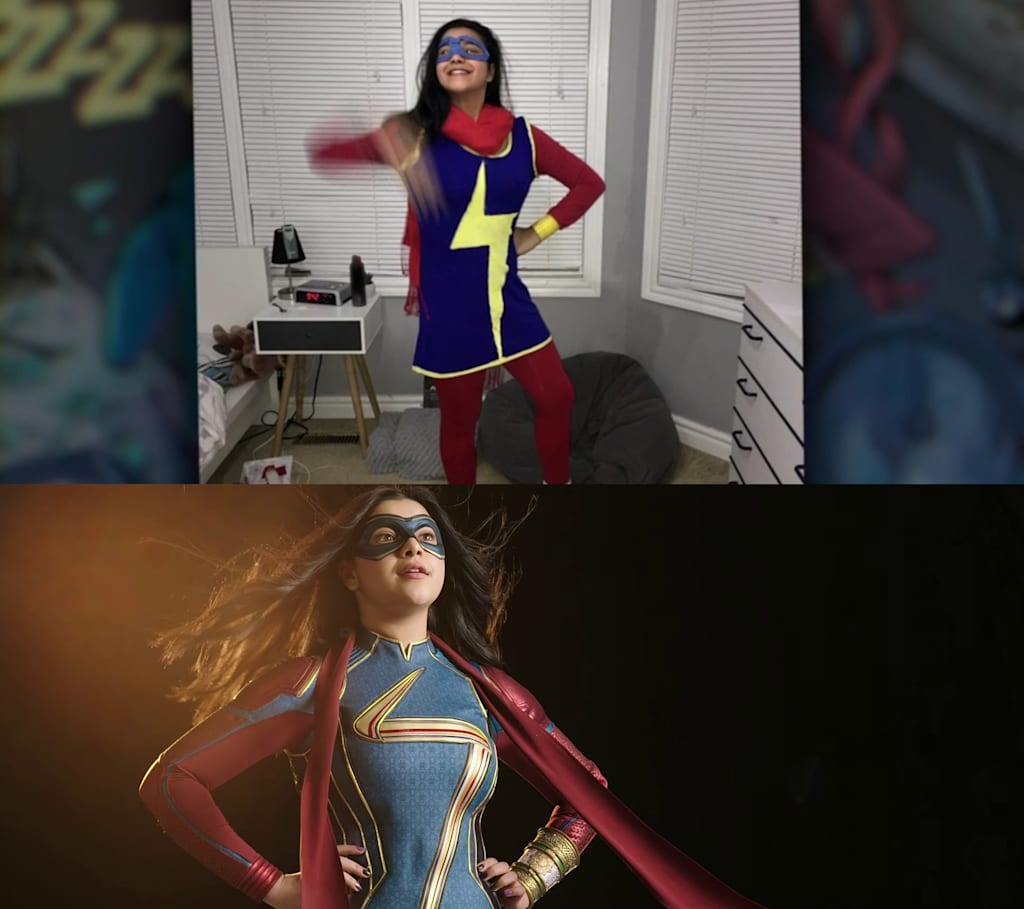
Picture this: Marvel shifting its focus away from securing A-list stars for the upcoming Avengers movie, the Disney+ show slated for next year, or even from the whole notion of the Marvel Cinematic Universe as we know it.
What if instead, its resources were directed toward connecting with kids who aren't readers yet. Who would eagerly learn to read given the right book — or the right comic, or the right creative avenue for self-expression? Just think: a single comic book might spark an entire generation of children to start making comics of their own.
Who could be better suited to help drive that effort than Iman Vellani, among Marvel's most candid and enthusiastic fans?
Now, let me be clear: I am not proposing that Vellani be appointed President of Marvel Studios, nor am I claiming she has any desire for such a role. I am merely laying out a hypothetical scenario in which she could bring enormous benefit to the medium as a whole. That, my friends, is a role that every respectable comic shop in America would be thrilled to see her take on.
I hold that Marvel is capable of far more than mere entertainment, provided it possesses the resolve to pursue it, and I hold that such resolve is something it undoubtedly has.
This mirrors the case I put forward in my piece From Variants to Legacy: A Radical, Practical Plan for How Libraries, Bookstores, and Comic Shops Can Rebuild Reader Pipeline, Reduce Over-Consumerism and Restore Comics as Public Culture, where I argue that merely marketing comics as a product falls short — we must inspire people to connect with the medium, to take part in it, to encounter it directly.
Who could be a better leader for that mission than Marvel itself?
From Marvel Superfan to Professional Storyteller
The journey of Iman Vellani, from devoted fan to creative force, is a genuinely captivating prospect.
Audiences first met an enthusiastic young Muslim who looked up to Earth's mightiest heroes when she was chosen to play Kamala Khan in Ms. Marvel. Yet Iman was far more than an actress portraying a fan. Being a fan herself, she infused the part with an added measure of heart and soul.
Later, she co-wrote Ms. Marvel: The New Mutant alongside fellow writer Sabir Pirzada, proving that her abilities extended beyond translating beloved comics onto the screen. Iman has demonstrated that she is a versatile asset to Marvel, contributing both in front of the camera and behind it.
On that note, her perspective makes for an intriguing voice when it comes to the idea of succeeding someone like Kevin Feige. After all, she has lived the fan's journey, first falling for the Marvel Universe and then getting to inhabit it. She possesses an insider's viewpoint that few outsiders could ever dream of acquiring. That is a precious quality to hold when you are tasked with guiding a company as prominent and esteemed as Marvel.
Still, while her enthusiasm is a strength, it does not by itself ensure instant success. Replacing a figure of Kevin Feige's stature is no easy task, given the countless years he has devoted to studying, learning, and honing his executive skills. Leadership roles demand far more experience than most people appreciate, and someone like Iman might be better off concentrating on writing, producing, or mentoring.
Ultimately, it hinges on what she actually wants to accomplish. With sufficient time and support, she could believably step into the role of Marvel's head writer. It is entirely possible that Iman Vellani will assume the position Kevin Feige eventually vacates — but if she does, it will be by her own choosing.
The curious thing is that when people consider legacy characters, a company-wide revolution is the very last thing that comes to mind. The reality is that cultivating a lasting fandom around a product is far more difficult than motivating people to become lifelong fans.
Marvel Doesn’t Always Need To Make Its Stories Bigger
For many years, superhero films have kept attempting to build larger and larger interconnected cinematic worlds, complete with ever more intricate storylines and a constantly expanding cast of characters.
This is not to say there is a problem with that approach — superhero movies are something you come to appreciate over time, yet once you discover a formula that clicks for you, it becomes difficult to get your fill of them.
Still, alternatives exist, and at times an intimate, character-driven look at coming-of-age themes matters more than an intricate space opera featuring colossal battles between whole planets.
It is the varied, character-centered projects that define the superhero genre, lending it its distinctive character. Take Ms. Marvel, for instance: her quest to comprehend herself and her position in the world is a deeply personal tale that delves into coming-of-age, family relationships, and identity. Her world might be populated by superheroes and monsters, yet the themes the show examines are universal, tying it to staples found in other media, like the X-Men's band of outsiders or Spider-Man's blend of extraordinary abilities with ordinary frailties. These sorts of inspirations have sustained the comics medium for more than 80 years, and a growing share of them is now being produced beyond the traditional outlets.
That is precisely why Marvel ought to give priority to such explorations inside its continually expanding cinematic universe. Every one of these character tales could standalone as an examination of the human (or inhuman) condition. There's no reason they can't be thematically and tonally self-contained while remaining part of a bigger narrative. There is real worth in coming to know the characters on a personal level, rather than simply being entertained.
Yet it should not end there — Marvel ought to do more to boost its cinematic properties by getting people to engage with the medium that gave rise to the whole idea: the comics.
Championing a wide range of voices within the company is all well and good, but not every fan gets the chance to become a writer or a director. That's why Marvel should put more emphasis on getting younger people involved with the comics — reading them, talking about them, crafting their own stories, arguing over possible plot twists or different interpretations of the same character. So forth. Anyone is capable of being a creator, even if they have not figured that out yet.
The Problem Isn’t A Lack Of Stories. It’s Access.
What plagues the Western comic book industry is not a lack of popularity, but a lack of accessibility. For someone outside the industry, finding a meaningful way to connect with the medium is far from easy.
To make sense of a story, they must untangle the intricate continuity of a sprawling franchise and pay a hefty price for issues that offer only a handful of pages despite being entertaining. Work out what counts as canon and what does not. The industry is more than happy to have people spend money on its products, yet a fan eager to dive into the comics is likely to hit numerous obstacles along the way, conventions included. Meanwhile, the industry is equally ready to cash in on its content through speculation, variant covers, and other tactics aimed at collectors.
Collecting and speculating, I would argue, are legitimate pursuits that both sustain the industry and carry cultural worth, yet simply purchasing a physical copy hardly does anything by itself to build a lasting bond with the medium. A person might mass dozens of trade paperbacks by a single writer without ever turning a page, whereas one trip to the library could transform someone's life by opening the door to new kinds of media. If the industry hopes to attract new readers, it must make engagement easier to come by.
Beyond expanding into films and other media, Marvel would benefit greatly from actively promoting and popularizing the comic books themselves. Backing the industry and its creators is an essential goal, yet the company must also discover how to draw in a fresh audience. Comic book stores and libraries bear the burden of the first task, while the second belongs to the entire industry, Marvel included.
Doing excellent work across different media matters a great deal. If new readers never engage directly with the source material, those efforts could go to waste as the existing audience ages and drifts toward other media. New generations must be introduced to the medium so they can immerse themselves in the stories they love, talk about them, reimagine them. In time, produce their own.
Becoming a creator, writer, or adapter is open to anyone, but first they need a way into the medium.
What If Marvel Helped Build a Reader Pipeline?
Imagine a partnership between Marvel, its parent company Disney, public libraries, schools, independent bookstores, comic shops, publishers, and community organizations.
Instead of concentrating primarily on promotional appearances, Disney theme park attractions, and merchandise, the initiative would create ongoing opportunities for children and teenagers to read comics, explore the arts, and develop their own storytelling skills.
The goal wouldn’t be to turn every child into an overnight Marvel fan. It would be to give more children the freedom to discover what they enjoy, whether that eventually leads them toward Marvel, independent comics, manga, novels, animation, filmmaking, acting, or another creative field entirely.
Here are five ways that could begin.
Marvel Reading Clubs in Libraries and Schools
Libraries and schools could host superhero reading clubs suited to different age groups, showcasing graphic novels, comics, and other books from a range of genres.
Children would get the chance to engage with the characters and talk about the different storylines, what sets them apart, and what they share. Library staff and educators can guide children toward the graphic novels that best fit their age, reading comprehension level, and individual interests.
For libraries and schools eager to put on an event like this, Marvel could offer reading guides, teaching resources, interviews with writers and artists, or other forms of support. Whenever feasible and suitable, the companies can highlight books from a variety of publishers and independent authors instead of focusing on just one franchise.
The aim is to spark children's interest in reading, not to transform libraries into Marvel superstores.
Young Creators Workshop
Reading can open the door to something even more thrilling: crafting your very own stories!
Libraries might host workshops on writing comic scripts, designing characters, and creating illustrations, along with sessions on planning panels, developing visuals, and making zines. To create comics, children and teenagers wouldn't require elaborate or costly equipment—only paper, pencils, a photocopier, and skilled instruction.
Comic book experts might volunteer their time, or receive payment, to instruct and mentor young people in comic writing and design. Older teens could also assist younger children with their own mini-comic endeavors!
Experimentation ought to be the priority, rather than the quality of the result. A child's first comic will probably not resemble the work of a well-known comic book creator, but that shouldn't be a concern. What truly counts is that the child gains the confidence and skills to see their project through to the end, and feels proud of what they've accomplished.
Certain children might eventually become authors, illustrators, animators, or perhaps even filmmakers. Yet for others, happiness will come simply from having an easy, enjoyable pastime they can turn to whenever they like.
Either outcome is a positive one.
Comic conventions in schools: Welcoming Fandom Into The Classroom. For many families, attending a comic book convention can be costly once tickets and travel are taken into account. When we host these events in gymnasiums, auditoriums, libraries, and classrooms, every child can experience the thrill of fandom and the creative arts.
Key Event Features and Hands-On Opportunities
Hands-On Workshops and Visits from Creators: Learners get the chance to connect with area illustrators and authors and pick up skills in character design. Take part in storytelling sessions. Art teachers and visiting creators are able to guide students as they create their own mini-comics.
Cosplay and Performance Demonstrations: Guests in costume can demonstrate the techniques behind making costumes, crafting props, and bringing a character to life through performance.
Student Exhibits and Literary Activities: The event may feature showcases of student artwork, spaces for reading and discussing books, book exchange tables. Creative writing corners where children can present their work.
Community Partnerships & Industry Involvement
Schools might team up with nearby libraries, independent comic shops, arts groups, and publishing houses. Marvel and Disney could organize fundraising efforts, contribute to educational resources, or send guest speakers to lead workshops. My suggestion is that we center the events on independent creators and smaller presses. The students' own projects, rather than on well-known figures who could steal the spotlight from them.
Prioritizing Accessibility & Inclusivity
School-hosted conventions ought to welcome every student, no matter how deep their fandom runs, whether they wear a costume, or whether they buy any merchandise at all. To draw in those who may have little interest in comics or who typically wouldn't go to a convention, schools can offer supplies and alternative events. Quiet spaces to retreat to.
Ultimately, hosting conventions at school can teach students that comics are far more than merchandise—they are a form of writing, drawing, design, and performance.
A Partnership Between Comic Shops, Bookstores, and Libraries
This part is directly tied to the framework laid out in From Variants to Legacy.
Rather than treating comic shops, bookstores, and libraries as rivals, they could join forces to build an ecosystem in which their combined effort proves more profitable than what each could achieve alone.
Their partnership would extend to readers as well, drawing them into activities and offering the comic community a new way of looking at things:
Libraries could offer free access to books and host events that introduce readers to series and characters they have not encountered before;
Schools and community groups would foster active involvement and spark interest;
Comic shops and bookstores would step in to meet that demand, opening their readers' eyes to the broader world of comics and giving them a chance to support local businesses;
Publishers and creators, for their part, would produce the material and supply the needed resources — reading lists or educational content, for instance — so that the collaboration pays off.
As agreed with the publishers, comic shops could partner with bookstores to redistribute excess inventory.
Beyond that, local shops and bookstores could team up with schools and libraries, supplying comic conventions with the equipment and know-how they need. Putting on events like these takes experience and patience, yet comic shops and bookstores could give attendees resources and reading lists, and hand children comics suited to their age. Point adults toward more sophisticated titles. Such cooperation would call for additional funding, approval from the board and the PTA, and enough logistical backing — things that may not exist in every school community.
Even though the arrangement clearly comes with challenges, it is plain that the cooperation's main goal is to serve readers by opening up stories they would never have found on their own.
A Global Network For Young Storytellers
Thanks to the worldwide scope of its audience, Marvel occupies a rare position that allows it to look past national boundaries.
Through collaboration with community-based groups, Marvel could build an international program that draws young people into a creative sharing of stories across borders. Such a project would give those taking part the chance to connect with each other, exchange their own comics and narratives. Honor both the common ground and the distinctions found in their cultures and life experiences.
Whether this effort succeeds will hinge on how well it works in local languages and responds to the particular educational and cultural requirements and sensitivities of children and their communities, all while respecting privacy and child safety rules. Beyond that, rather than pushing a single superhero franchise that might not resonate everywhere, Marvel would be stronger as a platform that uplifts a wide range of voices and tales.
Even though Marvel's heroes can bring young people together under a shared banner, it remains vital to inspire those youths to take pride in their own heritage and to teach one another about the rich and varied traditions, foods, art, and music. Histories that give every community its character.
What matters is fostering an exchange of cultures in which people learn from each other, not one that forces a US-centered superhero worldview upon them.
Who could resist reading a comic created by a kid living thousands of miles away and realizing the two of them enjoy the same pastimes and interests? An undertaking of this magnitude and cultural weight can be achieved on a far more modest budget.
Where Iman Vellani Could Fit Into This Vision
In what way would Ms. Vellani be incorporated into this?
Isn't it asking a bit too much of a single person to organize, finance, and run a program like this?
She could serve as a spokesperson for the cause, however.
Her background in the industry spans being a fan, an on-screen actor. A comic writer, which means she could connect with kids as someone whose love of comics drove her to improve her own life. Ms. Vellani could assist in promoting the literacy programs, champion workshops for up-and-coming writers and artists, join panels alongside her fellow creatives. Draw attention to the partnerships among schools, libraries, educators, artists, and publishers that make these programs happen. A comic convention held at a school during the school day would be a wonderful thing to see, with industry professionals making appearances. Meeting real, working actors and comic illustrators at these events would encourage kids to pursue writing or illustrating as a genuine career option, in whatever medium suits them best. A Marvel-caliber superstar would certainly draw attention to the cause. Local comic creators and educators could accomplish just as much, perhaps even more, by offering kids a more relatable figure to look up to.
Ms. Vellani may wish to shift into directing and producing at Marvel, or perhaps into a senior role at another company, which means she could someday leverage her fame as a marketing tool for literacy programs and school partnerships of this kind. Pursuing this would be a goal worth having, though it is not strictly necessary.
Above all, this program should not depend on a single person to rescue the industry.
Teachers, librarians, independent comic book creators, illustrators, cosplayers, publishers, and administrators all play a part in making a program like this succeed. They ought to be included in planning and carrying it out rather than added on afterward to satisfy corporate donors. It is also worth remembering that a partnership with Marvel and Ms. Vellani will probably involve more marketing than genuine educational materials. Students shouldn't be pushed into acting as brand ambassadors any more than they would be at a typical comic convention.
If Marvel genuinely wants to cultivate the next generation of comic creators and readers, the true measure won't be the sales of its branded merchandise or the cut it takes from every comic sold through the program. Rather, the opportunities it helps to open up.
How To Bring This Idea Into Fruition
Making a concept like this real takes more than an ingenious campaign—it requires a practical foundation for launch.
Disney and Marvel might start by arranging a pilot initiative involving a carefully chosen selection of schools, libraries, neighborhood comic book stores, and art centers.
At participating schools, expanded reading groups could center on the comic, while nearby bookstores and shops could hold companion author appearances and art workshops. This approach would give children a comprehensive experience, introducing them to sequential art and involving them in the creative process while promoting literacy through media they already know.
For the program to remain feasible over time, it would need to collaborate with literacy experts and educators to confirm that the content is age-appropriate and includes related media. Educators and guest authors should receive fair compensation, while teachers should be given materials that support continuing the program after the comic company’s participation ends.
Evaluation would also be essential to the program’s success. The primary measures would include the comic’s impact on student literacy rates, how often parents start taking their children to public libraries and comic book stores. Whether children begin producing comics or other sequential art.
Feedback from teachers would help identify which resources are suitable and needed for introducing children to sequential art. It would also be important to determine how many children the comic reaches who otherwise would not have had the chance to attend a major convention.
Together, these measures would show how effectively the program engages children and help identify changes needed to achieve better outcomes.
When putting a program of this kind into practice, it is essential not to assume that one company bears sole responsibility for addressing a societal problem.
Reading practices and literacy levels are complicated matters that no single organization, regardless of its influence, can resolve on a broad scale. Marvel’s efforts would succeed only if it could collaborate with specialists who understand the subtleties of children’s varied needs and learning approaches.
At the grassroots level, gaining momentum does not call for a multi-million-dollar campaign; a few committed community members can organize it. A single local school, bookstore, enthusiastic art teacher, and a handful of volunteers could assemble a modest reading group or comic-creation workshop. A local comic book store could organize a children’s event featuring a visiting author. There is no requirement for famous superheroes or elaborate promotional productions—what matters is dedication to diversity and inclusion, accessible resources and programs, cooperation, and parental participation.
After this foundation is in place, national initiatives could connect these independently arranged events and develop them into a broader movement.
A Legacy Bigger Than the Next Blockbuster
I find myself repeatedly returning to the issue of what the superhero media of the past ought to leave behind.
Marvel will without a doubt keep producing more films and TV series, build additional theme park rides, comics. Merchandise, and offer its viewers a range of experiences that differ from one another yet are ultimately forgettable.
Yet shouldn't one of the world's biggest cultural institutions be responsible for more than simply amusing its customers
By opening their eyes to new universes they never would have found by themselves
By igniting a passion in hesitant readers for the very medium that brought the franchise its fame
By giving young creators a space to tell their own stories
Instructing them in the fundamentals of plot and character development,
And demonstrating to them that a future awaits them in visual art or writing.
An all-encompassing strategy like this demands a much greater commitment and investment than mere star power and marketing materials, yet I believe it represents a remarkable opportunity — and not only for the company's share prices.
Iman Vellani's rise to stardom within the Marvel universe has barely started, and she is free to act and write as much as she likes in the years ahead. The idea of her carrying the weight of one of the world's most celebrated film universes seems almost unbelievable.
Even so, her place within the media machine demonstrates just how much a single individual can accomplish for the fans of tomorrow.
A child who became captivated by Ms. Marvel could one day grow into a comic book reader, then produce some fan art, pen their own tales, enter media production, attend art school. Ultimately, accomplish something remarkable for their abilities.
Not every fan needs to grow up to be a comic book artist or writer. Isn't that the sort of atmosphere we ought to be building in the schoolyards and living rooms of our fans? From Variants to Legacy, I have contended that the comic book industry ought to build better public infrastructure to champion the medium, instead of attempting to squeeze the greatest possible value from current consumers by deploying every business model humanity has ever devised. Yet isn't this the very same philosophy, only applied to an organization with too much power and too many resources to cater to its existing customer base? Marvel ought to commit itself to raising literacy rates around the world, one reader at a time, rather than depending on its tiny critical mass to keep its content factories running.
Unless Vellani is speaking on behalf of all of Marvel when she says the company aims to help its audience engage with its products through a deeper interest and a readiness to create stories of their own.
After all, isn't it more vital for superhero films to shine a light on the everyday heroes sitting in the audience than on the superheroes manufactured by the movies within the canon?
The legacy of superheroes ought not to be gauged by movie franchises and corporate earnings. By how many children felt moved to grab a pencil after witnessing Iron Man, Thor, or Captain Marvel for the first time and sketch their own heroes onto paper. For countless individuals across the globe, the Marvel Cinematic Universe has already left such an imprint — yet the moment has come for those very people to craft their own tales, with Marvel lending a hand.
Now is the moment for each of us to forge our own legends.
About the Creator
Jenna Deedy
Just a New England Mando passionate about wildlife, nerd stuff & cosplay! 🐾✨🎭 Get 20% off @davidsonsteas (https://www.davidsonstea.com/) with code JENNA20-Based in Nashua, NH.
Instagram: @jennacostadeedy
Enjoyed the story? Support the Creator.
Subscribe for free to receive all their stories in your feed. You could also become a paid subscriber, letting them know you appreciate their work.
Comments
There are no comments for this story
Be the first to respond and start the conversation.