
We Think the World of You by JR Ackerley
Why It's a Masterpiece (Week 124)

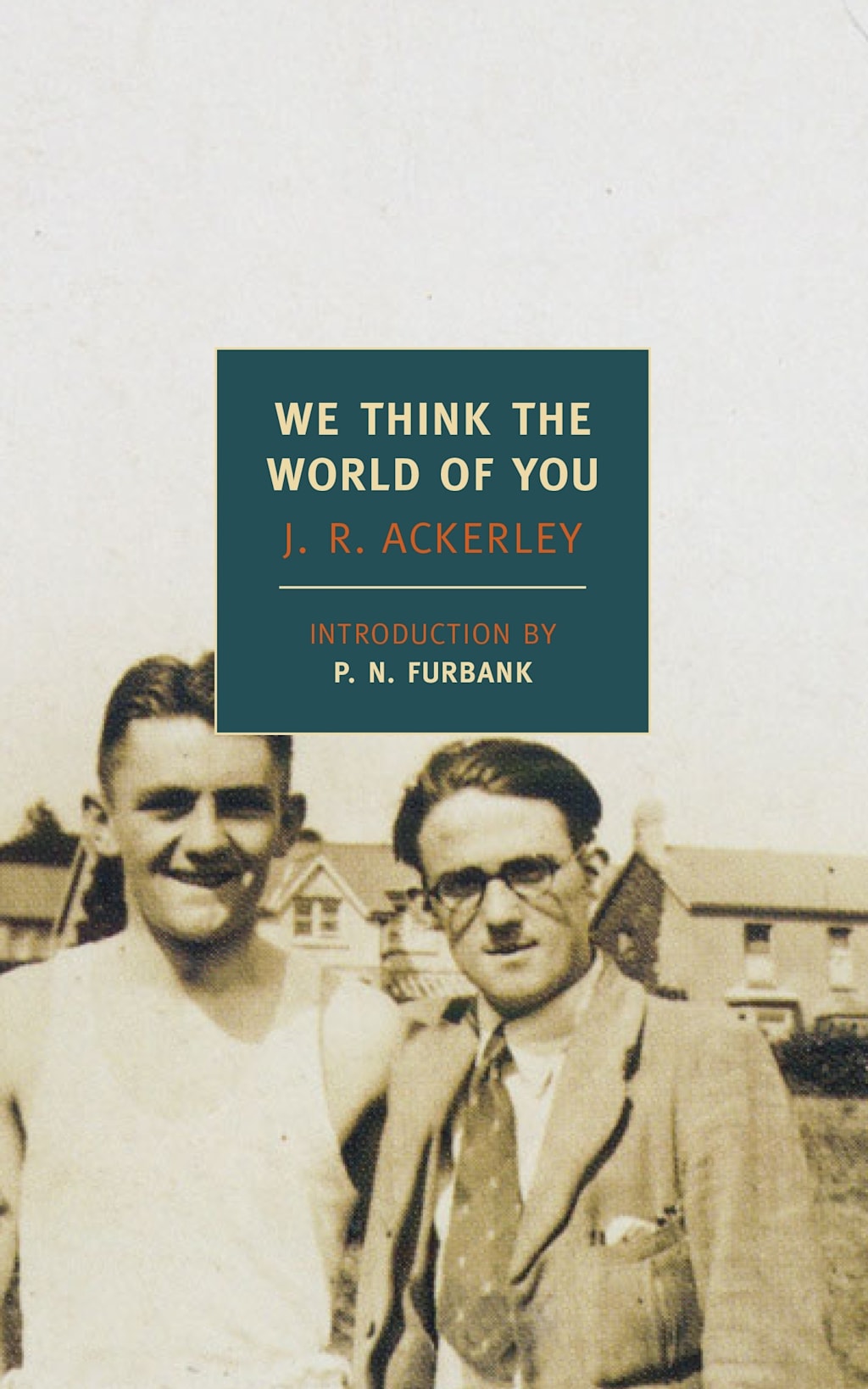
Written in 1960 and published the following year, We Think the World of You is an account of the author's own life, written into a light fiction. The story centres on how he came across his Alsation. It is quite emotional and comments on class and ownership. It is the author's only novel even though he had already published plays and essays. The book was also published at a time when homosexuality was still illegal in Britain, it was therefore considered sinful to read and some of the author's friends feared the law would not be on his side. The author though, had no such fear.
Rather than opening a horrific scandal in the style of Oscar Wilde, the very first WH Smith literature award ended up going to this book in 1962 for it's originality and wit. The book would fall into obscurity after the death of the author in 1967, but would be republished by NYRB Classics in the 2000s.
Plot

Frank, a middle-aged civil servant, harbours a deep, unrequited love for Johnny who is a younger, married man from a working-class background, recently been imprisoned for burglary. Before his sentence begins, Johnny asks Frank to look after his cherished German shepherd, Evie. Initially hesitant, Frank gradually forms an intense attachment to the dog. Evie becomes far more than a duty: she embodies Frank’s yearning for closeness and emotional fulfilment, serving as a substitute for the affection and intimacy Johnny cannot or will not return.
Johnny’s family, his domineering mother Millie, his withdrawn father Tom, and his bitter wife Megan, regard Frank with suspicion and condescension. As a middle-class outsider stepping into their tightly knit, working-class household, Frank struggles to find a foothold. He attempts to ingratiate himself under the guise of helping with Johnny’s dog, Evie, and supporting the family in Johnny’s absence, but his true motive (remaining close to Johnny) is barely concealed beneath a veneer of civility. Their interactions are marked by mutual misunderstanding and latent class tension: Frank is both patronising and eager for acceptance, while the family alternately exploits and mocks his presence.
Privately, Frank dreams of a different life, one in which he, Johnny, and Evie escape together into a peaceful, rural existence. This fantasy, however, is slowly dismantled by reality. Johnny is emotionally distant and noncommittal; Megan is openly resentful; Millie, though often absurd, dominates the household with her intrusive energy. Frank’s growing frustration leads him to scorn them in his thoughts, even as he longs for their recognition and inclusion.
At the centre of this emotional turbulence is Evie. To Frank, she embodies everything he desires: unconditional loyalty, beauty, and a sense of emotional control. Yet his fixation on the dog reveals more about his inner emptiness than genuine love, Evie becomes a projection of his own need for affection and belonging.
As time passes, Frank’s emotional attachment gradually shifts from Johnny to Evie, the dog he was asked to care for during Johnny’s imprisonment. He devotes himself to her wellbeing: taking her on long walks, grooming her meticulously, and cherishing her loyal presence. Evie responds with affection and attentiveness, often offering more warmth and constancy than Johnny ever did. In her, Frank finds a mirror for his own unmet emotional needs. She is a comforting constant in a life otherwise marked by emotional neglect and social disconnection.
At the same time, Frank is forced to confront uncomfortable truths about himself. He privately mocks the working-class habits, speech, and living conditions of Johnny’s family, but begins to realise that his class prejudice not only isolates him further, but also undermines the very connection he seeks. When Millie casually remarks that “they think the world of her,” referring to the family’s affection for Evie, Frank is struck by the emotional richness in lives he had previously dismissed.
The novel’s emotional climax arrives when Frank erupts at Millie over her husband Tom’s cruel treatment of Evie. Witnessing Tom’s callousness toward the dog, Frank lashes out in indignation, calling the behaviour “disgusting.” This confrontation exposes the full extent of Frank’s emotional entanglement, not only his empathy for Evie, but also his volatility and sense of moral superiority. His reaction blurs the line between genuine care and possessiveness, revealing how much of his self-worth and identity has become bound up in the dog. It’s a pivotal moment that lays bare Frank’s inability to separate his feelings from the need to assert control.
Following this, Frank experiences a sobering shift in perspective. He begins to understand that his romanticised vision of Johnny and contempt for the family were rooted more in self-deception than truth. The family's quiet, enduring loyalty to each other (while lacking in refinement) is genuine in a way that Frank’s grand gestures are not. He realises that his love, though intense, has been largely one-sided and fuelled by longing, ego, and illusion.
In the end, Evie remains a central figure in Frank’s life, but their relationship evolves. She is no longer merely a symbol of his love for Johnny or a proxy for human intimacy. Instead, she becomes an emblem of: loyalty, of emotional projection, and of the limits of human connection. Her presence lingers, both comforting and haunting in its ambiguity.
Into the Book

Emotional Substitution Due to Unrequited Love
The novel centres on Frank’s unreciprocated love for Johnny, a younger working-class man who remains emotionally distant, even manipulative. While Johnny offers crumbs of affection, Frank builds castles of fantasy around their connection. When Johnny goes to prison, the emotional void intensifies and is soon filled by Evie, Johnny’s dog.
As Frank begins to lavish attention and affection on her, Evie becomes not just a surrogate for Johnny, but the embodiment of Frank’s ideals: loyal, beautiful, responsive. The substitution underscores how Frank projects his emotional needs onto those who cannot challenge or reject him in the same way a person might. His love for Evie appears pure, but it is complicated by possession and illusion.
In clinging to Evie, Frank attempts to rewrite his own emotional narrative, one in which love is returned, loyalty is guaranteed, and devotion is uncomplicated. The result is an unsettling exploration of how deep loneliness can distort the boundaries between care, control, and fantasy.
“She looked at me with love in her eyes, and I thought: here at last is someone who loves me.”
- We Think the World of You by JR Ackerley
Class Division
Frank’s relationship with Johnny’s family is shaped (if not doomed) by class. As a middle-class civil servant, Frank is painfully aware of his own superiority and yet desperate to belong. He views Johnny’s family with disdain: their accents, their manners, their domestic messiness all offend his sensibilities.
Yet it is precisely this messiness that binds them - a shared experience of hardship, love, and resilience. Frank’s class prejudice blinds him to the authenticity of their bonds. His efforts to “help” come off as patronising, even intrusive. At the same time, the family exploits his generosity while keeping him firmly at arm’s length. The novel carefully dissects how class not only separates people materially, but emotionally.
It distorts empathy, fosters resentment, and traps individuals within rigid roles: Frank as the benefactor-turned-outsider, Millie as the shrewd matriarch, Megan as the embittered wife. The deeper irony is that Frank, in his relative privilege, is the loneliest of them all; wealthier, better educated, and yet entirely adrift.
“They were like a tribe, and I was an anthropologist who had fallen in love with the native girl.”
- We Think the World of You by JR Ackerley
The Limits of Human Connection
Throughout the novel, Frank is thwarted not by cruelty but by miscommunication and silence. Johnny is evasive, offering affectionate words that never amount to action. His letters from prison are brief and impersonal. Frank, on the other hand, is all interiority: composed, literate, yearning.
He speaks in the language of emotion and metaphor, while the family communicates in blunt speech and opaque gestures. These linguistic and emotional mismatches reflect deeper gulfs. The most heartbreaking communication breakdown is between Frank and Johnny, where class, sexuality, and fear combine to make real honesty impossible. Even with Evie (seemingly the most loyal companion) Frank can never be sure what she truly feels, only what he projects onto her.
The author suggests that full understanding between people is rare, perhaps unattainable. Relationships are built as much on illusion and hope as on truth. In this sense, Frank’s tragedy is not just that he is unloved, but that he cannot even make himself fully known.
“They could not see what I felt, and I could not say what I meant.”
- We Think the World of You by JR Ackerley
Why It's a Masterpiece

It remains frank in its depiction of a gay man’s love for another man and the social invisibility that often came with it. Rather than dramatise or eroticise homosexuality, Ackerley presents it with quiet matter-of-factness, focusing on emotional truth. In doing so, he created one of the earliest in-depth portrayals of queer identity in English literature at a time when homosexuality was still criminalised in the UK.
The novel is also a sharp and ironic commentary on class. Ackerley exposes the absurdities of middle-class pretensions and working-class pride with a cool, often comic, eye. The tension between social aspiration and emotional authenticity gives the novel its bite, and its narrator’s inability to bridge that divide adds to the tragedy.
Conclusion

I wrote about this book about four years' ago in my article Three Obscure Novels About Male Relationships in some form. Gladly, I was able to revisit it here and explore the novel in more frank and deep detail. I hope that you give this book a go, it is a fantastic lesser-known novel of the 20th century that fell into relative obscurity and didn't deserve to. It definitely needs to be more widely read.
Next Week: The Red and the Black by Stendhal
About the Creator
Annie Kapur
"Et in Arcadia Ego"
***
I am:
🙋🏽♀️ Annie
📚 Avid Reader
📝 Reviewer and Commentator
🎓 Post-Grad Millennial (M.A)
***
I have:
📖 300K+ reads on Vocal
🦋/X @AnnieWithBooks
📸 ThePrancingPonyBakery
🔗 PrancingPonyBakery.com
***
🏡 UK
Enjoyed the story? Support the Creator.
Subscribe for free to receive all their stories in your feed. You could also become a paid subscriber, letting them know you appreciate their work.
Comments
There are no comments for this story
Be the first to respond and start the conversation.