
War and Peace by Leo Tolstoy
Why It's a Masterpiece (Week 131)

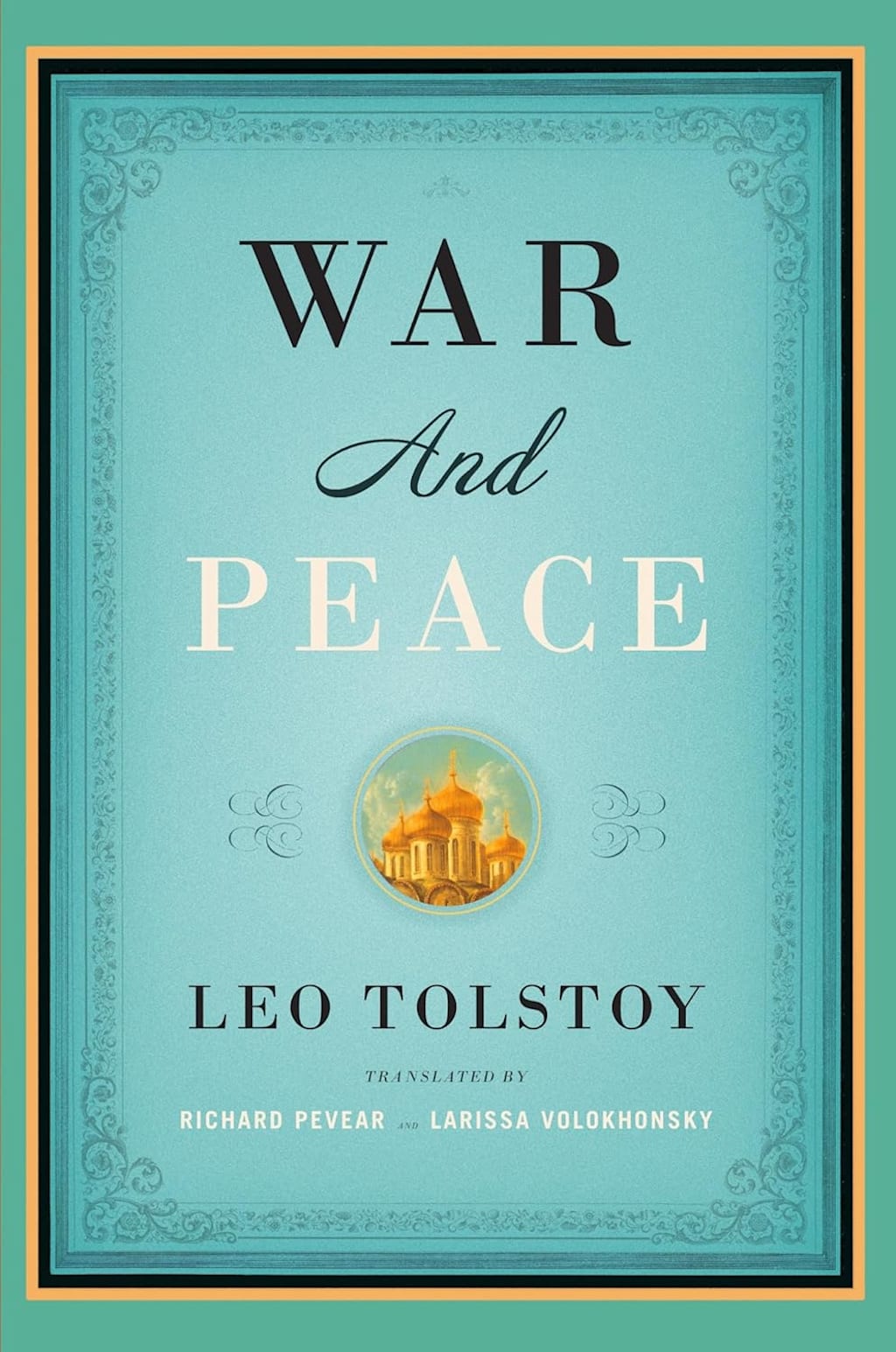
Tolstoy began writing this novel in the 1860s, at a time where his country was still reeling back from the emancipation of the serfs and even more so, from the Napoleonic Wars. He was initially going to write it about the Decemberist Uprising of 1825 but moved things around a bit so that he could better explore the extremes of Russian identity. Drawing on historical research, family records, and first-hand accounts, Tolstoy sought to blend fiction with documentary realism. His aim was to present not only the political and military events but also the moral and emotional lives of those caught within them, making the work a structure involving history, philosophy, and literature.
Between 1863 and 1869, Tolstoy would write and rewrite different parts of the novel, with his wife often editing drafts by hand and staying up late into the night to assist him. His correspondence from the period reveals deep anxiety over how to represent truth in fiction and his struggle to reconcile artistic creation with philosophical inquiry. But he laboured on still, spiritually growing as the novel continued to expand and change.
War and Peace was first published serially in "The Russian Messenger" from 1865 to 1867 under the title 'The Year 1805'. It was later expanded and published in its complete form in 1869. Tolstoy later revised and republished the novel several times, refining both its language and philosophical passages. Despite criticism about its unconventional structure and its lack of main protagonist, it went on to become one of the more famous Russian novels of all time. Be that as it may, there were many critics who hailed the novel as being one of the best works ever written and it went on to inspire realism writers from Thomas Mann to Virginia Woolf.
Plot
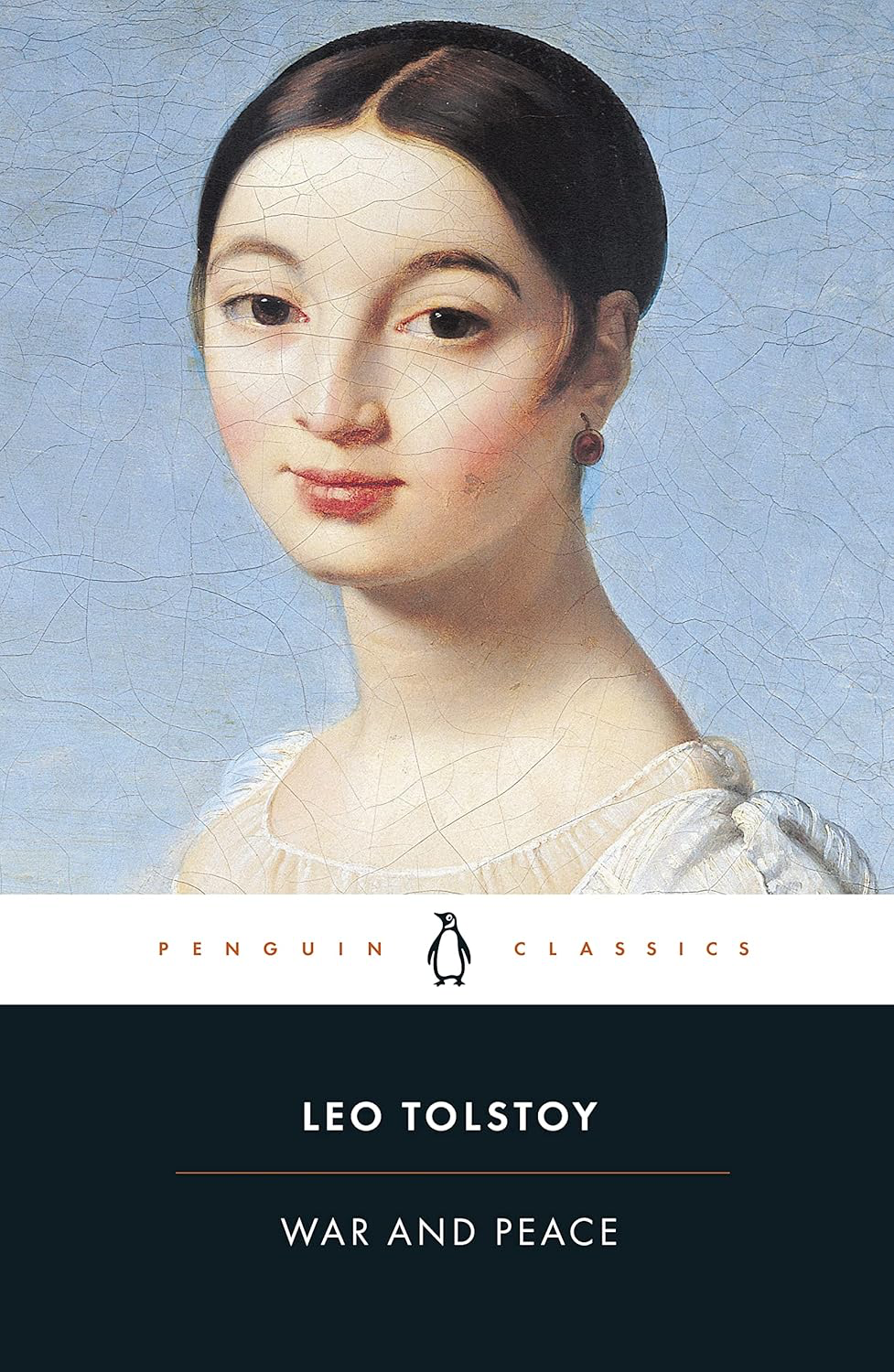
War and Peace opens in 1805 with a soirée at the home of Anna Pavlovna Scherer, where members of St. Petersburg’s aristocracy discuss Napoleon’s growing threat. Among the attendees are: Pierre Bezukhov, an awkward but idealistic young man who has just inherited a fortune; Prince Andrei Bolkonsky, disillusioned with his superficial life; and Natasha Rostov, a lively and innocent girl from a noble family.
Seeking purpose, Prince Andrei leaves his pregnant wife, Lise, to fight in the war against Napoleon. He serves as an aide-de-camp (confidential assistant to the senior officer) to General Kutuzov and witnesses the chaos of the Battle of Austerlitz, where Russia suffers a devastating defeat. Andrei experiences a profound existential awakening after being wounded and gazing at the vast, indifferent sky. His near-death experience marks the beginning of his spiritual evolution, as he grows disillusioned with both military glory and human ambition. This is a part that I like to think Tolstoy would've written quite early on because of the very direct spiritual growth and discovery of new thoughts and fears.
After his father’s death, Pierre unexpectedly inherits a massive fortune and becomes one of Russia’s wealthiest men. Thrust into high society, he is manipulated into marrying the beautiful but shallow Hélène Kuragin. The marriage quickly collapses, and Pierre’s life spirals into moral confusion and despair. He turns to Freemasonry, hoping to find spiritual meaning and reform himself and others, but he struggles to reconcile idealism with human weakness.
The Rostov family is a warm, impulsive, and financially unstable and they definitely represent the emotional heart of the novel. Natasha, their vivacious daughter, grows up amid family celebrations, dances, and hunting parties. Her innocence and enthusiasm contrast with the moral complexity of other characters. When she meets Prince Andrei at a ball, the two fall deeply in love, symbolising the merging of idealism and vitality. But of course, all is not fair in love and war. Tolstoy throws in some curve balls later on that we don't fully expect but it adds to the emotional depth of the novel.
As the Napoleonic threat resurfaces in 1812, Andrei, having matured and grieved the death of his wife, reenters military service. He carries a new sense of resignation toward life’s suffering and futility. Meanwhile, Pierre becomes obsessed with understanding history and Napoleon’s power, seeing the French leader as a false idol. Their paths cross amid war’s chaos, where Tolstoy contrasts philosophical contemplation with brutal realism. Of course, the 'brutal realism' is the PTSD of war and reality that Andrei is experiencing through his sights of death and dying.
During Andrei’s absence, Natasha becomes infatuated with the charming but predatory Anatole Kuragin, Hélène’s brother. Manipulated by Anatole’s deceit, she plans to elope, but the plot is exposed, shattering her engagement to Andrei and her family’s reputation. Devastated by guilt and shame, Natasha falls into deep depression and illness. Her downfall marks the loss of innocence and the beginning of her moral education. Natasha is one of those characters though, you cannot help but feel very sorry for. She is one of the characters who definitely represents the beating heart of the novel.
Napoleon’s army invades Russia, setting the stage for the novel’s grand historical climax - which is devastating as it is incredible to read. The Russian forces retreat, burning towns and villages as they go. Tolstoy presents the invasion not as the product of Napoleon’s genius but as the chaotic unfolding of countless human decisions and accidents. Pierre, driven by his philosophical curiosity, travels to observe the war firsthand, while Prince Andrei serves bravely at the front.
The Battle of Borodino, one of the bloodiest engagements of the Napoleonic Wars, becomes the novel’s central war episode. Prince Andrei is gravely wounded, achieving a kind of spiritual clarity as he contemplates forgiveness and the futility of hatred. Pierre, witnessing the battle’s carnage, undergoes a profound inner transformation, realising the insignificance of human power in the face of death. Tolstoy sends a message to the reader about the way in which human power can corrupt and kill even those who are working for the cause.
After the French occupy Moscow, Pierre is captured while attempting to assassinate Napoleon. During his imprisonment, he experiences deprivation and witnesses the execution of prisoners, which profoundly alters his worldview. Through his friendship with the peasant Platon Karataev, Pierre discovers a sense of inner peace and acceptance of life’s simplicity and transience. His spiritual rebirth reflects Tolstoy’s belief in moral enlightenment through humility and connection with common humanity. It is not the soldiers who have a gripe with each other, but instead the powers that are out of their hands that control them. On their own though, people do not seek each other's differences.
As peace returns to Russia, the surviving characters rebuild their lives. Prince Andrei dies, but his death brings reconciliation and peace to those who loved him, particularly Natasha, who matures through grief. She eventually marries Pierre, and their domestic life symbolises harmony and moral renewal. Natasha is redeemed in her attempts at becoming the woman her family would be proud of. Pierre settles upon a woman whom he can trust and will not take advantage of him.
Into the Book
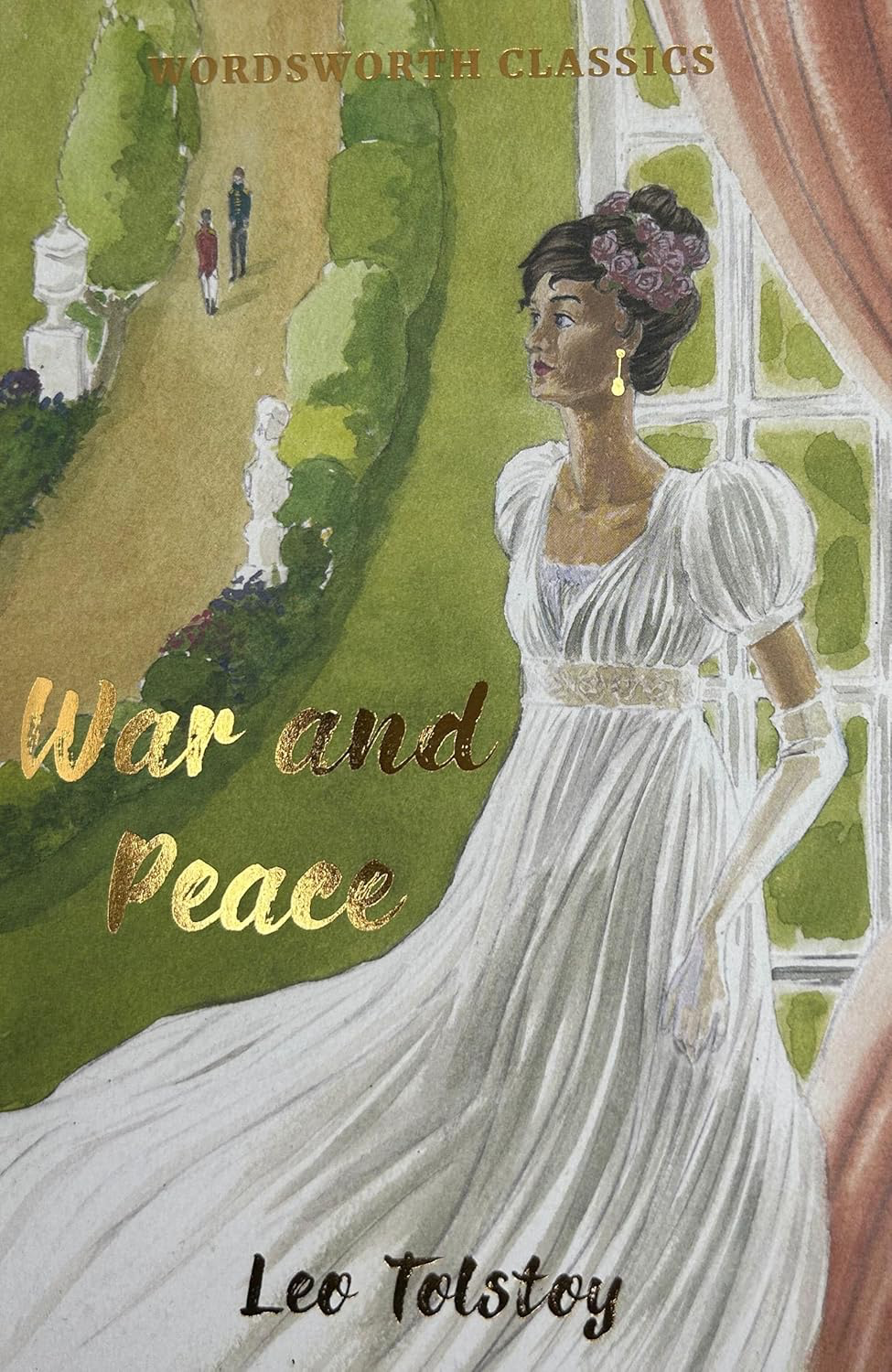
The Illusion of Free Will:
One of the most profound themes in War and Peace is the illusion of individual free will within the vast flow of history. The author rejects the idea that great men (such as Napoleon) shape events through genius or willpower.
Instead, he argues that history unfolds through countless small actions, choices, and coincidences. This philosophy is shown in characters like Pierre and Prince Andrei, who struggle to understand their roles in a world seemingly beyond human control.
Tolstoy’s depiction of battles, politics, and personal fates emphasises inevitability rather than agency. Even the mightiest leaders are swept along by historical forces they cannot command. Through this vision, the author redefines heroism as moral awareness and acceptance of life’s natural order rather than domination over it.
“The strongest of all warriors are these two—Time and Patience.”
- War and Peace by Leo Tolstoy
The Search for Spiritual Meaning:
Throughout the novel, the author explores humanity’s search for spiritual meaning amid the chaos of war, love, and mortality. Pierre’s philosophical journey is one that takes him from hedonism and despair to enlightenment through suffering, illustrates the moral awakening that Tolstoy saw as the essence of life.
His encounter with the humble peasant Platon Karataev depicts the redemptive power of simplicity, kindness, and faith. Prince Andrei’s near-death experiences similarly lead him to a deeper understanding of compassion and forgiveness.
In both cases, Tolstoy suggests that wisdom arises not from intellectual reasoning but from the acceptance of life’s mystery and being connected to others. Spiritual truth, in Tolstoy’s view, is found not in grand ideals but in ordinary goodness and humility.
“To love life means to love God, for life is all, and all is God.”
- War and Peace by Leo Tolstoy
Love and Human Connection:
Love in War and Peace functions as a redemptive force that moves above ambition, pride, and suffering. Romantic love, such as: that between Natasha and Andrei, serves as a path toward maturity and self-knowledge, though it often falters under the weight of human weakness. They prove that their identities are more fragile without going through that moral confrontation and suffering that takes place in the rest of the text.
More powerful is the compassionate, spiritual love that emerges later between Natasha and Pierre which depicts Tolstoy’s belief in moral harmony and domestic peace as life’s ultimate fulfilment. The Rostovs, despite their flaws, embody warmth and emotional authenticity that contrast with the moral emptiness of aristocratic society.
Through love and human connection, Tolstoy sees a reconciliation between the individual and the world as a quiet resistance against life’s chaos and strangeness.
“Love hinders death. Love is life. All, everything that I understand, I understand only because I love.”
- War and Peace by Leo Tolstoy
Why It's a Masterpiece
One of the reasons this book is a masterpiece is because Tolstoy doesn't limit himself to just one plot-line but explores the lives of different people and families within the realm of a turbulent time of Russian history. The realism comes not just from detailed descriptions of battle or court life, but from the psychological depth of characters who grow, change, and suffer. The novel’s portrayal of war is unsentimental, depicting chaos, randomness, and human cost over heroic myth.
War and Peace offers some of literature’s most vivid portraits: Pierre’s existential restlessness, Natasha’s passionate heart, Andrei’s disillusionment, family joy and grief. Readers like me connect with them not because they are idealised, but because they are deeply flawed and human. Especially characters like Natasha and Marya who are both, in reality, opposites but converge upon each other as familiars - though they share little in common. Marya's family may be broken, and Natasha's reputation may be destroyed - but Tolstoy has redemption in store for both of them.
Conclusion
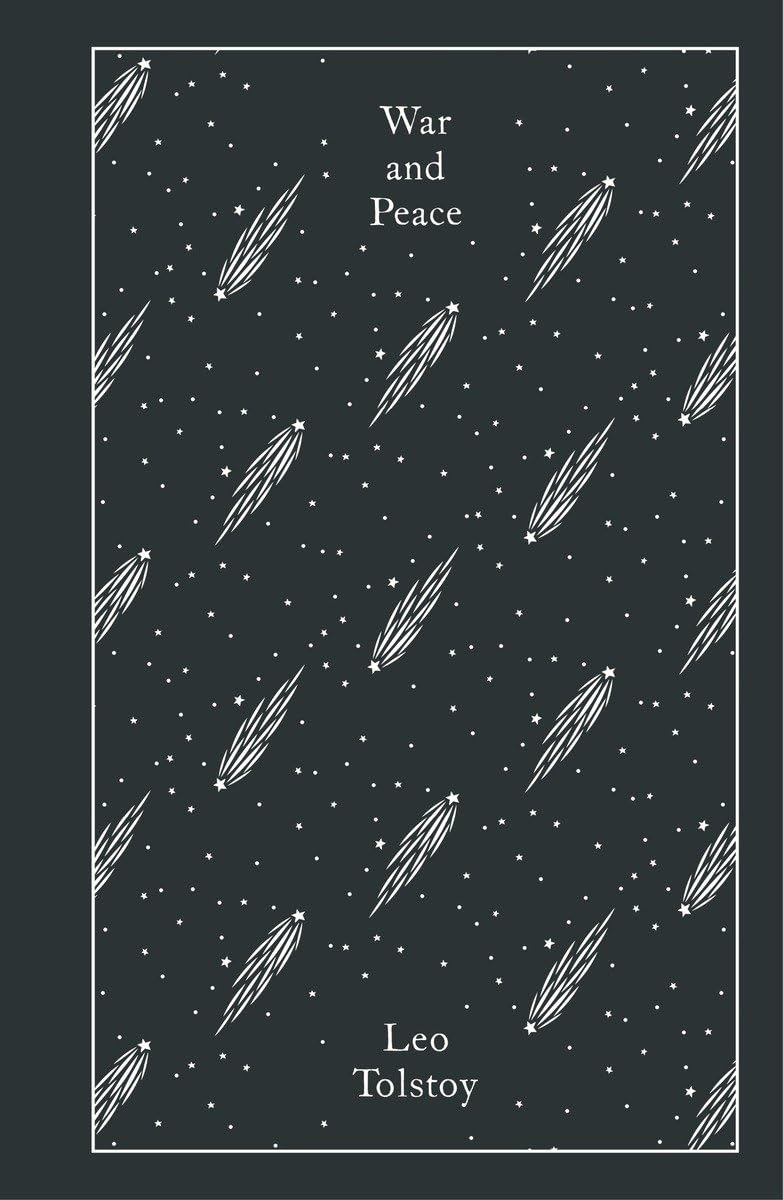
I hope you have enjoyed this article on War and Peace in which I have tried my best to condense the information down into a manageable size. If you ever get around to reading this book then I would highly recommend it. It is one of those books where you hear people talk about it and think about whether it is worth the hype. I can tell you that it definitely is worth the hype and then some.
Next Week: The Death of Napoleon by Simon Leys
Join in on my writing challenge!
Winners announced on Halloween...
About the Creator
Annie Kapur
"Et in Arcadia Ego"
***
I am:
🙋🏽♀️ Annie
📚 Avid Reader
📝 Reviewer and Commentator
🎓 Post-Grad Millennial (M.A)
***
I have:
📖 300K+ reads on Vocal
🫶🏼 Love for reading & research
🦋/X @AnnieWithBooks
***
🏡 UK
Enjoyed the story? Support the Creator.
Subscribe for free to receive all their stories in your feed. You could also become a paid subscriber, letting them know you appreciate their work.
Comments
There are no comments for this story
Be the first to respond and start the conversation.