
Thérèse Raquin by Emile Zola
Why It's a Masterpiece (Week 133)

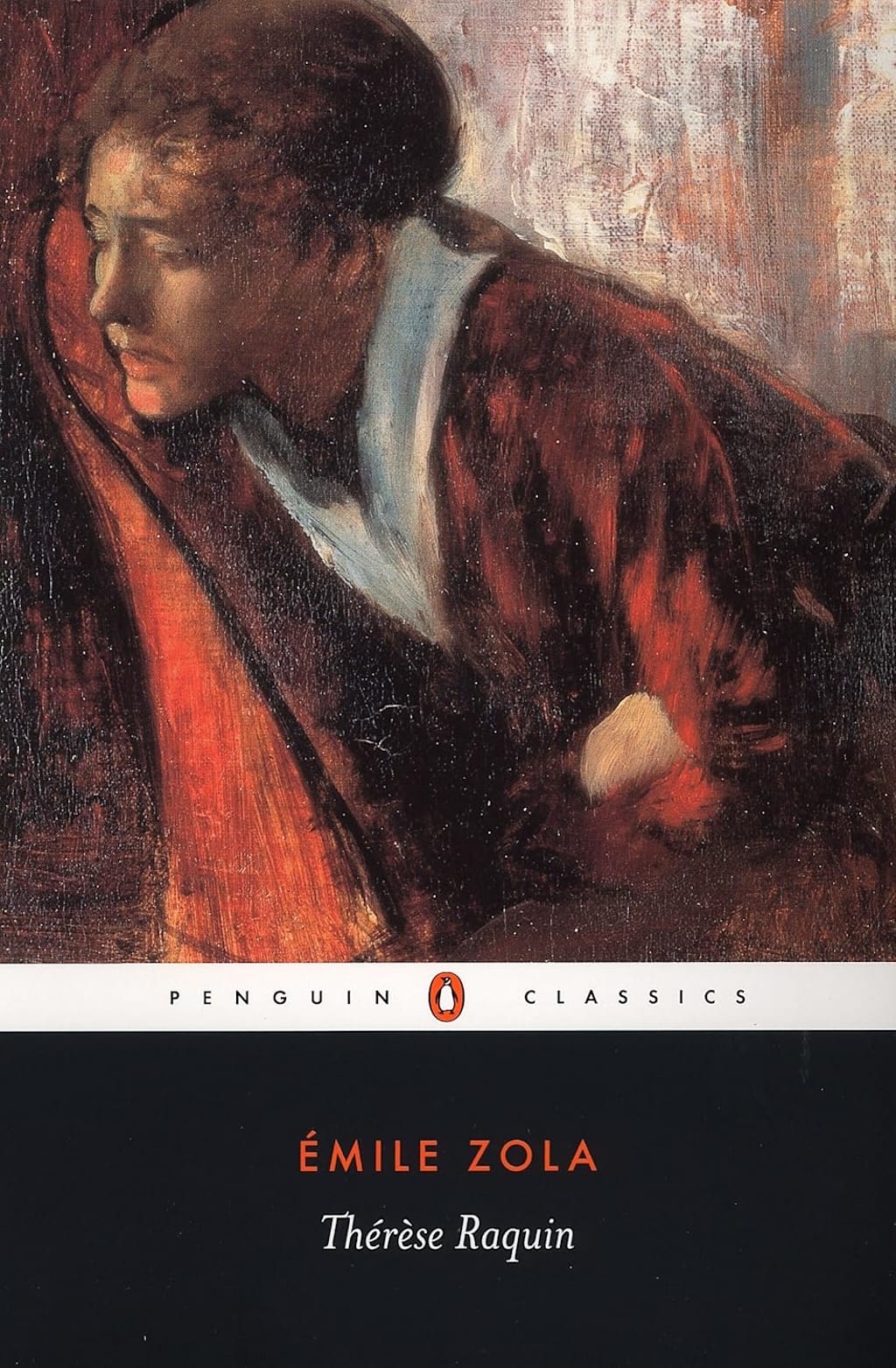
Emile Zola was once a journalist and an art critic but early on in his writing career, he made a start on a book called Thérèse Raquin. The novel was first published as a serial in the magazine L’Artiste in 1867 before being released as a single-volume book later that year by the publisher Lacroix. With what Zola believes is more of a 'scientific' approach to the study of human behaviour and morality, the serial version may have attracted limited attention but the book did quite well.
He would seek to call the novel a 'study of temperament' rather than a normal book and his study of human behaviour under particular (and rather horrifying) psychological conditions made the novel the source of a huge amount of public reaction. Upon its release, it caused outrage among many critics, who found it indecent and immoral because of its frank treatment of sexuality, violence, and psychological decay. Conservative readers condemned its “repulsive” content, while others admired its raw realism and bold departure from romantic convention.
Plot
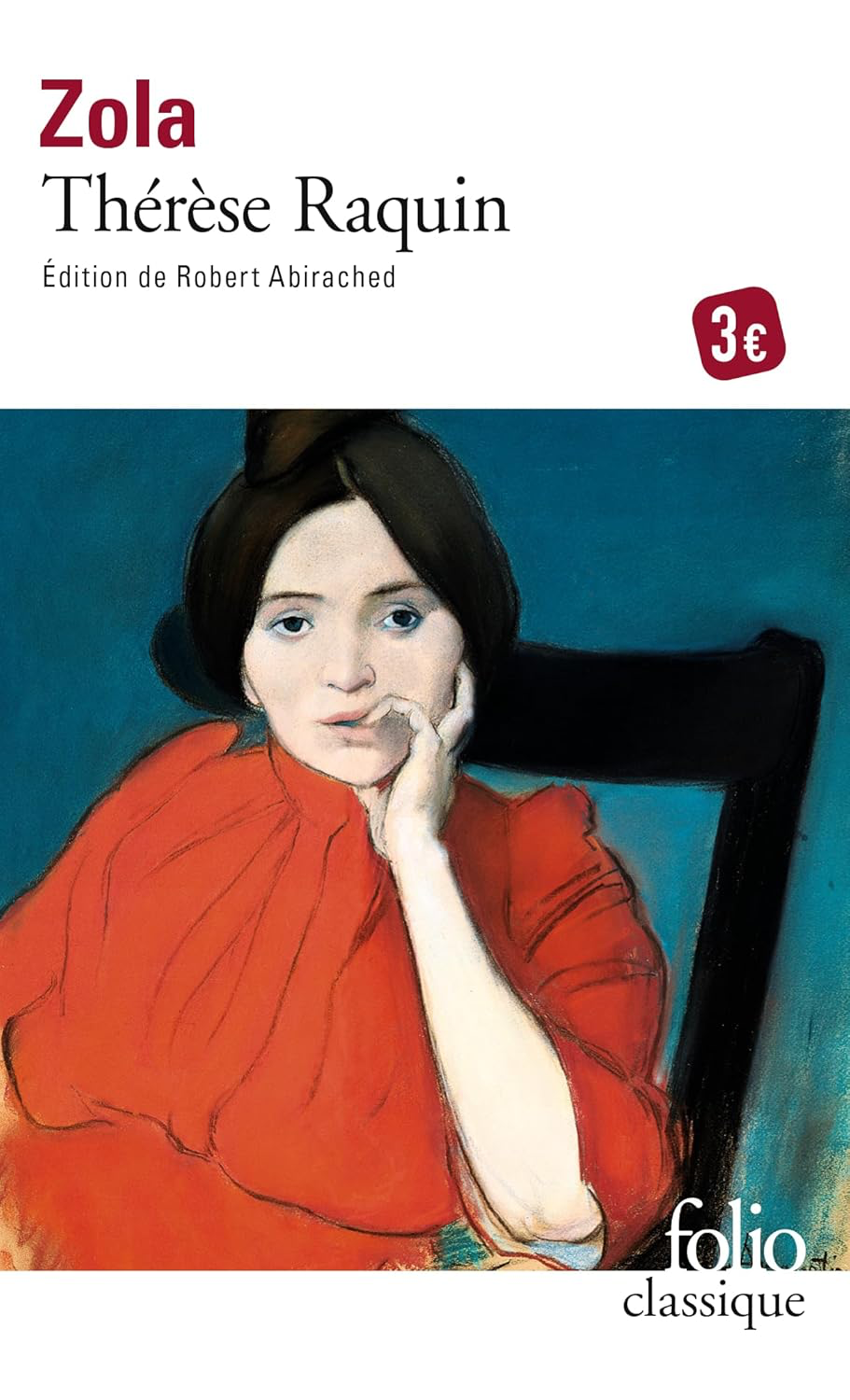
The novel begins by introducing the reader to Thérèse, an orphaned girl of mixed French and Algerian descent. After her mother’s death, she is taken in by her aunt, Madame Raquin, a strict and possessive woman who raises Thérèse alongside her sickly, pampered son, Camille.
Madame Raquin arranges for Thérèse to marry Camille once they are adults, believing it a practical and affectionate match. Thérèse, having been raised as Camille’s sister, feels no love for him but submits out of obligation. Camille remains self-centred and fragile, while Thérèse feels increasingly trapped in a monotonous life devoid of passion or freedom.
Seeking better prospects, Camille persuades his mother and Thérèse to move to Paris, where he finds a job with the railway. The family settles in a gloomy, damp shop near the Pont-Neuf, selling haberdashery. Each week, Madame Raquin hosts small social evenings attended by a few acquaintances, including an old police clerk named Michaud and his son Olivier. The routine evenings are dull and repetitive, filled with polite conversation and games of dominoes, showing the lifeless predictability of Thérèse’s existence.
Camille introduces his old school friend Laurent, a coarse but physically robust and sensuous man who contrasts sharply with Camille’s weakness. Laurent begins visiting regularly, and his presence awakens Thérèse’s repressed desires. Their mutual attraction grows quickly, leading to a secret and passionate affair conducted in the very house Camille shares with his wife.
Thérèse and Laurent’s meetings become increasingly obsessive and reckless. Zola portrays their relationship not as romantic love but as a physical, almost animalistic compulsion. Both are consumed by lust but tormented by the need to conceal their betrayal, realising that Camille’s existence is the sole barrier to their freedom. It is psychologically tormenting for the both of them and so, that is reflected back onto the reader who is feeling all of the tension whilst also feeling deep empathy for Thérèse because of her difficult position.
Driven by desperation, the lovers conspire to kill Camille during a boating excursion on the Seine. One evening, under the pretence of a leisurely outing, Laurent pushes Camille overboard and strangles him in the water. Thérèse remains silent, complicit in the act. They return home claiming it was an accident, and although Madame Raquin is devastated, she believes their story.
Initially relieved, Thérèse and Laurent expect to live happily together. However, after the murder, both are haunted by guilt and recurring visions of Camille’s corpse. Laurent suffers terrifying nightmares and hallucinations, while Thérèse grows increasingly nervous and hysterical. Eventually, Thérèse and Laurent marry, but their relationship is poisoned by paranoia and loathing. Madame Raquin, meanwhile, suffers a stroke that leaves her paralysed and unable to speak but mentally alert. One evening, she overhears the lovers confessing their crime in a heated argument and becomes a silent, living witness to their guilt, trapped in her own immobile body. Again, we see the true nature of the psychological torment suffered by all of the characters involved.
The psychological torment intensifies until both Thérèse and Laurent descend into madness. Their home becomes a site of unbearable tension, echoing with hallucinations of Camille’s ghost. In the final scene, the two decide to kill each other; each prepares poison for the other, but before drinking, they realise their mutual intent. Overwhelmed by despair, they simultaneously take the poison and die at Madame Raquin’s feet, thus leaving her to watch their punishment unfold in silence.
Into the Book
Guilt and Torment
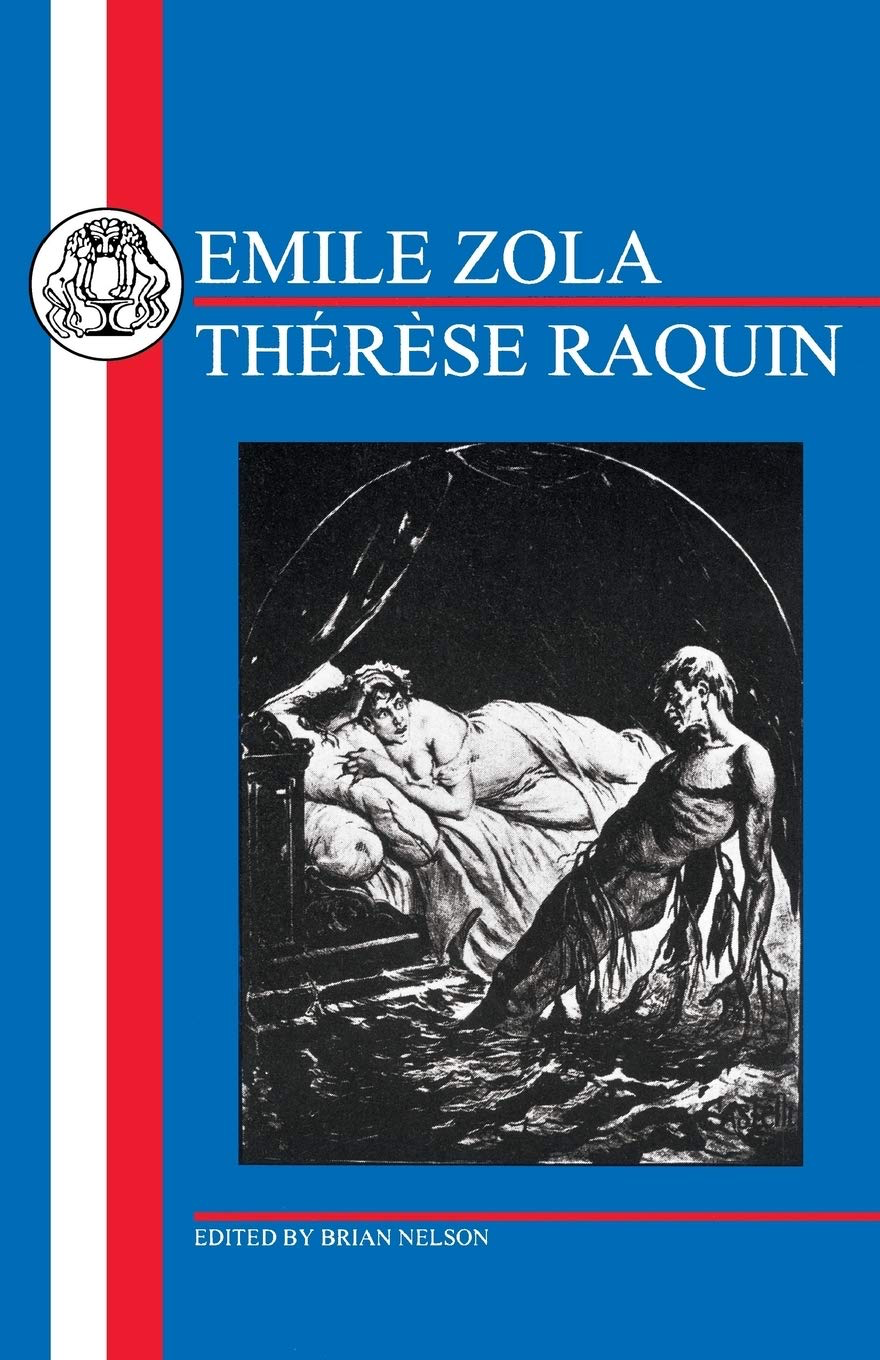
After the murder of Camille, guilt consumes both Thérèse and Laurent, transforming their passion into horror. Zola portrays guilt not merely as an emotion but as a physical and psychological illness. He writes, “Their crime had lodged in their flesh, had entered their blood, and it grew there, like a poison.” Through the language of infection and decay, Zola states that guilt contaminates their very bodies, aligning with his belief in the material basis of human behaviour.
Zola’s scientific tone, using imagery of disease and corruption, strips guilt of spiritual or moral overtones, instead presenting it as a biological inevitability following their act of violence. As their hallucinations intensify and the lovers’ inner decay mirrors the physical decay of the drowned body - the very same they see in the hallucinations and nightmares. The body becomes the psychological torment itself.
“They lived like two enemies bound together by a crime.”
- Thérèse Raquin by Emile Zola
The Absence of Free Will
Zola believed that human behaviour was in fact, determined by environment rather than moral alignment. Thérèse’s constrained upbringing, her repressed passions, and the stifling environment of the Raquin household all shape her eventual crime. Zola writes, “She was a corpse kept alive by habit, a sleeping beast that a breath might awaken.” The metaphor of the “sleeping beast” suggests animalistic instincts lying dormant beneath the shroud of civilisation. When Laurent arrives, he awakens these forces in her.
Their affair and the ensuing murder are not portrayed as moral failings but as inevitable outcomes of their temperaments colliding within oppressive circumstances. Zola’s beliefs in human behaviour denies Thérèse and Laurent the agency to act differently; their tragedy is one of biology and environment, not choice.
“They obeyed the commands of their blood, like animals driven by instinct.”
- Thérèse Raquin by Emile Zola
Confinement and Claustrophobic Settings
Physical and psychological confinement are huge parts of Thérèse Raquin, shaping both setting and character. The small, dimly lit haberdashery on the Rue du Pont-Neuf becomes a metaphor for the characters’ stifled existence. Zola writes, “The shop was like a dark hole, a tomb in which the air was tainted with the smell of the Seine.” This imagery of decay and enclosure mirrors Thérèse’s emotional imprisonment within her marriage to Camille and her life under Madame Raquin’s control. The comparison of the shop to a tomb anticipates the (moral) death that follows.
Even after the murder, freedom remains an illusion as the couple’s home transforms into another prison, haunted by guilt and by the paralysed figure of Madame Raquin. Zola’s sensory detail such as: the stagnant air, the damp walls, the lack of sunlight, creates an atmosphere of suffocation, reflecting through the environment, the emotional state of our morally corrupt characters.
“The walls seemed to close in on them, pressing tighter each evening.”
- Thérèse Raquin by Emile Zola
Why It's a Masterpiece
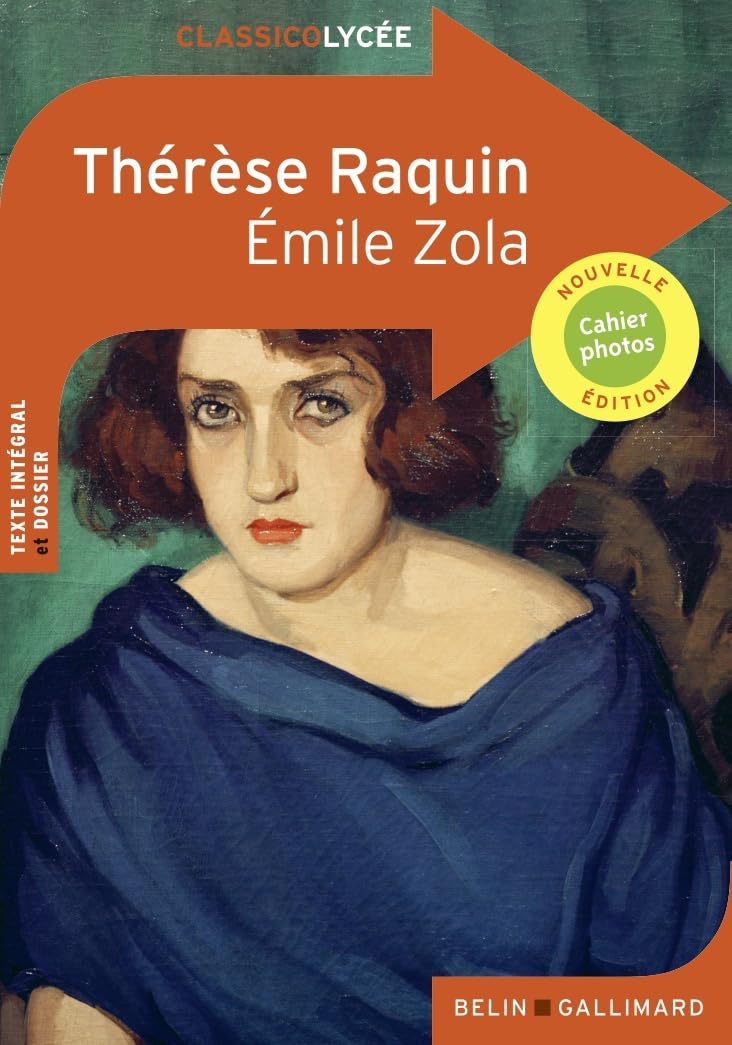
I first read this book some years' back and I can't tell you how in-depth it is until you actually read it. All at once, you feel sympathy for the protagonist but then you don't, but then you do again. It is a novel that is determined right from the very beginning and, though it feels deeply upsetting and moving, Zola writes it almost in the moral darkness. There is nothing about this which is a moral failure, but instead it is two people who have been pushed for too long, two people who are destined to die because of circumstance - like a twisted Romeo and Juliet. I've always loved Zola's novels and if you haven't read any then this is where you should start.
Conclusion
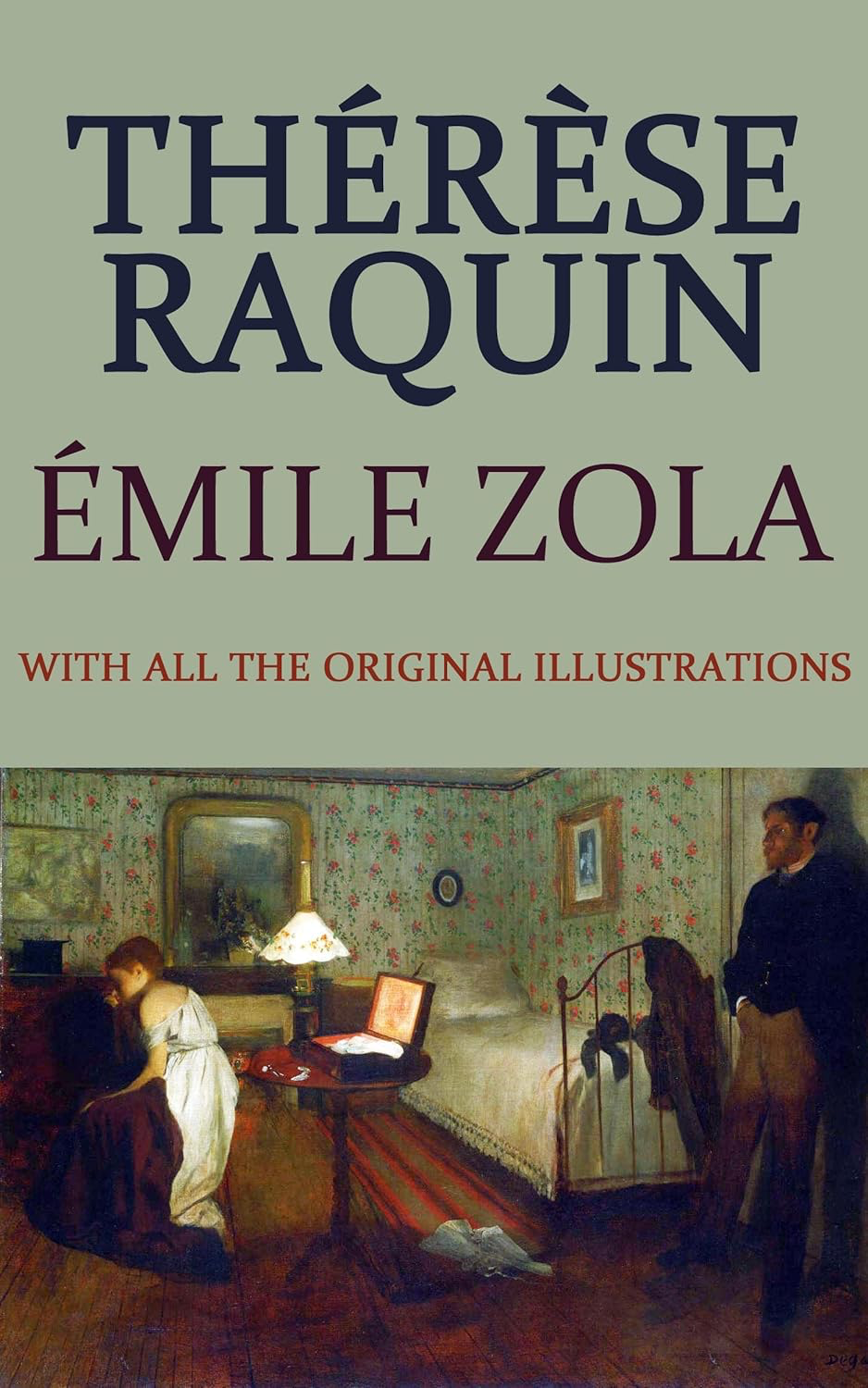
I hope you have enjoyed this week's Why It's a Masterpiece and I also hope that if you haven't read this book then you choose to. It is a fantastic tragedy novel which definitely represents the cause-and-effect of what happens when people are left feeling scorned by circumstances out of their control.
Next Week: The Tenants of Moonbloom by Edward Lewis Wallant
Join in on my writing challenge!
Winners announced on Halloween…
About the Creator
Annie Kapur
"Et in Arcadia Ego"
***
I am:
🙋🏽♀️ Annie
📚 Avid Reader
📝 Reviewer and Commentator
🎓 Post-Grad Millennial (M.A)
***
I have:
📖 300K+ reads on Vocal
🫶🏼 Love for reading & research
🦋/X @AnnieWithBooks
***
🏡 UK
Enjoyed the story? Support the Creator.
Subscribe for free to receive all their stories in your feed. You could also become a paid subscriber, letting them know you appreciate their work.
Comments
There are no comments for this story
Be the first to respond and start the conversation.