
The True Deceiver by Tove Jansson
Why It's a Masterpiece (Week 128)

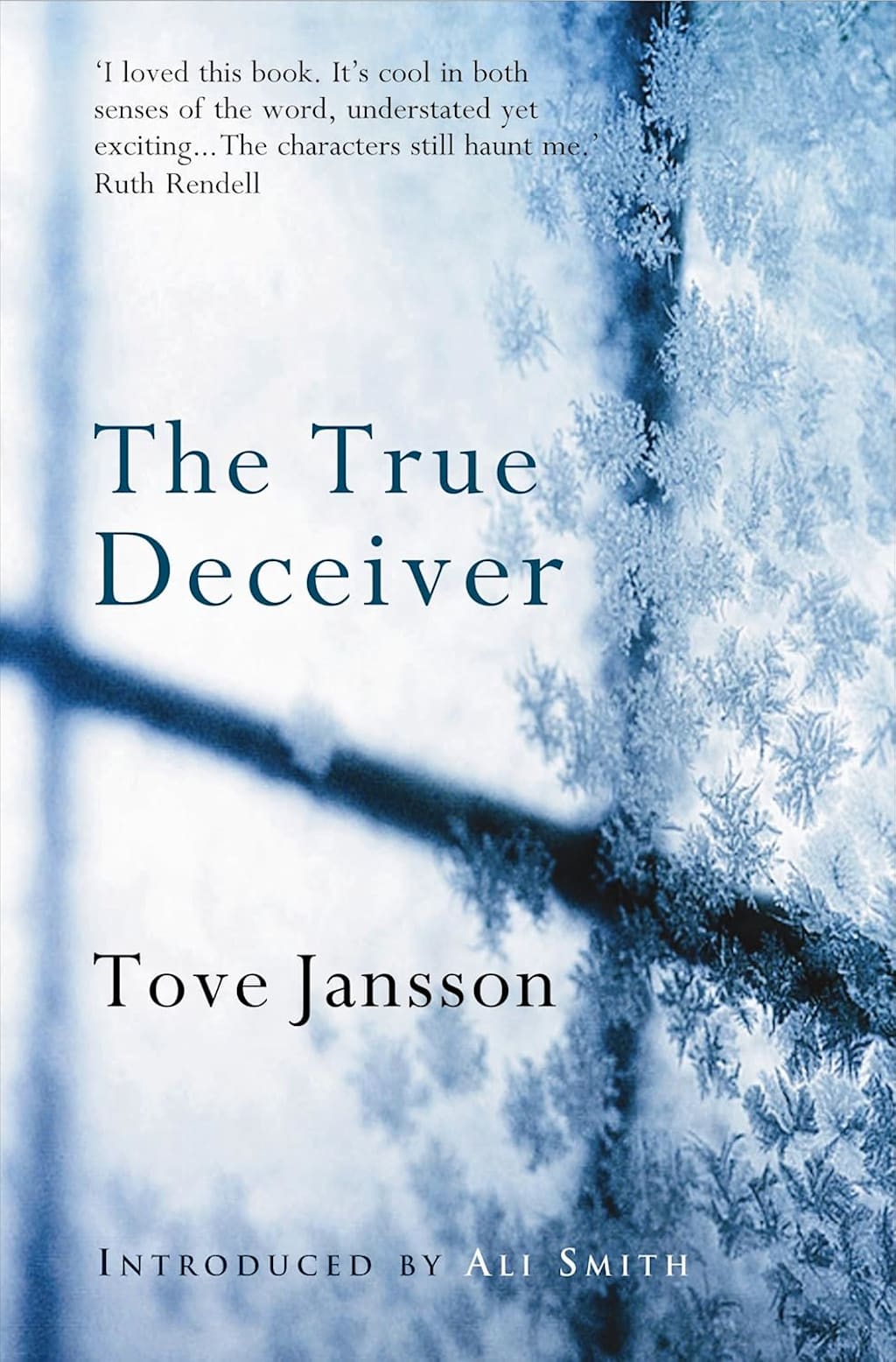
The author is probably best known for creating The Moomins, but The True Deceiver is definitely a shift towards more mature fiction in the latter decades of the 20th century. This novel was first published in Swedish in 1982 under the title Den Stora Bedragaren. Written during Jansson’s own later years, the book is set in a remote, snow-covered Finnish village, showcasing her interest in themes such as: isolation, honesty, and deception.
It was translated into English by Thomas Teal and first published in English in 2009 by New York Review Books Classics, which helped bring Jansson’s adult works to a wider readership. This is the edition I managed to grab a copy of as well. It has been released by multiple publishing houses since.
Plot
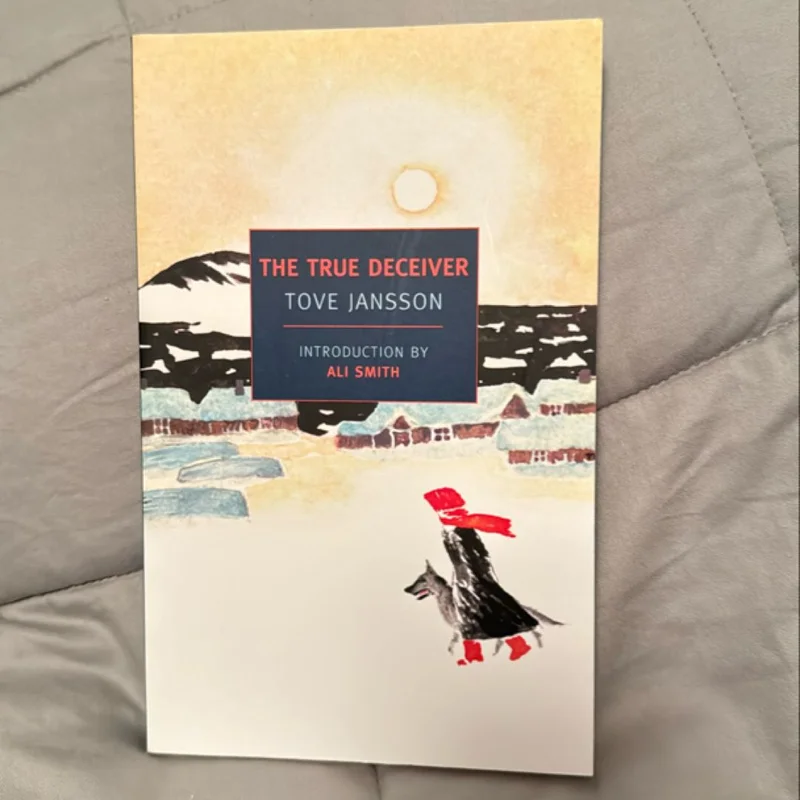
The novel opens in a small, snowbound Finnish village where winter seems to have locked everyone in silence. Within this stark setting, two central figures emerge: Katri Kling, a stern, sharp-minded young woman with yellow eyes, and Anna Aemelin, an older, wealthy, and rather naïve children’s illustrator who lives alone in a large house. Katri, who lives with her younger brother Mats, is regarded by the villagers as cold, blunt, and calculating, while Anna is known for her kindness and her whimsical paintings of forest animals. Their lives gradually intertwine under the weight of need.
Katri is feared and respected by the villagers, who distrust her penetrating honesty and unyielding manner. She has a reputation for being able to see through pretence and lies, and many seek her advice in financial dealings despite their dislike of her. She lives modestly, caring for Mats, who dreams of building his own boat but is considered simple-minded by others. From the beginning, Katri is portrayed as someone with a plan: she envies Anna’s wealth and comfort and believes she can insert herself into Anna’s household via deceptive actions.
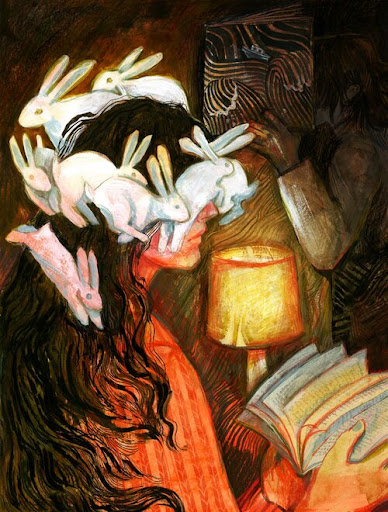
Anna Aemelin lives a sheltered, lonely life in her large, comfortable house. She is known for her distinctive children’s book illustrations (we know someone like that, don't we?), in which she paints meticulously detailed forest floors but populates them with unrealistically cute, wide-eyed rabbits, catering to the demands of publishers and children alike. Despite her talent, Anna seems disconnected from the realities of life, preferring to live in a world of art, routine, and solitude. The villagers regard her with both admiration and bemusement.
Katri and Mats begin to visit Anna more frequently, ostensibly out of concern for her well-being. Katri uses her blunt honesty to critique Anna’s finances, pointing out how shopkeepers and tradesmen take advantage of her. At first, Anna is unsettled by Katri’s presence and piercing truths, but she gradually grows accustomed to the younger woman’s influence. Katri positions herself as indispensable, ensuring Anna begins to rely on her to make decisions. The villagers watch this relationship develop with suspicion, sensing the weird motives of Katri who has seemingly come out of nowhere.
As Katri’s influence grows, she and Mats move into Anna’s home under the guise of helping her manage practical matters. The transition is smooth, orchestrated by Katri with quiet determination. She begins taking control of Anna’s daily life, managing her correspondence, finances, and household affairs. Anna seems simultaneously relieved and unsettled, caught between gratitude and unease. The house itself becomes a battleground of sorts, with Katri bringing order, sharpness, and austerity into Anna’s warm, decorative world. Though Anna is apprehensive, Katri insists it is for the best.
Once firmly placed in Anna’s home, Katri begins dismantling the illusions that have shielded Anna for years. She criticises Anna’s art, questioning the childish rabbits and the dishonesty of pandering to market expectations. Katri insists that Anna should face reality, accusing her of deceiving herself and her readers. At the same time, Katri exposes how neighbours and businesses have exploited Anna’s wealth and reputation. This stripping away of falsehoods unsettles Anna, yet she cannot resist Katri’s brutal honesty. Katri is constantly gaining power through this dynamic, presenting Anna as a dreamer who must confront reality.
As winter deepens, the relationship between Anna and Katri becomes increasingly ambiguous. Katri exerts control, but her motives are not always straightforwardly selfish. At times she seems genuinely protective, ensuring Anna is not cheated or isolated. Yet Anna also begins to assert herself, testing the limits of Katri’s authority. As this happens, the atmosphere seems to cling to the novel, the air of power dynamics shifting in the darkness of the winter leaving the reader with a creeping suspicion.
Anna gradually begins to resist Katri’s dominance. Though she initially accepted Katri’s management of her life, she comes to resent the suffocating control and the coldness with which her illusions are stripped away. The rabbits in her illustrations, once a source of joy, begin to lose their magic under Katri’s scrutiny. Anna becomes more questioning, probing Katri’s motives and hinting at an awareness of her manipulative tactics. Katri, in turn, is forced to reflect on herself and her own lack of warmth or imagination.
Anna begins to push back with unexpected strength, confronting Katri with her own vulnerabilities. She challenges Katri’s disdain for fantasy and imagination, exposing the hollowness in Katri’s ruthless pragmatism. In these moments, Katri herself is unsettled, forced to see that her calculated pursuit of truth may be as deceptive as Anna’s fanciful rabbits.
By the end of the novel, the power dynamic has reversed entirely. Katri is left to think about the destructive impact of her own influence, something that though the joy of drawing the rabbits has been retained, can never really be undone at all.
Into the Book
Truth and Deception
One of the central themes of the novel is the blurred boundary between truth and lies. Katri prides herself on being brutally honest, exposing hypocrisy and illusions in others, yet her entire plan to enter Anna’s household is itself a form of deception. Jansson uses stark, cold language to reflect Katri’s determination: her speech is clipped, her thoughts precise, and her descriptions stripped of ornament. In contrast, Anna’s world is painted with softness, colour, and artifice, mirroring her reliance on illusions. The tension between Katri’s “truth” and Anna’s “fantasy” creates ambiguity: both women deceive themselves in different ways.
“Katri never lied. But she did not tell the whole truth.”
- The True Deceiver by Tove Jansson
Isolation and Companionship
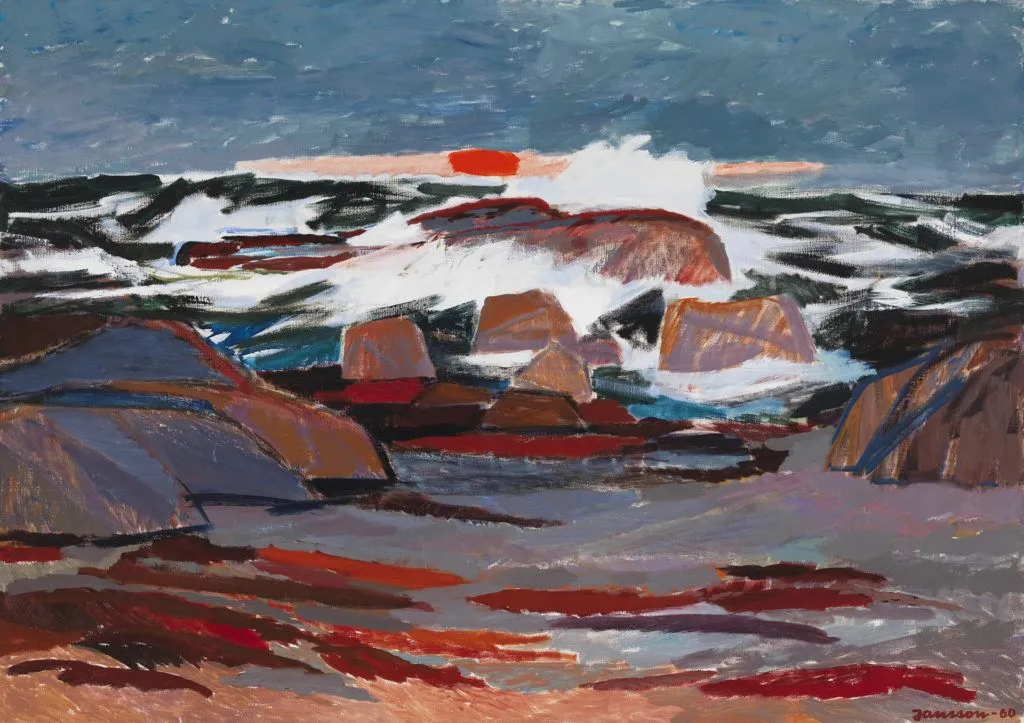
The snowbound village symbolises the isolation of its inhabitants, both physical and emotional. Katri, Anna, and Mats are each lonely in distinct ways: Katri through her coldness, Anna through her retreat into art, and Mats through his simplicity. The stark winter landscape mirrors this loneliness, with Jansson’s sparse, minimalist prose echoing the silence of snow and the frozen sea. Yet companionship also emerges in unexpected places, as the women’s shared life becomes both suffocating and strangely necessary. The language often shifts from harsh to tender, suggesting that even manipulation can breed intimacy in the strangest ways.
“The snow lay heavy on the roofs, muffling all sound, binding people together in silence.”
- The True Deceiver by Tove Jansson
Power and Control
The novel stages a psychological battle of dominance, expressed through everyday interactions. Katri seizes control through her mastery of terse language while Anna resists with a quieter, more elusive power rooted in imagination and persistence. Jansson’s prose highlights these clashes with shifts in tone: Katri’s words are sharp as blades, while Anna’s voice is hesitant but enduring. Power is not always where it first appears; Katri’s authority eventually falters under Anna’s subtle defiance. The tension in their dialogue becomes a contest of wills, suggesting that true control lies not in force, but in resilience.
“Words were Katri’s weapons, and silence was Anna’s defence.”
- The True Deceiver by Tove Jansson
Why It's a Masterpiece
The prose is incredibly minimalist and the author is often praised for the language style being able to pack in so much emotion whilst tearing down any unnecessary phrasings. The novel is not plot-driven but character-driven, tracing the shifting power dynamics between Katri and Anna with incredible subtlety. There are no heroes or villains. Katri, who claims to value truth, manipulates and deceives; Anna, who lives in illusions, shows surprising strength and self-awareness.
Despite its brevity, it is definitely able to communicate the themes of honesty, manipulation and companionship in a ruthless yet truthful way where the reader is left questioning the nature of the ending.
Conclusion

I hope you enjoyed this article on the endearing and yet, undervalued masterpiece of Tove Jansson. There's a lot to be said about minimalist prose even though it isn't really my thing when it comes to literature. I hope you stick around for next week's article which is anything but minimalist. Filled with atmosphere and dread, it is one of the books that apart from my favourites, I have possibly reread the most...
Next Week: The Strange Case of Dr Jekyll and Mr Hyde by Robert Louis Stevenson
About the Creator
Annie Kapur
"Et in Arcadia Ego"
***
I am:
🙋🏽♀️ Annie
📚 Avid Reader
📝 Reviewer and Commentator
🎓 Post-Grad Millennial (M.A)
***
I have:
📖 300K+ reads on Vocal
🫶🏼 Love for reading & research
🦋/X @AnnieWithBooks
***
🏡 UK
Enjoyed the story? Support the Creator.
Subscribe for free to receive all their stories in your feed. You could also become a paid subscriber, letting them know you appreciate their work.
Comments
There are no comments for this story
Be the first to respond and start the conversation.