
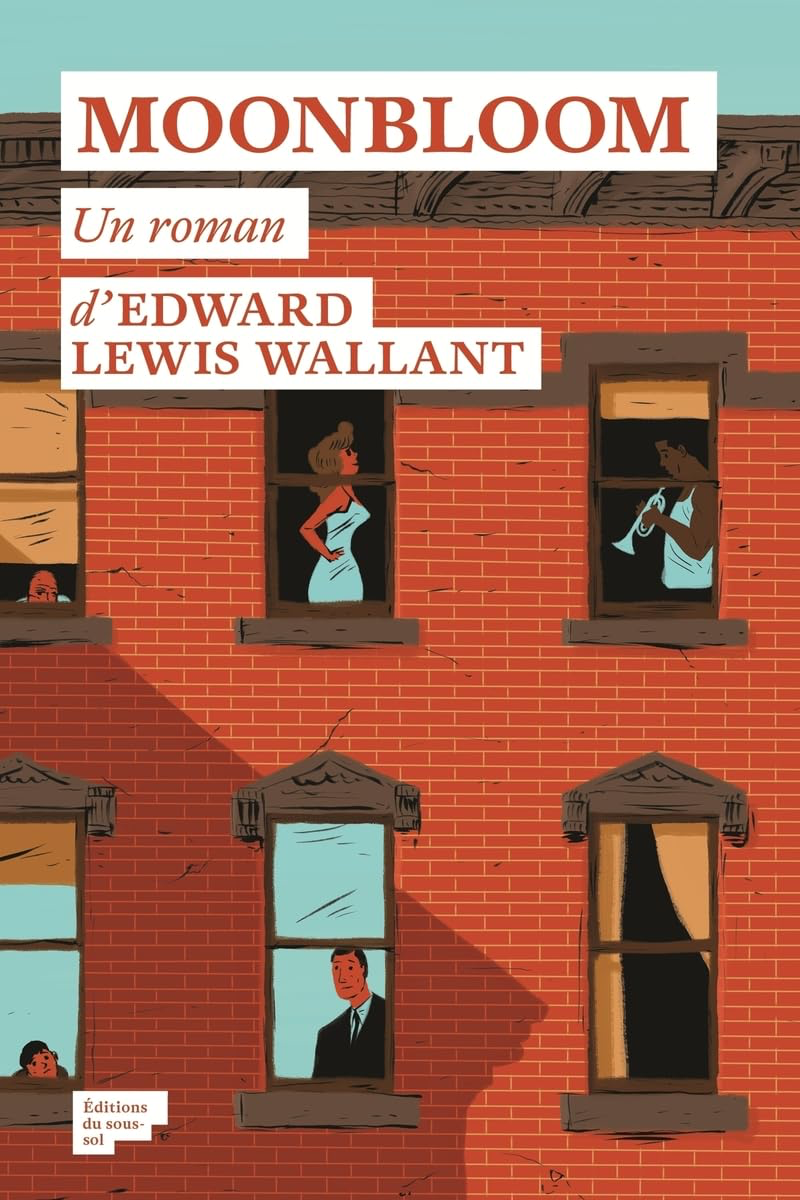
The Tenants of Moonbloom by Edward Lewis Wallant
Why It's a Masterpiece (Week 134)

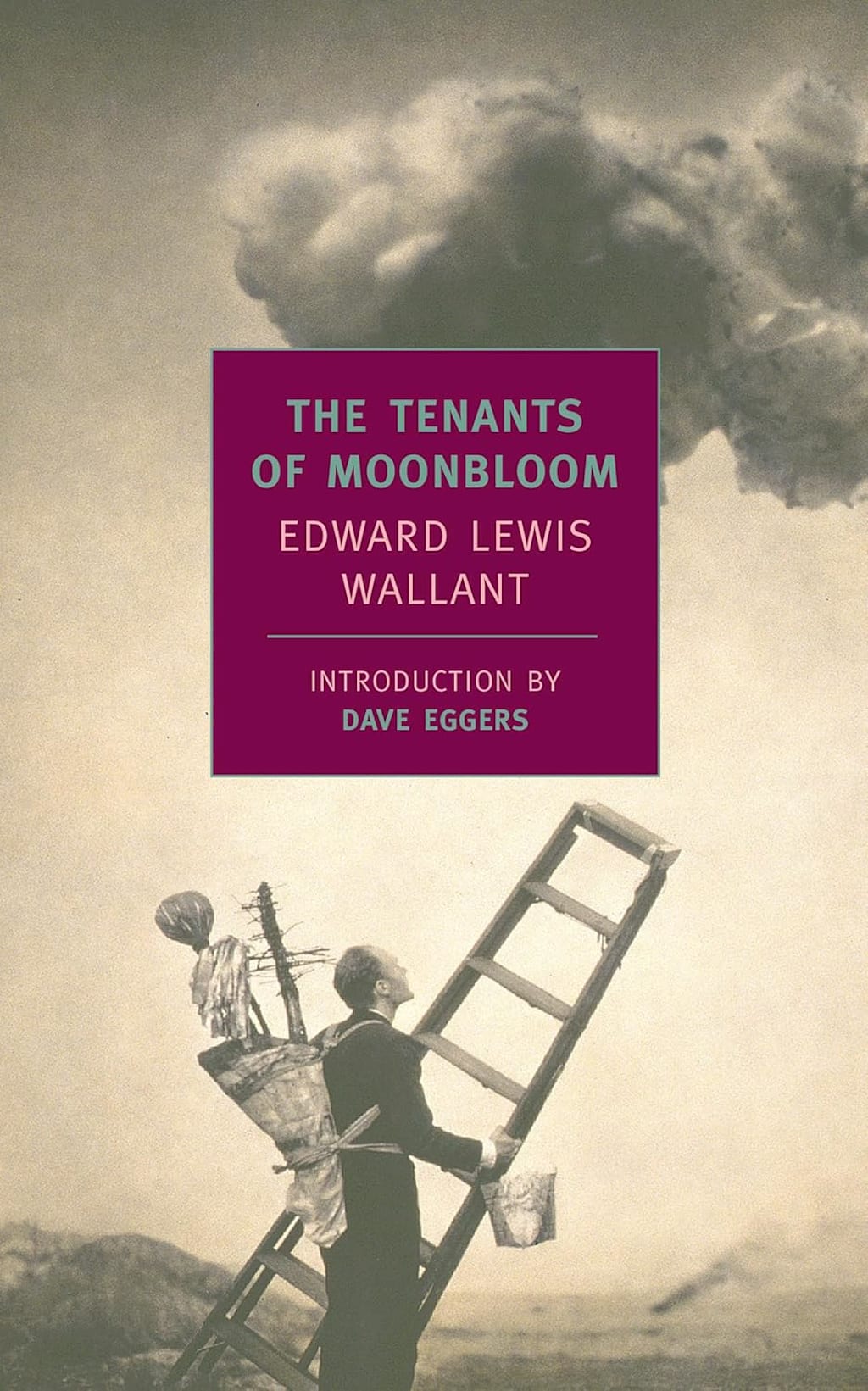
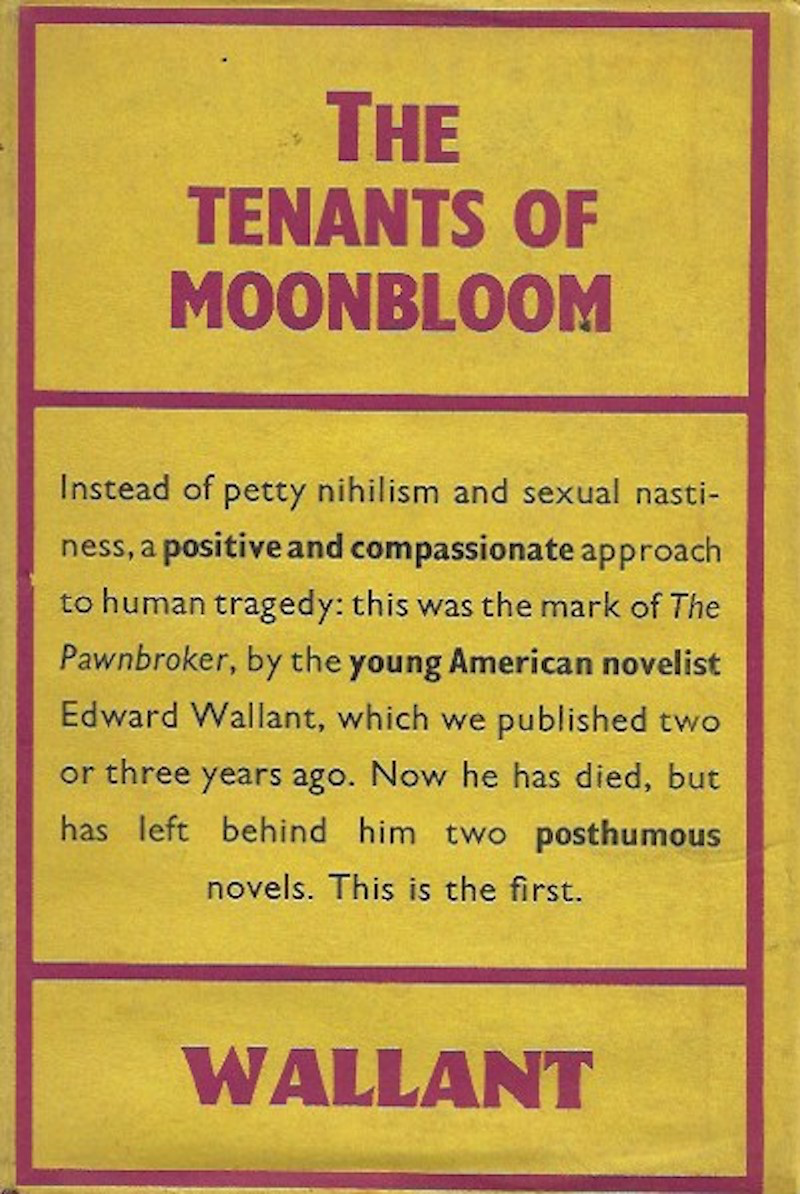
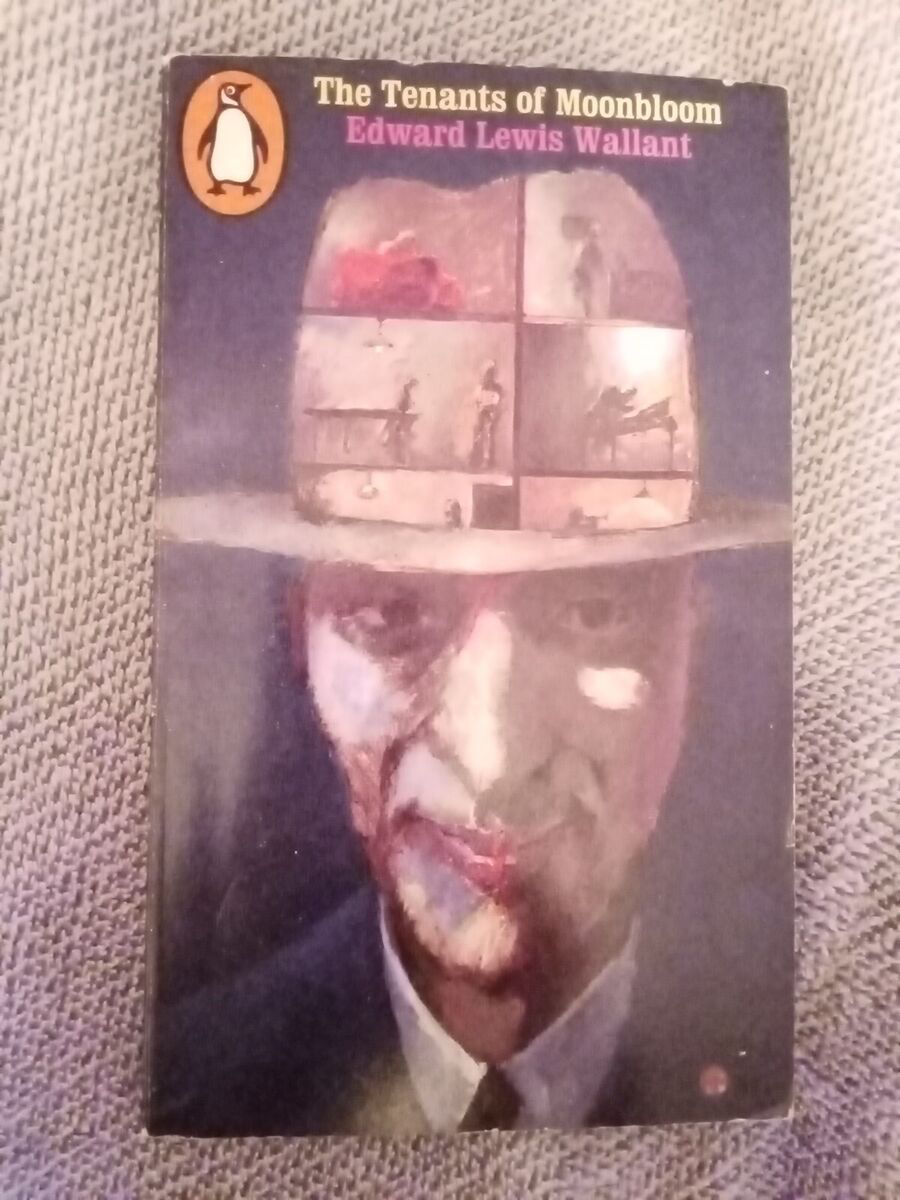
It came as a huge shock when Edward Lewis Wallant died of an aneurysm at the age of just 36 years' old slightly before the publication of his third novel, The Tenants of Moonbloom. An important last text from a post-war writer on the rise, it was published by Harcourt, Brace & World in 1963. Critics admired Wallant’s empathetic portrayal of struggling tenants in New York City and his protagonist Norman Moonbloom’s spiritual awakening amid urban decay. He was a writer who would be compared to the likes of Saul Bellow and others of greats of the 1950s.
The public definitely resonated with the changing social climate between the commercialist 1950s and the slightly less fortunate 1960s and looked into how this author told the new Jewish-American story - one of renewal, regeneration and defeating the odds.
Plot
The novel centres on Norman Moonbloom, a shy, awkward man in his late twenties who has drifted through various careers and university courses without success. When the story begins, he works as a rent collector for his brother Irwin, who owns several rundown tenement buildings in New York City.
Norman spends his days travelling between dilapidated, decaying apartments, collecting rent from poor and eccentric tenants. These visits expose him to the harsh realities of urban life such as: broken plumbing, peeling walls, vermin, and endless complaints. His role as the landlord’s agent makes him a target of resentment, isolating him further. It is quite an important idea in the book that, if you're looking at the ideas surrounding the cons of American urbanisation, you definitely want to pay attention to.
Each building introduces readers to a strange cast of tenants, including lonely widows, struggling artists, bitter couples, and people clinging to dignity amid poverty. The author presents them with humour and compassion, showing the human suffering and endurance that fill Norman’s daily encounters.
At first, Norman is passive and detached, merely going through the motions. But as he listens to the tenants’ troubles, he begins to feel a growing empathy and moral discomfort. The repetitive rhythm of his work becomes a mirror reflecting his own emptiness and disconnection from the world. Norman becomes every American struggling with placement as the novel moves through difficulties with emotion and understanding the self in a changing landscape.
Norman gradually realises that he cannot continue serving as an indifferent middleman between his brother and the tenants. He becomes haunted by guilt and compassion, feeling personally responsible for the misery around him, even though he didn’t create it. His encounters start to change from mechanical ones into acts of moral recognition.
Here is where he really starts to change: moved by a desire to help, Norman begins repairing apartments himself, spending his own money and time fixing leaks, painting walls, and restoring broken fixtures. These actions mark the beginning of his transformation where he goes from being an observer to an active participant in alleviating suffering. This is where we as readers, also start to connect more with the formerly detached character.
Norman’s growing compassion brings him into conflict with Irwin Moonbloom, his cold, business-minded brother who sees tenants only as sources of income. Their confrontations highlight the novel’s moral tension between profit and human decency, with Norman’s new conscience clashing against Irwin’s pragmatism. Norman is now more representative of the ideal American and Irwin is his exact opposite.
Through his encounters with the other tenants, Norman undergoes what can be seen as a spiritual awakening and an emotional journey. His acts of kindness become a form of redemption, allowing him to connect meaningfully with others for the first time. His journey is one from isolation and apathy to love, empathy, and self-understanding.
The novel closes with Norman continuing his rounds, but now transformed. The tenement world remains bleak, yet his perception has changed: he sees beauty and dignity in the struggle of others, finding purpose through his service. It is a wonderful movement towards the end of the text - our character has grown.
Into the Book
Compassion:
This theme is explored through Norman’s transformation from a passive, indifferent man into someone who truly feels the suffering of those around him. Wallant’s language conveys Norman’s emotional shift. At the start, Norman’s observations of the tenants are detached, almost clinical: “He had the curious sense of looking at life through someone else’s eyes, without ever touching it himself.” The use of the metaphor “looking at life through someone else’s eyes” shows his distance and the mechanical nature of his role as a rent collector.
As the novel progresses, Norman’s awareness deepens. The author's descriptive language often emphasises the physical and emotional conditions of the tenants’ lives, using imagery to evoke empathy. For example, when Norman notices a leaking ceiling, Wallant writes: “The water dripped in tiny, insistent beats, marking time like a heart that had never learned to stop hurting.” Here, this simile equates physical decay with human suffering, reflecting Norman’s growing connection to his tenants’ pain.
"He began to see each apartment as a small cathedral of lives, sacred in their ordinary suffering."
- The Tenants of Moonbloom by Edward Lewis Wallant
Urban Isolation:
Our author portrays the urban environment as a place of horrifying isolation, where individuals are physically close yet emotionally distant. The tenements themselves are spaces of confinement and alienation. Early in the novel, Norman observes: “The halls were narrow and dark, the air thick with the smell of old meals and stale cigarette smoke, as though the walls had learned to hold secrets.” This personification of the walls emphasises the weight of private sorrows pressing on the inhabitants, and the sensory language immerses the reader in the claustrophobic urban setting.
Norman’s own isolation is mirrored in his interactions. He is “like a ghost moving through the apartments, noticed but not understood,” showing both his invisibility and emotional detachment. Our author frequently uses similes and metaphors to disclose the realities of loneliness: the comparison to a ghost evokes a sense of disconnection, suggesting that human contact in the city is superficial, fleeting, detached or even performative.
"He realised that every locked door hid a story that wanted, desperately, to be told."
- The Tenants of Moonbloom by Edward Lewis Wallant
Redemption and Change:
Norman’s gradual realisation that small, sincere efforts can restore dignity to both others and himself, can be seen as the first step in that restoration of self. Our author often uses religious or spiritual imagery to show the significance of ordinary deeds: “He moved from apartment to apartment like a humble priest, administering invisible sacraments in the form of repaired leaky faucets and scrubbed floors.” The metaphor elevates Norman’s 'mundane' work, suggesting that redemptionis not found within grand gestures involving monetary items but in committed, compassionate labour and friendliness.
"And in the midst of broken walls and weary hearts, he found a quiet, uncelebrated grace."
- The Tenants of Moonbloom by Edward Lewis Wallant
Why It's a Masterpiece
Six years' ago, I published my favourite New York Review of Books publications of all time and The Tenants of Moonbloom was upon the list. This is what I had to say back in the days of when nobody was reading my writings:
This book was a lot more interesting than it sounds. First of all, you have Norman - a man who has a job to do for his brother Irwin. Irwin wants him to go around to the apartments Irwin owns and collect rent, listen to their needs etc. Norman does just this and meets some interesting characters. There's a musician and there's an old couple, there's some criminal characters and a man I think is based on James Baldwin. It's a pretty great book with many personalities. I really couldn't believe how good it was when I read it.
- Me
Yes, of course there is a character based on James Baldwin and that should make you consider reading the book alone. It is beautifully written and from a time where we needed some cure for the alienation that American consumerism brought around to the urban environment.
Conclusion
I hope you pick up a copy of this book because it is just an incredible read. I also hope you have enjoyed my brief but (sort of) in-depth literary analysis of the text. If you even want to be taught why apathy is not the best way to live your life then this is probably the best book for you.
Next Week: Jane Eyre by Charlotte Bronte
Join in on my writing challenge!
Winners announced on Halloween...
About the Creator
Annie Kapur
"Et in Arcadia Ego"
***
I am:
🙋🏽♀️ Annie
📚 Avid Reader
📝 Reviewer and Commentator
🎓 Post-Grad Millennial (M.A)
***
I have:
📖 300K+ reads on Vocal
🫶🏼 Love for reading & research
🦋/X @AnnieWithBooks
***
🏡 UK
Enjoyed the story? Support the Creator.
Subscribe for free to receive all their stories in your feed. You could also become a paid subscriber, letting them know you appreciate their work.
Comments
There are no comments for this story
Be the first to respond and start the conversation.