
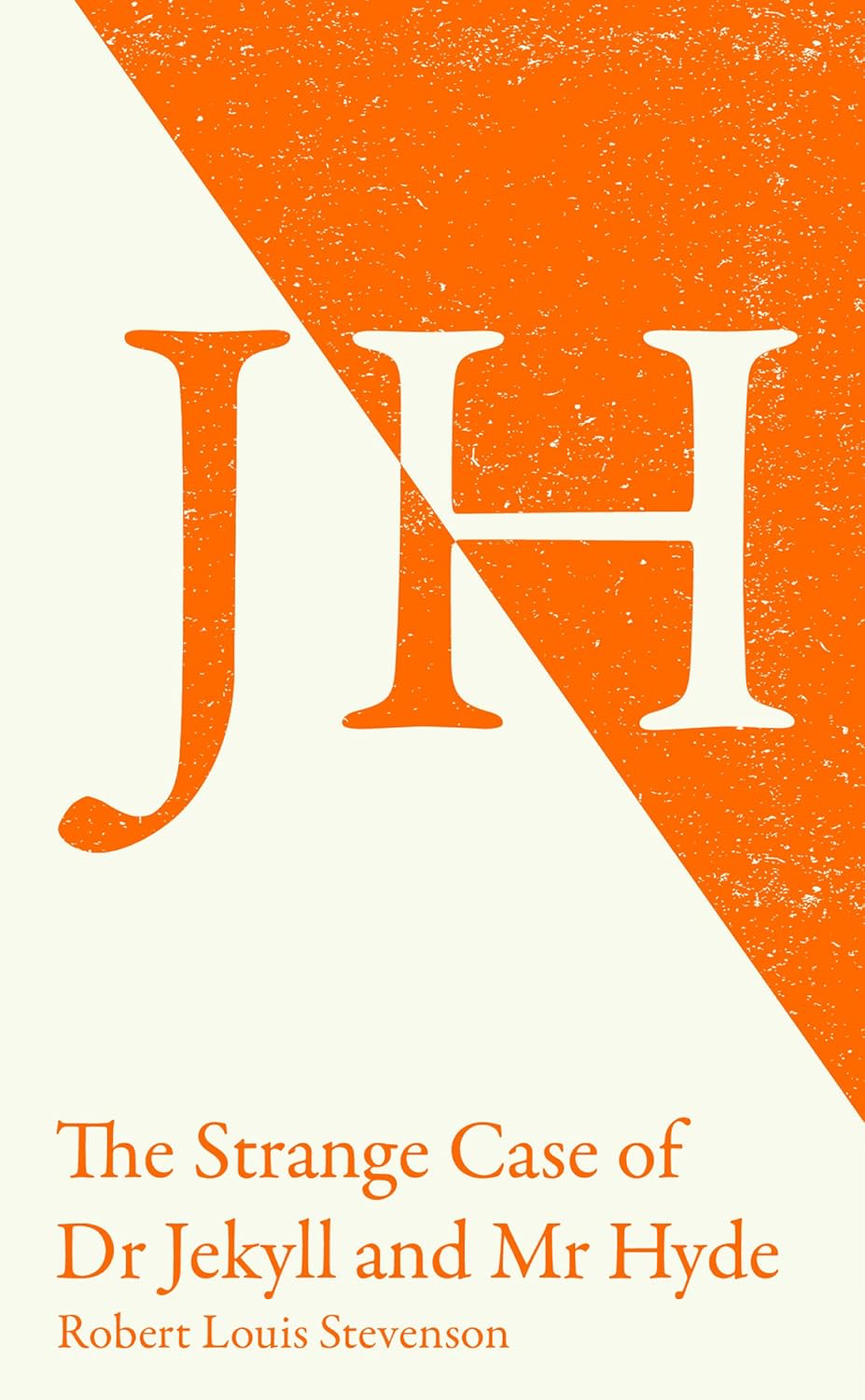
The Strange Case of Dr Jekyll and Mr Hyde by Robert Louis Stevenson
Why It's a Masterpiece (Week 129)

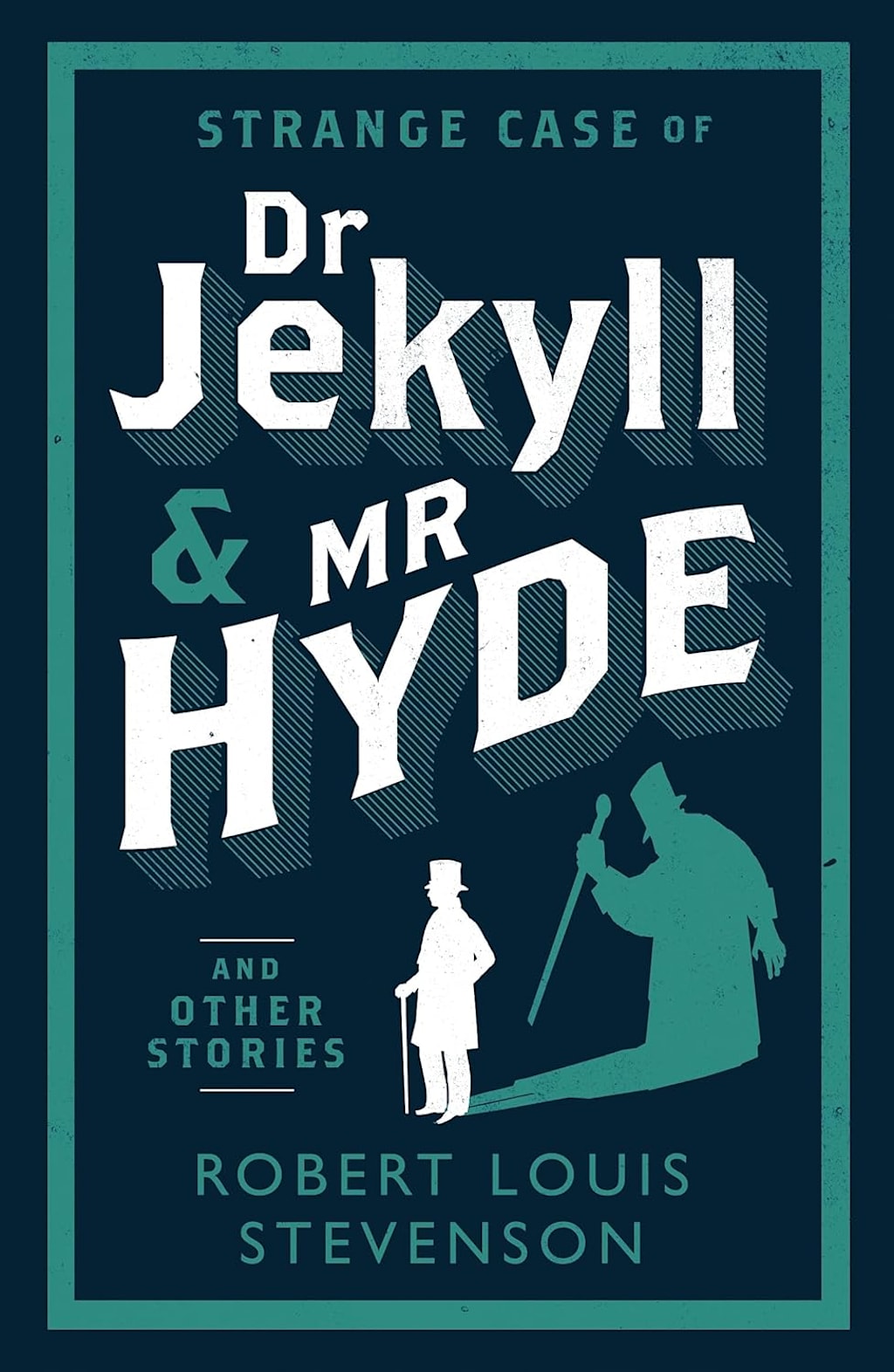
In 1885, Robert Louis Stevenson claimed this story first came to him in a dream, which he rapidly expanded into a manuscript. Rumours state that his wife burned the first manuscript after stating it was not good enough and he went to work on a new one. The cheap paperbacks of the day aptly named 'shilling shockers' were circulating and in 1886, The Strange Case of Dr Jekyll and Mr Hyde was released as one of them, followed by an American edition the next year.
The book became an instant success, selling over 40'000 copies in its first six months and then, going on to become internationally renowned. Before Stevenson's death it was adapted for the stage, one of which was famous for the audience calling for the police in the midst of Hyde's performance - reporting the actor to be Jack the Ripper because his acting was so convincing as a horrifying killing machine.
Plot
Gabriel Utterson and his friend Enfield are taking a walk one night when Enfield tells him the story of a man who trampled over a young girl. A savage beast, Enfield states that the repulsive person had a calling card which was worrying: the cheque-book of Dr Henry Jekyll, a good friend and client of Utterson. Usually unmoved by gossip but now, intrigued by the link between his respected scientist friend and this monstrous mystery, Utterson goes to check things out.
He waits outside of Hyde's door at all hours, has nightmares about a man without a face and contemplates in his mind exactly what is going on. Once Hyde arrives, it is clear that this 'troglodyte' is no ordinary man. Dark eyes and an even darker demeanour - Hyde is something far more evil than his visitor suspected and Utterson himself is shaken by the encouter he has with this terror. He knows he should confront Jekyll about this.
Utterson attends a dinner party hosted by Dr Jekyll and both are clearly 'at ease'. That is until Utterson mentions the situation regarding one Edward Hyde. Jekyll turns pale, his expression turns grave and he isn't entirely honest with his lawyer about what is really going on. When Hyde murders beloved MP Sir Danvers Carew by beating him to death with a cane, Stevenson writes his most graphic scene yet, letting the reader know how the bones 'audibly shattered'. When Utterson is called to the scene, he finds that the cane used as the murder weapon was the exact one he gifted to Jekyll and thus, the plot thickens.
When Utterson confronts Jekyll, it is a moment of repentance for the eponymous character. He gives Utterson a letter from Hyde without an envelope which claims to confirm that Hyde will never be back. Poole, Jekyll's butler states that he had not received a letter without an envelope and so, Utterson is naturally suspicious. Once Utterson checks with handwriting expert, Guest, he discovers that this letter was in fact, written by Jekyll himself and not by the infamous Hyde. Utterson is distraught and very concerned.
Utterson seeks help from Dr Hastie Lanyon, a friend who abruptly cut Jekyll off after something between them took place. Lanyon is surprisingly not in a good place, in fact he is on his deathbed. He hints that he has suffered a traumatic revelation involving their mutual friend, claiming Jekyll is now 'dead' to him. Within weeks, Lanyon dies, but before his death he entrusts Utterson with a sealed letter to be opened only after Jekyll’s disappearance or death. Utterson respects this condition, but the mystery deepens.
After a horrid experience as Utterson views a paling Jekyll through a window in which Jekyll looks horrified, shuts the window and retreats once again into frightening solitude - he receives word from Poole that something is not right in the house of Henry Jekyll. When Utterson arrives, Poole states that Jekyll will not come out of his laboratory and, is even taking his meals in there. He keeps asking for substances that Poole cannot get but Utterson listens to the voice and recognises it as Hyde's. Once Poole and Utterson break down the door with an axe, they see the dead body of Hyde on the floor after believing Jekyll was in deathly trouble with his 'blackmailer'. Jekyll though, is nowhere to be found.
Once the reader is thrown back into the letter of Hastie Lanyon, we discover that Lanyon was asked by Jekyll to bring a potion to a dark corner and meet with Mr Hyde. Once this happens, the savage Hyde warns Lanyon to continue on but, curiosity gets the better of the doctor and he watches as Hyde melts back into Jekyll. Scared to death, he retreats into isolation and then, eventually into his grave. When Utterson then uncovers the confession written by Jekyll, he gives all of his reasoning for wanting to become two separate people, and where it went all so horribly wrong.
Into the Book
The Duality of Human Nature:
Stevenson’s novella is an exploration human duality and the coexistence of good and evil. Dr. Jekyll is a respected gentleman, but within him lurks impulses that society condemns. His experiment to divide his moral self from his darker desires produces Hyde, who embodies the side of Jekyll that revels in cruelty and indulgence. The story suggests that every person struggles with conflicting identities, but Jekyll’s attempt to separate them proves destructive. Instead of achieving freedom, he becomes enslaved by Hyde, who grows stronger with each transformation. Stevenson implies that denying or repressing darker instincts makes them more powerful, rather than eliminating them.
“Man is not truly one, but truly two.”
- The Strange Case of Dr Jekyll and Mr Hyde by Robert Louis Stevenson
Science + Transgression = Chaos:
The author presents science as both a force of discovery and a source of danger. Jekyll’s scientific curiosity leads him to experiment beyond traditional boundaries, aiming to liberate his darker self. While innovative, his pursuit represents hubris: an attempt to manipulate human nature itself. In the Victorian era, rapid advancements in medicine and chemistry provoked both fascination and fear, as traditional beliefs clashed with new knowledge. Jekyll’s science reflects this unease, blurring the line between rational enquiry and forbidden tampering with the soul. The transformation potion becomes symbolic of science overreaching moral limits, as it produces not progress but chaos.
“I stood already committed to a profound duplicity of life.”
- The Strange Case of Dr Jekyll and Mr Hyde by Robert Louis Stevenson
Reputation, Secrecy and the Victorian Gentleman:
Victorian society placed enormous importance on reputation, and Stevenson demonstrates how this preoccupation can distort human behaviour. Characters like Utterson, Enfield, and Jekyll himself are obsessed with how others perceive them. Jekyll, in particular, seeks to preserve his status as a respectable doctor while indulging in pleasures through Hyde. This theme reflects the strict moral codes of the era, where appearances mattered more than private truths. Stevenson shows that secrecy breeds corruption: Jekyll’s hidden life ultimately consumes his public one. Even Utterson, who prides himself on being rational and loyal, often avoids probing too deeply, preferring silence to scandal. In this way, secrecy enables Hyde’s existence to continue unchecked.
“I concealed my pleasures.”
- The Strange Case of Dr Jekyll and Mr Hyde by Robert Louis Stevenson
Why It's a Masterpiece
Stevenson captures a universal psychological truth: that good and evil exist within everyone. The novella turns this inner conflict into a gripping narrative that resonates across cultures and has thus been adapted and adapted over and over again in gripping new ways. The story unfolds like a detective novel, with Utterson piecing together clues before the shocking revelation. This careful pacing builds suspense and has influenced countless mystery and horror narratives. The Victorian reader would have therefore not known the exact nature of the secret until the final chapters of the book.
Of course, it has also given way to the common phrase to describe a two-faced person or a person who changes personalities rapidly: 'Jekyll and Hyde'.
Conclusion
I have read this book countless times, my annotated copy is complete with over fifteen years worth of notes and it is a grand novella that if you haven't read, you need to take the time out to. A gothic mystery, a graphic horror, a symbolic social commentary - in a world of masks and social identities, this book is probably more important than ever before.
Next Week: Basic Black With Pearls by Helen Weinzweig
About the Creator
Annie Kapur
"Et in Arcadia Ego"
***
I am:
🙋🏽♀️ Annie
📚 Avid Reader
📝 Reviewer and Commentator
🎓 Post-Grad Millennial (M.A)
***
I have:
📖 300K+ reads on Vocal
🫶🏼 Love for reading & research
🦋/X @AnnieWithBooks
***
🏡 UK
Enjoyed the story? Support the Creator.
Subscribe for free to receive all their stories in your feed. You could also become a paid subscriber, letting them know you appreciate their work.
Comments
There are no comments for this story
Be the first to respond and start the conversation.