
The Sopranos Didn’t Glorify Italian-American Stereotypes. It Exposed Them.
After all this time some people still don't understand The Sopranos

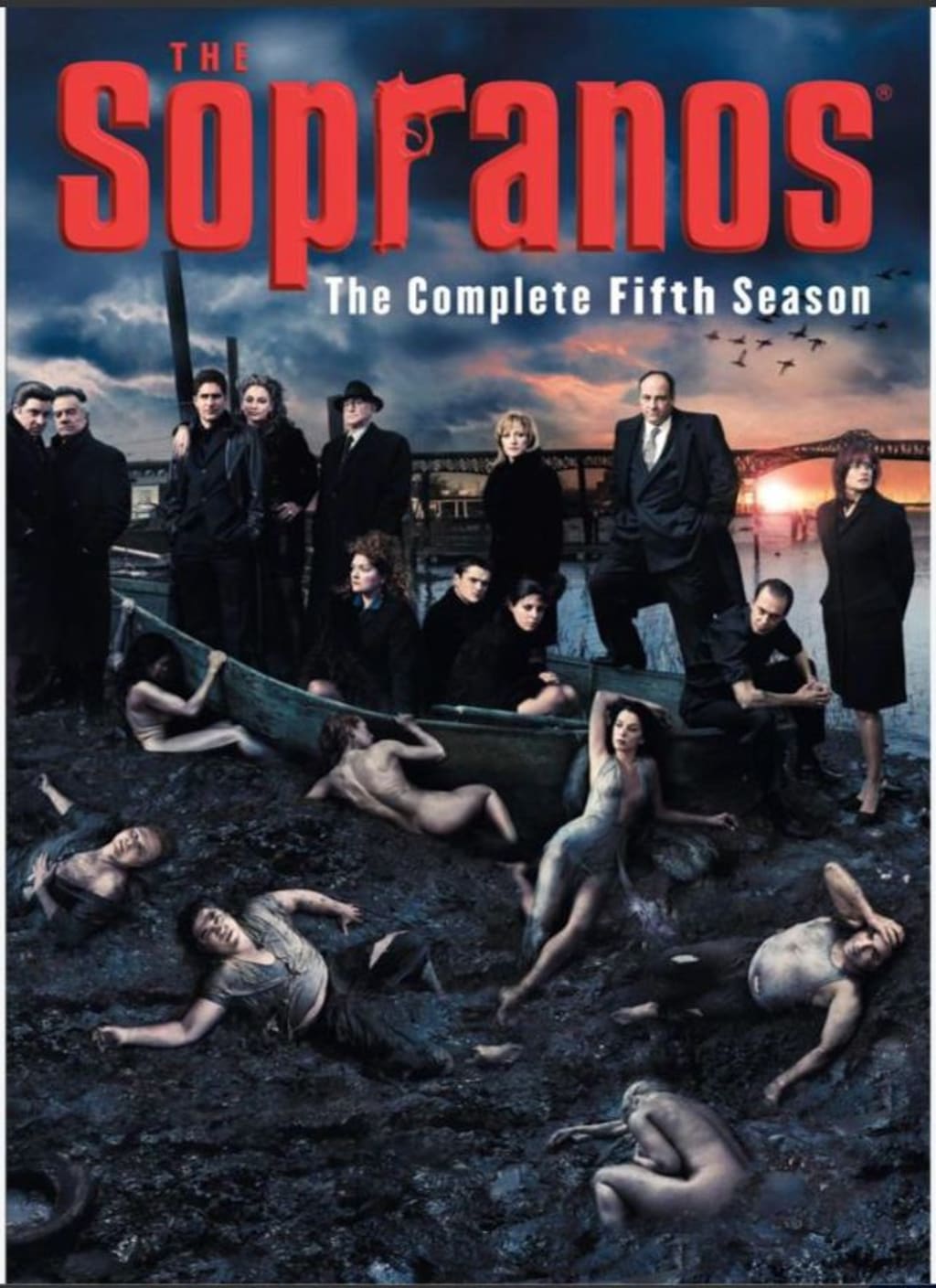
I’ve said it before, and I’ll say it again: few things in this world annoy me more than fake activism.
Every few years, I revisit The Sopranos, and each time I notice something new that I may have missed before. It remains one of the most brilliant examples of television writing and acting ever produced. Yet somehow, a show that ended more than a decade ago is still being accused of perpetuating stereotypes and glorifying criminality by people who seem to have a questionable understanding of what they’re watching.
Recently, I encountered someone online who insisted that The Sopranos was racist toward Italian Americans. I respectfully disagreed and like clockwork she hit me with every stereotypical online buzzword you could think of. She said I was an out of touch old white man who was completely oblivious to how these racial stereotypes hurt people of color I was like really?... Is that what I am? I then proceeded to explain to her that no I'm not out of touch old white man who is oblivious to racial stereotypes. That I'm actually a slightly out of touch grumpy sarcastic middle-aged biracial man who has experienced his fair share of actual racism over the years... it has always fascinated me that the people who claim to fight racism so staunchly are the ones who will jump to the most racist conclusions about someone they have never met in order to prove their point. But that's neither here nor there so I moved our conversation right along and asked whether she had actually watched the series. She said no.
And there it is.
How can you confidently condemn a television series for its supposed racism when you haven’t even watched a single episode? Apparently, simply having an opinion is no longer enough. These days, some people seem to believe that having an opinion automatically makes that opinion an informed one.
It doesn’t.
The Difference Between Depiction and Endorsement
One of the biggest problems with modern media criticism is the apparent inability to distinguish between depicting reprehensible behavior and endorsing it.
The Sopranos follows Tony Soprano, a New Jersey mob boss whose life revolves around organized crime, violence, manipulation, and betrayal. But it also follows a deeply troubled man struggling with depression, family responsibilities, personal insecurities, and his own inability to confront the ugliness of his character.
The show doesn't present Tony as an uncomplicated hero. It presents him as a complicated, often repulsive human being who occasionally displays charm, intelligence, humor, and genuine affection for the people around him.
That's precisely what makes him such a compelling character.
Tony can be funny and charismatic one moment, then cruel and terrifying the next. The fact that audiences sometimes find him likable doesn't mean the series endorses his behavior. It means the writers understand something about human nature: terrible people aren't necessarily terrible every second of every day.
The same principle applies to the show's other characters. They can be entertaining without being admirable, sympathetic without being innocent, and fascinating without deserving our approval.
If anything, The Sopranos repeatedly demonstrates the destructive consequences of Tony's choices. His criminal lifestyle damages his relationships, poisons his family life, and leaves a trail of misery behind him.
Where exactly is the glorification in that?
A More Complicated Portrait of Italian Americans
The claim that The Sopranos simply perpetuates Italian-American stereotypes also ignores the considerable depth of its characters.
Yes, the series features mobsters, violence, profanity, family feuds, and exaggerated displays of Italian-American cultural identity. That's part of its setting and subject matter. But the show isn't suggesting that all Italian Americans are criminals, nor does it portray every Italian-American character as a gangster.
Consider the variety of people who populate Tony's world. There are family members, professionals, business owners, and ordinary people whose lives intersect with organized crime in different ways. Some participate willingly; others are caught in its orbit. Their relationships with their heritage, families, and communities aren't all identical.
The show also uses Tony's sessions with Dr. Jennifer Melfi to examine the contradictions between his public identity and his private life. He can speak passionately about family traditions and old-fashioned values while routinely betraying the very principles he claims to cherish.
That hypocrisy is part of the point.
Tony often hides behind a romanticized vision of Italian-American culture to justify his behavior. He invokes family loyalty and traditional values while engaging in conduct that undermines both. The series doesn't simply accept his self-image at face value. It invites us to question it.
And that is a significant distinction.
The show explores the difference between the values people claim to uphold and the actions they actually take. That theme extends far beyond Italian-American culture.
Christopher Moltisanti: A Tragic Example of Tony's Influence
One of the clearest examples of the series' willingness to expose the ugliness of its central character is Tony's relationship with his nephew, Christopher Moltisanti.
Tony initially positions himself as a surrogate father to Christopher, offering guidance, opportunities, and the promise of a future within the criminal organization. But their relationship becomes increasingly toxic as Christopher struggles with addiction and attempts to develop an identity of his own.
Tony claims to care about Christopher, yet he repeatedly undermines him, exploits his vulnerabilities, and resents his attempts to become something more than a subordinate.
Christopher isn't innocent. He makes terrible decisions, hurts people, and contributes to his own downfall. But the series also shows how the criminal world he inhabits reinforces his worst impulses while offering him few healthy ways to escape it.
Tony's behavior toward Christopher reveals the contradictions at the heart of his character. He wants loyalty and obedience, but he also wants to be seen as a caring father figure. He expects Christopher to respect him while frequently treating him with contempt.
Eventually, Tony's resentment and Christopher's instability culminate in one of the series' most disturbing moments.
Tony kills his own nephew.
That isn't a triumphant moment for a heroic protagonist. It's the culmination of a deeply dysfunctional relationship in which affection, control, resentment, and violence have become hopelessly entangled.
The fact that viewers can understand the circumstances surrounding Tony's decision doesn't mean they have to approve of it.
Understanding a character isn't the same thing as excusing him.
The Importance of Showing Consequences
Another reason I find the criticism of The Sopranos so frustrating is that it overlooks how frequently the series confronts the consequences of its characters' actions.
The violence isn't consequence-free. The criminal lifestyle doesn't produce uncomplicated happiness or lasting security. Even when the characters appear to enjoy their wealth, power, and freedom from conventional rules, their lives are filled with paranoia, betrayal, fear, and the constant possibility of death.
Tony's therapy sessions provide another layer of criticism. He spends years discussing his anxieties, family problems, and emotional struggles, yet repeatedly fails to translate that self-awareness into meaningful change.
He can recognize aspects of his behavior without accepting responsibility for them. He can describe his problems eloquently while continuing to make them worse.
That contradiction is central to the show's psychological complexity.
The series also challenges the romanticized image of the noble gangster. Its characters may talk about honor, loyalty, and respect, but those ideals are frequently exposed as convenient justifications for selfishness and brutality.
The mobsters aren't presented as noble outlaws living by a superior moral code. More often than not, they're self-interested men who use the language of honor to disguise their appetites for money, power, and control.
That's hardly an endorsement of organized crime.
Great Television Doesn't Have to Make Us Comfortable
I understand that people can have legitimate criticisms of The Sopranos. No television series is beyond criticism, and questions about representation, stereotypes, and cultural impact deserve thoughtful discussion.
But thoughtful discussion requires more than making accusations based on secondhand impressions.
It requires watching the material, examining its context, considering its characters, and being willing to acknowledge complexity. It also requires recognizing that depicting a harmful attitude doesn't automatically mean a work of art promotes that attitude.
Sometimes a story needs an unpleasant character to make an uncomfortable point. Sometimes it needs to show us people behaving horribly so we can better understand the consequences of their choices.
And sometimes a great television series asks us to spend time with a character who is simultaneously fascinating, funny, pathetic, frightening, and morally repugnant.
That's what The Sopranos does so effectively.
For more than two decades, audiences have debated its characters, themes, and ending because the series gives them something substantial to think about. It doesn't offer easy answers or divide everyone neatly into heroes and villains. Instead, it examines the contradictions of human behavior, the corruption of power, the dysfunction of family relationships, and the stories people tell themselves to justify their actions.
That's the difference between a simplistic crime fantasy and genuinely compelling drama.
In Conclusion
I'm not suggesting that The Sopranos is flawless or that every criticism of its portrayal of Italian Americans is automatically invalid. I'm suggesting that criticism should be informed by an actual understanding of the work being criticized.
If someone hasn't watched the series, they can certainly express curiosity or ask questions about its portrayal of Italian Americans. But confidently declaring it racist while admitting they've never seen an episode isn't serious media criticism. It's an uninformed judgment masquerading as moral authority.
And frankly, I'm tired of seeing entertainment condemned simply because it contains characters who behave badly.
Fiction doesn't have to present morally perfect people to be worthwhile. It doesn't have to make every character admirable, every situation comfortable, or every audience member feel validated.
Sometimes the point is to make us uncomfortable. Sometimes the point is to show us the ugliness we would rather ignore.
The Sopranos did that brilliantly.
It gave us a criminal who could be charming without being virtuous, a family that could be loving without being healthy, and a culture that could be explored without reducing every person associated with it to a stereotype.
Most importantly, it trusted its audience to think.
Maybe that's what bothers some people most: the expectation that we actually watch, consider, and interpret a work of art before passing judgment on it.
Because if we're going to criticize television, we should at least have the courtesy to watch the damn thing first.
About the Creator
mark bradley (mark45xxx)
I'm a published Comic Book Creator & freelance illustrator specializing in dark,surreal, & cinematic artwork. I help authors, indie creators, and collectors, bring intense ideas to life
Enjoyed the story? Support the Creator.
Subscribe for free to receive all their stories in your feed.
Comments
There are no comments for this story
Be the first to respond and start the conversation.