
Tess of the D'Urbervilles by Thomas Hardy
Why It's a Masterpiece (Week 113)

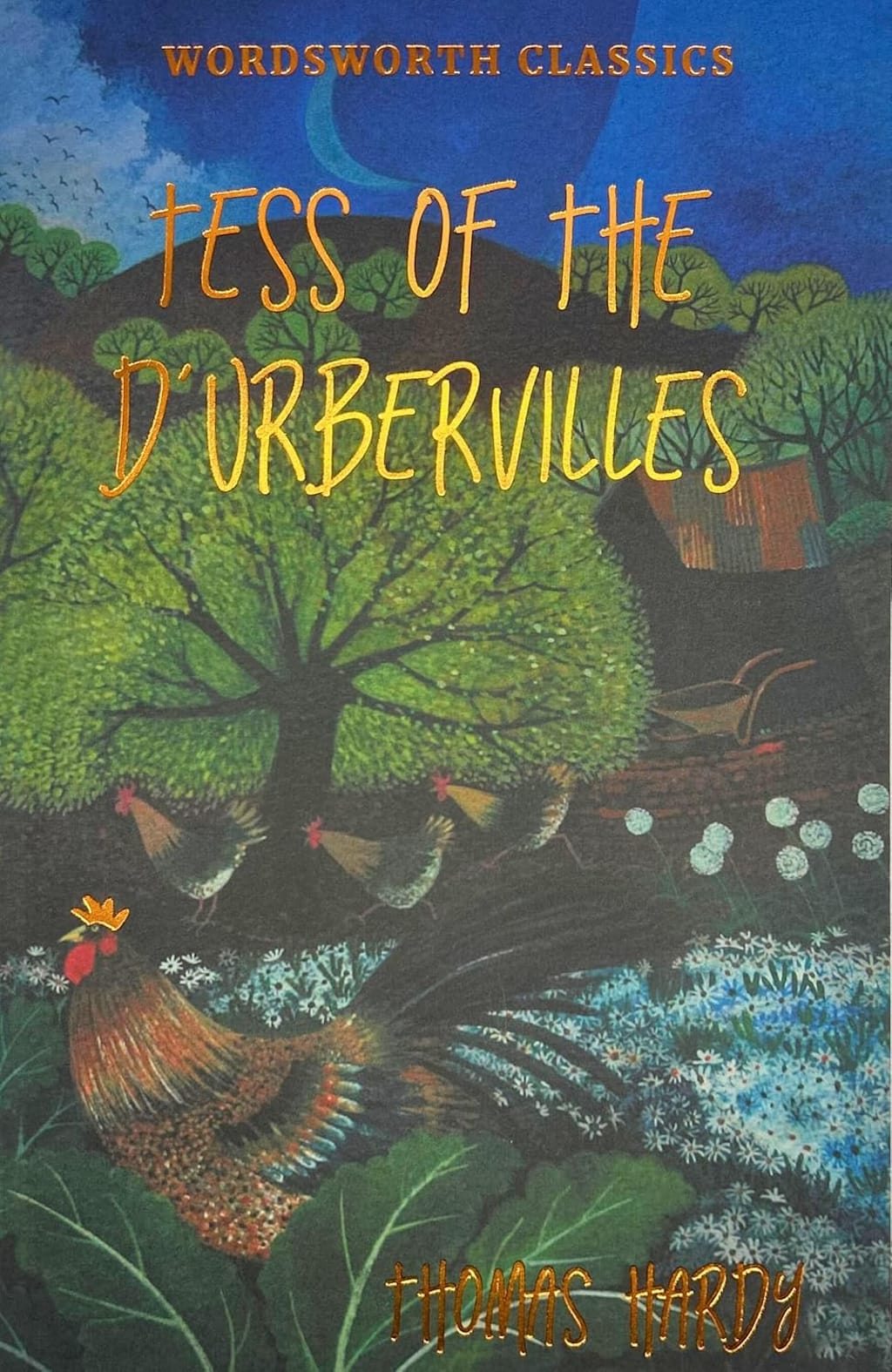
Tess of the D'Urbervilles was first published in 1891 and still stands today as one of the most depressing books ever written. It generated quite a bit of controversy back in the day and yet, the author was already established in the literary world - so you can imagine the kind of extra notoriety it got him. It was a novel that critiqued Victorian morals to an extreme degree, presenting people with the horrors of purity culture and the way in can destroy an entire life and society.
The novel had some trouble in publication, it was first serialised in The Graphic and yet, the author still had to make alterations to it to suit the readership of the magazine - which were a bunch of hard-nosed conservatives. The content was deemed to risqué as it included seductions and scenes of rape - these were softened and omitted. When the full book was later published R. Osgood, McIlvaine and Co. - the author restored these sections, offering a more radical narrative. Many, many people found this inflammatory alongside the subtitle: A Pure Woman Faithfully Presented" as it did not acknowledge Tess's fallen woman status.
Plot

‘Tess of the D’Urbervilles’ follows the tragic life of Tess Durbeyfield, a young woman of humble origins in rural Wessex. The story begins when her father, John Durbeyfield, learns from a parson that he is descended from the noble but extinct d’Urberville family. His vanity piqued, John sends Tess to claim kinship with the wealthy d’Urbervilles living nearby, hoping to secure a better future for her.
Tess meets Alec d’Urberville, a manipulative and predatory man who rapes her. Shamed and pregnant, Tess returns to her village and gives birth to a child who soon dies. She christens him Sorrow and buries him in unconsecrated ground, a scene laden with emotional and spiritual weight.
Trying to rebuild her life, Tess works as a dairymaid at Talbothays Dairy. There she meets Angel Clare, the idealistic son of a clergyman, who falls in love with her. Tess initially resists but eventually reciprocates his feelings. Despite her misgivings, she agrees to marry him but writes a confession of her past, which she slips under his door. He never reads it.
On their wedding night, Angel confesses a minor moral lapse, and Tess, encouraged by his candour, tells him of her own past. Angel reacts with horror and abandons her, claiming that she is not the woman he thought she was. Devastated but determined, Tess works gruelling jobs to support herself.
Eventually, she encounters Alec again, who has become an itinerant preacher but soon returns to his predatory ways. Desperate and with no support from Angel, Tess reluctantly becomes Alec’s mistress to help her family. When Angel returns, repentant and seeking forgiveness, Tess murders Alec in a moment of passion and flees with Angel.
The couple enjoy a brief period of happiness, wandering through the countryside. However, Tess is eventually arrested at Stonehenge. The novel ends with her execution, and Angel walking away with Tess’s younger sister, Liza-Lu, whom Tess asked him to care for. The closing lines reflect Hardy’s fatalistic vision: “Justice” had been done.
Into the Book

The Societal Construction of Purity Culture:
One of the main themes in 'Tess of the D’Urbervilles' is the notion of purity and how it is socially constructed, particularly in relation to women. Hardy’s subtitle, “A Pure Woman Faithfully Presented”, directly confronts Victorian definitions of moral virtue. Tess, despite being wronged and violated, is viewed by society (and initially by Angel Clare) as impure.Angel idolises Tess as a symbol of rural innocence, but when she confesses her past, he cannot reconcile this with his romantic ideal. Hardy critiques this double standard.
“It was for herself that he loved Tess; her soul, her heart, her substance—not for her skill in the dairy, her aptness as his scholar, and certainly not for her simple, formal faith-professions.” Angel’s failure to embody this principle underscores society’s hypocrisy. Hardy presents Tess’s purity as innate and moral, not tied to arbitrary sexual history.
Tess of the D’Urbervilles by Thomas Hardy
Determinism and Hardy's Own Beliefs:
Hardy’s belief in determinism pervades the novel, portraying Tess as a victim of forces beyond her control: ancestry, social class, coincidence, and gender. Repeated references to fate suggest Tess’s destiny is preordained, no matter her efforts. The death of Prince, the family’s horse, sets off a chain of events that leads Tess to the d’Urbervilles. Later, Hardy writes, “The President of the Immortals… had ended his sport with Tess,” a haunting encapsulation of Hardy’s view of life’s cruelty. Nature, chance, and social systems conspire against Tess, leaving little room for agency.
Even Tess’s final resting place of Stonehenge emphasises the insignificance of human suffering in the face of time and cosmic indifference. Hardy paints a universe where morality offers no protection from ruin, and innocence is not rewarded.
“If an offense come out of the truth, better is it that the offense come than that the truth be concealed.”
Tess of the D’Urbervilles by Thomas Hardy
The Natural World and Its Beauty:
Hardy romanticises the natural world, linking it with Tess’s beauty, resilience, and emotional truth. Much of the novel unfolds in pastoral settings which are rich with symbolic meaning. Tess is often described in harmony with the earth.Her connection to nature suggests authenticity and spiritual integrity.
However, this harmony is disrupted by industrialisation. The shift from agrarian life to mechanisation is illustrated in the oppressive work at Flintcomb-Ash, where Tess labours under a threshing machine. The contrast between Talbothays and Flintcomb-Ash mirrors the degradation of rural life and the dehumanising effects of modern progress.
Hardy uses seasonal imagery to reflect Tess’s inner journey. Nature, once a source of vitality, becomes indifferent or even hostile. The encroaching industrial world exacerbates Tess’s suffering, offering no reprieve or redemption.
“She was a daughter of the soil.”
Tess of the D’Urbervilles by Thomas Hardy
Why It’s a Masterpiece

We cannot argue that the book is a masterpiece. It's stylistic richness and the explorations it makes into purity culture during the Victorian era had not really been done before. It takes the approach of brutal realism without losing any of its descriptive beauty. Tess becomes a deeply sympathetic character who graces the book with her story, and yet also deals with her hardships with grace - and this is something that stays with the reader once the book is over and the ending has horrifically taken place. It makes this morality culture and the concepts of justice surrounding it almost seem wrong and the reader is invited to reconsider them for a moment or so.
Conclusion

Timeless human concerns are dealt with in depth and detail. These include but aren't limited to: justice, suffering and the societal forces that shape our identities. Ongoing discussions of gender and consent litter our own time but they are also very much alive in Thomas Hardy's novel. Its emotional intensity and philosophical depth invite each generation to grapple anew with the question of what it means to be “pure,” “just,” or “good” in an often indifferent world.
Next Week: The Radetzky March by Joseph Roth
About the Creator
Annie Kapur
"Et in Arcadia Ego"
***
I am:
🙋🏽♀️ Annie
📚 Avid Reader
📝 Reviewer and Commentator
🎓 Post-Grad Millennial (M.A)
***
I have:
📖 300K+ reads on Vocal
🦋/X @AnnieWithBooks
📸 ThePrancingPonyBakery
🔗 PrancingPonyBakery.com
***
🏡 UK
Enjoyed the story? Support the Creator.
Subscribe for free to receive all their stories in your feed. You could also become a paid subscriber, letting them know you appreciate their work.
Comments
There are no comments for this story
Be the first to respond and start the conversation.