literature
Geek literature from the New York Times or the recesses of online. Our favorite stories showcase geeks.
Book Review: "Amusing Ourselves to Death" by Neil Postman
Neil Postman is an interesting author whom I'm reading quite a bit of lately mainly because I've been hearing about his books online. I first read his book Technopoly which deals with the fact that these massive companies have absolutely no regard for how their technology and market monopolisation will impact the average person. But Amusing Ourselves to Death is something far more sinister than this. I have been itching to read this book (yes, that is a thing that happens to me) and I spent some time compiling my thoughts into workable paragraphs so that you can understand as much of what is going on as possible. I would urge you to read this book for yourselves though, it is so important.
By Annie Kapur11 months ago in Geeks
Book Review: "Unbound" by Richard L. Currier
You know how I love a good deal and so, I got this one on my phone again, on the cheap. Well, in reality I got it for free but that story is for another time. I'm not hugely into books that go so deep into anthropology that I can't really understand them philosophically speaking but I took my time with this one and it was pretty enjoyable. The book is actually well written, although at the beginning it was fairly hard to get into. However, even though I did feel like I was ploughing through it from time to time, I came out of it alive and pretty well-informed too. So, this book is getting some good marks.
By Annie Kapur11 months ago in Geeks
💫 The Shadow Signal: How One Strange Pulse Reopened a Forgotten Cosmic Mystery. Content Warning.
Space has a talent for reminding humanity that we understand far less than we think. Every few years, a discovery comes along that shakes the dust off some forgotten mystery and forces scientists to rethink everything from solar winds to planetary atmospheres. This story begins with one quiet, aging spacecraft drifting alone in the cold dark — and a signal that never should have existed. Not long ago, a research team revisiting decades-old data from an interplanetary probe stumbled upon a strange pulse buried in the noise. It was subtle, faint, almost embarrassed to exist, like a ghost tapping its fingers against a metal wall. But once they saw it, they couldn’t ignore it. Why had a spacecraft detected an energy fluctuation in a region where no such fluctuation was supposed to happen? The more they looked, the more the mystery unfolded. And it didn’t just revive a scientific puzzle — it resurrected a 40-year-old cosmic rumor. A Lonely Traveler and a Forgotten Timestamp The incident traces back to a moment nearly four decades ago. At that time, the spacecraft was young and ambitious, on a grand tour of the outer planets. It had already sent home breathtaking images of Jupiter and Saturn, each encounter rewriting textbooks and reframing humanity’s place in the solar system. Then it approached a distant, icy world tilted strangely on its side — a planet that behaves more like a cosmic secret than a celestial body. Scientists didn’t expect anything dramatic. This world was quiet, cold, and predictable. Or so they believed. But tucked inside the data from that flyby was a timestamp, just a tiny blip. A disturbance in the magnetic field. A spike in particle activity. Nothing dramatic enough to make headlines back then, but strange enough that a few scientists scribbled question marks in their notebooks. And then everyone moved on. Space exploration was racing forward. New missions. New discoveries. New priorities. The mystery faded into the archives, unbothered and unnoticed. Until now. The Rediscovery That Changed Everything Fast-forward to the present day. A group of researchers, curious about historical space anomalies, decided to reanalyze old probe data using modern tools. Today’s algorithms can detect whispers that yesterday’s computers missed entirely. That’s when they found it. The spike. The pulse. The disturbance. Only now, with fresh eyes and far better instruments, the pattern wasn’t small at all. It was clear. Sharp. And unmistakably intelligent — not in a biological sense, but in the sense that natural chaos rarely produces such precision. The spacecraft had passed through an unexpected, concentrated gust of solar wind that had ricocheted strangely off the planet’s magnetic field. But the shape of that ricochet didn't match any simulated model. It was like the planet had momentarily revealed a second personality. The team realized they weren’t looking at an error. They were looking at physics behaving… differently. Something about that planet — its tilt, its magnetic field, its atmosphere, or perhaps something deeper — was distorting the solar wind in a way no one had ever documented. Suddenly, the old mystery was new again. A Planet With a Reputation for Oddness This distant world has always been a bit of an oddball. Its axis is so tilted that it practically rolls around the Sun like a spinning barrel. Its seasons last decades. Its magnetic field is lopsided and tilted away from its rotational axis — something no other major planet does. Scientists often joke that this planet feels like it was assembled from spare parts. So the idea that it could produce a strange solar-wind echo wasn’t completely unbelievable. But the timing and structure of the pulse were too perfect, too concentrated. Imagine yelling at a mountain and hearing not just an echo, but an echo in a melody. That’s essentially what the spacecraft had recorded. A New Theory Emerges After months of simulations, scientists presented a theory that could finally explain the anomaly. They suggested that the spacecraft had crossed a temporary plasma bubble — a pocket of electrically charged particles trapped and twisted by the planet’s unusual magnetic geometry. When the solar wind hit that bubble, the energy refracted like light through a diamond. The spacecraft happened to be in the perfect place at the perfect moment to catch that cosmic refraction. This wasn’t just about solving a mystery. It opened new doors for understanding how magnetic fields shape planetary atmospheres — especially for worlds we’ve barely explored. It also hinted at something more profound: the universe still hides secrets in plain sight, waiting patiently for technology to catch up. Why This Matters More Than People Think To most people, a 40-year-old “space blip” sounds trivial. But in science, small anomalies lead to big revolutions. Penicillin started as mold on a forgotten dish. Gravitational waves began as faint ripples that scientists almost didn’t believe. This pulse is another reminder that cosmic mysteries don’t always come wrapped in explosions or dramatic events. Sometimes they arrive quietly, like a whisper from a frozen world drifting in the dark. Understanding this anomaly could improve future missions, refine magnetic field models, and even reveal new mechanisms that shape planetary evolution. It could help explain why some planets keep their atmospheres while others lose them. Why some worlds are hostile, while others thrive. Why solar storms affect some regions of space more intensely than others. The implications stretch far beyond one spacecraft’s brief encounter.
By The Insight Ledger 11 months ago in Geeks
The Unpaid Architects of Superhero Empires: How Comic Creators Are Denied Their Fair Share
Many comic book writers and artists face a stark reality: they create characters who become global phenomena, generating billions for publishers, yet they receive almost none of the financial rewards. As one commentator noted regarding the staggering success of franchises like the Marvel Cinematic Universe, which has grossed over $20 billion, a key question remains: "How much... went to those who created the stories and characters in it?" Despite building their vast empires on the intellectual property devised by these creators, major publishers like Marvel and DC, under their standard contracts, largely deny them a fair share of the profits.
By Jenna Deedy11 months ago in Geeks
Book Review: "An Angel at My Table" by Janet Frame
This book, bought on the cheap, was perhaps one of the most moving and heartbreaking reads I have read this year. An Angel at My Table features an introduction by the director of the incredible movie Bright Star, Jane Campion and is written in a beautiful, almost overtly atmospheric style. I was pretty sure from the moment that I saw this book that I wanted to read it but I had no idea how it would destroy my soul. It quite literally took me away and honestly, I never knew about some of these experiences. It is one of the best books I have read this year and if I can recommend any book to you it is most likely going to be this one.
By Annie Kapur11 months ago in Geeks
Book Review: "Selfie" by Will Storr
You're going to hate me but I got the idea for reading this book from a YouTube video where I heard of the book. Do I think the person in the video had read the book themselves? Well, before I managed to read it I would've said yes, but afterwards my answer is probably not - or at least they had cherry-picked things to read. The book was a lot more expansive and had a lot more depth than I found by ways of the video. Anyways, I still like the fact that it had pointed me towards reading this deeply philosophical and psychological book about why selfies became a cultural phenomenon.
By Annie Kapur11 months ago in Geeks
Berlin, Alexanderplatz by Alfred Döblin
Alfred Döblin’s Berlin, Alexanderplatz, first published in 1929, is regarded as one of the greatest modernist novels of the 20th century. Döblin, a German writer of Jewish descent, was deeply influenced by expressionism, psychoanalysis, and the political turbulence of Weimar Germany. His background as a practising physician, particularly in psychiatry, gave him a great perspective on the psychological and social struggles of marginalised individuals, this is something we see over and over again in his literature.
By Annie Kapur11 months ago in Geeks
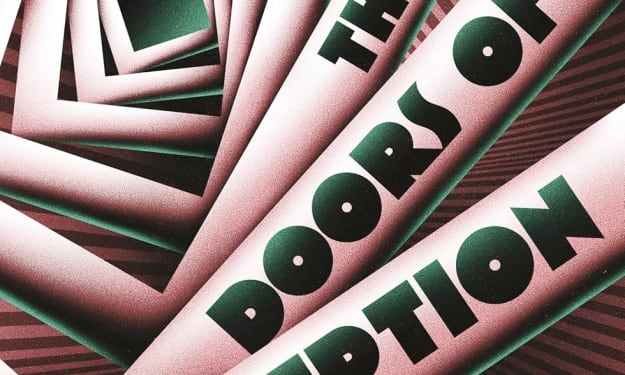
Book Review: "Doors of Perception" by Aldous Huxley
Aldous Huxley is probably best known for his controversial, but brilliant book Brave New World which in some ways, rivals George Orwell's 1984 in its depiction of dystopia. I have enjoyed other works by Aldous Huxley and I have to admit it, I've read Doors of Perception before. I just found a free copy of it and made the snap decision to give it a reread. I was always quite surprised by this book because it seems so different to the usual requests of Huxley's works. Instead of it being a probably future or a social commentary, this is an actual experience. This is an observation of a whole different kind. It is fantastic.
By Annie Kapur11 months ago in Geeks
Book Review: "The Fran Lebowitz Reader" by Fran Lebowitz
I've wanted to read this book for a while, but you know me, I need to find it for cheap before I go any further. Even Amazon wasn't really doing it too cheap as when I looked at it. I ended up finding it on a used bookstore again and thus, buying it. I didn't know it was a hardback when I bought it, I tend to steer clear from hardbacks because they are a) harder to store and b) not great if you want to carry them around. I prefer paperbacks or even books on my phone or Kindle. Anyways, the bluntness of one Fran Lebowitz is something to behold...
By Annie Kapur11 months ago in Geeks
Book Review: "A Book Forged in Hell" by Steven Nadler . Top Story - December 2025.
I have to admit that even when I was studying my modules of Western Philosophy whilst doing my Master's Degree, Spinoza was not my strong suit nor did he interest me very much. I knew a bit about his philosophy and his rationalisations and I had read parts of the book that The Book Forged in Hell speaks of. But I think the one thing that this book did is reignite a want to know more about philosophies I perhaps need to learn more about. I may not have had that much of an interest before, but this book has definitely created somewhat of a curiosity in me. Yes, before you ask - I read it on my phone...
By Annie Kapur11 months ago in Geeks
Book Review: "Mrs Miniver" by Jan Struther
The used bookstore is getting full near Christmas and so I thought I would treat myself to a few books. There's also a lot out on the Kindle Store and other places that I want to have a look at. I tend to read books on my phone as well as paperback, but I think you'll be happy to know I not only had this book in paperback, but it was also my free book in a deal of 'buy three get one free'. Mrs Miniver is about an upper-class English woman and well, there's no reason as to why I have been told to read this over the years. I can't believe I just got around to it.
By Annie Kapur11 months ago in Geeks
Book Review: "Dancing in the Streets" by Barbara Ehrenreich
I like cheap books yes, but free books is something I don't think anyone can resist and so, I got this from the little haul. I had no idea what it was about when I downloaded it to my phone - it just had a cool title and I have to say, I did a bit of 'cover judging'. I have to say, I was pleasantly surprised though. We get to see tribal dances, carnval, we learn about the celebrations to Dionysus and all these great and celebratory dances that are sometimes misunderstood by us. Honestly, it was great and should teach you to go for things you don't know even more. I would say 'do it scared' but I do everything scared so I don't know whether this counts.
By Annie Kapur11 months ago in Geeks