literature
Geek literature from the New York Times or the recesses of online. Our favorite stories showcase geeks.
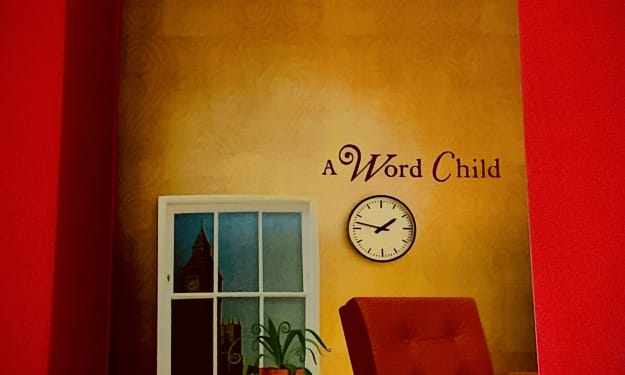
Book Review: "A Word Child" by Iris Murdoch
For some reason, I am on a run of slightly average Iris Murdoch novels. After reading The Red and the Green recently, the one thing I noticed is that some Murdoch novels have far too many half-characters in them and some characters leave the story for what is, in my opinion, not a good enough reason. Endings seem rushed and novels seem incomplete, genres are muddled and I think this is a slump that I'm seeing in comparison to her more brilliant novels: The Sea, The Sea - The Book and the Brotherhood and A Severed Head. It was nowhere near as strong as these that I regard as her best works and that can also be said for this book entitled: A Word Child. Too many characters, too much 'fluff' and adding unnecessary amounts of words that don't require to be there and finally, big characters who disappear for not enough reason.
By Annie Kapur5 years ago in Geeks
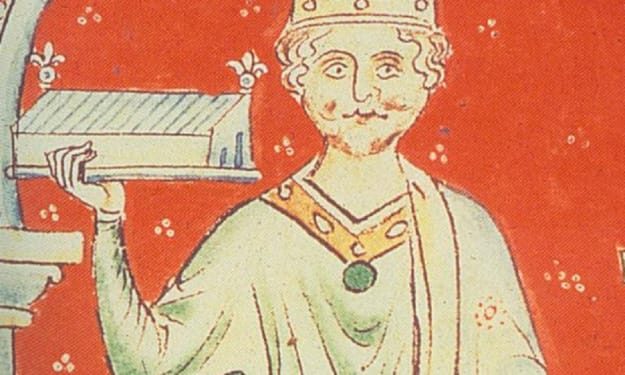
Book Review: "King Rufus: The Life and Murder of William II of England" by Emma Mason
I've already explained to you my reading of one book about every monarch's life after Edward the Confessor. And I have already told you about the really boring time I had with a biography about Harold Godwinson. The other two have been great though - both the biographies on Edward the Confessor and William the Conqueror have really made me far more interested in how they ruled and who they were. Swiftly though, I move on to the next monarch - the son of William the Conqueror: William Rufus (William II).
By Annie Kapur5 years ago in Geeks
The Spectacular Now & Youth
My favorite quote from Tim Tharp’s The Spectacular Now comes from the last page: “That’s the one-two punch right there, wanting to love and wanting to be loved” (pg 294). It’s hard to love at seventeen, eighteen, twenty-one, twenty-three. Harder to love when it’s one-sided, or stuck in the purgatory of living life and “what do I do now?”.
By Victoria Brown5 years ago in Geeks
Liala
After 1950, the contempt for the bourgeois novel, which now aspires to be part of literature, ceases. But first, in the Fascist period and beyond, there was a clear division between mass and entertainment literature, with large-scale novelists (Zuccoli, D’Ambra, Pitigrilli, DaVerona) and novels written by intellectuals for other intellectuals (Gadda , Landolfi, Bilenchi, Vittorini, Bersani).
By Patrizia Poli5 years ago in Geeks
26 Books You Should Read Before You Die
For my 26th birthday, I thus want to go through 26 books that I think, though may not be my favourite books of all time, are the most important books you should read. Of course though, you should primarily read what you feel like - then read these afterwards. They will be in no particular order.
By Annie Kapur5 years ago in Geeks
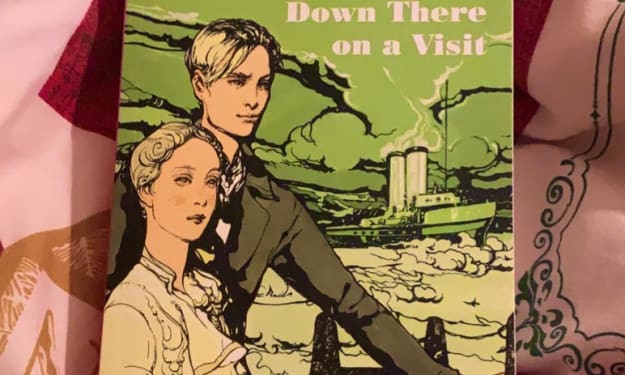
Book Review: "Down There on a Visit" by Christopher Isherwood
I have read many books by Christopher Isherwood in my time, including the books: Mr Norris Changes Trains, The Berlin Trilogy, A Single Man, The Memorial, Prater Violet and Christopher and His Kind. Honestly, I have never really found a bad book written by him. More often than not, the books are engrossing with references to the decadent and slightly dark glamour of his lifestyle and travels, a back and forth of conversations with a twist of philosophical speculation and finally, a critique on the on-coming social upheavals of the average person. In this book Down There on a Visit, I saw that there was a hint of this yet again, mixed with the sense that there are four different narrators all with the same name. Again, this is the mystery of Christopher Isherwood - the narrator is always changing in their years and their perspective from place to place.
By Annie Kapur5 years ago in Geeks
4 Short Story Collections That Will Change Your Mind About Reading
Have you ever been afraid to commit because you're unsure about where things are heading? Made your fair share of sacrifices to make it work, but been unsuccessful? Simply couldn't stick it out until the end? Well, perhaps you've been going about this all wrong. The truth is, as much as many of us would like to get through the latest novel from our favourite childhood author, it isn't always realistic. Whether it's putting in extra hours at work or staying on your toes with the children, finding time for yourself can be difficult. So, instead of stopping at page 129 in that novel you've been slowly navigating through for a year because reading 512 pages is just too daunting, why not try something a little different? Why not dive into a compelling story where you don't have to worry about struggling to reach its conclusion? Here are 4 short story collections that will change your mind about reading.
By Liam Spencer5 years ago in Geeks
The Rise of Jewish-American Comedy During the Holocaust
I wrote a novel called How to Find Your Way in the Dark. The book became a 2021 Best Mystery Novel by The New York Times and also a 2021 National Jewish Book Award Finalist. While writing it I observed something. It was something big: an observation about a unique and influential human experience that, if we pay closer attention to it, might help us understand more about who we are and what it means to be alive.
By Derek B. Miller5 years ago in Geeks
Book Review: "Rationality" by Steven Pinker
Let me start by saying that I am a pretty big Steven Pinker fan, ever since I read his book Enlightenment Now, I have read pretty much most of the books he has written. His reason and logic makes sense to the person who can see past the end of their nose and have a want to know different opinions and studies about linguistics, the mind and rationality. Unfortunately, you're not going to understand many of Steven Pinker's core theories if you don't know much about the study of language - but that's no matter. So far, I have read books like The Sense of Style, The Blank Slate and Better Angels of Our Nature. In this book entitled, Rationality, Steven Pinker seeks to argue that we are not irrational cavemen of human beings - and we have purpose.
By Annie Kapur5 years ago in Geeks
Book Review: "William the Conqueror" by David Bates
The one thing I like about reading historical nonfiction is that there is so much scope. You don't have to just write about the facts, you can use primary and secondary resources to assess something and draw conclusions based on various facts - especially if the person you are writing about is far back in history like William the Conqueror.
By Annie Kapur5 years ago in Geeks
Book Review: "The Red and the Green" by Iris Murdoch
I have read a few books by Iris Murdoch over the last few years and for me, her books are really a hit or a miss. For example: I loved her books, The Sea, The Sea and The Book and the Brotherhood. I also liked her novels Under the Net and The Severed Head. But there are other books that I felt like I couldn't become fully invested in. I have to say I was half in and half out when it came to The Red and the Green. Apart from being set during a time in which I have no real interest in, each of the characters seemed to have a lot of self-loathing to some degree and in the end, I didn't think I liked the way certain characters treated other characters, especially when Millie was asked to marry and Christopher was basically thinking about the way she might say yes, but not mean it. That had to be one of the weirdest paragraphs in the whole text.
By Annie Kapur5 years ago in Geeks