celebrities
Top celebrities in the geek entertainment and comic convention business. Our favorite geek advocates.
Why Blade Runner Still Defines Neo-Noir, 40 Years Later
In 1982, Ridley Scott released Blade Runner to a world that didn’t quite know what to make of it. Too bleak for blockbuster audiences, too strange for mainstream critics, the film stumbled at the box office. Yet four decades later, its rain-soaked streets, flickering neon, and moral ambiguity remain the blueprint for neo-noir and cyberpunk storytelling.
By ambiguous karmaabout a year ago in Geeks
6 Front-Runners To Win The Challenge: Vets & New Threats
I haven't written about The Challenge in while but we're back because Vets and New Threats have kept me intrigued. We have seen new stars emerge like Sydney Segal and Leonardo Dionicio. We have also seen vets like Olivia Kaiser and Michaela Bradshaw really find their footing this season as leaders of the franchise. This will be a list of 3 men and 3 women that have the best chances to win this season of The Challenge: Vets and New Threats.
By Dylan Deckardabout a year ago in Geeks
Brett James had a distinction to his name and a connection to Prince
Brett James left a legacy of music Country and Pop music songwriter Brett James died on Thursday Septemeber, 18, in a plane crash in North Carolina along with his wife, Melody Carole, and stepdaughter Meryl Maxwell Wilson.
By Cheryl E Prestonabout a year ago in Geeks
Manchester United vs. Chelsea
In the world of football, certain fixtures transcend the boundaries of mere games, becoming cultural events that capture global attention. Among these, the clash between Manchester United and Chelsea stands out as a spectacle of skill, strategy, and raw passion. Whether referred to as Man Utd vs Chelsea, Chelsea vs Man United, or simply the "Red vs Blue" showdown, this encounter is a highlight of the Premier League calendar, blending history with modern-day intensity.
By KAMRAN AHMADabout a year ago in Geeks
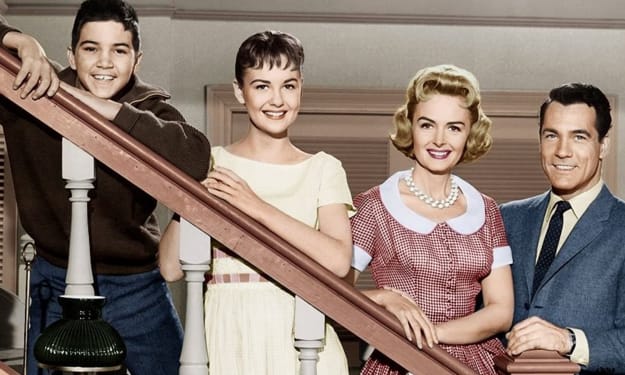
Watching Television 1950s
Adventures of Superman (1952–1958) Because of kids enjoying superhero comics, the show soon became popular. It was all about the comic book superhero Superman disguised as the mild-mannered Daily Planet reporter Clark Kent, played by George Reeves. The episodes revolved around the newspaper reporters which included Phyllis Coates as Lois Lane in season 1 and, from season 2, Noel Neill. A young reporter and the ally of Superman, Jimmy Olsen played by Jack Larson and keeping them all in line was Perry White, the editor of the Daily Planet, played by John Hamilton. The first two seasons were filmed in black and white, and the last four in color. I do believe all kids and all adults knew the opening line:
By Rasma Raistersabout a year ago in Geeks
The Rise of the Everyday Geek
M Mehran There’s a moment in everyone’s life when they feel out of place. Maybe it’s sitting alone at lunch with a book nobody else cares about. Maybe it’s getting laughed at for talking too much about dinosaurs, space travel, or video games. For geeks, that moment isn’t just once—it’s a pattern. But the thing about geeks is this: what once made them outsiders often becomes the very thing that makes them extraordinary. Consider Sara. As a child, she memorized every constellation in the night sky. While other kids wanted to be singers or athletes, she dreamed of telescopes and distant galaxies. Her classmates teased her, calling her “Space Girl.” But she didn’t stop. She collected books on astronomy, saved up for her first telescope, and stayed awake until dawn scanning the skies. Years later, Sara became an astrophysicist, working on a team that discovered new exoplanets. The same passion that made her stand out in school is now helping humanity understand the universe. This is the quiet magic of geeks: they are driven by love, not approval. Geeks don’t chase trends. They don’t care if their favorite topics are popular. They devote themselves to the things that light them up inside—whether it’s coding, art, cosplay, music, science, or storytelling. That devotion is what sets them apart in a world where most people dabble in everything but master nothing. Think of the innovations we take for granted today. The smartphone in your hand. The video platforms we stream on. The virtual worlds we escape to in games. All of these came from people once dismissed as “too obsessed” or “too weird.” It was the geeks—those who spent nights tinkering in garages, sketching designs on napkins, or coding until their fingers ached—who built the future. But being a geek isn’t just about technology. It’s about intensity. A cooking geek can spend hours perfecting a single recipe. A history geek might know more about a century-old battle than most professors. A film geek can quote entire scenes and analyze camera angles with excitement that seems endless. To be a geek is simply to care more deeply than the average person. And here’s why that matters: passion fuels progress. The world doesn’t change because of people who shrug their shoulders. It changes because of people who say, “This matters to me,” and keep working until it matters to everyone else. When you walk into a convention center filled with comic fans, you’re seeing a living example of this. Thousands of people gather not because it’s fashionable, but because it’s meaningful to them. They trade theories, celebrate characters, and create art that connects strangers across the globe. What was once niche has become a global culture. For years, geeks were told to hide their passions. Now, they wear them proudly. T-shirts with superheroes, collections of rare figures, libraries filled with fantasy sagas—it’s no longer embarrassing, it’s empowering. To declare yourself a geek today is to declare that you refuse to be ashamed of what you love. And the world is better for it. Because geeks remind us of something essential: curiosity is powerful. A geek’s curiosity leads to discovery, creativity, and resilience. When others give up after a few failures, a geek tries again. When most say, “That’s impossible,” a geek whispers, “What if?” That stubborn curiosity has given us electric cars, virtual reality, cures for diseases, and art that moves millions. Back to Sara—the girl who became an astrophysicist. Years after her discoveries, she returned to her hometown and visited her old school. She gave a talk to the students, telling them how she used to sit in the same classroom and get laughed at for being “too into space.” She paused, smiled, and said, “The truth is, the things that make you different might just be the things that make you powerful. Don’t ever stop being curious.” The room was silent, but in the back, a young boy who loved building model rockets sat up a little straighter. Maybe, just maybe, he thought, being a geek wasn’t a weakness after all. That’s how culture shifts—not all at once, but through moments of recognition, inspiration, and courage. So here’s the message: if you’re a geek, don’t hide it. The world doesn’t need more people pretending to like what’s popular. It needs more people chasing what they truly love, no matter how unusual it seems. Because when geeks rise, society rises with them. After all, the future doesn’t belong to the people who laugh at passion. It belongs to the people who live it.
By Muhammad Mehranabout a year ago in Geeks
The Quiet Power of Geeks
M Mehran The word geek used to be a label whispered in hallways, tossed like an insult across classrooms, and scribbled in notebooks beside doodles of glasses and calculators. But somewhere along the way, the world shifted. What was once a word meant to exclude has become a badge of honor, a quiet declaration of passion, curiosity, and a refusal to apologize for loving what others might not understand. This story begins in a small, dimly lit bedroom, where a boy named Arman hunched over a desk scattered with wires, circuit boards, and a thick manual on computer coding. His parents worried he was wasting his time, his teachers thought he was distracted, and his classmates dismissed him as “the weird kid who preferred machines to people.” But what they didn’t realize was that Arman wasn’t retreating from the world—he was building one. Every night, when the house fell silent, Arman’s bedroom transformed into a laboratory of imagination. He stayed up past midnight, typing strings of code into an aging computer, teaching himself how to create games and solve problems that had no answers in his schoolbooks. When something failed to work, he didn’t give up; he tinkered, tested, and learned. That stubbornness—the hallmark of a geek—became his superpower. And Arman wasn’t alone. All around the world, in countless bedrooms, libraries, garages, and basements, there were kids like him. Some obsessed over comic books, memorizing the lore of entire universes. Others stayed awake learning the secrets of black holes, or sketching blueprints for robots that might one day walk among us. They were misunderstood, sometimes mocked, often underestimated—but they carried inside them a spark that would change the world. The story of geeks is not one of quiet obsession alone—it is one of transformation. Decades ago, a man named Steve Jobs dropped out of college and tinkered with computers in his garage. Another young man, Bill Gates, spent hours writing code with more excitement than most kids showed for sports. J.K. Rowling, often described as a bookish dreamer, turned her love of storytelling into a cultural phenomenon. What unites them all isn’t luck—it’s that fierce, unshakable love of something bigger than themselves. But here’s the thing: being a geek isn’t limited to science or tech. It’s not just about wires, formulas, or code. A geek is anyone who falls so deeply in love with a subject that they lose themselves in it. It’s the musician who spends hours perfecting a chord progression, the gamer who knows the lore of their favorite franchise better than their own family tree, the historian who lights up when talking about ancient civilizations. Passion is the universal language of geeks. Back in Arman’s story, high school was rough. His classmates threw around jokes about how he’d never fit in. Prom night came and went without an invitation. But years later, while scrolling through his phone, Arman saw those same classmates liking his LinkedIn posts, asking him for advice, and congratulating him on his new tech startup that had just received international recognition. Suddenly, the “weird kid” was the innovator, the leader, the one people admired from a distance. That’s the quiet power of geeks: they’re often underestimated until the moment they transform entire industries, cultures, and lives. In today’s world, being a geek is no longer something to hide. Comic-Con events fill massive arenas with people celebrating superheroes and science fiction. Video games now rival Hollywood blockbusters in both budget and storytelling depth. Shows once considered “niche” are global hits, and technology has become the backbone of nearly every aspect of life. The geeks, it turns out, didn’t just inherit the Earth—they rewired it. Yet, the true magic of geeks lies not in their achievements, but in their way of seeing the world. Where others see problems, geeks see puzzles. Where most shrug and say “that’s impossible,” geeks lean closer and whisper, “what if?” That mindset—equal parts curiosity and determination—is what has given us everything from electric cars to medical breakthroughs, from the internet to the smartphones we can’t imagine living without. And still, the world needs more of them. More kids willing to spend hours experimenting instead of scrolling. More adults unafraid to chase their obsessions, even if others roll their eyes. More people brave enough to say, “Yes, I’m a geek—and proud of it.” So maybe the next time you see someone lost in their passion—whether they’re coding, sketching, writing, gaming, or studying galaxies billions of light-years away—you’ll recognize what they really are: a dreamer, a builder, a pioneer. Arman’s story, like the story of so many geeks, reminds us of something simple but powerful: the world doesn’t move forward because of those who follow the rules; it moves forward because of those who dare to obsess, explore, and create. And maybe, just maybe, the world’s future lies in the hands of the very people once called “weird.” Because being a geek isn’t about exclusion anymore—it’s about passion. It’s about building, dreaming, imagining. It’s about rewriting the word itself into something beautiful. And in that sense, we are all geeks of something.
By Muhammad Mehranabout a year ago in Geeks
Blossoming Hope Through "Myth, Magic & Mystery"
Make the impossible possible. Voices of Hope is excited for audiences to attend its 16th annual fall gala, “Myth, Magic & Mystery,” on Saturday, Oct. 4 at 8:00 p.m. The evening will be filled with Broadway music, stories, and dance.
By Marielle Sabbagabout a year ago in Geeks
Jimmy Kimmel Salary, Net Worth, and ABC Suspension Explained. AI-Generated.
Jimmy Kimmel Salary, Net Worth, and ABC Suspension Explained Jimmy Kimmel has been a household name in late-night television since Jimmy Kimmel Live! premiered on ABC in 2003. For over 20 years, his witty monologues and celebrity interviews have kept viewers entertained. But in 2025, the host found himself at the center of controversy after making comments about the tragic death of conservative activist Charlie Kirk. The backlash led ABC to suspend the show indefinitely, raising questions about Kimmel’s future — and his earnings. Why Did ABC Suspend Jimmy Kimmel Live!? During his September 15 opening monologue, Jimmy Kimmel criticized how some conservatives responded to Kirk’s death. He accused “many in MAGA land” of trying to use the tragedy for political gain and claimed they were attempting to frame the suspect, 22-year-old Tyler Robinson, as anything but “one of their own.” The remarks quickly went viral and sparked anger from conservative groups. ABC confirmed the show would be “pre-empted indefinitely.” Nexstar, which owns several ABC affiliates across the country, also stopped airing Jimmy Kimmel Live!, stating that it “strongly objects” to Kimmel’s comments. Adding fuel to the fire, FCC chairman Brendan Carr praised Nexstar’s move, while former President Donald Trump celebrated the suspension on social media, calling it “Great for America.” Jimmy Kimmel’s Salary at ABC One of the biggest questions fans are asking is: how much does Jimmy Kimmel earn? According to multiple reports, Kimmel’s ABC salary is about $15 million per year for hosting Jimmy Kimmel Live!. Some outlets suggest the figure may be closer to $16 million annually, factoring in bonuses and additional payments. This places Kimmel among the top earners in late-night television, alongside names like Stephen Colbert and Jimmy Fallon. His high paycheck reflects both his long career and the show’s importance to ABC’s lineup. Jimmy Kimmel’s Net Worth Over the years, Jimmy Kimmel has built an impressive fortune beyond his hosting salary. His income also comes from producing, acting, and other entertainment projects. As of 2025, his net worth is estimated at $50 million, according to Celebrity Net Worth. This wealth highlights his success as not just a host but also as a major figure in the entertainment industry. Even with his show suspended, Kimmel’s financial future remains secure. What’s Next for Jimmy Kimmel? The suspension of Jimmy Kimmel Live! has left viewers wondering about the show’s future. ABC has not announced whether or when the program will return. With Nexstar pulling episodes from its stations, the pause appears more serious than a short break. However, Kimmel’s long history in late-night television and his loyal fan base could work in his favor. If ABC decides to bring him back, he still has the influence and popularity to keep audiences tuning in. Key Takeaway Jimmy Kimmel’s suspension from ABC has created headlines across the country. While the controversy has put his show’s future at risk, his financial success is undeniable. With an annual salary of around $15 million and a net worth of $50 million, Kimmel remains one of the richest late-night hosts in America. Whether or not Jimmy Kimmel Live! returns, his impact on late-night TV — and his fortune — are here to stay.
By Farhan Khanabout a year ago in Geeks
Luigi Mangione
Luigi Mangione: The Enduring Fascination with a Shadowy Figure In the vast landscape of organized crime history, certain names resonate with a particular, almost mythical, infamy. One such name is Luigi Mangione. While not as universally recognized as Al Capone or John Gotti, Mangione's story is a compelling chapter in the annals of American crime, a tale that continues to spark curiosity and occasional Luigi Mangione news cycles decades later.
By KAMRAN AHMADabout a year ago in Geeks