
Naruto: Shadow Rising Is Coming, and I’m Terrified for Sasuke
Kishimoto is finally filling in the blank years after the war. Please don’t turn the shadow into a romance patch job.
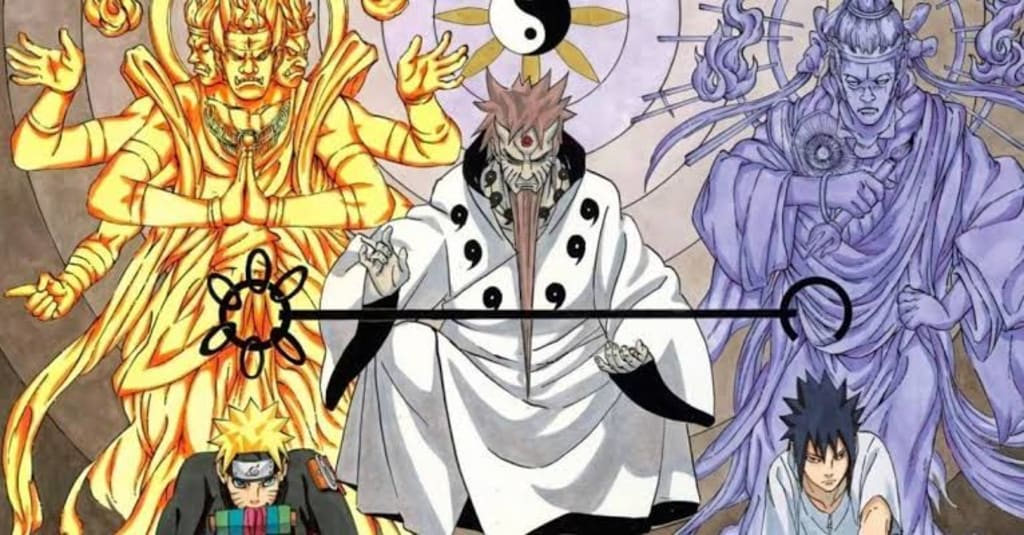
Kishimoto is finally filling in the blank years after the war. The risk is that he turns Sasuke’s shadow into a romance patch job.
On October 10, 2026, at New York Comic Con, the “NARUTO: What’s Next?” panel announced that Masashi Kishimoto would write and draw a new manga: NARUTO -ナルト- SHADOW RISING. The news hit the fandom fast. Naruto has not been gone. Boruto has run for years. The news still landed because this is the first time since 2014 that Kishimoto is returning to the main line with his own hand.
The difference matters. In Boruto, Kishimoto’s name appeared as supervisor. The actual drawing was done by Mikio Ikemoto. Ikemoto has his own style, but it is not Kishimoto’s. Proportions, faces, and the way action is staged do not carry the same weight. Shadow Rising is different. Kishimoto is credited with both story and art. Storyboards from his own hand were shown at the panel. The lines are still there. Naruto’s face is a little off-balance, but it is the right kind of off-balance. Only Kishimoto draws it that way.
The timeline is also clear enough now. The story takes place after the Fourth Great Ninja War, before Naruto formally becomes the Seventh Hokage. In the teaser, the Hokage Rock is still being carved. More specifically, the manga is said to focus on the blank period: Sasuke and Sakura’s travels, and the years around Sarada’s birth. The full story and serialization format will be revealed at Jump Festa 2027, on December 19 and 20.
That choice of timeline is smart. The original manga jumped from the final battle at the Valley of the End straight to Chapter 700, “many years later.” Everything in between was left empty. How did Naruto go from war hero to Hokage? How did Sasuke move from atonement to fatherhood? How did the Leaf Village rebuild? By returning to that gap, Kishimoto gives himself almost unlimited narrative room. He also avoids the accumulated baggage of Boruto’s new era.
But there is a problem, and it comes from outside the manga.
A dangerous signal from the live-action leaks
Around the same time, leaks about the live-action Hollywood film began circulating. According to industry reporters, the film’s version of Sakura Haruno will change significantly. She will come from a wealthy family. Her father will have died during the Nine-Tails attack. Her mother will be a snobbish, status-conscious woman. This is not the Haruno family from the original manga. In the original, Kizashi and Mebuki Haruno are alive, ordinary, and a little awkward. They argue in front of their daughter. They are not rich. They are not tragic. They are just parents.
The live-action version erases the father and turns the mother into a negative figure. That rewrites the entire Haruno background.
Another leak is more alarming. Sasuke will be given an early crush on Sakura, hidden because he was consumed by revenge. The intent is obvious. It is trying to build a foundation under a romance that barely had one in the original. If that setting were true, Sasuke’s coldness toward Sakura in the original would become deliberate suppression rather than simple indifference. Those are two different characters.
The worry is that Kishimoto might echo these changes in Shadow Rising. The new manga focuses on Sasuke and Sakura’s travels. It covers the time around Sarada’s birth. If Kishimoto follows the live-action logic, then the main job of this new story becomes filling in the Sasuke-Sakura romance.
That is a hard job to do well.
The Sasuke-Sakura problem
Sasuke’s internal drive, from Part I through the end of Shippuden, was always revenge and then revolution and atonement. His emotional world was filled by those themes. Romance was never the core of his arc. It was never the starting point of his actions. After the war, he chooses to leave the village and investigate the Otsutsuki threat alone. That choice carries a strong flavor of self-exile. A man in self-exile has to somehow become a husband and a father during his travels. That is the question Kishimoto must answer.
If he chooses to handle the romance seriously, he cannot just add a few sweet scenes. He needs to build the internal logic of why Sasuke chooses Sakura. That takes pages. It takes patience. It takes reopening Sasuke’s emotional layer in a way the original manga never fully did. Shadow Rising is currently described as a short series or a short, focused serialization. Whether there is enough space for that emotional construction is already a question.
If Kishimoto instead downplays the romance and keeps the focus on Sasuke’s identity as the shadow, then the manga may be stronger. That side includes his investigations abroad, his clashes with Otsutsuki remnants, and his independent actions as an unofficial Hokage. “Shadow Rising” points directly at that other side of Sasuke. He is not the Hokage standing in the light. He is the shadow outside the village, protecting it in a different way. That is the most unique and least explored part of his character.
You said it well: forced pairings feel awkward no matter how you round them out. The awkwardness is not really about Sasuke and Sakura as a couple. It is about the fact that Kishimoto never gave the line enough narrative weight. Sakura’s feelings for Sasuke are consistent from Part I to Shippuden. That part is clear. Sasuke’s side is not. Across the entire original manga, his responses to her amount to about two moments: the “thank you” at his departure, and the forehead poke after the final battle.
The forehead poke is a good gesture. It echoes Itachi’s gesture toward Sasuke. It carries a sense of inheritance. But it is too light. It is so light that the reader has to fill in a great deal of interpretation to read it as romantic confirmation. Kishimoto did not give it enough setup. He did not let Sasuke show, at some earlier point, that Sakura mattered to him in a specific way. Not even a glance, a hesitation, or a sentence left unfinished.
So when Chapter 700 revealed that Sasuke and Sakura had a daughter, many readers did not feel “finally.” They felt “when did that happen?”
If Shadow Rising tackles this line, Kishimoto faces that exact situation. He needs to answer “when did that happen?” without breaking Sasuke’s character logic. That is difficult, but not impossible. The key is whether he is willing to open Sasuke’s interiority enough. Not through narration saying “Sasuke always cared about Sakura.” Through a concrete action only Sasuke would take, so the reader can see it for themselves.
For example: Sasuke travels for years. He carries one thing with him. It is not a weapon. It is not an intelligence scroll. It is an object connected to the Leaf Village and to Sakura. He does not mention it. He does not explain it. He only takes it out once, alone, looks at it, and puts it back. That action needs no narration. The reader can piece together the answer.
If Kishimoto does not even have that kind of patience, and instead jumps straight into sweet domestic scenes of the couple traveling together, then the line cannot be saved.
The shadow should belong to Sasuke
The title itself is not ambiguous. The shadow is Sasuke. At the end of the original manga, Sasuke refuses to settle back in the village. He chooses to act outside as the shadow that supports the Hokage. Kishimoto gave him that position at the very end. It is the most natural direction for the character.
If “Shadow Rising” means Sasuke growing and changing as an independent actor, then its narrative potential is enormous. The teaser shows Naruto and Sasuke exchanging blows. That could be a memory of the Valley of the End, or it could be a new fight in the new story. If it is the latter, the reason behind it matters. After the final battle, Naruto and Sasuke resolved all their core conflicts. A new fight between them must have serious weight. Is it a spar? A clash of ideals? An external crisis forcing them onto opposite sides? There has to be a reason heavy enough to justify it.
What I want to see more is Sasuke’s independent storyline during his travels. As the only ninja with both the Rinnegan and the Sharingan, and with the Otsutsuki threat still present after the war, he investigates matters the Leaf Village cannot officially touch. In Boruto, this was handled too quickly. Sasuke often appeared only to rescue someone or hand over intelligence. He never had a complete narrative line of his own.
If Shadow Rising can truly point its camera at Sasuke’s shadow operations, then the manga has a reason to exist. Let him fight alone. Let him decide alone. Let him carry the consequences alone. It does not need Naruto to save him. It does not need Sakura as rear support. It just needs Sasuke facing an unknown enemy with his own judgment and his own methods.
That would be worthy of the word “shadow.”
Where everyone else went
Apart from Sasuke, readers care about what happened to the rest of the cast after the war. Kakashi and Tsunade are good examples of two different kinds of retirement.
Kakashi’s postwar path is relatively clear in official material. After the Fourth Great Ninja War, he becomes the Sixth Hokage. He leads the village for several years, then steps down once Naruto is ready. After that, he travels with Might Guy, revisiting the past. That setup is moving on its own. Kakashi lost his Sharingan. Guy is half-paralyzed and uses a wheelchair. The two of them traveling together is less “retirement” and more a choice to support each other for whatever time remains. Whether Kakashi visits Obito’s grave is not officially stated. But Obito’s final act was lending Kakashi the power of both Mangekyo Sharingan. That gesture says enough. Kakashi’s feelings toward Obito are complicated. There is regret and release and something that cannot be fully put into words. If Kishimoto draws a panel of Kakashi stopping somewhere on his travels, standing for a moment, no dialogue and no narration, the weight of that image would be enough.
Tsunade’s path is vaguer. She steps down as Fifth Hokage after the war, and Kakashi takes over. After that she fades from the main narrative. The idea that she and Mei Terumi travel the world together is more fan speculation than official canon. Some material mentions the two of them playing mahjong and drinking tea after the war, living a retired life, but that also lacks official confirmation. Still, Tsunade lost too much in the original story. Her brother Nawaki, her lover Dan, her friend Jiraiya. Choosing to stay away from the center of power and live on her own terms fits her character better than any “continue to shine” narrative.
You mentioned that Kakashi might keep visiting Obito’s grave, and that Naruto might keep running off to find Sasuke. The idea that Team 7’s way of deepening their bond is a fight at the Valley of the End is actually very Naruto. Naruto and Sasuke never communicated through words. In the final battle at the Valley of the End, they fought until they lost arms, then lay on the ground looking at the sky before they could finally speak. If after the war they occasionally go to the Valley of the End to fight, not to kill, just to spar, then sit on the stones and eat bento afterward, that would be an accurate expression of who they are.
Hope and caution
What makes Shadow Rising most exciting is that Kishimoto is finally willing to return to the world of Naruto and fill in the most important blank period himself. Sasuke’s independent story as the shadow, the rebuilding of the Leaf Village, the way Team 7 interacts in peacetime: these are things original readers have waited more than a decade to see.
What makes it most worrying is the possibility that the manga’s core goal becomes fixing the Sasuke-Sakura romance and rewriting the Haruno family background. If that happens, it may drift from what readers actually care about. Sasuke’s shadow rising should not be held hostage by a romance that never had enough setup. What readers want is a ninja fighting alone in the dark, finding his own path. Not a love story forced back into shape.
The most moving parts of Kishimoto’s Naruto world were never about who ended up with whom. They were Naruto and Sasuke bleeding at the Valley of the End. Kakashi and Obito reconciling across life and death. Jiraiya smiling as he sank into the deep sea. Those moments have weight because they were not reduced to romance.
Jump Festa 2027 is two months away. By then, the length, the serialization format, and the direction of the story will be clearer. Until then, the only thing I can say is this: Kishimoto, let the shadow have its own story. Do not let it become a supporting piece for something else.
About the Creator
Jin
Writer of reamstories
https://reamstories.com/jin
Enjoyed the story? Support the Creator.
Subscribe for free to receive all their stories in your feed. You could also become a paid subscriber, letting them know you appreciate their work.
Comments
There are no comments for this story
Be the first to respond and start the conversation.