
Morte D’Urban by JF Powers
Why It's a Masterpiece (Week 126)

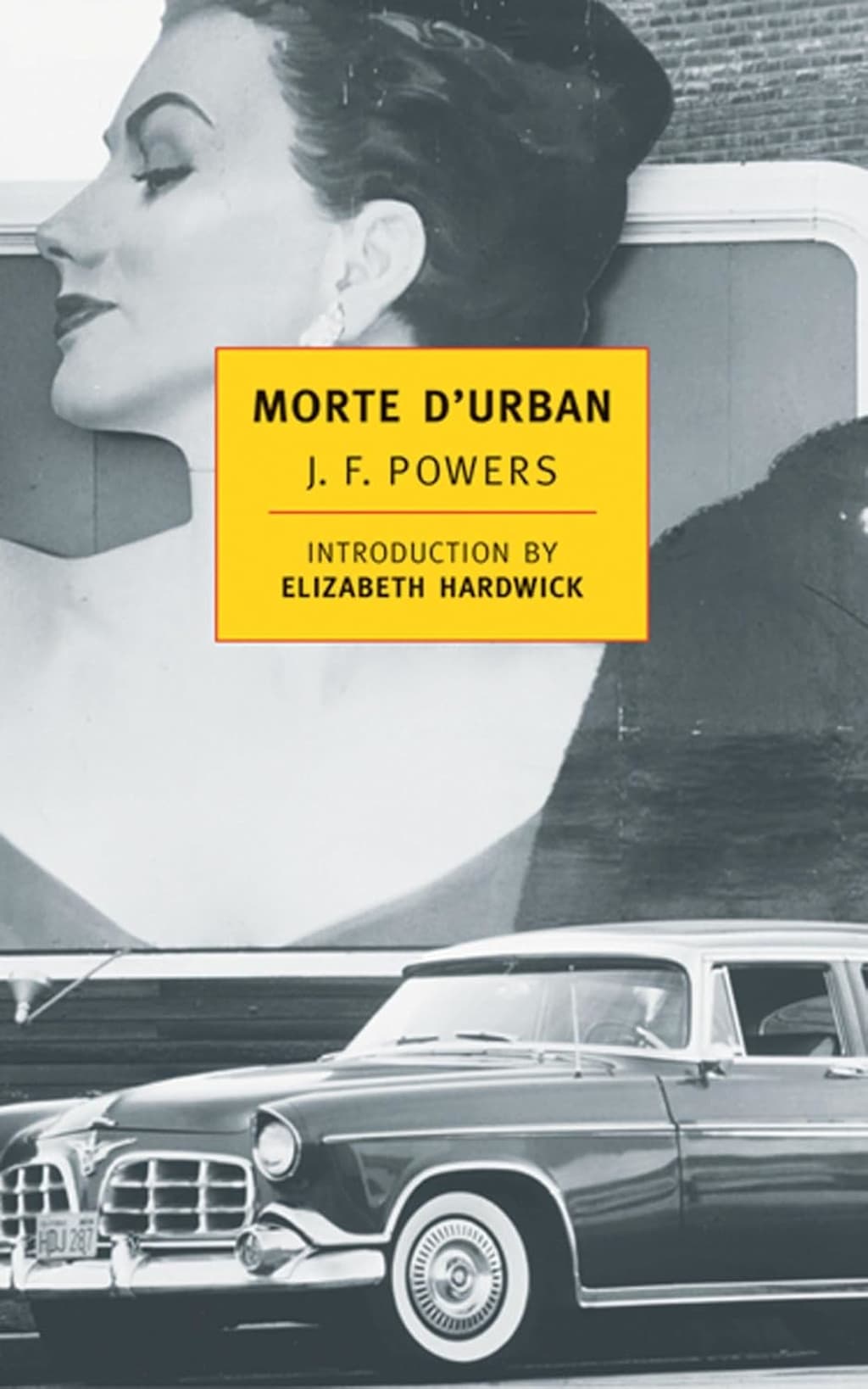
J.F Powers' debut novel was published in 1962 by Doubleday, before this the author was known for his short stories criticising Catholicism in the American Midwest. Thomas Merton called it “a valid and penetrating study of the psychology of a priest in what is essentially a spiritual conflict..." whereas other critics gave it the thumbs-up for being a great 'workplace saga' with a great amount of wit to wrestle with.
The novel earned the 1963 National Book Award for Fiction which means that by this point, Powers had created quite a name for himself. Even though the book didn't perhaps sell as much as was hoped for, but it did gain great acclaim amongst people of letters.
Plot

Father Urban Roche is a talented, urbane priest belonging to the Order of St Clement, a small and undistinguished Catholic religious order in America. Unlike many of his brethren, he is a gifted preacher, socialiser, and fundraiser, admired for his charm and cultivated manner. However, his ambition and modernising spirit sometimes make him a misfit within the conservative, unadventurous folk. His desire for a more prominent role and his skill in dealing with influential folk mark him as a figure of potential, yet also as someone the leadership might prefer to keep at a comfortable distance.
Hoping for a position in a more cosmopolitan and influential setting, Father Urban is instead sent to a remote, struggling retreat house in rural Minnesota. The posting is clearly a demotion, but he accepts it with a determination to make the best of his situation. The retreat house, St Clement’s Hill, is shabby and underused, reflecting the order’s general decline. Father Urban quickly resolves to improve both the facilities and the spiritual engagement of the place, seeing it as an opportunity to demonstrate his skills and perhaps prove his superiors wrong in sidelining him.
Upon arrival, Father Urban begins cultivating relationships with influential lay benefactors, particularly Billy Cosgrove, a wealthy Catholic businessman with a love for golf and a taste for luxury. Father Urban sees such friendships as essential to revitalising the retreat house. Through charm, diplomacy, and his own social ease, he wins supporters who might provide funding and credibility. His efforts soon begin to attract attention, raising hopes that his tenure might mark a turning point for the fortunes of St Clement’s Hill.
Father Urban’s partnership with Cosgrove leads to opportunities for both fundraising and recreation. He manages to secure donations and support for renovations, including plans to improve the retreat house’s rather dilapidated amenities. These developments elevate his profile within the local Catholic community.
With financial backing, Father Urban oversees physical improvements to the retreat house, including landscaping and facility upgrades. The most notable addition is a golf course, a sign of the retreat’s growing appeal to affluent patrons. Although, this blending of spiritual retreat with leisure activities causes some unease, hinting at a potential dilution of the order’s religious mission. Father Urban himself is aware of the compromises he is making, though he justifies them as necessary for the greater good.
During a golf match with Cosgrove, Father Urban is struck in the head by a golf ball. While not life-threatening, it forces him to rest and temporarily step back from his energetic pace. The incident also shifts perceptions: he is no longer seen as untouchably competent, and the episode hints at a vulnerability in him.
Despite his efforts, Father Urban’s relationship with his fellow priests and superiors remains fraught. Some resent his high-handed manner and perceived worldliness, while others quietly admire his initiative but hesitate to support him openly. The order’s leadership remains cautious, reluctant to give him greater responsibilities or a more prominent platform. Father Urban becomes increasingly aware that institutional conservatism will always limit his scope for action.
Eventually, Father Urban is reassigned from St Clement’s Hill to a small parish in the city. Although it might seem like a step up, the new role comes with its own frustrations. The parish is uninspiring and offers little scope for his ambitious ideas. Moreover, his time in rural Minnesota has left a lingering sense of physical and spiritual fatigue. The dream of transforming his order or securing a more influential position begins to fade.
Over time, Father Urban’s energy and sharpness diminish. His earlier drive to network, fundraise, and innovate gives way to a quieter, more resigned approach to his duties. He continues to serve faithfully, but without the sparkle and ambition that once defined him. He must continue on, but not having the promise of worldly success means that he finds little point now in doing above the absolute minimum.
Into the Book

Ambition vs. Institutional Stagnation
Father Urban’s story is shaped by the tension between his personal ambition and the institutional conservatism of the Order of St Clement. His talents as a preacher, networker, and fundraiser are undeniable, yet his superiors repeatedly limit his scope, assigning him to uninspiring posts. Powers suggests that ambition within religious life is both necessary for renewal and dangerous when it disrupts established hierarchies.
The novel explores how institutions often resist change, preferring stability over individual brilliance. Urban’s gradual decline reflects the slow erosion of drive in the face of bureaucratic inertia. His journey questions whether ambition in a spiritual vocation can be reconciled with obedience, or whether one inevitably stifles the other. The irony of his fate lies in the fact that his gifts are recognised but never fully utilised, leaving him to wrestle with the gap between potential and reality.
“The Order had never encouraged brilliance, only steadfastness.”
- Morte D’Urban by JF Powers
Spiritual Mission
The novel examines the uneasy relationship between the worldly skills that make Father Urban effective and the spiritual mission of the priesthood. His ability to charm wealthy patrons, play golf, and manage public relations revitalises the retreat house, but also risks blurring the line between religious work and social climbing. The author presents Urban as a man who genuinely wishes to serve God, yet cannot help enjoying the trappings of influence and prestige. This duality raises the question of whether such strategies undermine or strengthen spiritual goals. The golf course becomes an important symbol: a way to attract benefactors, but also a sign of creeping secularism.
“You can’t very well preach to a man while he’s missing a putt.”
- Morte D’Urban by JF Powers
The Defeat of the Individual
Unlike stories of grand failure or tragic downfall, Morte d’Urban depicts a more subtle defeat, the gradual fading of a man’s hopes. Father Urban begins full of energy and purpose, determined to make his mark, but is slowly worn down by setbacks, reassignment, and the unyielding nature of the order. Powers captures the melancholy reality that not all defeats are sudden; some come as a quiet yielding to circumstances until the fight simply stops. The novel’s dry tone makes Urban’s decline all the more important, showing how compromise and resignation can be as final as any dramatic ending. Yet, there is also a trace of dignity in his acceptance, a man adapting to what remains possible, however small.
“Some victories look a good deal like surrender.”
- Morte D’Urban by JF Powers
Why It's a Masterpiece

One of the biggest reasons this book is a masterpiece is because of the presentation of character. Father Urban is one of modern American fiction’s most recognised clerical characters. He is at once ambitious and devout, worldly yet sincere, flawed yet sympathetic. The author avoids caricature, making him a rounded figure who reflects genuine human contradictions.
Another reason it is considered a masterpiece is because of its praise from other writers. As well as winning the 1963 National Book Award and remaining in print for decades, it has received praise from the likes of Elizabeth Hardwick for its timeless insight into the human condition.
Conclusion

I read this book a while back and I still think about it often as one of the best books I've read about the state of America and its relationship with organised religion. But it's also a great book to read if you want a criticism on American institutions and their want for regularity. I hope that if you have not considered this book already that you seek it out.
Next Week: A Connecticut Yankee in King Arthur’s Court by Mark Twain
About the Creator
Annie Kapur
"Et in Arcadia Ego"
***
I am:
🙋🏽♀️ Annie
📚 Avid Reader
📝 Reviewer and Commentator
🎓 Post-Grad Millennial (M.A)
***
I have:
📖 300K+ reads on Vocal
🦋/X @AnnieWithBooks
📸 ThePrancingPonyBakery
🔗 PrancingPonyBakery.com
***
🏡 UK
Enjoyed the story? Support the Creator.
Subscribe for free to receive all their stories in your feed. You could also become a paid subscriber, letting them know you appreciate their work.
Comments
There are no comments for this story
Be the first to respond and start the conversation.