
Life and Fate by Vasily Grossman
Why It's a Masterpiece (Week 140)

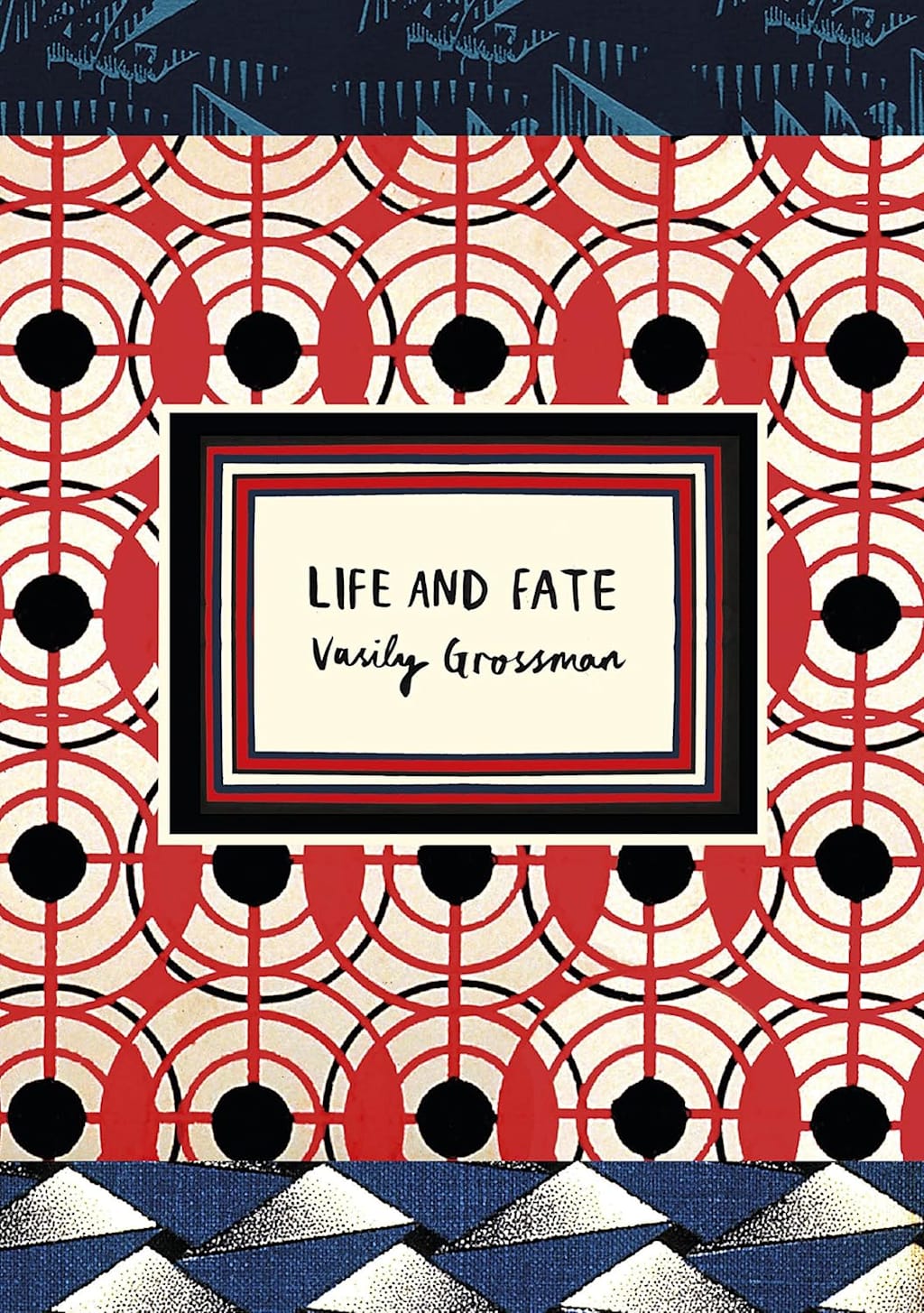
Vasily Grossman was a war correspondent and so, who better was there to write about wartime? Life and Fate is shaped by Grossman's experiences at Stalingrad and his investigations into Nazi extermination camps. One thing I found out was that Grossman's mother, Yekaterina Savelievna, was murdered in a concentration camp in 1941 - suffering the same fate as many of the Jewish population of the time. It is truly horrific and you can see that terrifying imagery in his writing.
Life and Fate was written around 1959-1960 and upon its publication in 1960, it was deemed unfit for public consumption - believing it was against the Soviet Regime. The KGB confiscated all available copies, including carbon paper and typewriter ribbons, in an effort to erase the text entirely. Party official Mikhail Suslov reportedly claimed the novel could not be published for hundreds of years. Grossman’s appeals to the state were ignored, and he died in 1964. I find this heartbreaking, but at least we get to read it today.
As there were definitely rebels around, copies of the manuscript survived through the efforts of fellow writers and dissidents, including Andrei Sakharov and Vladimir Voinovich (a physicist and a satirical writer). The text was secretly microfilmed and smuggled out of the USSR, leading to its first publication in 1980 in Switzerland.
It wouldn't be until the late 1980s that the novel would be published in the USSR. It is today a 20th century War and Peace in its popularity and magnitude.
Plot
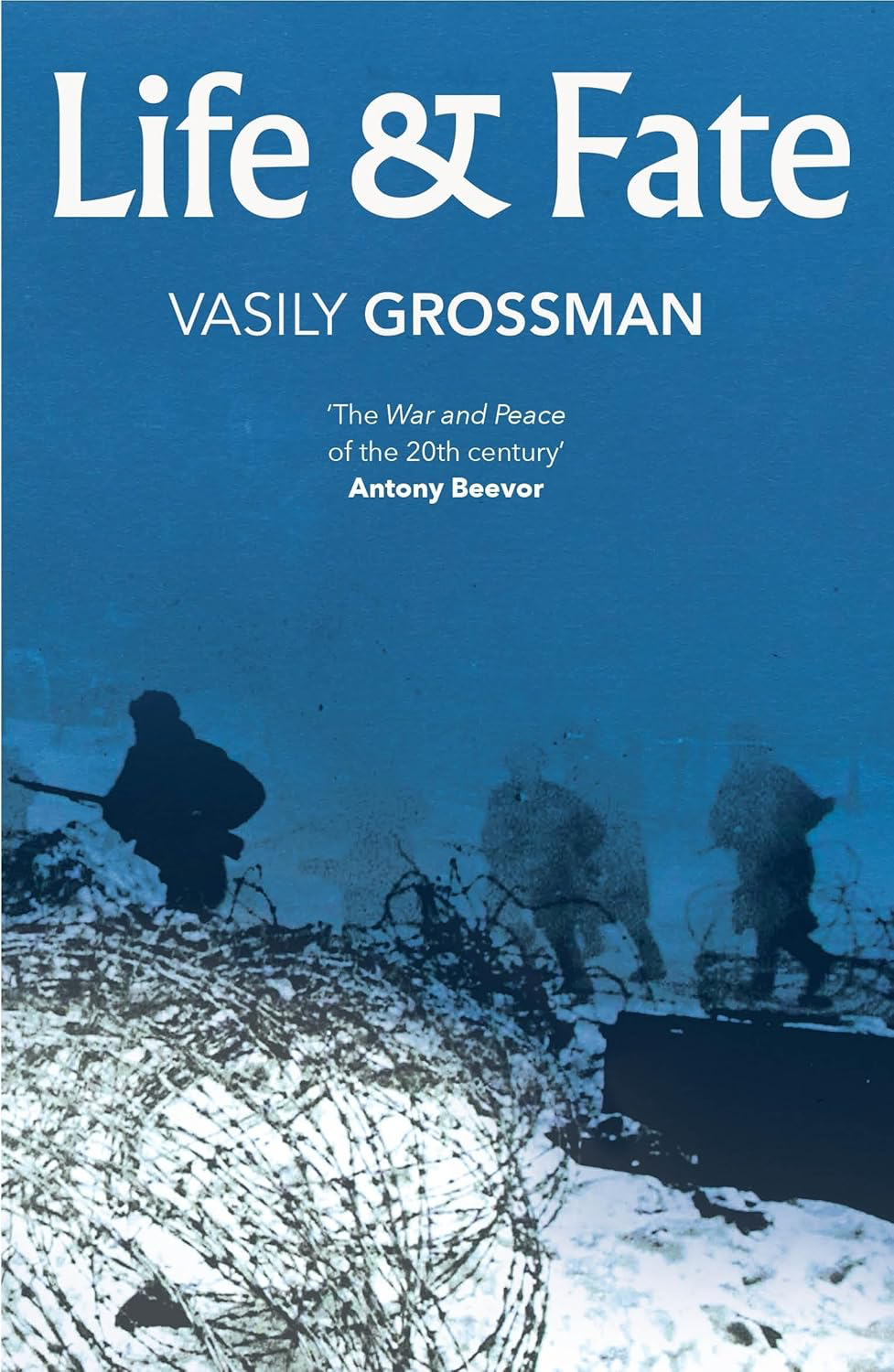
The novel is set during the Battle of Stalingrad in 1942–43, using the conflict as both a historical event and a moral trial. Much of the narrative revolves around the extended Shaposhnikov family, whose members are scattered across Soviet society. Their lives intersect with the war in different ways, from frontline combat to evacuation and imprisonment.
Viktor Shtrum, a Jewish nuclear physicist, struggles professionally and personally as antisemitism and ideological scrutiny threaten his career. His scientific integrity clashes with the state’s demand for political conformity. If you didn't think that intellectual life was distorted and stifled under Stalinism then I urge you to read this book because Shtrum's experiences will make you see everything differently.
There's a direct comparison of Stalin's Russia with Nazi Germany and of course, this was one of the reasons the novel was so controversial upon its release. If there was one group of people that the Stalinists did not want to be associated with let alone compared to it was the very people whom they now considered to be their enemies. Yet, the venn diagram they existed in was actually a circle in which they were both present basically doing the exact same things. There are scenes in Soviet prisons that mirror those that happen in Nazi concentration camps and the culture of fear and propaganda was definitely similar. I think today we may understand the comparison, but to think of doing it at a time when Stalinism was still fresh in the mind of the Russian people and the USSR was still in full swing was a death wish if anything.
Lyudmila Shaposhnikova, Viktor’s wife, is haunted by guilt over her son Tolya’s death during the war. Her grief exposes the emotional cost of ideological sacrifice, where personal suffering is dismissed as secondary to the state’s goals. But in contrast, through generals, officers, and ordinary soldiers, Grossman explores the nature of command, obedience, and courage - the rhetoric is almost clinical in its obedience. Some leaders value human life; others treat soldiers as expendable.
The book includes devastating depictions of the Holocaust, including letters and testimonies describing mass murder in occupied territories. These sections are among the first literary attempts to confront the genocide directly in Soviet literature. Many of the characters themselves are trapped in these prisons created by society instead. These include cycles of denunciation of the state and then, self-censorship out of fear. Totalitarianism through fear and compliance makes the world a prison for its inhabitants and Grossman definitely shows how state control can silence even the most arduous dissenters.
But he also argues that true freedom lies in small, private acts of kindness and moral refusal. Politicians come and go, but human compassion from one to another can stay forever if we want it to. To be kind and compassionate in such trying times is itself, the ultimate act of resistance.
Into the Book
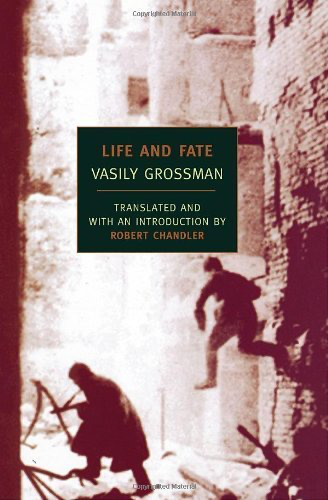
Totalitarianism:
A big theme of the text is the author's critique of totalitarianism, particularly its capacity to erase moral independence. Through parallel depictions of Nazi Germany and Stalinist Russia, Grossman argues that ideological absolutism functions in similar ways regardless of political alignment. Individuals are reduced to instruments of the state, valued only for obedience. Fear replaces ethical judgement, forcing characters to act against their own conscience in order to survive.
The author exposes how totalitarian systems depend not only on violence, but on internalised self-censorship. Characters constantly monitor their own speech and thoughts, aware that even private doubts may lead to denunciation and possibly imprisonment. This is particularly evident in scenes set in Soviet prisons, which deliberately mirror Nazi camps, suggesting that the true horror lies not in national identity but in systems that demand ideological compliance. A quotation depicting this shows how this plays out throughout the text: “Wherever the state lays claim to the soul, freedom ceases to exist.”
Yet the author then resists simplifying evil into individual villains. Instead, he shows how ordinary people become complicit through fear, careerism, or moral exhaustion. Totalitarianism succeeds because it persuades individuals to surrender responsibility for their thoughts and feelings, allowing cruelty to appear normal, even necessary.
“A man may be faithful to an idea, but ideas do not love him back.”
- Life and Fate by Vasily Grossman
The Individual vs. The State:
The author consistently shows the struggle between personal conscience and state authority at the foreground of the text. He portrays moral choice as both fragile and essential. Characters are repeatedly placed in situations where survival depends on compromise, silence, or betrayal. Viktor Shtrum’s experience as a Jewish scientist shows this conflict: his professional success hinges not on truth or intellect, but on political obedience. When he submits to state pressure, the author presents this not as villainy but as a tragic human failure shaped by fear.
The book insists that conscience is not heroic or grand, but quiet and easily crushed. Acts of resistance are often small: refusing to denounce a colleague, offering kindness to a stranger, or privately rejecting ideological lies. The author suggests that these moments matter precisely because they occur in hostile conditions. A quotation he uses to show this in action throughout the text is: “The history of humanity is the history of human kindness.” It is the core idea of the whole novel, on which the message hinges, on which the characters survive.
More important than this though is that Grossman does not romanticise moral compliance disguised as 'purity' of thought. Those who preserve their conscience often suffer or die, while those who compromise survive. This reinforces the book's bleak realism, while also elevating conscience as the last remaining form of freedom under tyranny.
“Kindness is stronger than fear, even when it is defeated.”
- Life and Fate by Vasily Grossman
War, Suffering and the Value of Human Life:
War in Life and Fate is not portrayed as glorious or redemptive, but as a vast mechanism of suffering that exposes how cheaply human life is valued by ideological systems. Especially those that operate under dictatorships and totalitarianism. The Battle of Stalingrad is both a historical event and a symbolic setting, where heroism and brutality coexist. Soldiers are celebrated rhetorically, yet treated as expendable in practice, revealing the contradiction at the heart of state-sponsored patriotism. We can even argue that war is portrayed in a similar way today over in places like the USA. Patriotism is politically celebrated whereas those who actually go and die in the wars are more than often forgotten to history as expendable people in a conflict they both didn't create and probably don't fully understand. The message is far stronger - another act of propaganda - one that often costs people their lives. The average person understands this as political propaganda, but this doesn't stop the powerful from pushing it.
The author focuses on the physical and emotional cost of war: exhaustion, hunger, grief, and moral numbness. Civilian suffering, particularly that of women and children, is given equal weight to battlefield heroics. Lyudmila’s grief over her son’s death reveals how private loss is dismissed by the state as an acceptable sacrifice. As she realises, “The state demanded suffering, but it did not share it.”
By including explicit depictions of the Holocaust, the author broadens the book's moral scope, insisting that war’s greatest crime is the systematic erasure of human individuality. Against this, he asserts the absolute value of each human life, regardless of ideology or outcome.
“Nothing is more precious than a single human life.”
- Life and Fate by Vasily Grossman
Why It's a Masterpiece
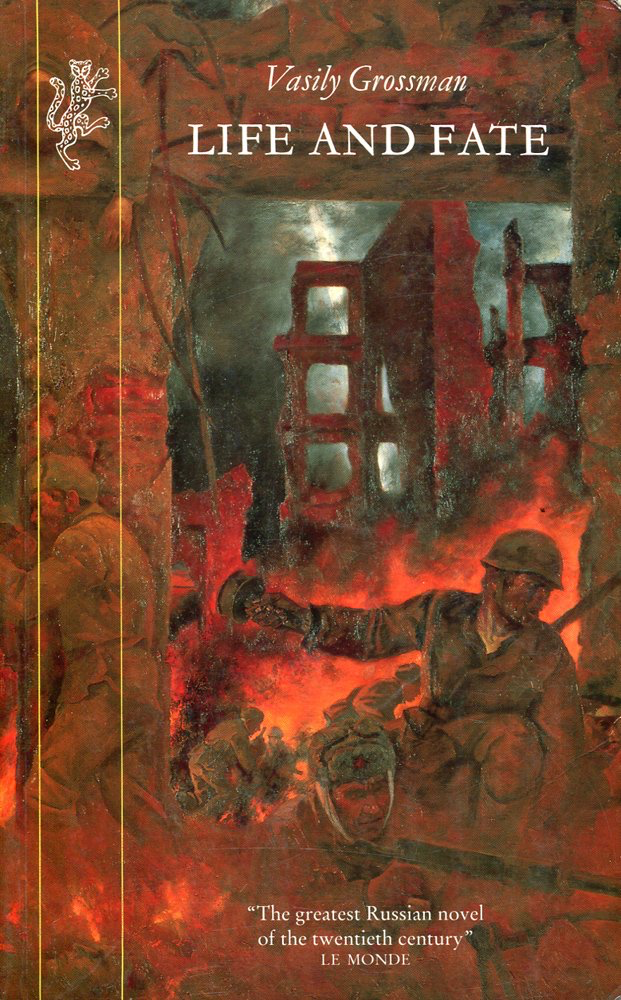
War literature will always be hard-hitting in the emotional sense but we today are not so far-removed from Grossman's own message. As I have already stated, there is political propaganda everywhere, freedom of speech is under threat by those who once claimed to be completely and utterly on the side of defending it no matter the consequences. And atop of this with the takeover of public online spaces like Twitter, it is clear that the lunatic is now running the asylum. We have entered a space that masquerades as one that respects the freedom of the individual, but in reality actually is simply state-sponsored slow-death which forgoes the usual logic than human compassion is worth more than many a material item and concedes (wrongly so according to biology) that we have 'suicidal empathy'.
This is Hitlerian behaviour, it is Stalinism at its horrific core and Grossman's Life and Fate teaches us about how to recognise this and how now, we have been overcome with the supporters and soldiers of this system - we must have a quiet resistance by existing in spaces where we are not wanted. Even our existence is an act of defiance.
Conclusion
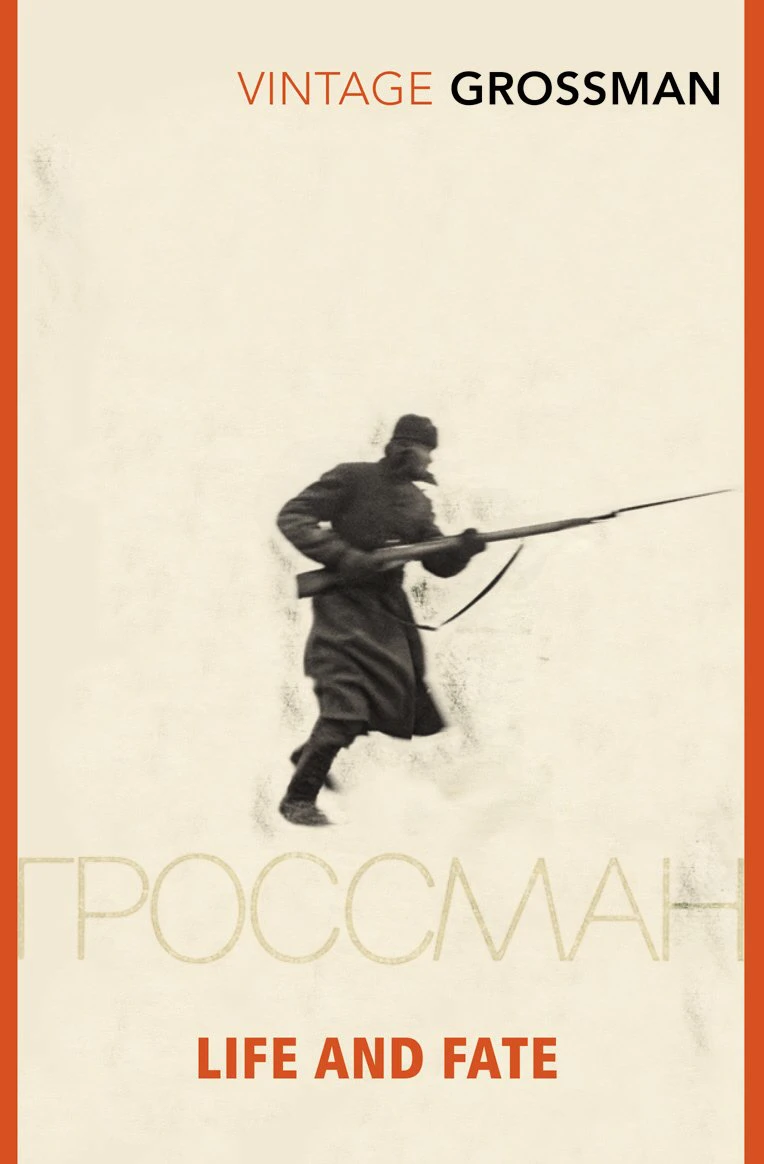
Life and Fate is one of the great novels of the 20th century and if you're put off by its size, please don't be. It has some very valuable lessons about human compassion within and how important it is for a functioning society where thought and intelligence flourishes, to have empathy and love at its epicentre. It is a fantastic novel and I hope you consider it.
Next Week: Os Maias by Eça de Queiros
About the Creator
Annie Kapur
"Et in Arcadia Ego"
***
I am:
🙋🏽♀️ Annie
📚 Avid Reader
📝 Reviewer and Commentator
🎓 Post-Grad Millennial (M.A)
***
I have:
📖 300K+ reads on Vocal
🦋/X @AnnieWithBooks
📸 ThePrancingPonyBakery
🔗 PrancingPonyBakery.com
***
🏡 UK
Enjoyed the story? Support the Creator.
Subscribe for free to receive all their stories in your feed. You could also become a paid subscriber, letting them know you appreciate their work.
Comments
There are no comments for this story
Be the first to respond and start the conversation.