Latest Stories
Most recently published stories in Geeks.
Is Stranger Things Season 6 Coming Out? . AI-Generated.
After nearly a decade of Demogorgons, the Upside Down, and Hawkins chaos, Stranger Things has officially reached its conclusion. With Season 5 wrapped and the credits rolled for the final time, many fans are still asking the same question across Google, social media, and forums:
By Md. Nurul Afsar8 months ago in Geeks
My Top 10 Favorite Coldplay Songs
#1 - Fix You, Released 2005, X&Y Album Fix You is a song that is very near and dear to my heart. I learned to play it on the guitar when I was 12 years old and it was always one of my dad's favorites. It's a beautiful yet surreal song about offering support and guidance to those in the throws of grief. While the beginning alludes to feelings of regret and emotional exhaustion, trying your best but not succeeding, by the end, we are reminded to never give up. Healing and love can always be found, even in the darkest times, just know "lights will guide you home."
By Maddy Newt8 months ago in Geeks
Lindsey Vonn Crash. AI-Generated.
The phrase “Lindsey Vonn crash” quickly spread across global sports headlines after the legendary skier suffered a frightening fall during a World Cup downhill race in Switzerland. For fans of alpine racing, the incident was a sobering reminder of the risks that define elite skiing—and of the resilience that has long characterized Vonn’s career. Often misspelled as “Lindsay Vonn,” the American champion has built a reputation not only through victories but also through her ability to return after serious setbacks. The latest Lindsey Vonn injury now raises fresh questions about her immediate future, especially with a major international competition approaching. --- The Moment That Stunned the Skiing World During the final World Cup downhill race before the Milano Cortina Winter Olympics, Vonn lost control after landing a jump on the course in Crans-Montana, Switzerland. She skidded sideways into the safety netting and appeared to be in visible pain, particularly around her left knee. Despite the severity of the fall, Vonn managed to stand and ski down slowly, but she repeatedly shifted weight off her injured leg before being airlifted for medical evaluation. Reports noted that she remained down for several minutes after the impact while medical staff attended to her on the slope. The race itself became controversial. Worsening visibility and snowy conditions contributed to multiple crashes, prompting officials to cancel the event altogether. --- Immediate Medical Concerns The 41-year-old skier was transported to a hospital for precautionary checks after appearing to clutch her left knee. Encouragingly, preliminary physiotherapy assessments were described as “mostly reassuring,” though doctors recommended further evaluation before clearing her to compete again. Still, the timing could not have been worse. The crash occurred roughly one week before the Olympic opening ceremony, casting doubt on her participation in key alpine events. --- A Comeback Story Suddenly in Question What makes this Lindsey Vonn crash especially significant is the narrative surrounding her recent return to competition. After retiring in 2019, Vonn reentered the sport following a partial knee replacement, motivated by a pain-free condition and the desire to end her career on her own terms. Her comeback had been impressive. She was considered a strong contender for upcoming races after posting podium finishes during the season. In fact, she had already achieved multiple standout results since returning, reinforcing the idea that experience can still compete with youth in high-speed disciplines. The latest injury therefore represents more than a single race mishap—it threatens what many viewed as a celebratory final chapter. --- Dangerous Conditions on the Course Observers pointed to the course itself as a contributing factor. Snowfall and poor lighting made visibility difficult, and several athletes crashed before the race was halted. Such conditions highlight an ongoing debate within alpine skiing: how to balance thrilling competition with athlete safety. Downhill racing is among the fastest non-motorized sports in the world, often pushing athletes to the limits of reaction time and physical endurance. Even minor miscalculations can lead to high-impact falls. --- A Career Defined by Risk—and Recovery To understand why this incident resonates so strongly, it helps to view it within the broader arc of Vonn’s career. She has endured numerous crashes over the years, including a devastating fall at the 2013 World Championships that resulted in major knee ligament tears and a fractured tibial plateau. Earlier in her career, she also crashed at nearly 60 miles per hour during Olympic training but returned to competition just days later. These moments established a pattern: setback followed by determined return. That resilience is part of what transformed Vonn into one of skiing’s most recognizable figures. --- Why the Lindsey Vonn Injury Matters Beyond One Athlete Elite athletes often serve as symbols for their sports, and Vonn is no exception. Her presence alone can elevate audience interest and media attention. The possibility that she could miss a major event has implications for: Competition dynamics: Removing a veteran contender reshapes medal predictions. Fan engagement: Vonn’s popularity draws viewers beyond traditional skiing audiences. Narrative continuity: Her comeback story had become one of the season’s defining themes. At 41, she was even poised to make history as the oldest woman to compete in Olympic alpine skiing. --- The Mental Challenge After a Crash Physical recovery is only part of the equation following a high-speed fall. Athletes must also regain confidence—an intangible but critical component in downhill racing. Trust in one’s body, equipment, and instincts determines how aggressively a skier attacks the course. After a crash, rebuilding that trust can be as demanding as rehabilitation itself. Given Vonn’s history, however, few would underestimate her psychological strength. --- What Happens Next? For now, her status remains uncertain. Medical teams are expected to monitor her condition closely before confirming whether she can safely compete. Athletes at this level often face a delicate decision: return quickly for a major event or prioritize long-term health. Either choice carries weight. --- Legacy Beyond the Fall Regardless of the outcome, the latest Lindsey Vonn injury does little to diminish a career filled with milestones. Olympic medals, World Cup victories, and record-setting performances have already secured her place among alpine skiing’s greats. What continues to set her apart is not just achievement—but persistence. Every generation of athletes produces champions. Only a few redefine what endurance looks like. --- Conclusion The recent Lindsey Vonn crash is a reminder of both the beauty and brutality of alpine skiing. One moment can alter months of preparation, yet it can also reveal the character of those who compete at the highest level. Whether Lindsay Vonn returns quickly or takes time to recover, her influence on the sport remains unmistakable. Fans, fellow athletes, and analysts alike will be watching closely—not simply for updates on her condition, but for the next chapter in a career that has repeatedly turned adversity into inspiration. In a sport built on speed and courage, Vonn has long embodied both. This latest challenge may prove difficult, but if history is any guide, it will not define her—it will simply become another part of her remarkable journey.
By Saboor Brohi 8 months ago in Geeks
"Knock, Knock," A Common Thread Theatre Company Presents "Fun Home"
Do you feel my heart saying ‘hi?’ A Common Thread Theatre Company opens the doors to its production of “Fun Home,” a Tony Award-winning musical based on Alison Bechdel’s graphic memoir. The story centers on Alison, a lesbian woman, recalling memories of the past to help her understand her complicated relationship with her closeted gay father, Bruce.
By Marielle Sabbag8 months ago in Geeks
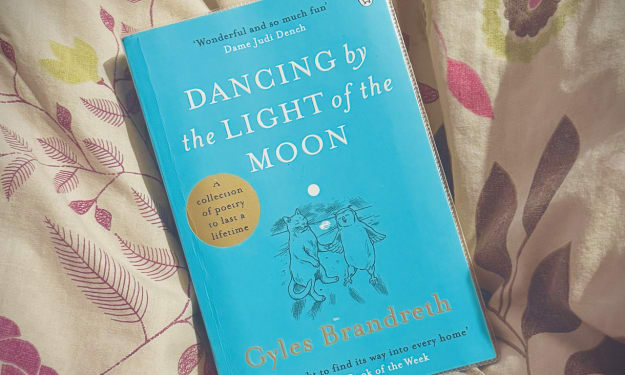
Book Review: "Dancing by the Light of the Moon" by Gyles Brandreth
I love poetry and I love trying to memorise my favourite poems. Ever since I was a young girl, I've loved memorising poems like The Raven by Edgar Allan Poe (which I managed to do when I was about 13 years' old) and of course, the famed Vincent Malloy by Tim Burton (if you haven't seen it already I would say definitely go and watch it). Poetry can convey so much in a short space of time, and some of my favourite poets include Lord Byron, Percy Shelley and of course, John Keats. I'm a big fan of Romanticism as you can see, but when it comes to Gyles Brandreth - he has allowed me to explore these favourites whilst also presenting me with nostalgia for lost poets I haven't revisited. But best of all, I have discovered new poets I have not read before.
By Annie Kapur8 months ago in Geeks
National Shutdown . AI-Generated.
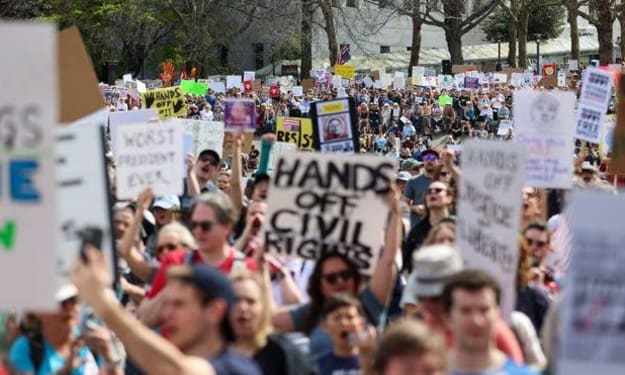
Across the United States, organizers have called for a national shutdown January 30, urging people to pause daily routines and participate in a coordinated day of economic and civic protest. The movement, often described as a jan 30 general strike, reflects rising public tension around immigration enforcement policies and the role of federal agencies in local communities. While general strikes are historically associated with labor disputes, this moment represents a broader coalition effort that blends social activism, political expression, and grassroots organization. Supporters describe the action as a necessary demonstration of collective power; critics question its effectiveness and long-term implications. What Is the National Shutdown? The nationwide shutdown January 30 is part of a larger campaign encouraging people to avoid work, school, and consumer spending for a day. Organizers frame the effort as an “economic blackout,” designed to demonstrate how everyday participation fuels the broader economy. The national strike january 30 is linked to opposition against expanded Immigration and Customs Enforcement (ICE) operations and mass deportation policies under the current U.S. administration. More than 250 actions were reportedly planned across dozens of states, backed by over 1,000 organizations, illustrating the scale of coordination behind the nationwide strike jan 30. Why Protest Now? The momentum behind the general strike january 30 follows several fatal incidents involving federal agents that sparked widespread outrage and debate. Demonstrators have called for accountability and policy reform, while federal officials in some cases argued agents acted in self-defense—highlighting the sharply divided narratives surrounding these events. Activists say the goal of the ice protest jan 30 is to pressure lawmakers and institutions by showing how coordinated public action can influence political decisions. Many protests are targeting detention centers, airports, and political offices connected to immigration policy. The “ICE Out” Movement A central slogan tied to the ice out jan 30 campaign is a demand to reduce or dismantle immigration enforcement agencies. The demonstrations, sometimes branded simply as ice out, are scheduled to continue beyond a single day, signaling a longer-term advocacy strategy. Grassroots networks—including student groups, civil rights organizations, and labor advocates—have helped organize the national strike, emphasizing civic participation as a method of influencing national conversation. How Businesses and Communities Are Responding The strike on friday has prompted varied responses from businesses. Some restaurants, galleries, and local establishments have chosen to close temporarily in solidarity, despite acknowledging the financial risks of shutting down during an already challenging economic period. In certain cities, art spaces even planned to “go dark” as a symbolic gesture supporting the nationwide shutdown. Other companies remain open but have pledged donations or support services, reflecting the nuanced decisions organizations must make when navigating politically charged moments. A Call for Collective Action Supporters of the jan 30 general strike argue that collective pauses—whether through labor withdrawal or consumer boycotts—can send a strong message to policymakers. The strategy is rooted in a long tradition of civil resistance, where economic disruption is used to draw attention to perceived injustices. At the same time, labor experts note that a true general strike typically involves organized work stoppages across industries, something that can be difficult to achieve without formal union backing. This distinction has led some analysts to debate whether the current effort qualifies as a classic general strike or represents a newer form of decentralized protest. Political Timing and National Attention The protest tomorrow also coincides with broader federal policy debates, amplifying its political relevance. Observers suggest that aligning demonstrations with legislative timelines can increase visibility and potentially influence public discourse. Recent statewide strikes—such as one in Minnesota—helped set the stage by encouraging residents to refrain from work, school, and shopping to spotlight concerns about immigration enforcement. The January 30 action builds on that momentum, transforming localized activism into a national conversation. Public Reaction: Support and Skepticism Public opinion surrounding the national shutdown is far from uniform. Advocates see it as an opportunity to stand in solidarity with affected communities and reaffirm democratic rights. For them, participation symbolizes more than protest—it represents civic engagement. Skeptics, however, question whether a one-day strike can produce meaningful policy change. Some economists also warn that repeated shutdown-style protests could strain small businesses more than large corporations, potentially creating unintended consequences. Yet even critics acknowledge that the scale of coordination demonstrates how quickly modern movements can mobilize through digital platforms and community networks. Beyond January 30 Organizers have indicated that the national shutdown january 30 may not be the final action. Future demonstrations and lobbying efforts are already being discussed, suggesting the movement could evolve depending on political developments. Historically, nationwide protests often serve as catalysts—sparking dialogue, influencing elections, or reshaping policy debates—even when immediate change is not visible. The Broader Meaning of a Nationwide Shutdown At its core, the nationwide shutdown january 30 raises deeper questions about civic responsibility, economic leverage, and the role of protest in democratic societies. Whether viewed as a necessary stand or a disruptive tactic, the event highlights the enduring power of organized public expression. Moments like this remind observers that democracy is not only shaped in legislative chambers but also in streets, workplaces, campuses, and communities. As the general strike unfolds, its lasting significance will likely depend less on a single day’s participation and more on what follows: continued dialogue, policy evaluation, and the willingness of institutions to respond to public sentiment. For now, the January 30 shutdown stands as a vivid example of how grassroots activism can scale into a nationwide movement—one capable of capturing attention, prompting debate, and redefining the boundaries of modern protest.
By Saboor Brohi 8 months ago in Geeks
Protest Tomorrow. AI-Generated.
Across the United States, activists, civil society groups, students, and labor supporters are preparing for protest tomorrow, as a large-scale demonstration and economic shutdown is scheduled for Friday. Known widely as the nationwide strike Jan 30, the movement reflects rising tensions surrounding immigration enforcement policies and recent high-profile incidents involving federal agents. While strikes and public demonstrations have long been tools for political expression, the scope of this planned action suggests a moment of heightened national debate—one that blends labor activism, human rights concerns, and political polarization. Why the Strike on Friday Is Happening The strike on Friday is primarily linked to opposition against Immigration and Customs Enforcement (ICE) operations and broader immigration policies. Activists have called for a general shutdown, urging people to avoid work, school, and shopping as a way to demonstrate collective dissent. Recent fatal shootings involving federal immigration agents helped catalyze the movement, sparking widespread outrage and calls for accountability. These incidents intensified scrutiny of enforcement tactics and encouraged organizations nationwide to mobilize supporters. What began as localized protests has now evolved into a coordinated effort, with hundreds of actions expected across multiple states. The ICE Protest Jan 30: From Local Marches to National Action The ICE protest Jan 30 builds on earlier demonstrations, including a large march in Minneapolis that drew tens of thousands despite severe weather. Organizers say the goal is to transform regional frustration into a unified national response. Reports indicate that more than 250 protest actions are planned across dozens of states with support from over 1,000 organizations. Targets for demonstrations include detention centers, airports, and political offices associated with immigration policy funding. The protests are expected to continue into the weekend, with coordinated events scheduled in all 50 states and Washington, D.C. Such widespread participation highlights how immigration policy has become a defining issue for many advocacy groups. A Modern General Strike The nationwide strike Jan 30 is part of what observers describe as a modern general strike—an organized labor stoppage intended to disrupt normal economic activity and draw attention to political demands. Historically, general strikes have been rare in the United States. Their effectiveness often depends on public participation and institutional support. This time, galleries, businesses, and community organizations have announced closures in solidarity, signaling an economic dimension to the protest. The strike has roots in earlier Minnesota actions, where hundreds of businesses shut down during a previous protest, demonstrating the potential financial impact of coordinated activism. For organizers, the strategy is clear: economic pauses can amplify public pressure more quickly than traditional demonstrations alone. What Organizers Are Demanding Although individual groups differ in messaging, several core demands appear repeatedly: Greater accountability for federal enforcement actions Reduced or eliminated funding for immigration agencies Stronger protections for immigrant communities Some activists are even calling for the dismantling of ICE and Customs and Border Protection entirely. Supporters argue these measures are necessary to restore trust between authorities and communities. Critics, however, warn that eliminating enforcement agencies could create operational challenges for border management and public safety. Political and Social Implications The strike on Friday comes at a time when immigration remains deeply intertwined with national politics. The demonstrations are widely viewed as opposition to intensified federal enforcement and mass deportation policies. Public reaction has been mixed. Advocacy organizations, religious leaders, and some celebrities have endorsed the strike, framing it as a moral response to perceived injustice. Meanwhile, others question whether large-scale shutdowns risk economic disruption without guaranteeing policy change. Regardless of perspective, the event underscores a broader trend: social movements are increasingly capable of mobilizing quickly through digital networks and grassroots coordination. Cities Preparing for Demonstrations Major metropolitan areas—including Boston, New York, and Philadelphia—are expected to host protests alongside smaller communities. Local groups have scheduled rallies in public squares and government districts, while student organizations are playing a visible role in organizing participation. One planned rally in Providence, for example, anticipates over a thousand demonstrators gathering at the statehouse as part of the national shutdown. These localized events reflect how national issues often manifest in community spaces. The Broader Meaning of Protest Tomorrow Whether one views the movement as necessary activism or disruptive dissent, protest tomorrow illustrates the enduring power of collective action. Strikes serve multiple purposes: They signal dissatisfaction Encourage public debate Pressure institutions to respond Even when immediate policy shifts do not occur, such actions can influence future legislation, elections, and public opinion. Importantly, protests also test the balance between civic expression and societal stability—a dynamic that has shaped democratic systems for centuries. What Happens Next? Organizers have already suggested that the Jan. 30 demonstrations may not be the final step. Continued lobbying efforts and future national days of action are reportedly under discussion. The long-term impact will likely depend on participation levels, government responses, and whether the movement maintains momentum beyond a single day. For now, the nationwide strike Jan 30 stands as one of the most coordinated protest efforts in recent years—an event that may shape conversations around immigration, civil liberties, and political accountability well into the future.
By Saboor Brohi 8 months ago in Geeks
Zoey's Extraodinary Playlist?
Can I be totally transparent? Yes? Okay, I haven't really been that interested in anything I have absorbed on television or the internet in years. To be quite frank, art however, subjective it always turns out to be has really been lacking for me, personally, as a viewer of the craft. Ever since the pandemic, it feels like, nothing seems to be interesting or entertaining. Everything seems almost dull or is trying a bit too hard to be something it's clearly missing the mark in.
By Parsley Rose 8 months ago in Geeks
Hemingway, Steinbeck, and Faulkner
When people ask if I like Faulkner or Hemingay, like they’re Maryann and Ginger, it irks me. My answer is yes, and it’s not like, it’s love. And why are you neglecting Steinbeck? I reject the idea that a reader can only read one style and like it. Hemingway, Steinbeck, and Faulkner are my holy trinity, my neapolitan ice cream. At the risk of stating the obvious, Hemingway is vanilla, Steinbeck is strawberry, and Faulkner is chocolate. I love them all.
By Harper Lewis 8 months ago in Geeks