
Käsebier Takes Berlin by Gabriele Tergit
Why It's a Masterpiece (Week 118)

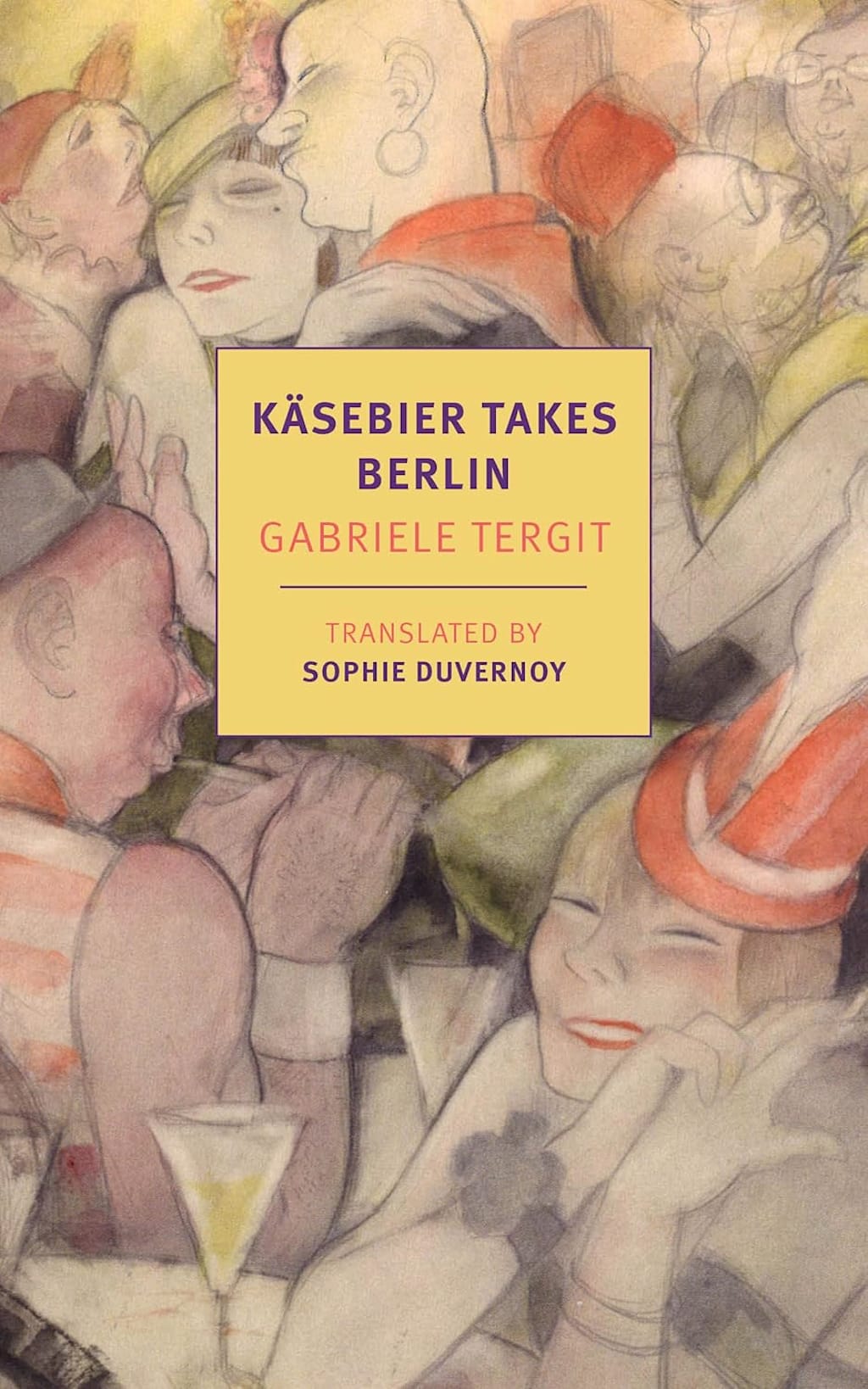
First published in 1931, the novel was released in Germany under the title Käsebier erobert den Kurfürstendamm (I had to copy this from Google because I had no idea how I was even going to attempt that without messing it up) and it captured the volatility of the final years of the Weimar Republic. It was Tergit's debut novel even though she was already an established reporter and journalist - this was a whole new direction for her in which she blended satire and realism. It was an immediate overnight success and was praised for its wit and modern style though it became overshadowed by the very real political turmoil Germany went through in the early 30s.
Tergit was Jewish and so her works were banned under the new Nazi regime and thus, she fled Germany and settled in London in 1933 - eager to get away from the ever more anti-Semitic implications that would make her life unliveable. This work was eventually lost to time and rediscovered in the 21st century. It was published in 2019 by the New York Review of Books.
Plot

Set in Berlin at the turn of the 1930s, Käsebier Takes Berlin captures the Weimar Republic in its last flamboyant gasp before collapse. The novel opens in a city buzzing with energy and anxiety: newspapers compete for headlines, the middle class teeters on the edge of bankruptcy, and the scent of political unrest lingers in the air. Against this backdrop, Gabriele Tergit launches a scathing satire of the media machine, celebrity culture, and the blind greed of late-capitalist society. At its centre is Georg Käsebier, a modest cabaret singer with no ambitions beyond entertaining his local crowd. But when a bored journalist writes a flattering piece about him during a slow news cycle, the media pounces, and Käsebier is transformed overnight into a cultural sensation.
As the press frenzy takes hold, Käsebier becomes more symbol than man. Journalists from rival newspapers begin building him up, turning him into the face of an invented movement. Soon, his name is everywhere: printed on cigarettes, dolls, and even housing developments. Property speculators and bankers rush to invest in Käsebier-themed ventures, convinced he is a goldmine. Socialites and industrialists throw glamorous events in his honour, and plans are drawn up for a grand theatre bearing his name. All of this happens with remarkable speed and little substance, driven not by Käsebier himself (who remains bewildered by it all) but by a media industry desperate for spectacle and profit.
Tergit turns a sharp eye to her fellow reporters driving the 'Fall of Weimar' frenzy. While some delight in the chaos they’ve created, others grow increasingly uneasy. Their initial puff pieces have spiraled into a phenomenon they can no longer control. Meanwhile, the subtly reminds us of the real world encroaching on this farce: election posters, rising anti-Semitism, and economic collapse loom in the background. What begins as a clever social comedy gradually turns darker, as the reader senses the impending doom of a society that has traded substance for surface.
Inevitably, the bubble bursts. A failed overseas tour, waning public interest, and economic collapse bring an end to the Käsebier craze. Investors lose their fortunes, newspapers sack their staff, and the once-glamorous parties dry up. Käsebier, stripped of his brief, artificial stardom, returns to obscurity - performing in a border-town pub, far from the bright lights of Berlin. The frenzy disappears as quickly as it began, leaving behind a trail of bankruptcies, broken dreams, and a quiet sense of absurdity.
Into the Book

The Corrupting Power of the Media
The author's treatment of the media in Käsebier Takes Berlin presents journalism not as a noble pursuit of truth but as a chaotic, profit-driven performance. From the novel’s earliest scenes, newspapers are shown as hungry for headlines, manufacturing meaning where none exists. Käsebier is not discovered for his artistry but invented to fill column inches. The language used to describe the press is frenetic and cynical. Tergit deliberately overloads her sentences with journalistic jargon, editorial asides, and rapidly shifting perspectives, mimicking the breathless pace of a newsroom and the instability of the information it produces.
This linguistic chaos reflects a broader thematic concern: how quickly fiction can replace fact when spectacle takes over? Tergit’s satire is not subtle: journalists flip their opinions on Käsebier based on trends, not evidence, and the sheer volume of press coverage obscures any real understanding of the man himself. The novel questions who shapes reality in a media-saturated society, and whether public opinion can be trusted at all.
“They all wrote about Käsebier, although none of them had ever really seen him.”
- Käsebier Takes Berlin by Gabriele Tergit
The Fragility of Fame
Fame in the novel is portrayed not as glory but as a fragile construct: unstable, depersonalised, and ultimately hollow. Käsebier’s ascent is almost accidental; he doesn’t chase the spotlight, and in fact remains rather passive throughout. The author crafts him as a blank figure, almost symbolically nameless (his surname, a comic-sounding "Cheese–Beer", mocks the seriousness with which the world treats him). His character is deliberately underdeveloped in contrast to the hysteria he provokes, illustrating how celebrity often functions independently of substance.
The novel’s prose echoes this instability. Descriptions of Käsebier’s rise are breathless and exaggerated, deliberately inflated to mimic the media’s hyperbolic tone. But when the tide turns, the language flattens; interest in him disappears not with a dramatic fall, but with a shrug. Tergit captures this shift with a dry, almost indifferent tone, showing that fame, when built on image rather than talent, is more likely to fade than explode.
“Fame came as quickly as it left, and no one could remember what the fuss had been about.”
- Käsebier Takes Berlin by Gabriele Tergit
Capitalism and Commodification
The novel is a critique of capitalist absurdity: how culture, art, and even people become products to be packaged and sold. Once Käsebier gains traction in the papers, his name becomes a brand. The author catalogs this commodification with physical items. This piling-up of merchandise is satirical in tone, and the novel’s language reflects the relentless churn of consumerism. Long, list-like sentences enumerate the many products and schemes, mirroring the way real-life branding floods the market with pointless variety.
The satire is sharpened by the grotesque contrast between Käsebier’s modest background and the luxurious fantasies projected onto him. Developers erect entire buildings around his persona, financiers speculate on his staying power, and socialites host parties in his name; all while Käsebier himself seems increasingly alienated from the phenomenon. Through this, Tergit suggests that capitalism doesn't just sell stories—it creates them, consuming reality in the process.
“You couldn’t sell an idea, but Käsebier—Käsebier you could sell by the dozen.”
- Käsebier Takes Berlin by Gabriele Tergit
Why It's a Masterpiece

This novel is considered a masterpiece in large part because of its prescient cultural satire. Gabriele Tergit captures, with uncanny accuracy, a society drunk on its own image-making, where celebrity is not earned but manufactured, and where the truth is less important than the story that sells. Long before the age of social media and 24-hour news, the author skewers the mechanisms of vanity. Her portrayal of Käsebier’s accidental rise and fall through media hype is both hilarious and chilling. This makes the novel feel strikingly contemporary, even though it was published in 1931.
Her background as a court reporter gives her prose a unique clarity and sharpness, while her literary flair ensures the text never reads like pure reportage. She writes with ironic detachment and a densely layered voice, capturing the pace of Berlin’s cultural and economic life. Paragraphs teem with overlapping conversations, abrupt tonal shifts, and sly humour, creating a vibrant, sometimes overwhelming, sense of a society in flux. But it’s not all noise; beneath the bustle lies a deeper unease. Tergit indicts the erosion of democratic values, the exploitation of both media and capital, and the public’s willing complicity in it all.
Conclusion

It's been a while since I've read this book but it has since been a popular book in the New York Review of Books series and so, I hope you choose to give it a go. As we move on to next week, I also hope you are still excited about this series like I am.
If you like this book, then try out:
- Berlin Alexanderplatz by Alfred Döblin
- The Man Who Was Thursday by G.K. Chesterton
- The Cry and the Covenant by Morton Thompson
Next Week: Bleak House by Charles Dickens
About the Creator
Annie Kapur
"Et in Arcadia Ego"
***
I am:
🙋🏽♀️ Annie
📚 Avid Reader
📝 Reviewer and Commentator
🎓 Post-Grad Millennial (M.A)
***
I have:
📖 300K+ reads on Vocal
🦋/X @AnnieWithBooks
📸 ThePrancingPonyBakery
🔗 PrancingPonyBakery.com
***
🏡 UK
Enjoyed the story? Support the Creator.
Subscribe for free to receive all their stories in your feed. You could also become a paid subscriber, letting them know you appreciate their work.
Comments
There are no comments for this story
Be the first to respond and start the conversation.