
In a Lonely Place by Dorothy B. Hughes
Why It's a Masterpiece (Week 120)

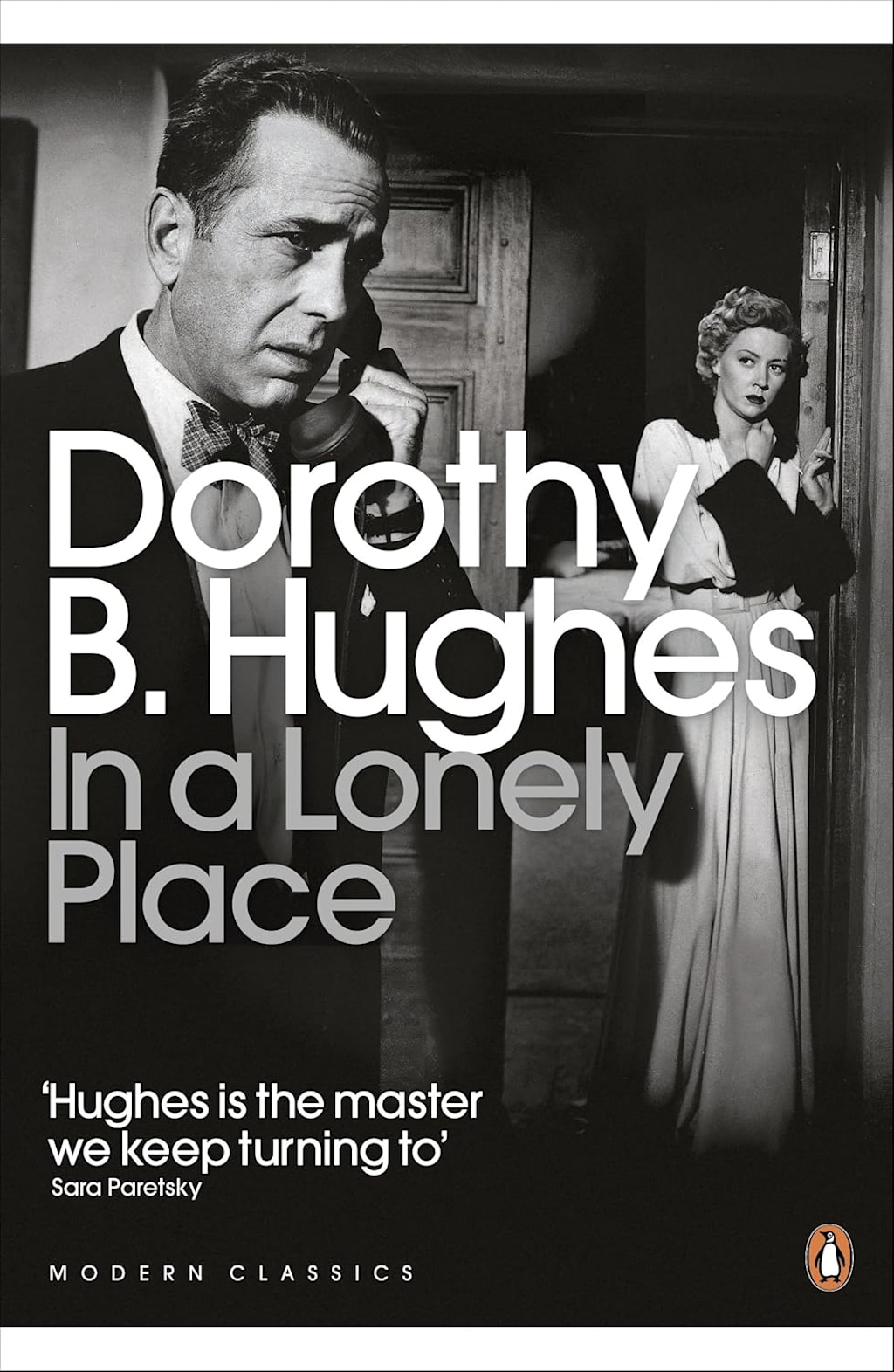
Published in 1947 by Duell, Sloan and Pearce, In a Lonely Place was part of a huge growth in crime fiction that swept America after the Second World War. No longer was crime fiction just about goody-two-shoes detectives looking at murder mysteries; they became much darker, much more psychological and evolved to contain horror tropes as well. These included but were not limited to: madness, darkness, torment and betrayal. The author was already well into a writing career when the book was published but it would prove to be one of the most famous crime novels of the time, even getting its own film adaptation in 1950 starring Humphrey Bogart and Gloria Grahame.
The book would eventually fall out of print for a few decades, but with the new waves of feminism forming in the latter part of the 20th century, Hughes' books were rediscovered and that meant In a Lonely Place became a big seller once again. It also solidified the film adaptation, no matter how far away from the book, having its own place in history as well.
Plot

The novel opens in post-war L.A where ex-fighter pilot Dix Steele is living off the generosity of a wealthy friend, pretending to be a crime novelist. In truth, Dix is unemployed, emotionally unstable, and increasingly violent. Unbeknownst to those around him, he is also a serial killer targeting women. Let's make a point of looking at the fact that Hughes never concealed the fact that Steele was a murderer, but instead puts it right in the reader's face. This is a massive shift from crime fiction before in which the identity of the killer would be revealed in a shock ending (normally with a twist of some kind) at the end of the book.
Dix reconnects with an old war acquaintance, Brub Nicolai, who now works for the LAPD. Brub is investigating a series of unsolved strangulations - murders Dix himself has committed. Dix pretends to be interested in the case as research for his writing, giving him a convenient excuse to ask probing questions. He regularly visits Brub and his wife Sylvia, both of whom are warm and trusting. Through these visits, Hughes heightens the tension by placing the killer in direct proximity to the investigation, allowing Steele to revel in the danger of remaining undetected while mocking the system that seeks him.
Dix Steele meets and becomes romantically involved with his neighbour, Laurel Gray, a sharp and independent actress. Unlike the women he has previously targeted, Laurel is perceptive and confident, and for a time he seems genuinely captivated by her. But as she starts displaying mood swings and moments of suspicious tendancies, she distances herself slightly from him. He on the other hand, becomes paranoid by this, wondering if anyone has found out his dark secret.
At this point, he starts displaying erratic behaviour as the net begins to tighten. The friends who were once warm and affectionate and now noticing inconsistencies with Dix Steele's character. Laurel too, grows scared of him and when she tries to leave she becomes the victim of a terrifying confrontation. It is clear that through his intense paranoia, the facade he was maintaining is now unravelling and everyone is noticing it.
The novel concludes with a strange and eerie ending, something unlike those shocking crime endings we were used to before the war. Dix Steele's world finally implodes and there is something sombre about the whole experience. The author leaves us exhausted from the tension, but that doesn't make it any less satisfying.
Into the Book
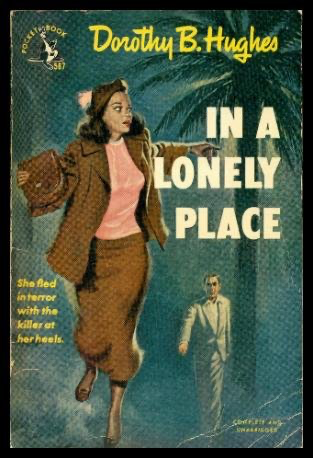
Masculine Violence and Entitlement:
One of the most pervasive themes within In a Lonely Place is the connection between masculinity and violence. Dix Steele embodies a toxic model of postwar masculinity: possessive, volatile, and convinced of his own superiority. Having lost his role as a wartime hero, he seeks control and affirmation through domination, especially over women.
Hughes uses the character to critique how violence is normalised and internalised in men who feel displaced or emasculated by peace. His entitlement over women’s bodies and his rage at their autonomy reveal a deep-seated misogyny couched in the language of romantic pursuit or wounded pride. The novel does not romanticise his violence; instead, it exposes the ordinary, even banal, nature of his cruelty.
The most chilling aspect of his character is not his capacity for murder, but how easily he blends into society, how familiar his entitlement feels. He rationalizes his actions, believes himself clever, and refuses to take responsibility. Through this character, Hughes critiques a culture that excuses male aggression as passion or frustration, and positions women as both scapegoats and victims of male disillusionment.
“He had to get out of this. He couldn’t let a woman do this to him. He couldn’t let her stop him.”
- In a Lonely Place by Dorothy B. Hughes
Alienation and Psychological Disintegration:
Dix Steele is a portrait of deep emotional isolation, and the novel explores how alienation can curdle into sociopathy. His disconnection from others is profound; he floats through the city without meaningful ties, projecting false identities and constantly concealing his true self.
As the novel progresses, this alienation intensifies into paranoia and delusion. Hughes illustrates the internal collapse of a man who cannot cope with the mundanity of civilian life, the loss of wartime identity, and the absence of genuine human connection.
Rather than engage in self-reflection, he externalises his despair, lashing out with violence and increasingly retreating into fantasies of control and power. His psychological unraveling is subtle but relentless, and Hughes’ use of close third-person narration traps the reader within his disordered mind. The Los Angeles landscape: foggy, sprawling, impersonal, mirrors his mental state: disorienting and full of shadowy corners. This theme of psychological decay speaks to postwar anxieties and the cost of unprocessed trauma, especially among men expected to re-assimilate without support.
“He felt the coldness pressing against him, the knowledge that he was alone and always would be, that there wasn’t anyone or anything anywhere.”
- In a Lonely Place by Dorothy B. Hughes
The Illusion of Respectability:
A powerful theme in the novel is the ease with which danger hides behind a mask of charm and civility. Dix Steele is not a monstrous outsider, instead he is urbane, well-spoken, and socially integrated. He moves comfortably in educated, middle-class circles, and people are slow to suspect him precisely because he looks the part of a respectable man.
Hughes critiques a society that associates morality with surface appearances, allowing evil to flourish behind well-maintained facades. This illusion of respectability protects predators like Steele, who exploit social conventions to avoid suspicion. The novel also examines how women, especially Laurel, must constantly assess the truth beneath a man’s performance, deciding if charm masks cruelty.
The police, too, are caught in this illusion; Brub is blind to his friend’s true nature for much of the novel. The author exposes the dangers of trusting too easily in appearances, especially when they conform to privileged archetypes. In this way, the novel functions not only as a noir thriller but also as a social critique of class, gender, and the blindness of politeness.
“He was the kind of man no one ever really saw until it was too late.”
- In a Lonely Place by Dorothy B. Hughes
Why It's a Masterpiece

Throughout the golden age of crime fiction, female characters have often been marginalised or used as romantic fodder. Hughes' novel sort of turns that on its head. Instead of a male detective pushing the novel forward, women play an active role in raising the suspicions about a male character who is a danger to everyone around him. It is Laurel who becomes the first person to suspect something is wrong and, because this would mean her life would be in danger if something was wrong - the author focuses quite hard on the character of Laurel, giving her character an ample arc that is not purely a romantic interest.
As the late-20th century feminist movement grew, In a Lonely Place became evermore popular for its depiction of women as the victims of male violence, propelling a whole new sub-genre of crime forwards.
Conclusion

If you haven't read the book yet then I suggest you do so before seeing the movie. If you've seen the movie but you haven't read the book then you might be surprised at their differences. Many people believe the ending to the movie is better whereas, I would beg to differ. The ending of the book matches the release of tension perfectly. I hope you enjoy reading it if you have not done so already.
Next Week: Les Miserables by Victor Hugo
About the Creator
Annie Kapur
"Et in Arcadia Ego"
***
I am:
🙋🏽♀️ Annie
📚 Avid Reader
📝 Reviewer and Commentator
🎓 Post-Grad Millennial (M.A)
***
I have:
📖 300K+ reads on Vocal
🦋/X @AnnieWithBooks
📸 ThePrancingPonyBakery
🔗 PrancingPonyBakery.com
***
🏡 UK
Enjoyed the story? Support the Creator.
Subscribe for free to receive all their stories in your feed. You could also become a paid subscriber, letting them know you appreciate their work.
Comments
There are no comments for this story
Be the first to respond and start the conversation.