
Don Juan by Lord Byron
Why It's a Masterpiece (Week 137)

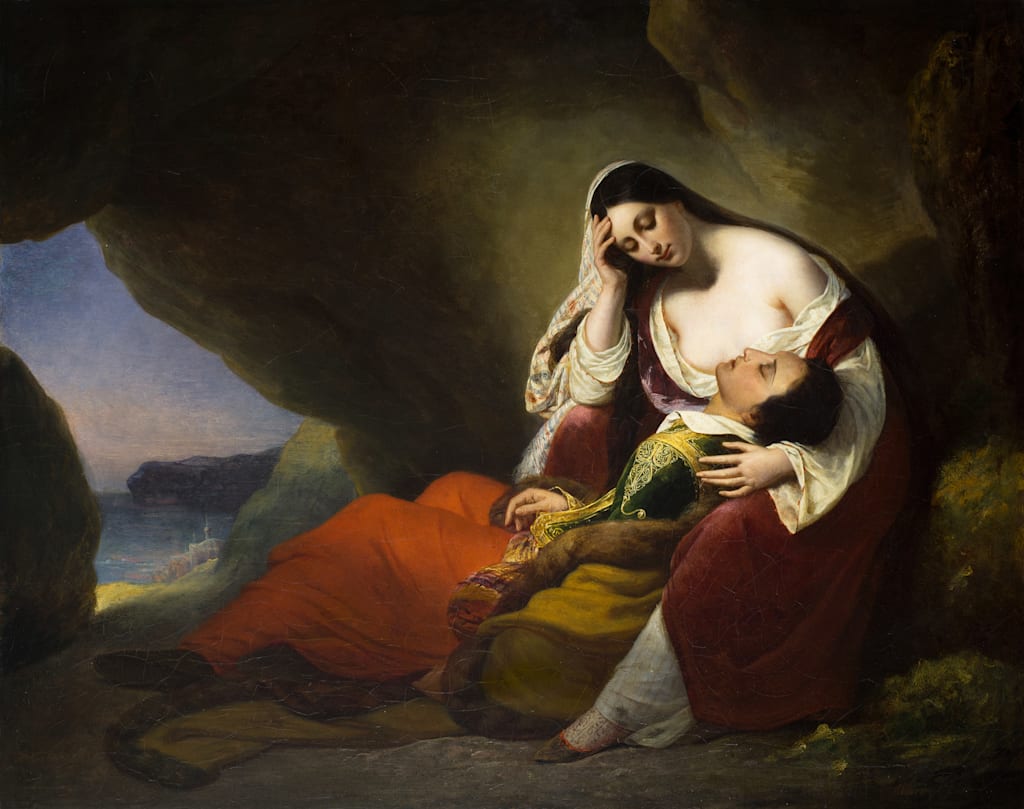
Background and Context
As you know, Lord Byron is my favourite poet of all time. I have mentioned him countless times, read several books by him and about him - I have even got up close and personal with a handwritten letter by him. When I first read Don Juan, I was absolutely floored. I was possibly in my mid-teens when I first encountered it in an abridged format but afterwards, I've come across it many times and though, I personally enjoy the poem The Giaour a bit more, Don Juan is probably the one that Byron is most well-known for. His life, his words and his brilliance has endured long after the man himself died. He will always be the greatest poet in all existence to me.
Don Juan by Lord Byron
The composition for Don Juan began in 1818 whilst Lord Byron was living in exile in Italy and was meant to reflect all the disillusionment he felt with the society he was living in. Published in 1819, it had everything that was considered a bit controversial. These things included: scandal, references to others in a mocking manner and satire - Byron knew he was about to be dragged through the dirt for it and he didn't care in the slightest.
Though he published it in 1819, this started with Cantos 1 and 2. He would publish the poem in cantos over the next several years, leaving the poem unfinished at the time of his death.
Plot
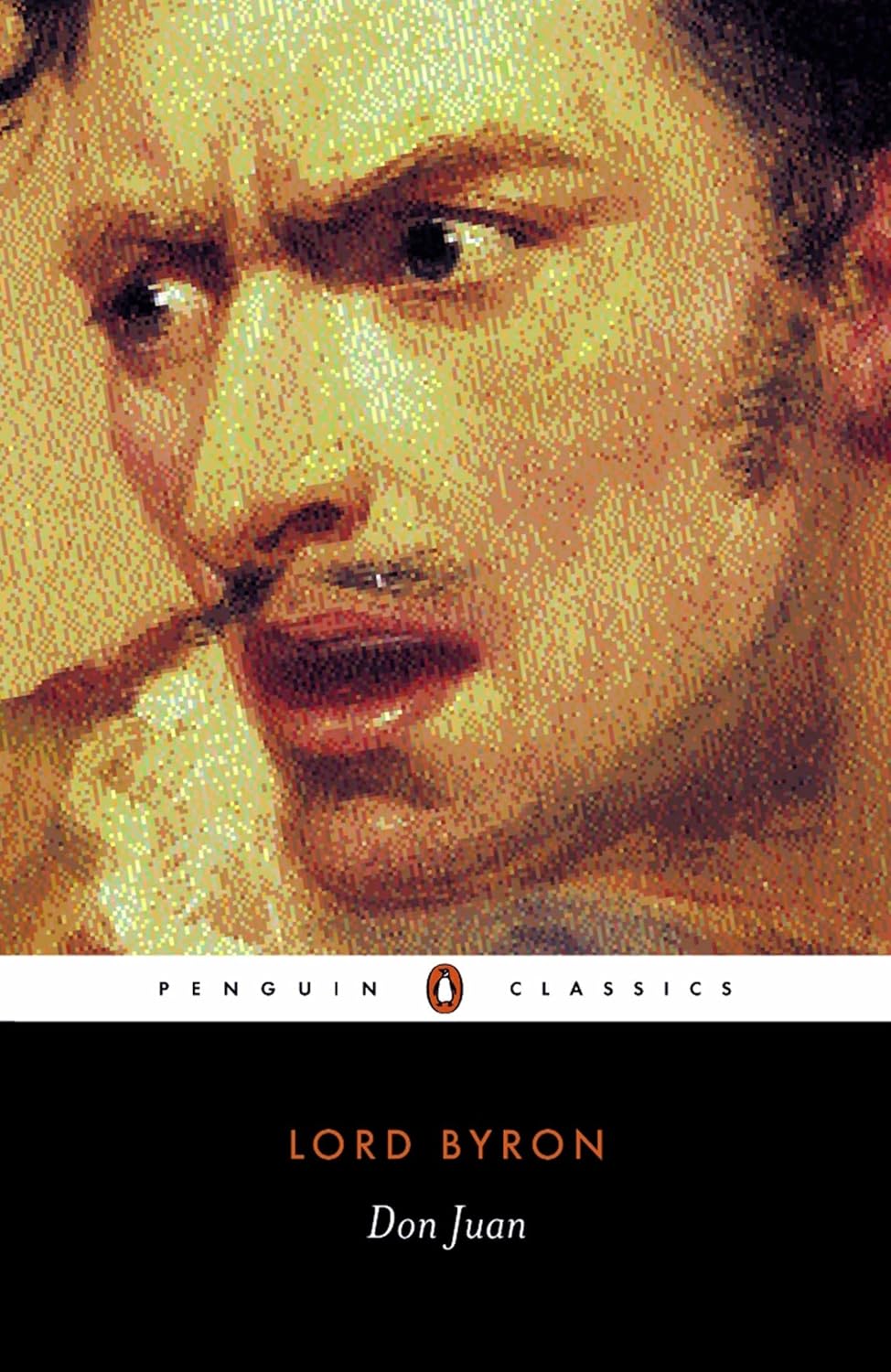
Don Juan is set in Seville and our main character is raised by an intellectual mother named Donna Inez. She moulds him into an upright man (as we are led to believe). Once he turns 16 though, Don Juan gets himself entangled in a passionate love affair with an unhappily married Donna Julia. It is found out by her jealous husband, Don Alfonso and to avoid a scandal, Juan is sent away to the sea and Julia is locked up in a convent. He's heartbroken but this, this is where his journey truly begins...
Juan's voyage turns horrifying as a storm destroys his ship. This leads to starvation, death, and even hints of cannibalism among the survivors. This definitely makes me think of a certain painting of a horrific shipwreck called The Raft of the Medusa. Check it out and you will see what I mean.
He washes ashore on a Greek island and found by Haidée, the daughter of a pirate. She nurses him back to health and they fall in love. For a period of time they live in a state of happiness in which they dream of freedom and eventually, marriage. But her father does return and is absolutely furious at the discovery of Juan. On comes a violent confrontation that ends their romance in tragedy.
He intends to punish Juan and reassert control over his daughter. A violent struggle erupts between Lambro’s men and the islanders loyal to Haidée. Juan fights bravely but is eventually captured, while Haidée, overwhelmed by grief and helpless to save him, collapses. She dies. Juan, unconscious and unaware of her fate, is sold into slavery as cargo. This is the perfect example of something Byron creates and recreates in his epic poems: the unpredictability of the world and of fate.
Juan is transported to Constantinople, where he becomes part of a slave convoy entering the bustling city. He is purchased by a lustful eunuch for the Ottoman Sultan’s seraglio, where beautiful young captives are housed. To avoid being placed among the women, Juan disguises himself as “Juanna,” a young girl. In the seraglio, Juan draws the desire of Gulbeyaz, the Sultan’s favourite wife, who insists he submit to her. Juan refuses, staying loyal to Haidée’s memory.
His defiance enrages Gulbeyaz, but events quickly overtake her anger when the Russians launch an assault on Ismail. In the chaos, Juan escapes, joining the Russian forces almost by accident. His bravery in battle is described with ironic grandeur as he fights fiercely, saves lives, and demonstrates unexpected heroism.
Juan continues serving the Russians during the brutal siege of Ismail. Juan distinguishes himself again by rescuing a young Muslim girl, Leila, from the carnage. This act of compassion earns him admiration but also gives him a new responsibility as her guardian. After the victory, Juan travels with the Russian army to St Petersburg, where he is introduced to Empress Catherine the Great. His reputation as a brave and handsome youth precedes him, and Catherine quickly takes an interest in him.
In St Petersburg, Juan becomes a favourite of Catherine the Great, who rewards him with luxurious accommodations, honours, and a position at court. His charm, innocence, and beauty make him an object of fascination. Catherine uses her influence to appoint him as a diplomat to England, ostensibly to strengthen political ties but more likely to advance her own romantic whims. Juan, though flattered, remains somewhat overwhelmed. He prepares to travel to England, taking Leila with him and unknowingly stepping into the tangled webs of British society.
Arriving in England, Juan is welcomed into high society, where his foreign charm and heroic reputation make him an immediate sensation. He stays with Lord and Lady Amundeville, whose estate becomes the centre of a complicated social world. Juan navigates flirtations, political conversations, and subtle manipulations. Meanwhile, Leila remains under his protection but becomes a concern, as her traumatic past and foreign identity complicate matters. It is through this that Byron attacks the elite - something that he has seen quite a bit of (if you haven't noticed, his title is 'Lord') - he knew what it was like from the inside.
At the Amundeville estate, Juan becomes increasingly close to Lady Adeline, an intelligent, beautiful, and virtuous woman who takes an interest in his welfare and character. Although she is married, their connection develops into a restrained but emotionally charged flirtation. Adeline attempts to “reform” Juan, encouraging seriousness and moral reflection, while Juan remains both charmed and slightly naïve. Though nothing explicitly happens between Juan and Adeline, the emotional tension creates rumours that swirl through society.
Juan becomes the object of pursuit by the Duchess of Fitz-Fulke, a bold and flirtatious woman whose desires contrast with Adeline’s restrained affection. The Duchess aggressively pursues Juan, culminating in a secretive encounter during a masked ball. The canto ends without resolution, as Byron died before completing the poem. So Don Juan, our main character in England, entangled in romantic escapades...is left hanging in the air...
Into the Book
Satire and Social Critique
Don Juan is driven by satire, targeting hypocrisy in politics, morality, and social convention. From the outset, Byron mocks the pretence of genteel society, exposing the gulf between public virtue and private vice. His ironic narrative voice constantly undercuts grand claims and moralising tones, forcing readers to question the reliability of authority. For instance, Byron describes moral guardians as those who “Whispered ‘I will not scandalise my daughter’,” but the verb whispered suggests secrecy, gossip, and complicity rather than integrity. The poem’s ottava rima form (especially its comic rhyming couplets) intensifies satire, deflating serious moments with humour and making the reader aware of social absurdities.
“But ‘why then publish?’—There are no rewards / Of fame or profit when the world’s one’s own.”
- Don Juan by Lord Byron
Love, Desire and Human Vulnerability
Love in the text is portrayed as both transformative and destructive, revealing all the fragility we can think of. The poet often merges romantic language with ironic commentary, creating tension between genuine feeling and satirical detachment. Juan’s relationship with Haidée, for example, is described with lyrical tenderness, but Byron undermines idealised romance through playful shifts in tone. In describing Haidée’s emotional surrender, he writes: “Her eyes were black as death, her lashes long…,” using the simile black as death to fuse beauty with foreboding. This duality encapsulates the danger embedded within intense passion. Byron suggests that love exposes individuals to profound joy but also to heartbreak, loss, and moral compromise.
“Alas! the love of women! it is known / To be a lovely and a fearful thing.”
- Don Juan by Lord Byron
How the Journey Forms Identity
Juan’s travels function as a picaresque exploration of how identity is shaped by experience, chance, and social expectation. Rather than portraying him as a deliberate seducer, Byron casts Juan as someone constantly acted upon by circumstances, highlighting the fluidity and instability of selfhood. Byron uses the poem’s shifting settings: from Spain to Greece, Constantinople, Russia, and England, to show how identity adapts to external pressures. Language is key to this: descriptions of Juan often rely on passive constructions, such as “He was taken to the seraglio,” emphasising his lack of agency. As Juan encounters love, war, power, and corruption, he is repeatedly forced into new roles such asL lover, captive, soldier and court favourite, suggesting that identity is not inherent but constructed.
“Man’s a phenomenon, one knows not what, / And wonderful beyond all wondrous measure.”
- Don Juan by Lord Byron
Why It's a Masterpiece
"[Lord Byron's writing] has embraced every topic of human life, and sounded every string of the divine harp, from its slightest to its most powerful and heart-astounding tones."
- Sir Walter Scott
"[Don Juan] is a a work of boundless genius."
- Goethe
There has been endless praise for Don Juan over the years. Of course, it is based on an older legend and has been adapted and readapted over time. But one of the most important reasons to see why Don Juan is really a masterpiece is because of how it is Byron's version that has endured in the literary atmosphere, in the cultural consciousness and in the artistic world - for so damn long.
I will say no more. Read it. Read it please.
Conclusion
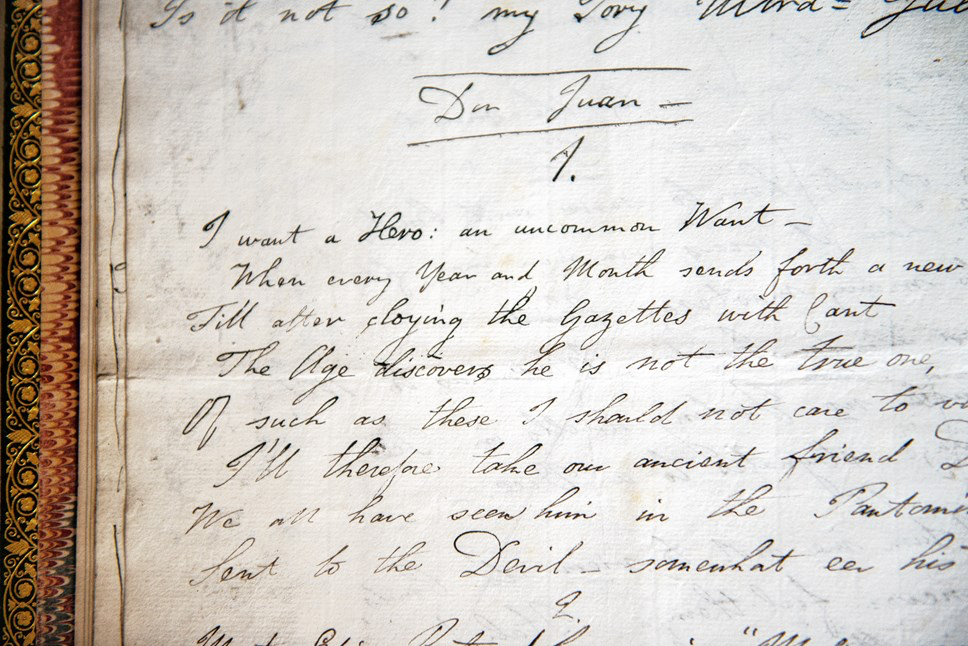
Very few poems will move you like this one, very few of them will make you lose your soul, your heart, your mind. Don Juan is all romance, politics and travels. It is escapades on the sea, tragedies in the heart and it is most of all, written by probably one of the greatest men to ever put pen to paper: George Gordon, Lord Byron.
Next Week: Clandestine in Chile by Gabriel Garcia Marquez
About the Creator
Annie Kapur
"Et in Arcadia Ego"
***
I am:
🙋🏽♀️ Annie
📚 Avid Reader
📝 Reviewer and Commentator
🎓 Post-Grad Millennial (M.A)
***
I have:
📖 300K+ reads on Vocal
🫶🏼 Love for reading & research
🦋/X @AnnieWithBooks
***
🏡 UK
Enjoyed the story? Support the Creator.
Subscribe for free to receive all their stories in your feed. You could also become a paid subscriber, letting them know you appreciate their work.
Comments
There are no comments for this story
Be the first to respond and start the conversation.