
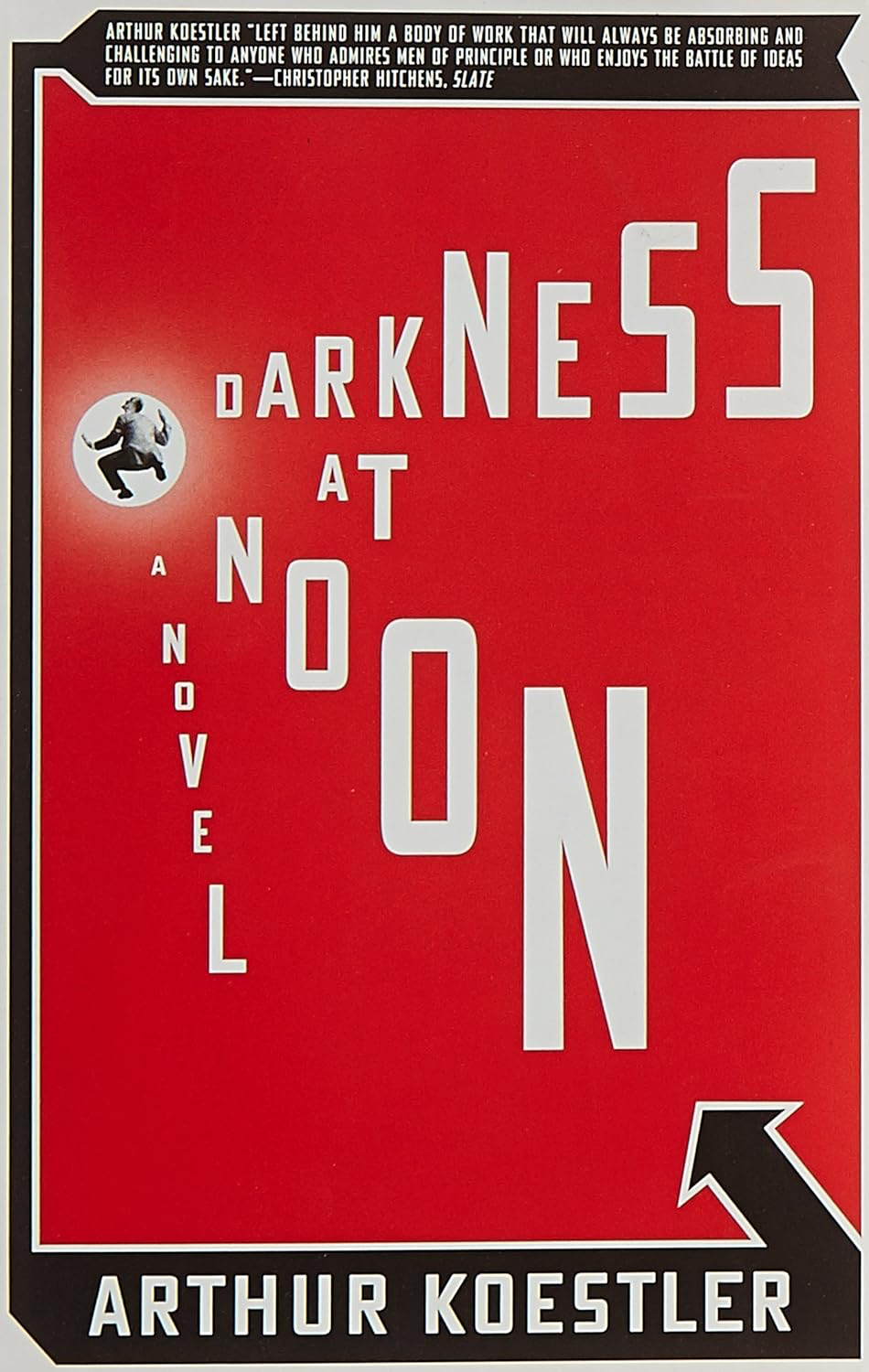
Darkness at Noon by Arthur Koestler
Why It's a Masterpiece (Week 116)

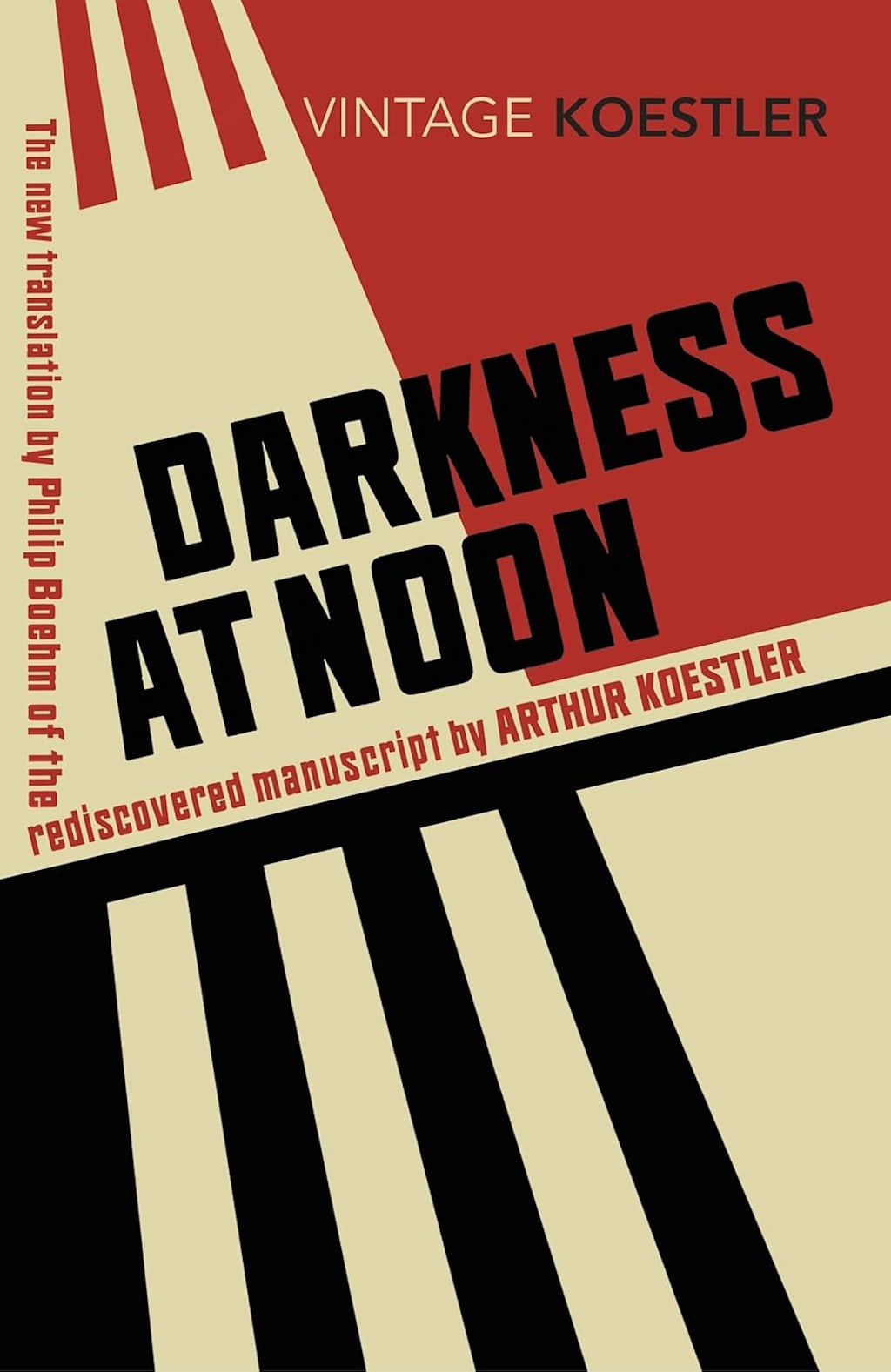
Written by 1940, Koestler was living in Paris when this book was published in its original German. A former member of the Communist Party, the author wrote this book as a indictment of Stalinism especially during the Moscow Show Trials. Based on entirely real people, many of the characters are directly representative of actual personalities and figures in the era. Jonathan Cape in the UK picked it up in 1940 and translated it for English readers, it would be published by Macmillan in the USA, making it a hugely successful read during the World War 2 years.
It is likely that Koestler left the original manuscript behind in Paris when he fled the Nazis moving into Paris and thus, the translation by Daphne Hardy into English was based on Koestler's manuscript under his supervision. Therefore, what we actually thought was the book, might have been a rough translation of a lost manuscript.
However, in 2015, a German-language manuscript was recovered from a Swiss archive and it was proven to be an original of Koestler's actual novel. A new English translation was thus made, translated by Philip Boehm and published by Vintage Classics in 2019. It offered some tonal differences to Hardy's previous version, but both are great reads in there own way.
Koestler's novel would be on par with Brave New World and 1984 as some of the anti-totalitarian bookshelf of the time and became a major influence during the Cold War, especially amongst defecting communists.
Plot
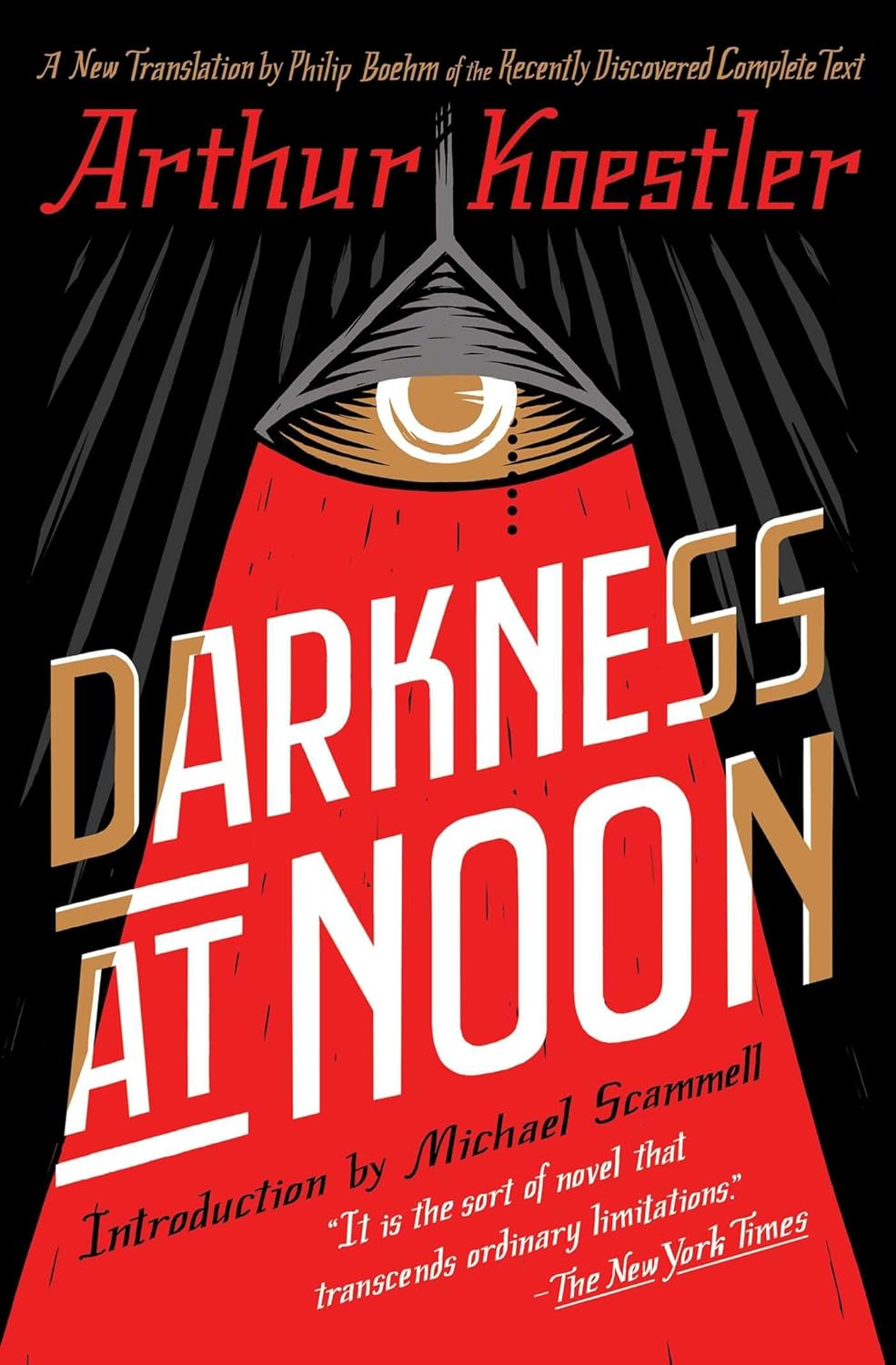
Set during the Great Purges of the Soviet Union in the 1930s, it focuses on a character named Rubashov, an old-guard Bolshevik and a former high-ranking Communist party member who has been imprisoned and is tried for treason for going against the regime.
Rubashov is arrested one night and taken to jail in a Josef K. style, he reflects on his role of betrayal for the sake of discipline. He is interrogated by Ivanov who is an old friend and a revolutionary who turns on him, trying to get him to confess to preserve the party. Ivanov is later replaced by Gletkin, a younger man who believes in the force and fear associated with Gulag-style confessionary.
Rubashov is subjected to increasingly harsh tactics, including sleep deprivationa nd psychological manipulation and violence. He wrestles with many ideas in his head and he wonders whether it was all worth it very often. Eventually, he agrees to confess to crimes he did not commit, hoping to preserve the part and believing his death might mean something.
He signs a false confession and it's broadcasted to the public and so, he meditates upon his former loyalty and the party's logic. He comes to the conclusion that the individual no longer matters, only the collective and that is the case under the totalitarian regime.
There is a casual indifference at the end of the novel, the mechanisation of political repression about to become much worse, though Koestler could not have predicted it himself.
Rubashov is executed by firing squad.
Into the Book
Totalitarian Regimes:
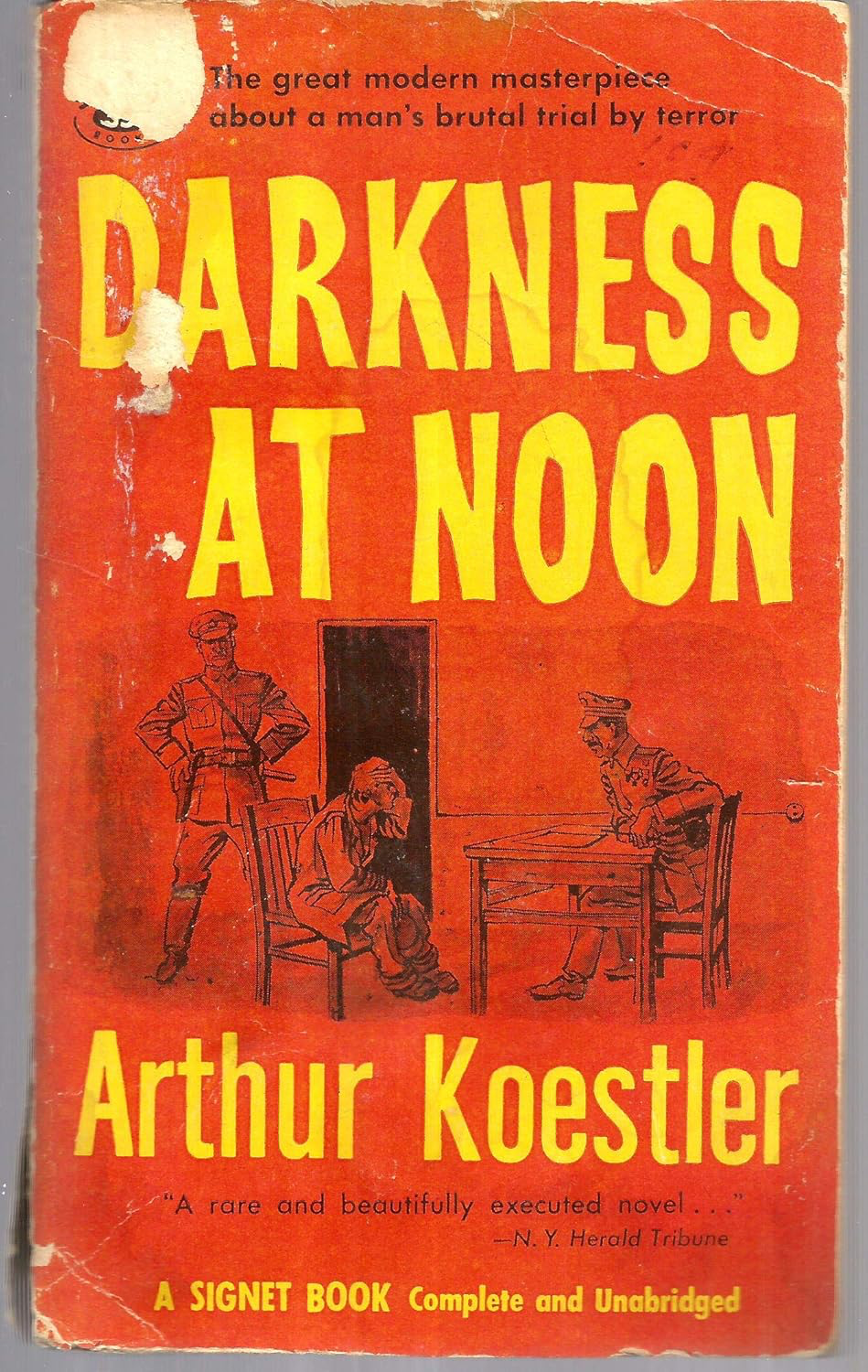
The novel critiques totalitarian regimes, especially Stalinist Russia, showing how they demand absolute obedience and sacrifice of personal conscience. The individual is devalued, and any dissent is treated as betrayal, regardless of motive or truth. This paradox underlies the regime's logic: it erases personal freedom while still holding people responsible for not conforming. Rubashov’s internal conflict shows how totalitarianism forces individuals to suppress moral judgment in favour of ideological survival.
“The Party denied the free will of the individual—and at the same time it exacted his willing self-sacrifice.”
- Darkness at Noon by Arthur Koestler
The Ends Justify the Means:
Another theme is the morality of ends justifying the means. Rubashov and other Party members once believed that unethical actions were justified if they served the revolution’s greater good. The novel interrogates this belief, showing how it leads to a cycle of betrayal and dehumanisation. This justification reflects how Party leaders rationalise violence and purges. Rubashov comes to see the consequences of this reasoning; how it strips people of agency and enables horrific crimes under the guise of progress.
“History is the judge—and the proletariat is the executioner.”
- Darkness at Noon by Arthur Koestler
Guilt:
The final one is guilt. Much of the novel takes place inside Rubashov’s mind as he wrestles with guilt over past betrayals and doubt in the ideology he once served. His inner conflict highlights the struggle between duty to ideology and personal morality. Rubashov’s eventual confession is not truly to the state, but to himself. He recognises the damage he has done by prioritising ideology over humanity, and his execution is framed as both punishment and release.
“He who is in the wrong must confess... in himself, not before the tribunal of justice, but before that of his own conscience.”
- Darkness at Noon by Arthur Koestler
Why It's a Masterpiece
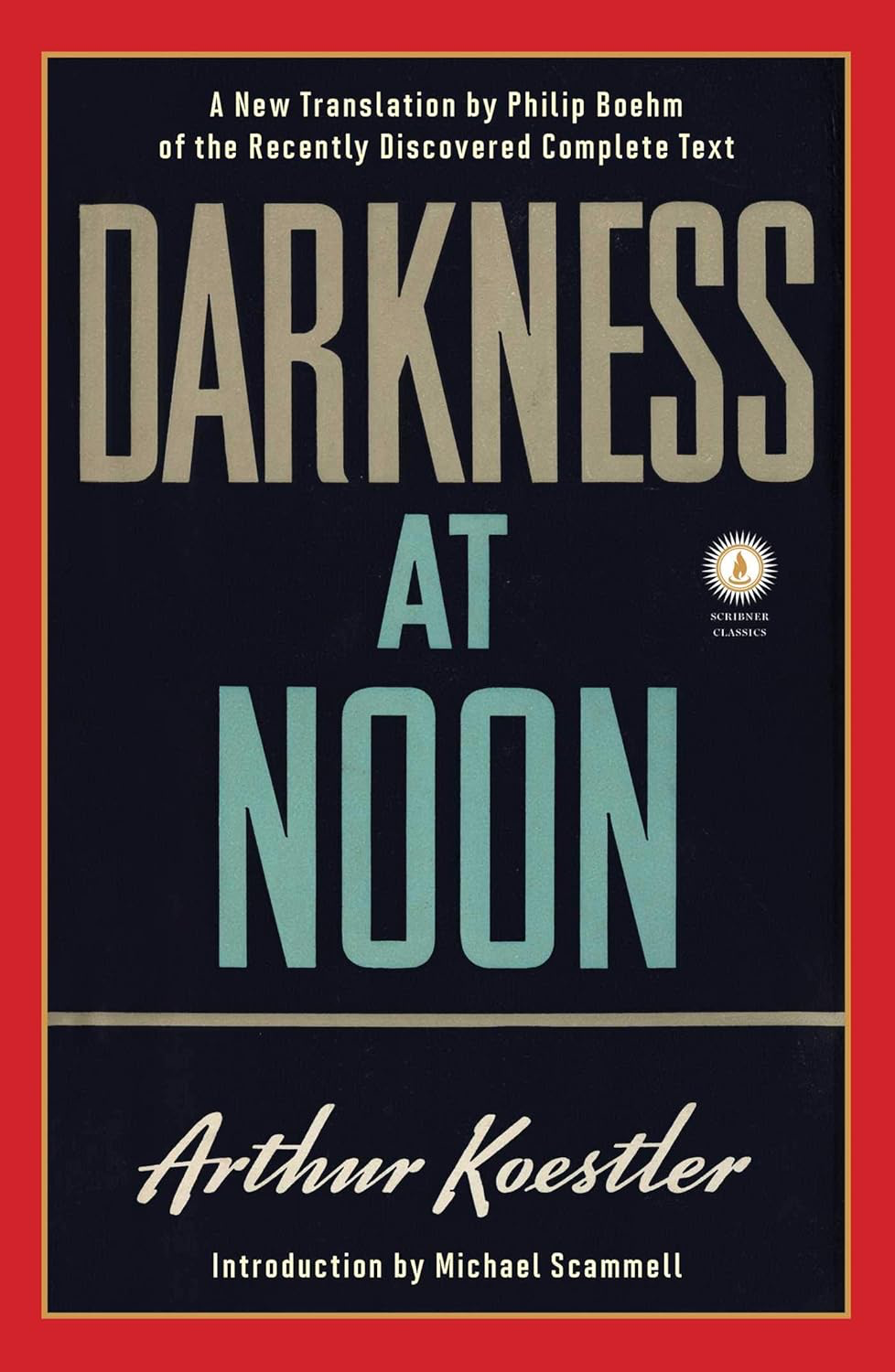
As one of the first major works to expose the Communist regime of Russia for what it actually was, it was published a few years before 1984 by George Orwell. It shows us a man who isn't really a hero or a villain, he is just a product of his time that happens to be in the wrong political landscape at the wrong time.
Koestler's writing is probably best described as economical, it is trying to tell us the bulk of the politics without masking it with atmosphere, but it is still bleak in mood and tone. The suffocation of the landscape itself though, is definitely representative of the way in which we think about Russian Communism now. Remaining relevant today therefore, isn't very difficult because it just showed us everything we were not seeing.
Conclusion
Darkness at Noon is possibly one of those books that gets overlooked in favour for books by Orwell, Burgess and Huxley and yet, I think it still remains popular because of its first-hand evidence from a defector. If you ever wanted a reason to dislike Communism, this book is it.
Next Week: Moby-Dick by Herman Melville
About the Creator
Annie Kapur
"Et in Arcadia Ego"
***
I am:
🙋🏽♀️ Annie
📚 Avid Reader
📝 Reviewer and Commentator
🎓 Post-Grad Millennial (M.A)
***
I have:
📖 300K+ reads on Vocal
🦋/X @AnnieWithBooks
📸 ThePrancingPonyBakery
🔗 PrancingPonyBakery.com
***
🏡 UK
Enjoyed the story? Support the Creator.
Subscribe for free to receive all their stories in your feed. You could also become a paid subscriber, letting them know you appreciate their work.
Comments
There are no comments for this story
Be the first to respond and start the conversation.