
Confessions of an English Opium Eater by Thomas De Quincey
Why It's a Masterpiece (Week 139)

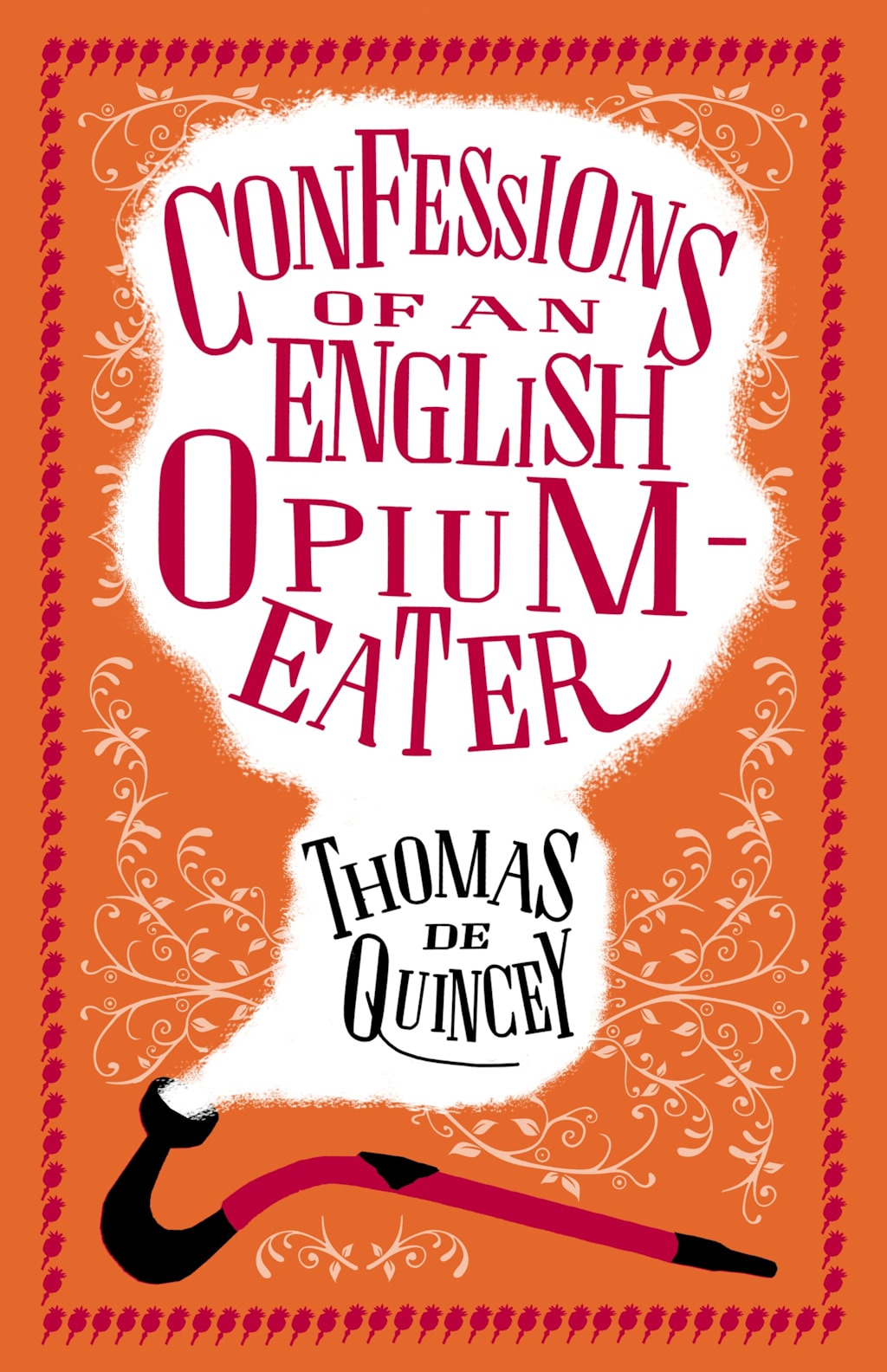
Thomas de Quincey was someone who was exceedingly bright, but had a life that was coated in addiction issues. His experiences with opium addiction began after he was introduced to laudanum as a remedy for illness and insomnia. This would develop into him writing a book on his experiences, mixed with the philosophical qualities of addiction - Confessions of an English Opium Eater.
The work first appeared in serial form in the London Magazine in 1821. Its initial reception was a mix of curiosity and moral apprehension, as readers were intrigued by De Quincey’s candid exploration of addiction yet disturbed by the frankness with which he described the pleasures and horrors of opium use.
Following the magazine serialisation, De Quincey expanded the text for book publication in 1822. This edition included more detailed reflections on his life, the effects of opium, and philosophical musings, enhancing both its literary depth and its appeal to readers interested in psychology, morality, and social critique. This book would go on to shape a discourse around addiction that would become very important to writers such as Charles Baudelaire and Edgar Allan Poe.
Plot
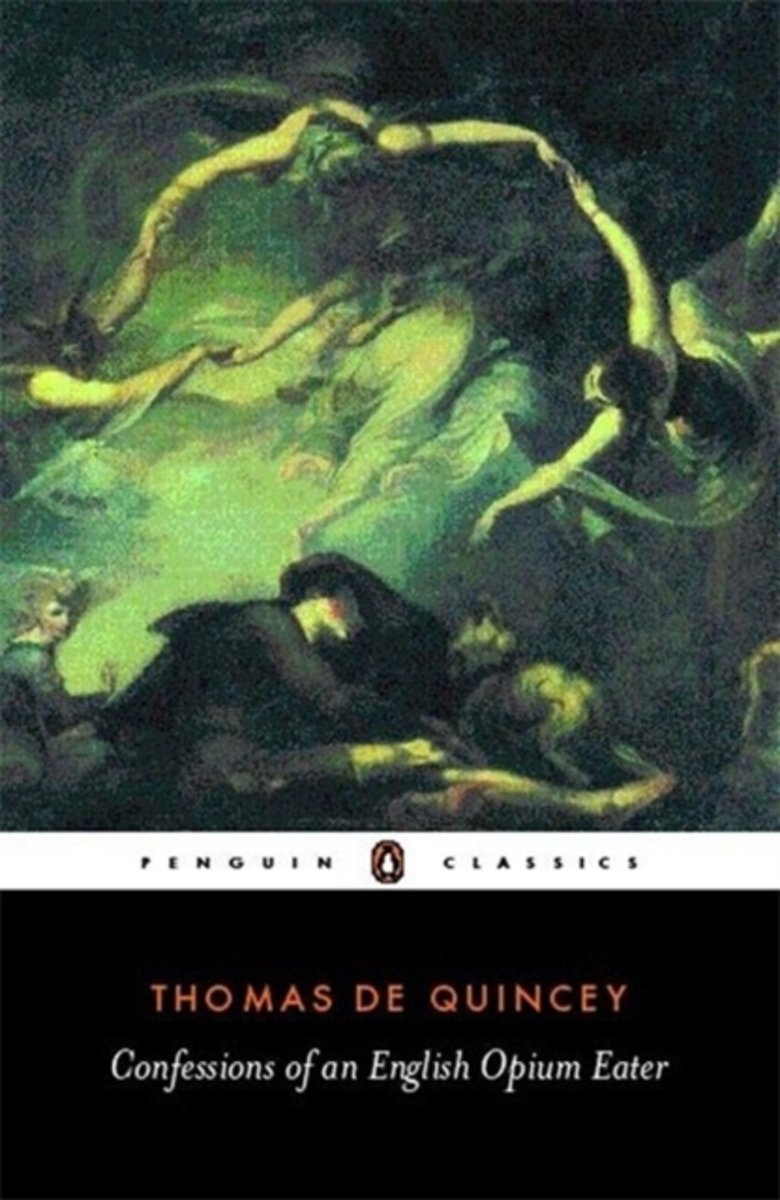
The author begins outlining his precocious childhood and early exposure to classic literature. Despite academic promise, he becomes increasingly alienated from formal education and family expectations, establishing an early pattern of restlessness and isolation that later contributes to his vulnerability and attraction to escape through opium.
As a teenager, he runs away from school and lives in extreme poverty on the streets of London. He recounts these experiences in vivid detail, particularly his hunger, illness, and loneliness. His friendship with Ann, a young prostitute who shows him kindness, becomes a symbol of lost innocence and human connection.
Eventually he is rescued from destitution and enters Oxford University. However, rather than providing fulfilment, academic life proves unsatisfying. He struggles with health issues and mental unrest, suggesting that education and social status alone cannot resolve his deeper emotional and psychological conflicts.
He first takes opium in the form of laudanum to relieve severe physical pain. Initially, the drug brings profound pleasure, clarity, and emotional well-being. He describes opium as enhancing his intellectual powers and happiness, stating that its early effects are almost utopian, and thus he sets up the later contrast with its destructive consequences.
During this phase, De Quincey presents opium as a source of profound aesthetic and emotional enrichment. He experiences heightened imagination, intensified sensations, and a sense of harmony with the world. Lush and descriptive passages colour this part of the book. There are definitely punches the author is throwing against the moral judgements upon addiction that were very much still apparent in the time of the book's publication. It is quite rebellious.
Over time, his opium consumption increases dramatically as tolerance develops. What began as controlled use becomes compulsive dependency. He acknowledges his growing inability to function without the drug, marking a turning point in the narrative where pleasure gives way to anxiety, guilt, and psychological instability.
The latter half of the text focuses on the horrifying visions induced by opium. He describes elaborate, nightmarish hallucinations involving vast architectural spaces, endless processions, and oppressive figures. These dreamlike sequences reflect his inner torment and demonstrate how the imagination, once liberated, becomes a source of terror. These hallucinations are frequently infused with guilt, especially concerning his past, colonial imagery, and unresolved moral anxieties. He presents suffering as inescapable, suggesting that the mind cannot outrun its own fears or memories.
The author expresses a desire to reduce or escape his addiction, but his efforts are inconsistent and fraught with relapse. He presents recovery not as a simple moral triumph but as an ongoing, painful struggle, resisting any neat or comforting resolution to the problem of addiction. The work ends without a clear sense of closure or redemption. There is no realisation.
Into the Book
Addiction and the Seduction of Pleasure:
A large theme of Confessions of an English Opium-Eater is the seductive nature of addiction, particularly how pleasure disguises long-term suffering. He initially presents opium as a near-miraculous substance, describing how it “introduced order, legislation, and harmony” into his mind. The elevated, almost reverential language reflects how addiction often begins not with excess, but with relief and control. More importantly, the author resists presenting himself as morally weak; instead, he frames addiction as a gradual psychological trap, one that exploits genuine pain and vulnerability.
As the narrative progresses, this pleasure curdles into dependency. He acknowledges that the drug no longer grants joy but merely prevents suffering, revealing addiction as a cycle of avoidance rather than fulfilment. His admission that opium had become “the scourge of my life” signals a shift from enchantment to entrapment. In terms of structure, the text mirrors addiction itself: early indulgent passages give way to fragmented, anxious reflections.
“The habit of opium is so fatal to the moral affections.”
- Confessions of an English Opium Eater by Thomas De Quincey
Power and Terror in Imagination:
The author presents the imagination as both a source of beauty and a site of psychological torment. Under the influence of opium, his mind produces visions of extraordinary grandeur, filled with “vast processions” and “endless architectural forms.” These images reflect Romantic themes of the sublime, where awe and terror coexist. Initially, imagination is expansive and liberating, allowing him to transcend physical and social limitations.
However, as opium tightens its grip, imagination turns hostile. The dreams become oppressive rather than enlightening, filled with repetition, paralysis, and looming figures. He describes being trapped within his own mind, suggesting that imagination, once unmoored from control, becomes inescapable. His repeated imagery of infinity such as: endless corridors and eternal returns, mirror the addict’s sense of being trapped in time. Notably, these nightmares are not random; they are infused with memory, guilt, and fear, implying that opium does not invent terror but magnifies what already exists within the psyche. Through this, the author anticipates modern psychological understandings of trauma and intrusive thought.
“My dreams were not merely more vivid than waking realities, but infinitely more awful.”
- Confessions of an English Opium Eater by Thomas De Quincey
Isolation/Alienation:
Isolation runs throughout the text, shaping both the author's addiction and his narrative voice. Even before opium, he presents himself as detached from society, whether as a runaway living in London or as a disillusioned student at Oxford. His friendship with Ann stands out precisely because it is fleeting and ultimately lost, reinforcing a pattern of transient human connection. This emotional solitude creates the conditions in which opium becomes a substitute for companionship.
As addiction deepens, isolation intensifies. He withdraws from social life, describing long nights spent alone, consumed by memory and hallucination. His suffering is deeply private, inaccessible to others, which heightens the confessional tone of the work. Yet, the act of writing becomes an attempt to bridge this isolation. By addressing the reader directly, the author transforms personal misery into shared experience. Nevertheless, the text never fully resolves this tension: communication alleviates isolation, but does not cure it. Addiction, the narrative suggests, is both a symptom and a cause of profound alienation.
“I was stared at, hooted at, and pursued.”
- Confessions of an English Opium Eater by Thomas De Quincey
Why It's a Masterpiece
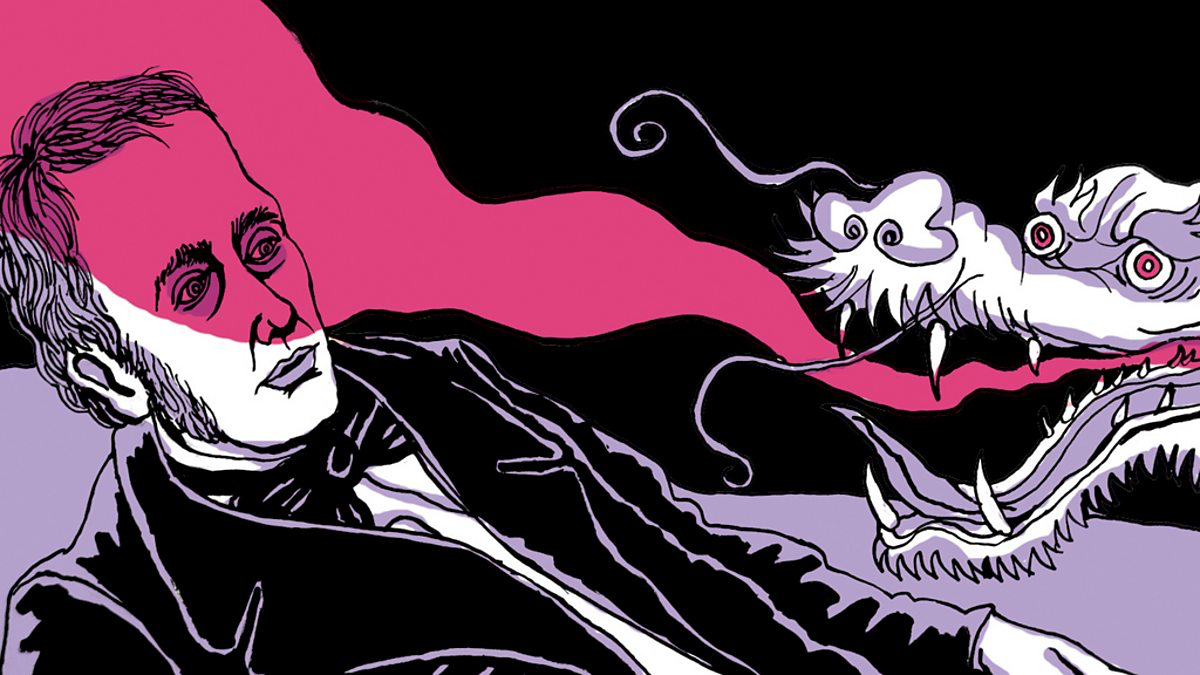
You could not possibly talk about addiction literature without mentioning Confessions of an English Opium Eater if you tried. It is one of the most vivid and psychological books of its era and stands as a seminal work of biography.
Fun fact: I've actually seen the handwritten version of this book under glass, it was quite the experience to see the handwriting of a man who had basically destroyed himself and yet, was still writing quite coherently.
It is a brilliantly formulated book which covers a subject many are scared to talk about even today. It was one of the first books that basically stated that you cannot possibly blame the addicted for what they are addicted to - especially if there is nobody around to help them push against it. They are basically just fighting a losing battle.
Conclusion
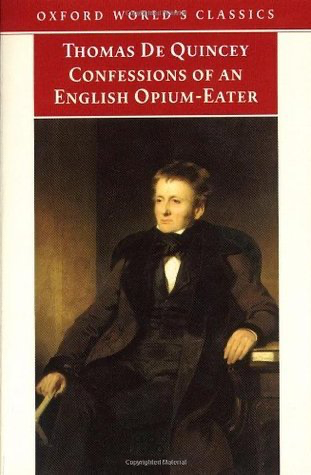
This book is still read today but unfortunately, many people don't pick it up because of its subject matter. It is a lesser-known work of its time and often gets eclipsed by big-selling works of fiction. If you are interested in it, please I beg you to pick it up and give it a read or two. It may just change your entire perspective on addiction...
Next Week: Life and Fate by Vasily Grossman
About the Creator
Annie Kapur
"Et in Arcadia Ego"
***
I am:
🙋🏽♀️ Annie
📚 Avid Reader
📝 Reviewer and Commentator
🎓 Post-Grad Millennial (M.A)
***
I have:
📖 300K+ reads on Vocal
🫶🏼 Love for reading & research
🦋/X @AnnieWithBooks
🔗 PrancingPonyBakery.com
***
🏡 UK
Enjoyed the story? Support the Creator.
Subscribe for free to receive all their stories in your feed. You could also become a paid subscriber, letting them know you appreciate their work.
Comments
There are no comments for this story
Be the first to respond and start the conversation.