
Book Review: "Witches" by Tracy Borman
4/5 - an interesting book about the Belvoir Witches case...

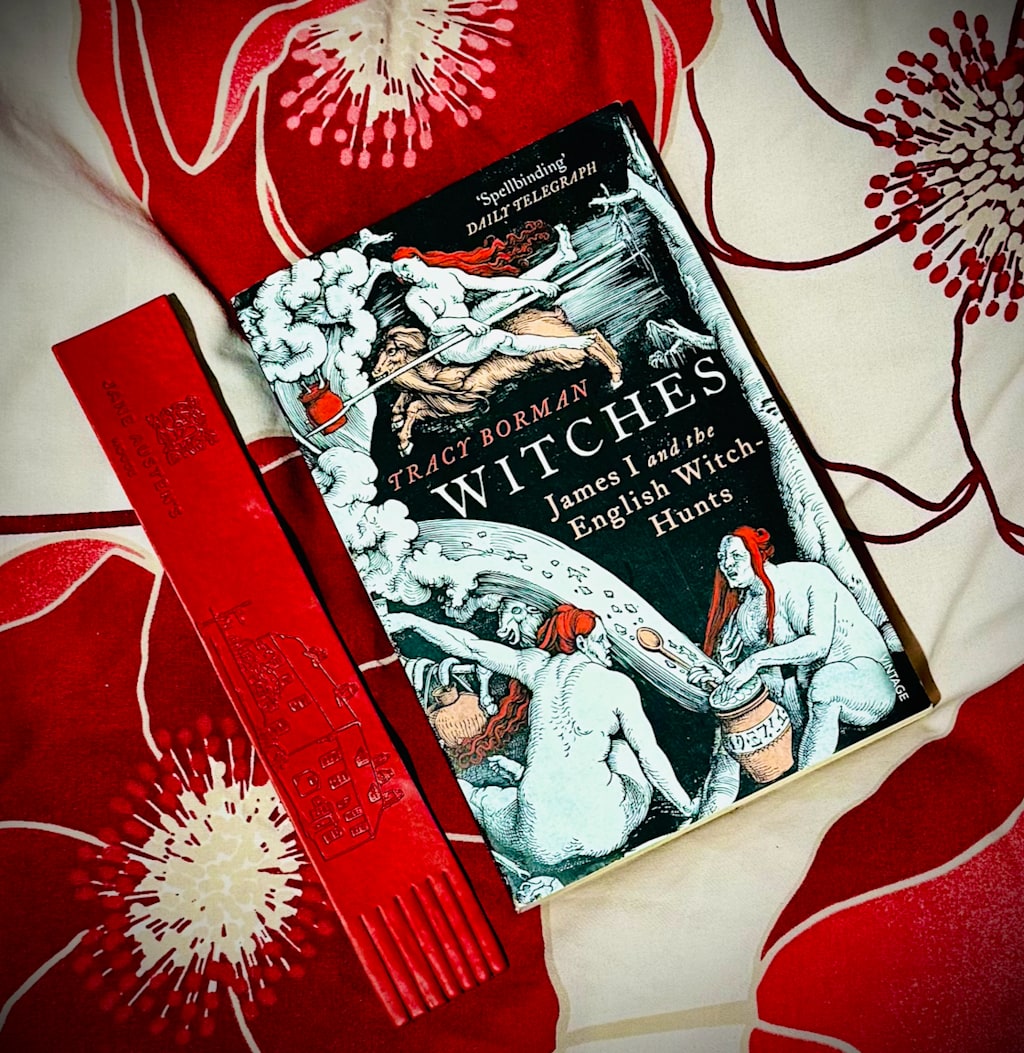
Tracy Borman is not a woman whom I have read a lot by, but I am planning to read more of her bibliography since diving into this incredible text. Witches is a nonfiction history of the Witch Trials under the direction of James I and starts off with an image of James as king by comparison to others. What we have elsewhere though is a country under constant struggle with itself for identity. Catholicism is filled with pageantry and mysticism, alchemy rides around practically unscathed. Yet, with the Protestant Reformation came something more stripped back and all that was left behind was displayed front and centre as a threat to the new belief system. Borman looks at this under a microscope, checking for stories of witches, fairies and goblins - things that regular people back then believed in. So why should the Devil and his human minions be a step too far?
The book covers in-depth the case of the Belvoir witches and alongside this, has some notes about the ideas about witches coming from the era and what they were perpetuated by. Mainly, witchcraft was an idea feared because it was 'other'. Many other cultures around the world utilised what Europeans would call 'witchcraft' as a part of their medical or religious practices. But it is important to remember that if it wasn't the upper class doing astrology and if it was a poor person - then the astrology becomes witchcraft as well. Tracy Borman weaves the story together very well.
The Belvoir witches are the Flower family. There's Margaret, there's Phillipa and then there's the mother Joan. Often referred to as 'cunning women' because of their knowledge of herbs and charms, this book goes through their mistreatment (and later two of them were executed for it) and how it became a reflection about the paranoid society King James I had created (his publishing of the pamphlet Demonology didn't make things any better). So of course, when the Duke of Rutland's sons die under the care of the 'Belvoir Witches' a lot of it becomes a question not of what happened, but of rampant misogyny. Tracy Borman makes a good deal of effort to show us that many of the foundations for the claims of witchcraft weren't based in much reality at all and so, there's an opening for something else to creep in when it comes to injustice.

One thing I will say though is that Tracy Borman uses this case as a representative place holder in showcasing how silly the claims of witchcraft really were and yet, the feeling of threat was very real. All the propaganda and conspiracy involved to make sure the accused would be arrested, charged and later, executed. I think this is important to understand when reading this book because it does state as the subtitle that the book is regarding James I and the Witch Trials, whilst this is true - it does see it through the eyes of the aristocrats accusing the poor - which was definitely part of the whole case.
A lot of the book was about the family themselves, with an entire chapter dedicated to their place of entertainment (of course, a palace) and I think that though this depicts a high level of research, it does unbalance the book slightly and it takes a long time to get to the witchcraft accusations. When we do get there though, there is not much investigating into the women themselves by comparison. This is perhaps one of the only things I had to wrestle with when it came to the book.
As you can see, I'm trying not to give you too much information about the Belvoir witches because I want it to be a surprise for you (no spoilers). I've watched a documentary about this case in the past but I think that if you want a comprehensive view of the people involved and the aristocrats at the head of the story then you probably want to read this book. It shows the true extent of conspiracy and the terrible way in which some aristocrats treated those in their employment and those who are beneath them in society. Though, there is a larger question about how society treated its women in poverty.
About the Creator
Annie Kapur
"Et in Arcadia Ego"
***
I am:
🙋🏽♀️ Annie
📚 Avid Reader
📝 Reviewer and Commentator
🎓 Post-Grad Millennial (M.A)
***
I have:
📖 300K+ reads on Vocal
🦋/X @AnnieWithBooks
📸 ThePrancingPonyBakery
🔗 PrancingPonyBakery.com
***
🏡 UK
Enjoyed the story? Support the Creator.
Subscribe for free to receive all their stories in your feed. You could also become a paid subscriber, letting them know you appreciate their work.
Comments
There are no comments for this story
Be the first to respond and start the conversation.