
Book Review: "While England Sleeps" by David Leavitt
5/5 - romantic, political and beautifully written

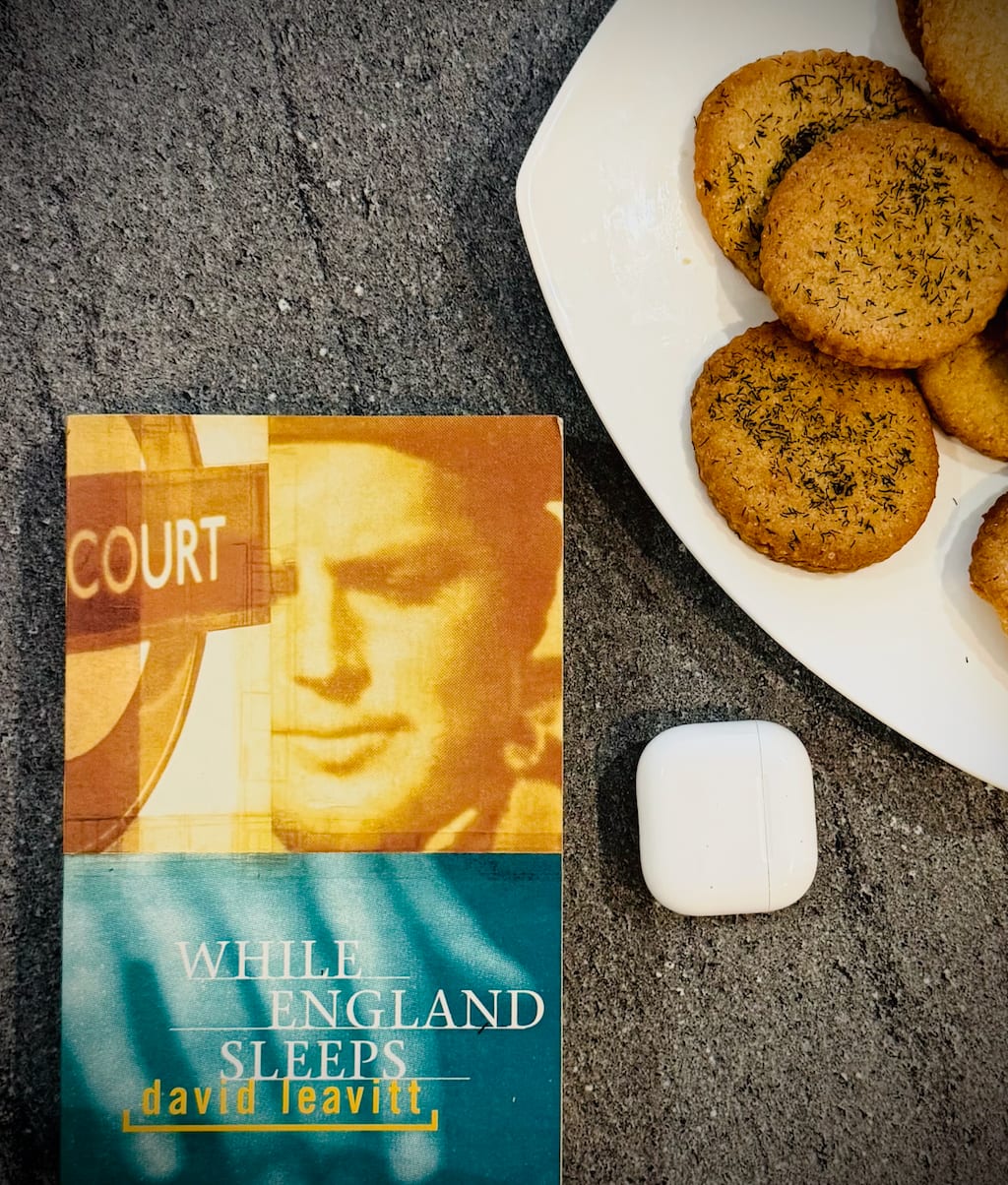
If there was an award for best prologue of the modern age then this book would probably get the award. I was the Queer Lit bookshop in Ancoats, Manchester when I was browsing the used books section. I picked up Outrageous! by Paul Baker and then this book entitled While England Sleeps by David Leavitt. The prologue takes place in the 50s and tells us about how the writer was caught in England engaging in homosexuality, and so he took a plea in which he ran off to America (yes, it happened back then). His Englishness helped him out when it came to creating a career in scriptwriting for movies and going to Hollywood parties.
But, after he's caught expressing communist sympathies, he becomes a victim of the McCarthy era and is blacklisted. He debates whether it was more dangerous to be outed as a homosexual in an era where in most western countries, it was still illegal, or whether it was more dangerous to be regarded as a communist in an era where everyone was too scared to say what was on their mind. Honestly, it wins the award for the best prologue I've read in a long, long time. But it teaches us that even though the book is centred on the European ideas surrounding sexual totalitarianism, the very idea of totalitarianism is not exclusive to anywhere at all. It can be anywhere in the right conditions.
Enough about the opening.
Brian is a character who revisits the mistakes of his youth, especially on his lost chances at love. He, an upper class writer, fell in love with Edward Phelan - working class London Underground worker. The Tube worker is also a member of the Communist Party and if you excuse the obvious plagiarism by the author of the book then you can definitely see how the prologue has informed this love story that was, as we can see, doomed from the beginning. The writing isn't beautiful though. It's more raw and unfiltered. It doesn't feel like a stream of consciousness but there is definitely a lot of yearning that I sometimes associate with Virginia Woolf. It's like you're reading a confession from someone who feels guilty about something but hasn't really admitted to you why they are guilty of anything yet.
The interwar and post-war period definitely had a different way of the self dealing with homosexuality and the author explores both of them. For example: we have Edward who seems to accept the fact that he is a homosexual - he is more free and without prejudice than Brian is. Brian seems to have a self-loathing within his soul that wants to deny access to that part of him. Of course, this is where the guilt comes in. The fact that Brian went on to marry a woman in a semblance of what he would think is a normal life, he has also caused his soul (and Edward) to suffer. His view of homosexuality as a temporary phase also shows this because in his self-loathing comes a misunderstanding of who he is. It's almost constant too. Edward has taken care to learn about himself, Brian has not. Edward knows his place in society as a working and valued person, Brian does not. Eventually Edward moves on with his life and Brian does not. Brian is left alienated from society.
This comes to a climax when Edward chooses to be selfless in his act - he goes off to fight in the Spanish Civil War. When he's captured, Brian finds his moment to rescue Edward from the Spanish prison. There's something deeply political about the way in which Europe has all of these rising tensions, but then we have the slightly romantic plot line in which we see two very different people having to accept different things. Edward must accept he cannot fix the world and change people and Brian must accept who he is as that is better not only for himself, but is better for everyone around him as well. The author does a brilliant job at showing us how the characters become better after acceptance, he also shows us how absolutely any place is capable of dropping its protections for human rights, reflecting on the dark period of the 1980s that homosexuality went through under Thatcher and during the rising cases of AIDS (that's just my interpretation).
Join in on my writing challenge!
Winners announced on Halloween...
About the Creator
Annie Kapur
"Et in Arcadia Ego"
***
I am:
🙋🏽♀️ Annie
📚 Avid Reader
📝 Reviewer and Commentator
🎓 Post-Grad Millennial (M.A)
***
I have:
📖 300K+ reads on Vocal
🫶🏼 Love for reading & research
🦋/X @AnnieWithBooks
***
🏡 UK
Enjoyed the story? Support the Creator.
Subscribe for free to receive all their stories in your feed. You could also become a paid subscriber, letting them know you appreciate their work.
Comments
There are no comments for this story
Be the first to respond and start the conversation.