
Book Review: "The Things You Can See Only When You Slow Down" by Haemin Sunim
2.5/5 - good, not great...

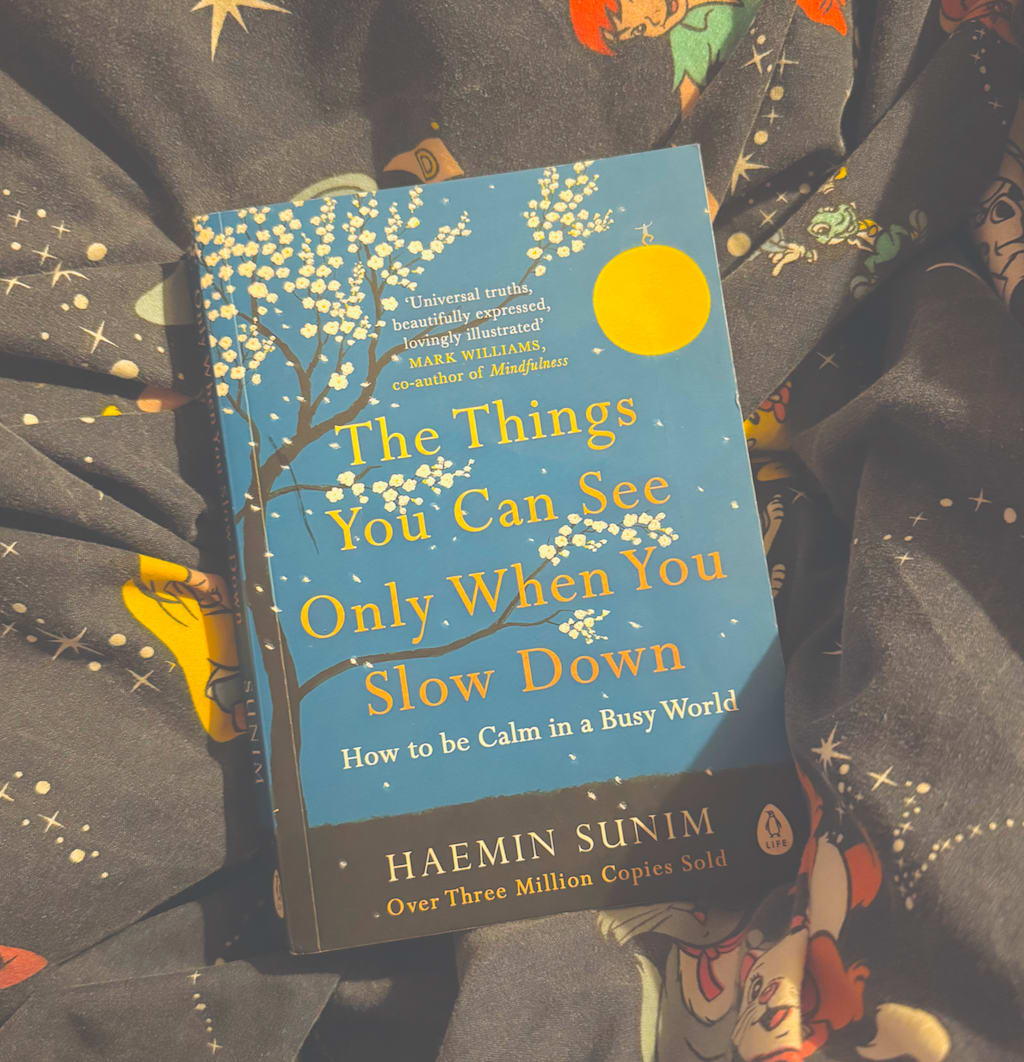
So you guys probably know that terms like 'mindfulness' and 'being present' mean absolutely nothing to me. I don't understand what I'm supposed to be doing when 'being present' and I don't know how to make it any more 'present'. Be that as it may, I think there are some things in this book that are useful, it wouldn't be fair to paint the book simply under my own prejudices against the mindfulness movement (as it is almost universally known that if you're under stress because you're homeless, you cannot simply meditate your way out of homelessness). I will try to be as fair as possible, but there are some things about this book that are still a bit silly. Let's begin...
First of all, the book is split into sections titled 'Love' and 'Relationships', 'Passion' and others. I think this makes the book appear useful and yet, the sections are quite unequally divided. For example: you would think that something like 'passion' would be the most applicable to the most people as the vast majority of people have a passion about something, whether you know about it or not. However, the section on 'passion' seems to be the shortest. There are clearly not enough vague affirmations that one would say in a mirror and post as an Instagram-able 'quote' to fill up an equal section on one of the most universal feelings ever.
Next, we have that little section in between each section in which the author talks about something to do with the subject - something oddly specific. These are probably the best parts of the book because they don't take the reader for an idiot. They aren't 'positive affirming' you into oblivion and they're not trying to make it poetic (you will be surprised at how much of the book is written like poetry but is clearly not actually poetry). Instead, these little sections are teaching about an oddly specific problem and actually offering you a workable solution. These sections are even written better and clearer than the rest of the book, complete with some unusual artwork - it really ties the room together a bit more than perhaps, positive affirmations do.
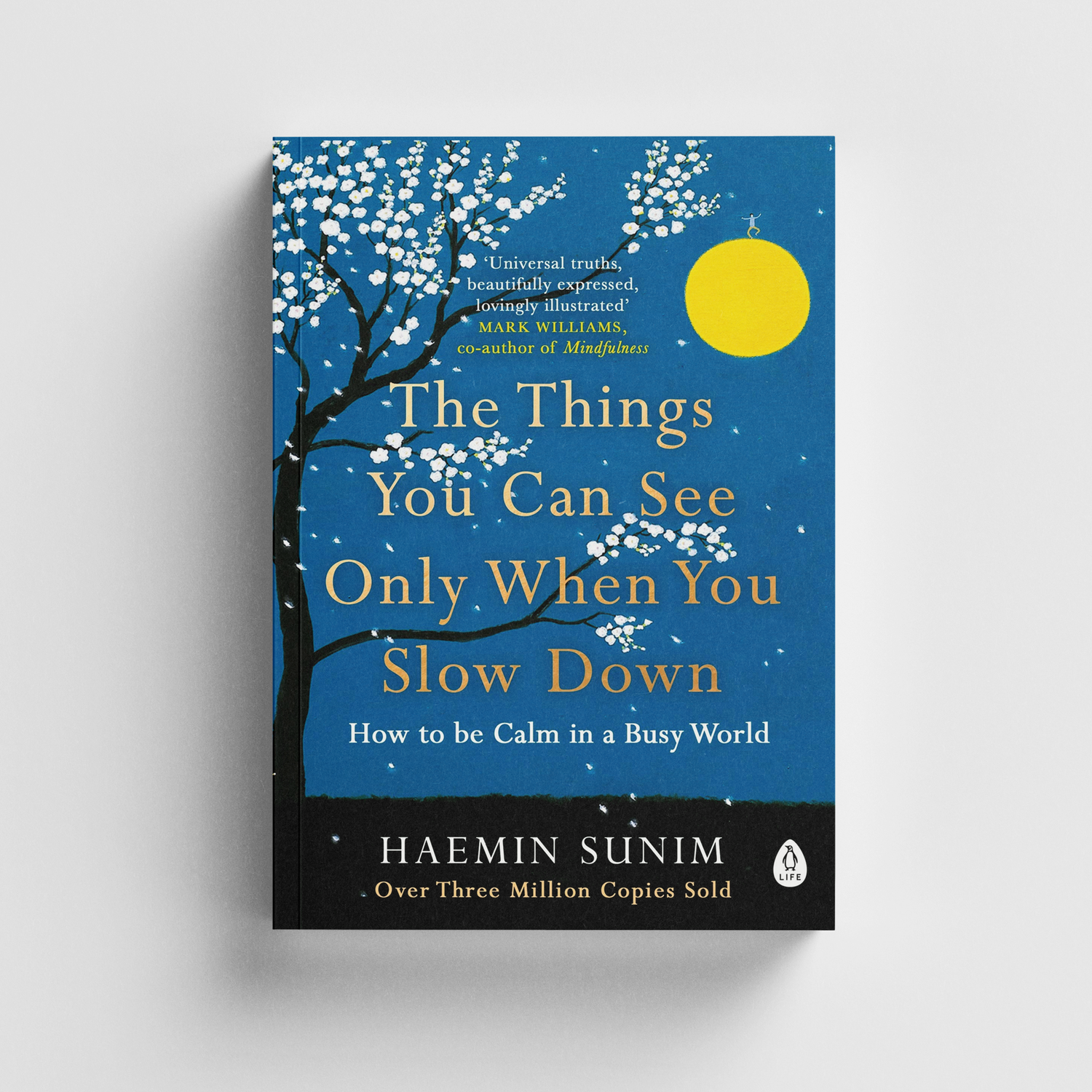
The book is also laid out a bit weird in the sense that it is not like you're usual book. It feels heavier in the hand, has less words upon the page and many of the pages are artwork. I feel like if this book was written out simply as a normal book, it would only perhaps be some 30-40 pages long. It is quite confusing and the idea that it can be read in such a short time seems to be besides the point, or even ironic given the subject matter. There's something about this book that feels like it's missing the point but I like the fact that an author has clearly tried to make a book about this particular subject without being patrionising about it.
Atop of this, we have the author who is a professor at a university. I respect that a lot. Though I do find it difficult to take seriously the matter at which he is a professor, which seems to be a mixture of theology and meditation practices. As we go through the book, we are constantly met with his own struggles. The problem with this is that his struggles are incredibly minor by comparison to the struggles of the average person. Therefore, I genuinely don't think that this book would be useful to anyone - but for a very specific subset of people who are like the author.
All in all, there is some stuff in this book that would be great if you were simply trying to relax your brain a bit. But the book pushes itself as a solution to life's headaches, which it most definitely is not. I don't have much of an issue with the content as much as I do with the fact that the author is professing himself to be a genius on the subject when the subject itself is individual. Yes, there are some things that can be claimed as universal but many of these issues do not lend themselves that way. The author's attempt at anecdotal supporting evidence only proves that these are individual. It's a good book, it's just not very useful in reality.
About the Creator
Annie Kapur
"Et in Arcadia Ego"
***
I am:
🙋🏽♀️ Annie
📚 Avid Reader
📝 Reviewer and Commentator
🎓 Post-Grad Millennial (M.A)
***
I have:
📖 300K+ reads on Vocal
🦋/X @AnnieWithBooks
📸 ThePrancingPonyBakery
🔗 PrancingPonyBakery.com
***
🏡 UK
Enjoyed the story? Support the Creator.
Subscribe for free to receive all their stories in your feed. You could also become a paid subscriber, letting them know you appreciate their work.
Comments
There are no comments for this story
Be the first to respond and start the conversation.