
Book Review: "The Extinction of Experience" by Christine Rosen
3/5 - interesting but inherently flawed...

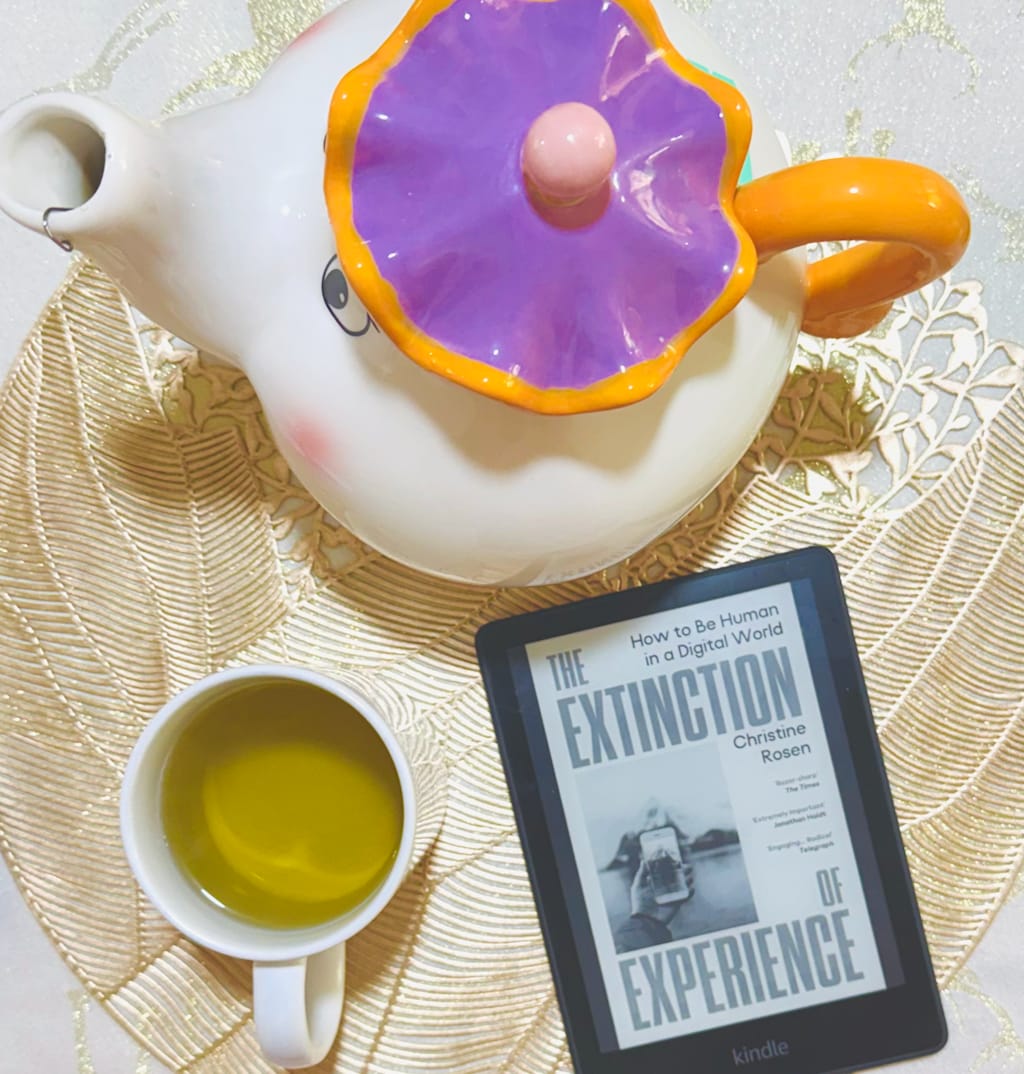
Christine Rosen's book was brought to my attention because of a video I saw on YouTube that was referring to it and using it to make a point about experiences and consumerism. The quotations seemed to have been cherry-picked as they always are in YouTube videos and atop of this, they are quotations that are used by hundreds of YouTubers and GoodReads reviewers and so, the idea that the YouTuber had read the book very quickly went down the drain. There are some good points in this book, so don't misunderstand me here. I feel however, that Rosen very conveniently leaves out some main points about society that have changed the way we experience things that are not dependent on social media and algorithms. Something that I feel is just as important: the lack of money and the rising prices of basically everything.
The Extinction of Experience on the whole is about how modern technology has changed the way we experience things. She states that this increasing use and reliance on our digital tools and worlds decreases actual engagement with the world and virtually replaces our initial attention from the experience to our phones, iPads and other devices. Another thing that is argued with this is that the very idea of what an 'experience' is and entails has changed with this modernising world. Activities that once rooted in physical presence have now, especially with the COVID-19 Pandemic, are now navigated and mediated through a screen. Losing the nuances of reality is something I can definitely agree with is happening, but blaming this solely on the devices itself is something I cannot. The rising prices of basic necessities take priority over random 'experiences' more often than not. Yet Rosen also seems like the person who would blame the poor person for spending money on a Starbucks with friends rather than apples for their child. Nowhere, does she mention the price-gouging by businesses. It is all a user problem, of course.
The reduction fo spontaneity is also referenced and again, this is not a user problem as Christine Rosen would have you believe. The 'loss of authenticity' in the world of TripAdvisor and Yelp in which we look up places before trying is more of a financial security than a problem regarding the device itself. Again, yes we would like to create memorable experiences, but since the vast majority of people are on a budget - if we want an experience we want to make sure it will be positive. I also discuss this problem in another article of mine called No, There's Nothing Wrong with the MCU. You can read it below:
The traditional contributions towards meaningful experiences is something I agree with - that we need to take more risks. However, if you only have a bit of money in your pocket to spend and you have to be very careful with it, there are clearly risks you want to avoid - and you can avoid them. I will have to disagree with Christine Rosen's analysis not because her point is wrong (it is perfectly correct to suggest there is a decline in these things) but because she is failing to get to the very root of the problem. It is cheaper to do things over a device, and with people having less free time and disposable income than they've had for a long time, there is a huge market for social media experiences and spaces.
One point I do agree with though is the fact that social media lacks all the nuance of human interaction. You cannot tell someone's body language, you cannot tell someone's tone a lot of the time (unless here, where I'm writing in a quite displeased way about some of Rosen's leading points) and you do not share a space in which you can move. However, that last one does allow the two people communicating to do whatever they feel like or whatever they need to and so, that's a bit better than having to organised a shared time and space. She does make a good point about the shared environment being more emotionally and socially complex - there is more immediacy and often deeper conversation involved. However, again, this is not always a possibility for the vast majority of people anymore.
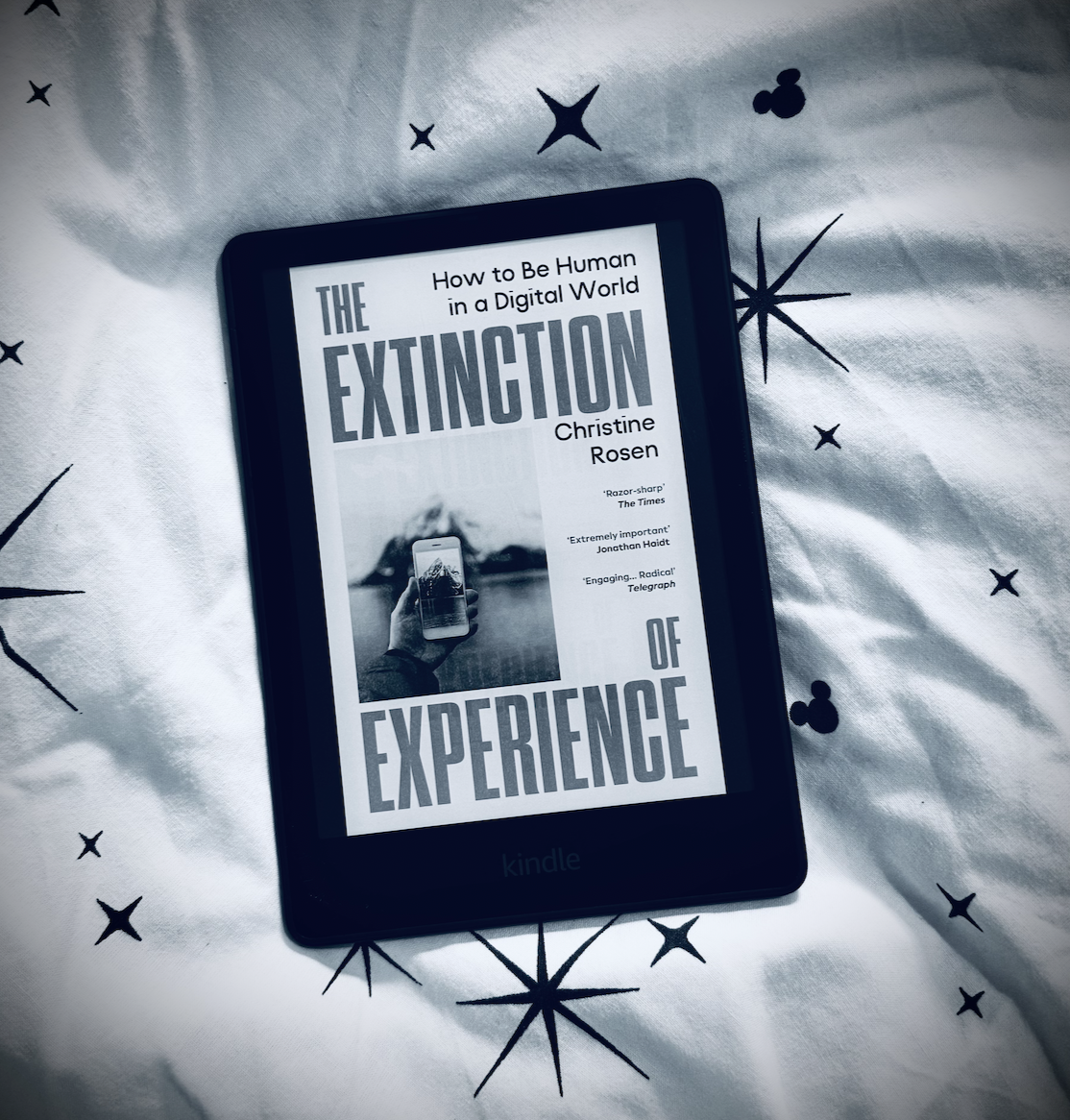
Another of Rosen's points that I found interesting was that the social media world lacks the friction of the real world and even the friction of the real world is being taken away by the online experience seeping into our everyday lives. These small inconveniences of the real world like how we would once get lost, how we would require to navigate places that are unfamiliar have now disappeared. I would personally argue that this saves time massively, even if they do reshape our character as human beings. But Rosen's suggestion that this has unintended consequences is something I can't get on board with because it's always been the case that we have had signage around to tell us which way to go. The only difference is now that most people have less time to get there, and less money to do what they wish to when they do. The problem hasn't been 'reshaped', it has been solved and so, we can save time on journeys.
There's nothing alarming about this book - instead the author sounds quite reflective about the situation, posing more observations that seemingly ignore the main state of the problem. The 'richness' and 'depth' of human experience she is constantly talking about have historically only ever been available to the upper and middle classes, the working class were almost always working. This is the same now but because of social media, we see people of every single class more often and have become more aware of everyone else. Ironically, we are also lonelier than ever. My point is that Rosen ignores the heart of the problem, but tries to criticise us for what has been pumped into its main vein.
About the Creator
Annie Kapur
"Et in Arcadia Ego"
***
I am:
🙋🏽♀️ Annie
📚 Avid Reader
📝 Reviewer and Commentator
🎓 Post-Grad Millennial (M.A)
***
I have:
📖 300K+ reads on Vocal
🦋/X @AnnieWithBooks
📸 ThePrancingPonyBakery
🔗 PrancingPonyBakery.com
***
🏡 UK
Enjoyed the story? Support the Creator.
Subscribe for free to receive all their stories in your feed. You could also become a paid subscriber, letting them know you appreciate their work.
Comments
There are no comments for this story
Be the first to respond and start the conversation.