
Book Review: "The Age of Diagnosis" by Suzanne O'Sullivan
5/5 - an interesting deep-dive into medicalisation and more importantly...over-medicalisation...
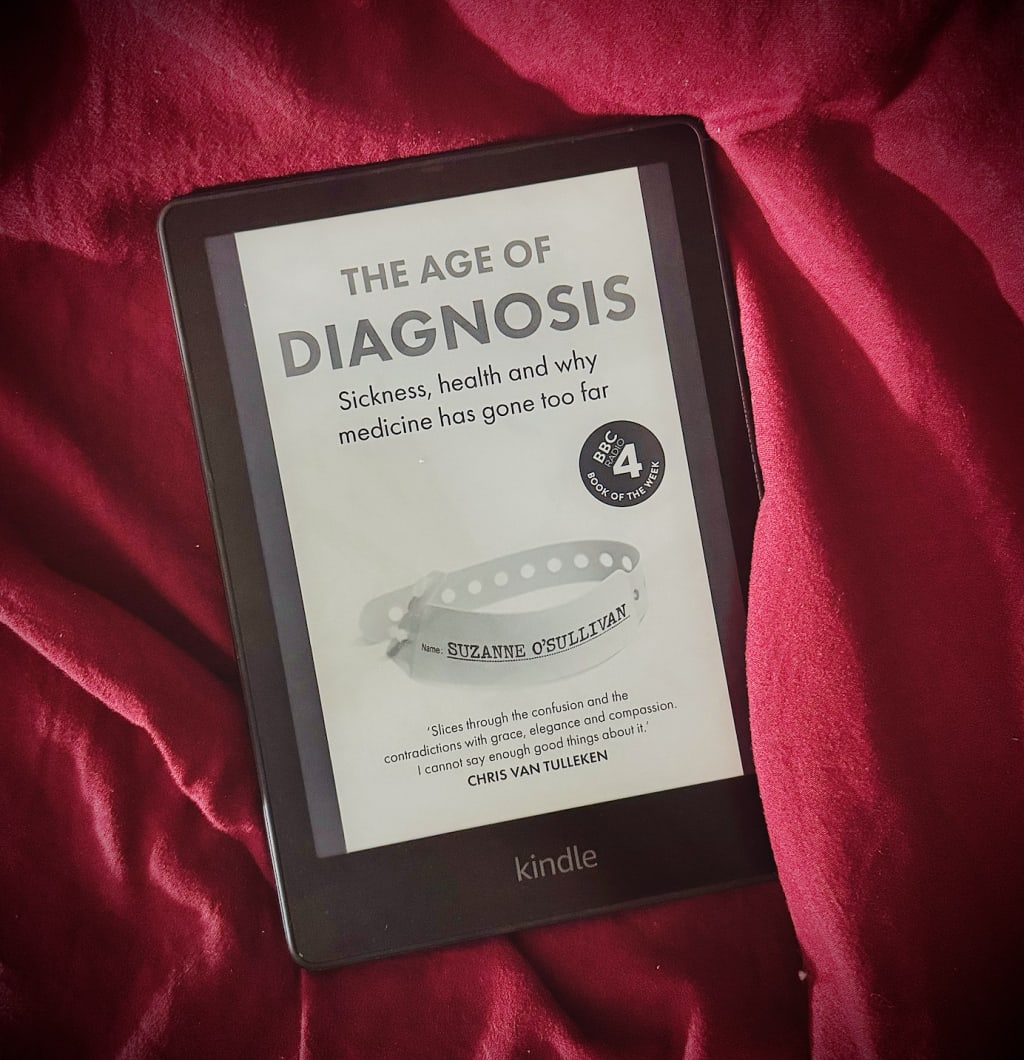
I think the only problem I've ever had with the 'Age of Diagnosis' was the fact that people are definitely starting to diagnose themselves. Those who aren't doctors or mental health professionals should not be diagnosing conditions on themselves such as depression, anxiety and/or autism. When it comes to medical professionals making those diagnoses for themselves, I am on the side of it. I understand that these diagnoses can, at times, be upsetting or cause anxiety in especially younger people. But, I think we know more about these disorders today and so, that is why doctors are diagnosing them more often. Let's have a look at what our author has to say about this...
One of the things that O'Sullivan states that I agree with is that self-research with the age of the internet and information has made it easier for people who are concerned to find some pointers online. This however, presents itself as a paradox in which the more they know about it, the more anxious they become about the symptoms related to the illness they may, or may not have. There is another point that I think is quite important is that the overdiagnosis of everyday problems as medical issues may have caused us to believe we are experiencing something worse than what we actually are. This is something I often think about.
She calls this 'overmedicalisation' - the pathologising of everyday and very normal problems. And I think this is definitely true of our younger generations, particularly Gen Alpha. If we keep teaching them that this is alright, we cannot complain when they are basically scared of doing anything that is remotely difficult. However, I have found a point that I don't agree with - I don't think that this is primarily done by just ourselves, but rather by our institutions. These include government, education and employment. In which medicalising these things can be seen as a virtue but actually doing anything about them is an entirely different thing.
One of the things I quite harshly disagree with is the 'epidemic' label the author puts on the diagnosis of ADHD and Autism. I think it is something far more complicated than people being diagnosed more often. In the past twenty years or so, there has been an increased understanding of these impairments and so, naturally there will be more people being diagnosed. However, again I do believe that the diagnoses of these conditions is being pushed by the state education system in which the school will definitely acquire more money per child that is diagnosed with the impairment. So even though there are few pieces of evidence to support the improvement of wellbeing to the child who has been diagnosed in this new era, there is definitely more money going to places that feel they need more money to cater to these children. That's my theory and comes from basic research on the issue.
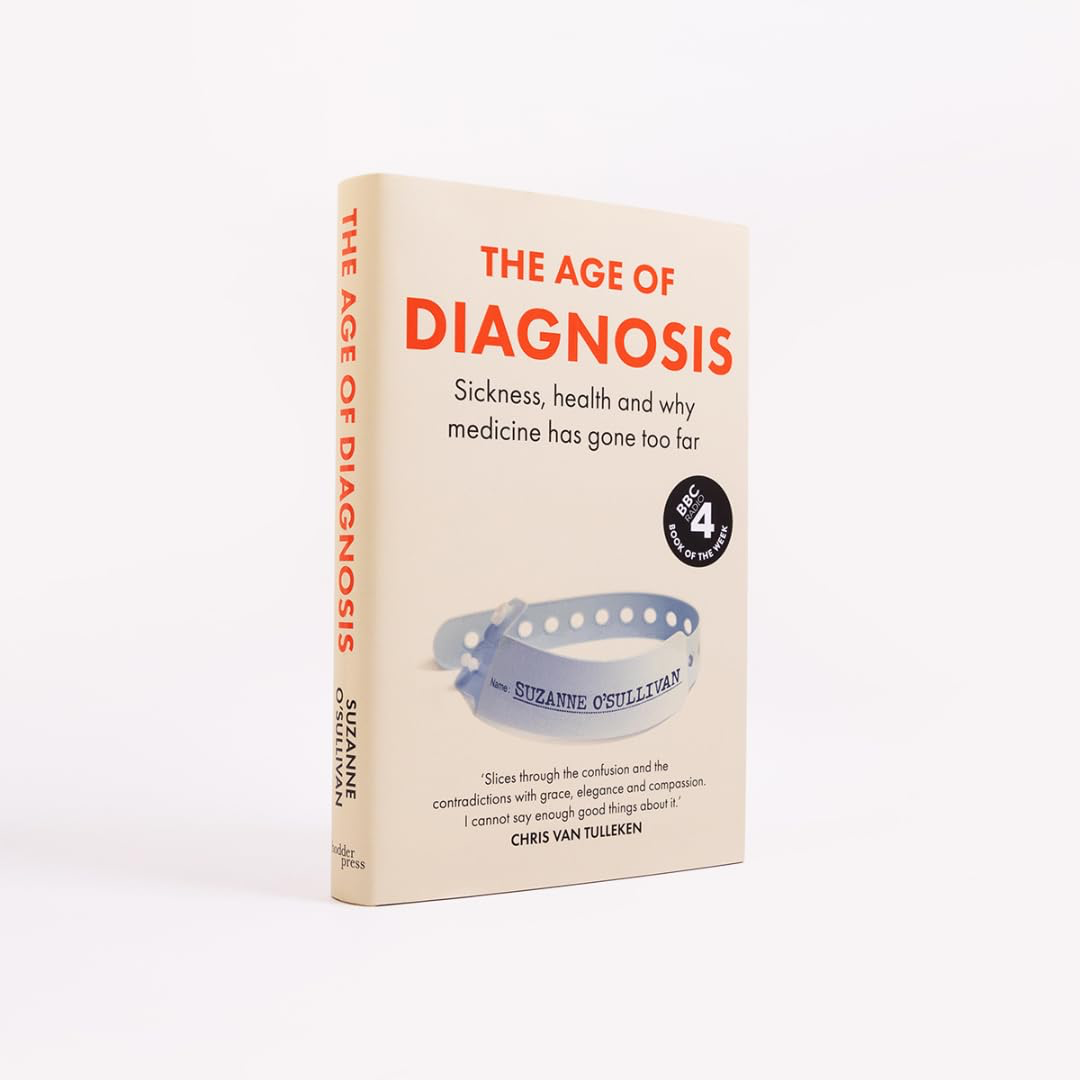
The author uses the term 'Nocebo' to refer to the idea that when someone is labelled as ill in some way, it can actually make their condition worse. This includes things like knowing diagnostic terminology, knowing the symptoms and even looking at complications. Each one of these feeds into that effect and honestly, I do actually agree with this to an extent. It only really works on conditions you can understand. If you are diagnosed with a condition you have never heard of and then start looking at the condition, I cannot imagine it has the same impact.
This is also where the author talks about genetic testing to see what the predisposition to certain diseases are. These can be diseases like Huntington's. She states that knowing this can actually have an adverse impact on the mental health of the individual and thus, actually make their health worse in the long run as mental health almost definitely changes physical health. Therefore, the author argues that early intervention of this type can be life-saving but should always be approached with extreme caution. I mean, that is something I think most of us can agree on - even if catching something early is there, it is not for most people and can just put them on edge.
The author gives us the example of Long COVID as one of these strange patient-induced reportage - one which has a terrifying impact on mental and physical health. This is because patients self-report the symptoms and then, expecting they have some COVID complications already, are told they have long COVID (which has some tricky diagnosis anyway) and thus, they are even more worried than before because of the timescale being virtually unknown.
The author highlights some 'watchful waiting' strategies rather than quick diagnoses to make the patients 'feel better' (because as she has argued, it definitely does not make them feel better). The case for 'slow medicine' is something I am quite fond of. I don't believe throwing medicine at people straight away to fix issues will lead to a solution, but something could morph into a whole new problem the doctors were not aware of because they weren't willing to observe and take the time on the patient.
Whilst the author colours the book with stories of real people from both sides of the argument, I still think there is something to be said about the fact that we are more aware of certain conditions now than before. However, I find myself on the side of the author when it comes to watching and waiting rather than throwing shit at the wall and hoping it sticks. There is a lot of information in this book that is very useful, and much of it could be eye-opening to the medical and medicalisation community.
About the Creator
Annie Kapur
"Et in Arcadia Ego"
***
I am:
🙋🏽♀️ Annie
📚 Avid Reader
📝 Reviewer and Commentator
🎓 Post-Grad Millennial (M.A)
***
I have:
📖 300K+ reads on Vocal
🦋/X @AnnieWithBooks
📸 ThePrancingPonyBakery
🔗 PrancingPonyBakery.com
***
🏡 UK
Enjoyed the story? Support the Creator.
Subscribe for free to receive all their stories in your feed. You could also become a paid subscriber, letting them know you appreciate their work.
Comments
There are no comments for this story
Be the first to respond and start the conversation.