
Book Review: "Queer as Folklore" by Sacha Coward
5/5 - I wish I could inject this book into my veins...
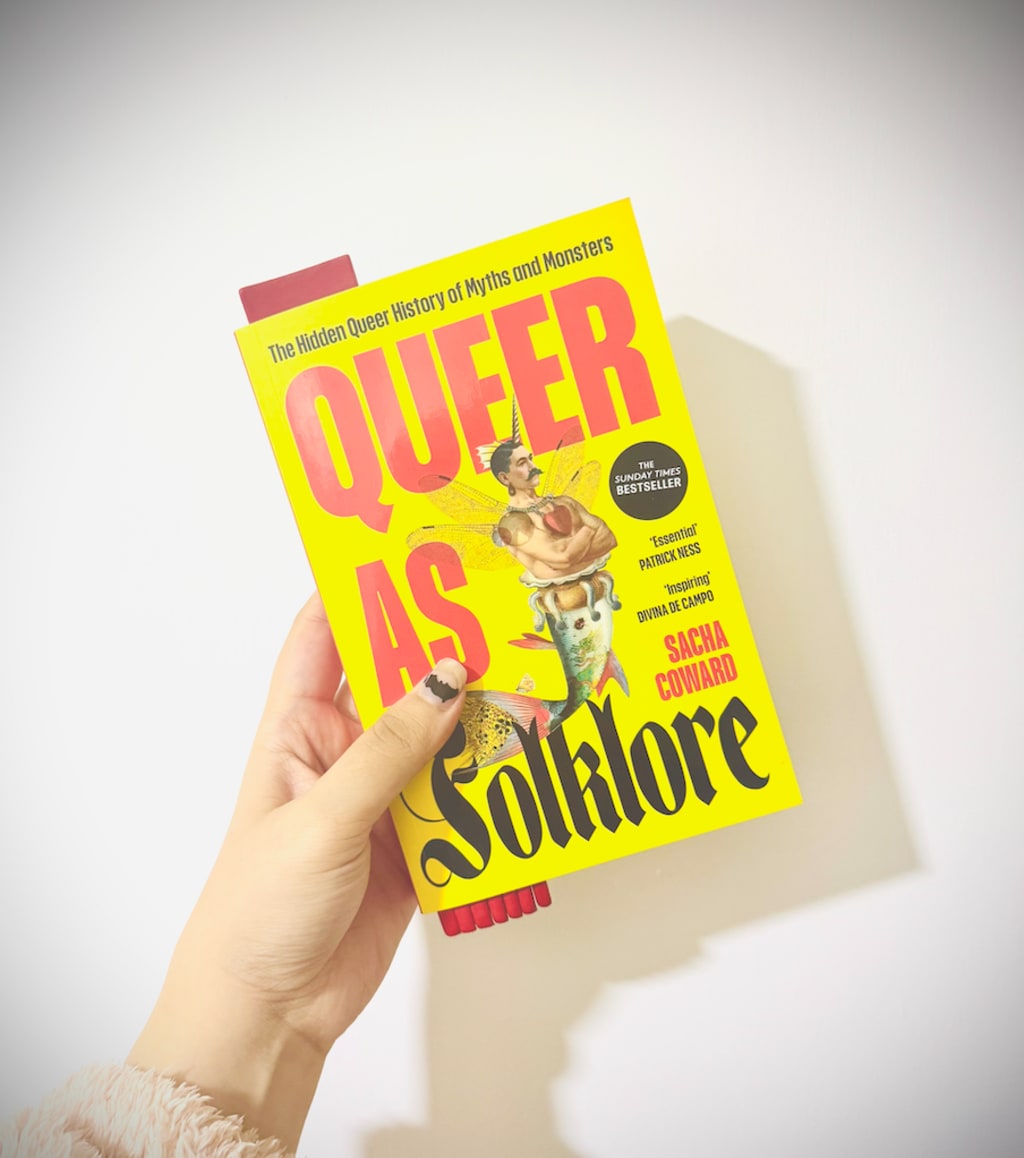
Sacha Coward has written a book about the LGBTQIA+ movement and how it coincides with folklore. As these are two of my favourite topics to read about I hope you already know that this is going to be a glaringly positive review. Queer as Folklore gives us insights into history, art and language as we explore the stories and fables behind some of the best-known creatures and myths, beasts and monsters from legends and ancient stories. With an introduction by Joanna Harris in which she states "Stories tell us who we are. Folklore tries to tell us why..." - this book covers how the LGBTQIA+ movement has constantly been linked to folktales which built civilisations and understanding between humans. It is about this and so much more: past, present and future.
The first chapter introduces us to mermaids and the history behind the author's fascination with them coming from seeing Ursula in Disney's The Little Mermaid. This is not, however, the focus of the chapter because this isn't a memoir but rather, it is a host to an investigation in which we see exactly how the author reaches their conclusions. The discernment he wants to make though is that the Disney film and the original tale are two entirely different things: the tale itself is much darker and more reflective of Hans Christian Andersen's own life. A queer man in his own lifetime, the author of the book explains the unrequited love he experienced for another man and thus, the failure of the mermaid to acquire the prince is an example of this tragedy happening in a folktale.
He relates Ursula to the drag icon Divine and calls it Disney's worst kept secret because we all know the inspiration for Ursula was, in fact, Divine. When it comes to defining how The Little Mermaid had an impact on the LGBTQIA+ movement, we can see many different factions and all of them are very intriguing.
In the second and third chapters we gain access to unicorns and fairies. Of course, the author acknowledges that the unicorn's mythology holds some biblical weight and thus, has been hailed as a Christian symbol for a while. However, it was also held as a creature that was once different, frightening and feral. Something misunderstood and at the same time, enlightening. Arthur Beardsley and Oscar Wilde are discussed at length here as Beardsley would write an unfinished novel and Wilde would suffer his trials for being homosexual. The campness of the imagery of the unicorn though, the author states, continues to fascinate audiences all over the world. It became a universal symbol for excess, beauty, everything lavish and sexually questioning.
This is slightly different, but along the same lines as the fairy which, as we all know, is historically one of the many derogatory names given to homosexual men which has since been reclaimed in its power by the same people it was used to beat down. How? Well, the fairy has this universal appeal of existing between worlds and the author uses performances of Peter Pan and stories of the fairies living underground to explain how we got from here to there in a way that is enlightening and brilliant.
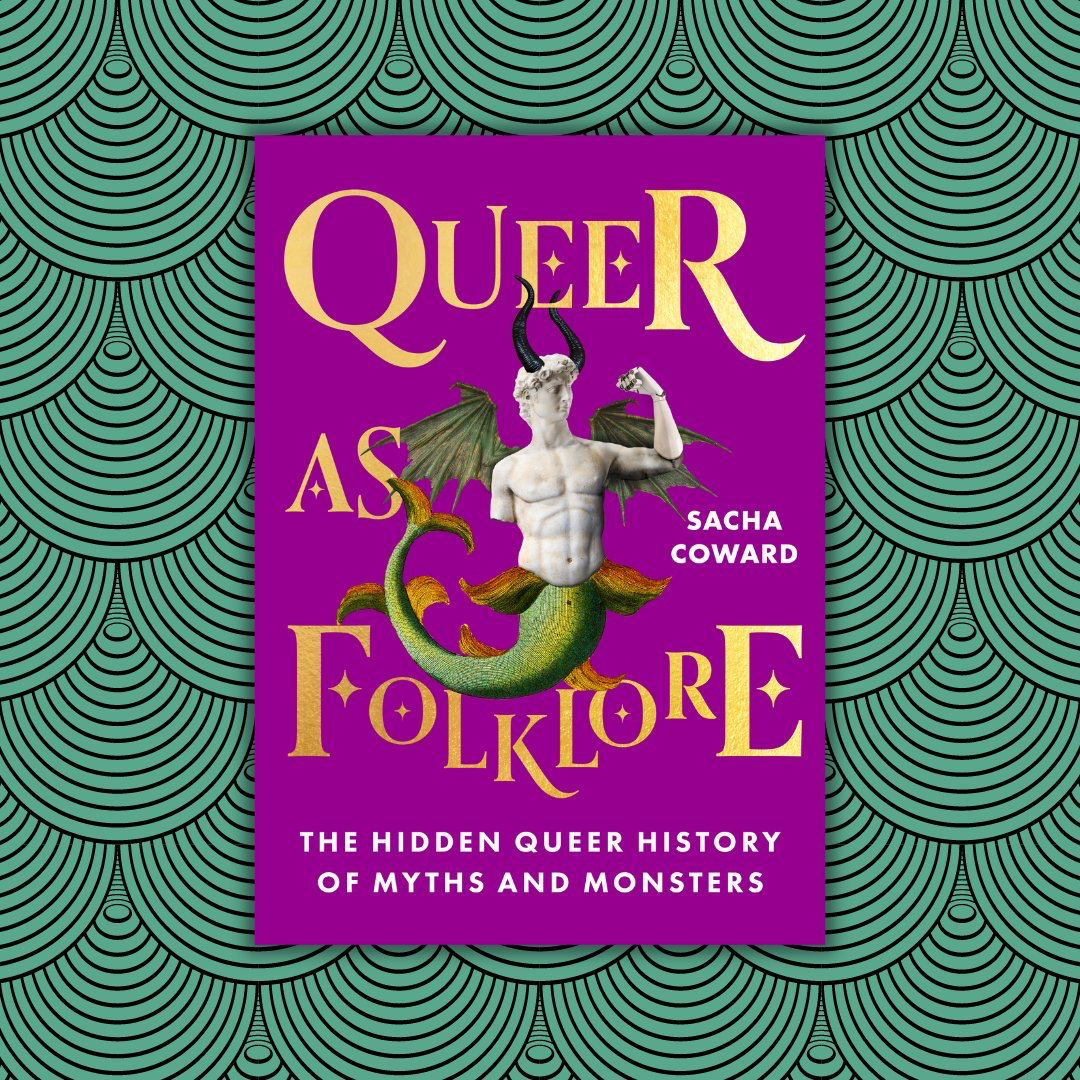
In the second part, we encounter the homosexual associations of the werewolf and the vampire. I really have to say I enjoyed the logic put forward in the chapter Children of the Night, about vampires because of course we are going to get some analysis on Lord Byron. My favourite poet is called cruel and abusive, often manipulative and narcissistic and at least three characters (vampire and not) who are monsters are based on him in fiction from his time. But the author here also draws parallels between Byron and Dracula - as there are many for anyone who has read both Byron's life story and Bram Stoker's classic novel.
This then gets side-stepped beautifully into the modern associations of the vampire and of course, if we are talking about a bite then the author must also discuss the more stern and serious topic of the HIV/AIDS crisis. Drawing links between this and the history of the vampire definitely helps us to understand why these characters in some of my personal favourite works (i.e: Interview with the Vampire) are often depicted as not only possibly queer but outright and unquestionably homosexual. So far, Children of the Night is the best chapter in the whole book.
As we move through the text, we see other creatures such as witches and demons. The witch-hunts are covered in great detail when it comes to their history and how they basically went after non-conforming women. We understand now that these were not witches but just random women who were told that they didn't look, act or behave in anyway (or even some way) like the typical woman.
The author makes the point of stating that this is still somewhat happening today in countries like Cameroon but, I actually believe that this happens on a much larger (though less deadly) scale on social media where young girls are often made to feel inadequate by conventional attributes they may not possess. This is often in a witch-hunt style too of people judging the original poster in horrific ways.
The author's points on demons are incredible. Looking at the way in which drag performers are categorised by the idiotic religious right wing means that we can draw parallels between it and the way in which these same people got scared of D and D (and thus did the same thing and associated it with Satan). The author relates demonic imagery to the LGBTQIA+ through this religious invasion and thus, shows us what this actually is: yet another witch hunt.
Queerly Departed covers how the LGBTQIA+ movement is also related to death. This is both in a sense of who is buried where and what we can learn about the past of the people who are involved in the group. For example: the author gives us an intriguing story about people with Klinefelter's Syndrome in the past and present. When we move on to taking a look at aliens and pirates, we get even more stories of how these people (are aliens people?) have been (and in some cases probably still are) interwoven into the movement at its core. Exploring levels of homosexuality that even the vampires were seen to be and how the differences in gender performance can make us truly wonder about our pasts and whether they were as heteronormative as we have been led to believe.
The author's talk about AI and LGBTQIA+ people starts with a bit of a commentary on 2001: A Space Odyssey and the chapter is rightly named 'I'm Sorry, Dave' from the classic line in the film. The question of Arthur C. Clarke (the writer of the book) and his sexuality was never, as we see, really a question. Though Clarke himself, the author tells us, did not address this issue - a lot of other people did.
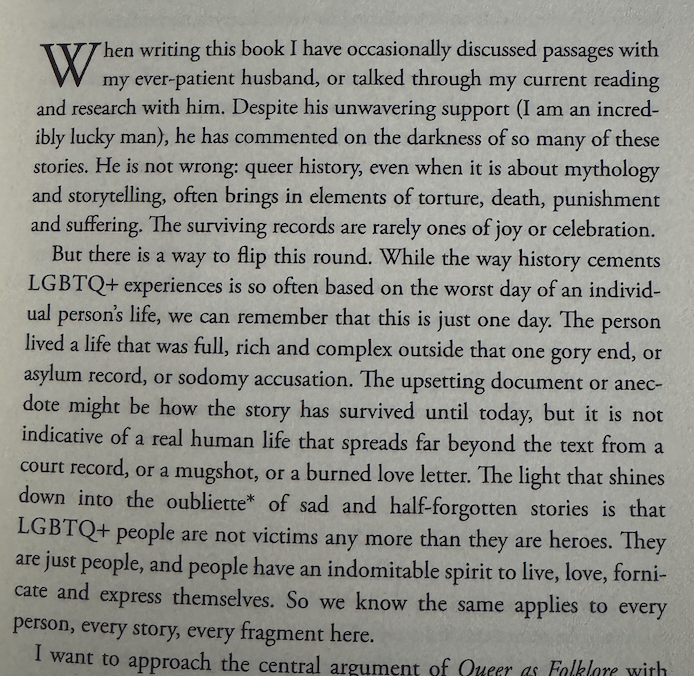
As we move towards the end of the book though, what we are left with thousands of years of storytelling and history of the communications of the LGBTQIA+ community - it is beautiful. Oh yes, and a wonderful final chapter by the author that I am going to let you discover for yourself. In the end, it does get better and there is a sense of pure joy.
About the Creator
Annie Kapur
"Et in Arcadia Ego"
***
I am:
🙋🏽♀️ Annie
📚 Avid Reader
📝 Reviewer and Commentator
🎓 Post-Grad Millennial (M.A)
***
I have:
📖 300K+ reads on Vocal
🦋/X @AnnieWithBooks
📸 ThePrancingPonyBakery
🔗 PrancingPonyBakery.com
***
🏡 UK
Enjoyed the story? Support the Creator.
Subscribe for free to receive all their stories in your feed. You could also become a paid subscriber, letting them know you appreciate their work.
Comments
There are no comments for this story
Be the first to respond and start the conversation.