
Book Review: "Paris" by Andrew Hussey
5/5 - Andrew Hussey is a genius for writing such an incredible book...

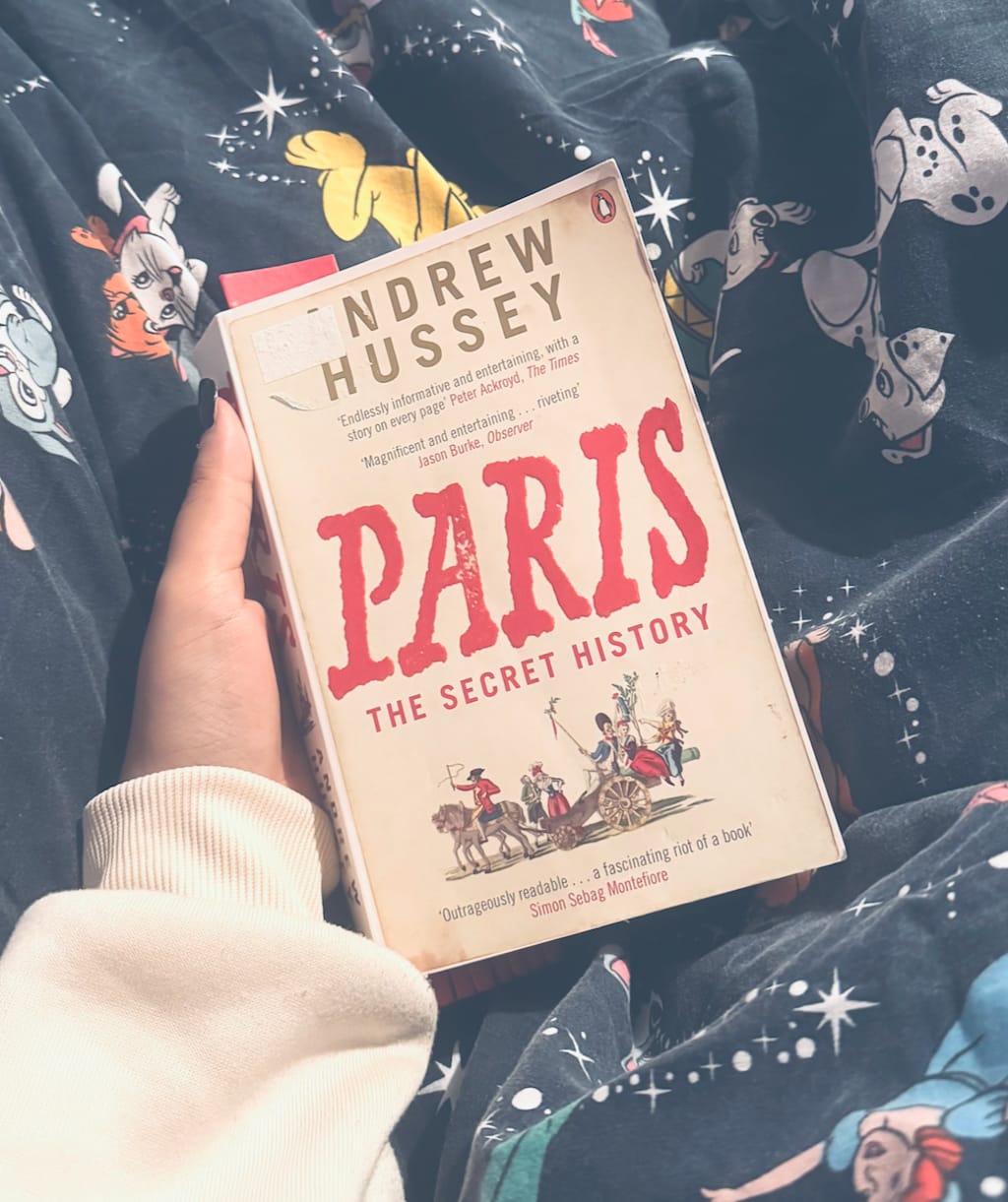
Andrew Hussey is probably one of the foremost important voices on the history of Paris. Some years' ago he did a documentary on the history of the Louvre and honestly, it is one of my favourite documentaries of all time and I have seen it several times over the years. His book entitled Paris both looks at the city thematically and chronologically, taking us from the prehistoric era onward, with attention paid of course - to the eras that made the city famous like it is today. We get to see the blend of history, art, revolution and so much more in this book. When I saw it, I knew I could not skip over the chance to read it.
One of the main things that Hussey attempts to do in his book is separate the reality from the myth - and he does it quite successfully. Many people seem to have this mythical perception of Paris as the city of love, and also the romantic view of the revolutions. However, Hussey argues that throughout its history, Paris has been overwrought with class struggles and rampant poverty, the often decadent images of palaces and princesses coming at the expense of the average Parisian who would have not even had enough to eat on a regular basis. This is quite definitely true for the revolution era because as we know, that was part and parcel as to why the revolution even happened in the first place.

There is significant attention paid the revolutionary eras and the way in which they changed the landscape of the city. Political violence, Hussey argues, seems to be embedded in the identity of Paris and its people and the spaces around the city carry the memories of these conflicts in street names and statues. Georges-Eugène Haussmann, Hussey states, was praised for his redesign of Paris, modernising it for a fast-progressing world - but there were darker undertones to it. This man redesigned Paris to make it harder for uprisings to occur, harder for people to barricade themselves and face up against the military and thus, easier to control. This I found both shocking and also ironically predictable. In this era of Paris, when uprisings are common you would want the most efficient way to make sure they didn't happen which also didn't risk losing the military you needed to fight overseas. I don't agree with it, but the French government were certainly scared of its own people.
He covers the 20th century as well. The allure of the city that once brought Ernest Hemingway to it - he would end up writing A Moveable Feast (my personal favourite Hemingway novel) whilst there. There were in fact, many writers who would move to France including Chester Himes and James Baldwin. The modernist, existentialist and other philosophical movements of the 20th century relied on Paris with people such as Jean-Paul Sartre and even Marcel Proust making their names within this expanding city. As we move through to World War 2, we see that Hussey understands that there were darker things happening in the city. Once we have concentrated on the elite and its decadence, we come to see especially how the bohemians and the working class, the migrants and the marginalised have created the story of the city - and to Hussey, this is the only true way to understand Paris at all.
The cultural power of Paris, Hussey suggests, seems to be because of this deep divide. What we have here is a concentration on the rich and the decadent - something that everyone sees and knows of France. But amazingly so, much of Hussey's book when it comes to the people of Paris, is dedicated to the nameless ones. It goes through the way in which these working people changed Paris, from the revolutionary eras where they rose up against their oppressors, to the ones who created art and made themselves great. I loved reading about all of this stuff because it was truly fascinating - to think that these people, though they may have felt unimportant, had such a great impact on the reality of these spaces is incredible.
All in all, I would recommend this book to anyone who is interested in getting into the depths of Paris, from the tops of the Louvre to the sewers depicted in Les Miserables. This book is truly the definitive Parisian history text.
About the Creator
Annie Kapur
"Et in Arcadia Ego"
***
I am:
🙋🏽♀️ Annie
📚 Avid Reader
📝 Reviewer and Commentator
🎓 Post-Grad Millennial (M.A)
***
I have:
📖 300K+ reads on Vocal
🦋/X @AnnieWithBooks
📸 ThePrancingPonyBakery
🔗 PrancingPonyBakery.com
***
🏡 UK
Enjoyed the story? Support the Creator.
Subscribe for free to receive all their stories in your feed. You could also become a paid subscriber, letting them know you appreciate their work.
Comments
There are no comments for this story
Be the first to respond and start the conversation.