
Book Review: "Owls Do Cry" by Janet Frame
5/5 - heartbreaking and beautifully written, this book will definitely leave you in tears...

If you want to know some of the background to Janet Frame's life then you can either read her book An Angel at My Table or, alternatively you can read my review of that book here:
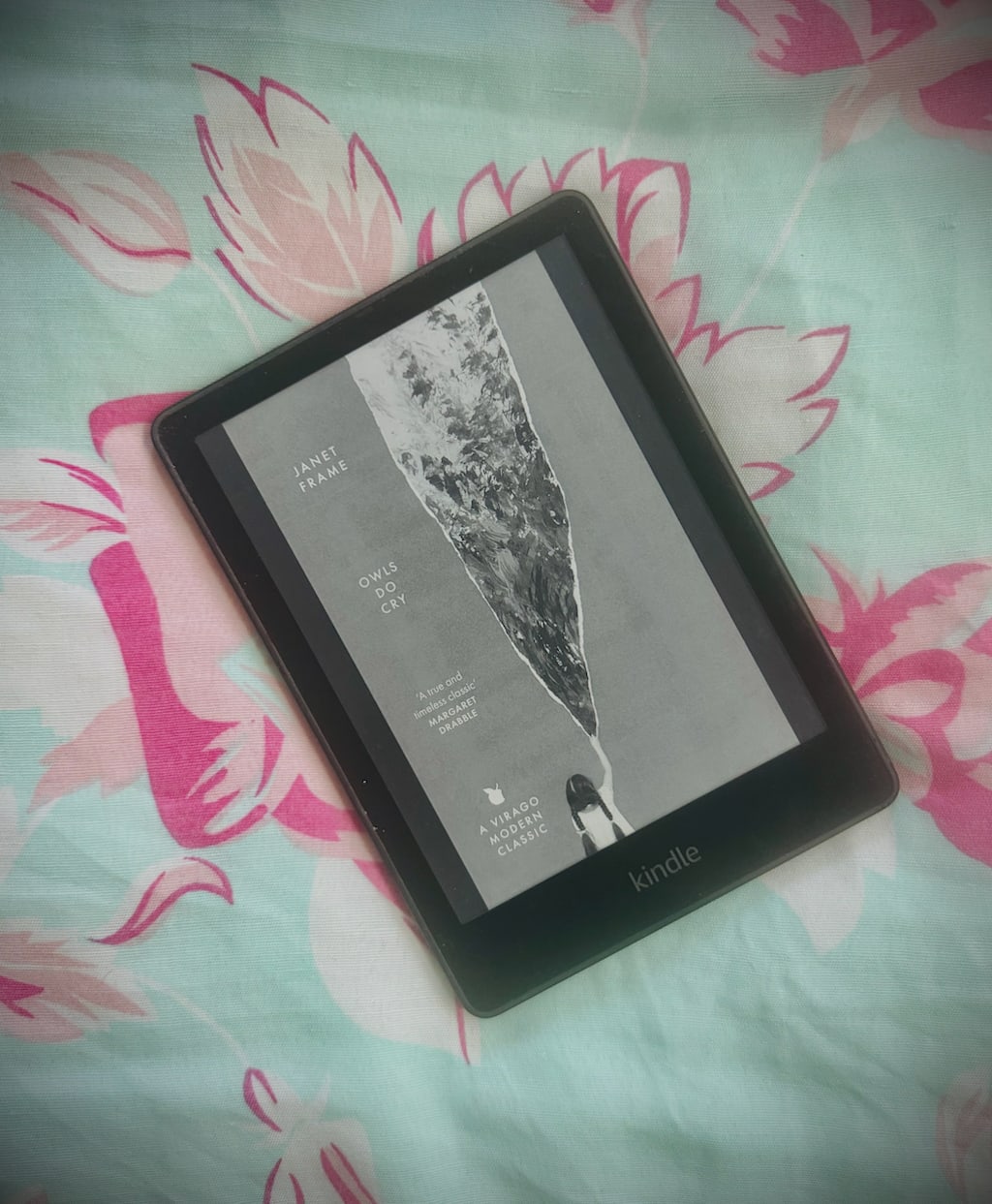
An Angel at My Table is more autobiographical than this one. Owls Do Cry is based on parts of her life but An Angel at My Table will give you more insight into her rather than the people around her. Owls Do Cry is about a family, each member of the second generation has their own identity and yet, they are also quite flawed inherently. A shorter book than the one I had read previously, I definitely think this effort by her is extremely well-written. With an introduction by Margaret Drabble who outlines that Janet Frame's books are up there with The Bell Jar by Sylvia Plath and Mrs Dalloway by Virginia Woolf, this is definitely one for the modern ages. A legendary book in the sub-genre of feminist novels with a focus on women's mental health.
This story is about the Withers Family: Bob and Amy, who are the parents and then their four children: Francie, Daphne, Toby and Chicks. It is clear that they are a struggling family despite being a part of the working class, they are stricken by the poverty line in New Zealand. The children have wild imaginations and yet, they are incredibly vulnerable - there is definitely something traumatic bubbling beneath the surface to do with mental health and the theme is there from their childhood. Emotional and brilliant, Janet Frame is painting herself as Daphne and honestly, it really moves you right from the beginning as it is her narrative that will open the novel. Her narrative, told directly from a place called the 'Dead Room'.
The main shift of the novel comes from the point at which Francie dies in a horrific accident. The bubbling that we see in the earlier parts of the novel overflows and the stability the characters were attempting to keep is shattered and we start to see how they truly are. The emotional surface is broken and we read about how they adapt and how they don't. Twenty years and adult society is still as unforgiving as it was in their own parent's day, Daphne is called an abnormal girl and thus committed to a psychiatric ward in an asylum. It is horrific to see a woman who is just a little strange being removed from society just because she is not conventional - she's poetic and dreamy and has this strong inner life. Again, Janet Frame is clearly Daphne herself and we get to see that inner-life in all of its detail and glory in An Angel at My Table. You should definitely read it.
Daphne undergoes electric shock therapy, something that I have heard Lou Reed also underwent and he tells it as being terrifying. Above Daphne is also the threat of a lobotomy, yes we are in that period of history - the mid-20th century in which psychiatry was largely untested and run by a bunch of sexually frustrated men. The Dead Room becomes more and more prominent as the place that punishes non-conformity, the place where her narrative starts to comment on her family and the way in which she is made to feel so much worse than she actually is. I genuinely wish she didn't have to go through this - it sounds truly heartbreaking. This is the complete opposite to what happens to Chicks as well who gets married and distances herself from her family by every past degree: no working class stuff, no mental illness stuff, just marrying into money and having material values. As for Toby though, I honestly cannot feel enough heartbreak for these children of a traumatic childhood.
Yet another great novel from Janet Frame embodied by the mental health system failures of her day and how they worked even worse for women. If you loved The Bell Jar then this book would definitely be right up your street. I think I'm going to continue to read Janet Frame's books but if you want to know why I read this one it's because I saw someone else reading it and noticed I recognised the author. I am simply heartbroken.
About the Creator
Annie Kapur
"Et in Arcadia Ego"
***
I am:
🙋🏽♀️ Annie
📚 Avid Reader
📝 Reviewer and Commentator
🎓 Post-Grad Millennial (M.A)
***
I have:
📖 300K+ reads on Vocal
🫶🏼 Love for reading & research
🦋/X @AnnieWithBooks
***
🏡 UK
Enjoyed the story? Support the Creator.
Subscribe for free to receive all their stories in your feed. You could also become a paid subscriber, letting them know you appreciate their work.
Comments
There are no comments for this story
Be the first to respond and start the conversation.