
Book Review: "Moments of Reprieve" by Primo Levi
5/5 - haunting and brilliant

In his book Reliable Essays, Clive James goes through the Last Will and Testament of Primo Levi. I reviewed it in some detail last year and if you're interested, you might want to seek out parts one and two to the same review which covers other books and essays. Of course, it is about the contested nature of Levi's suicide and what he saw whilst imprisoned at the Auschwitz Concentration Camp:
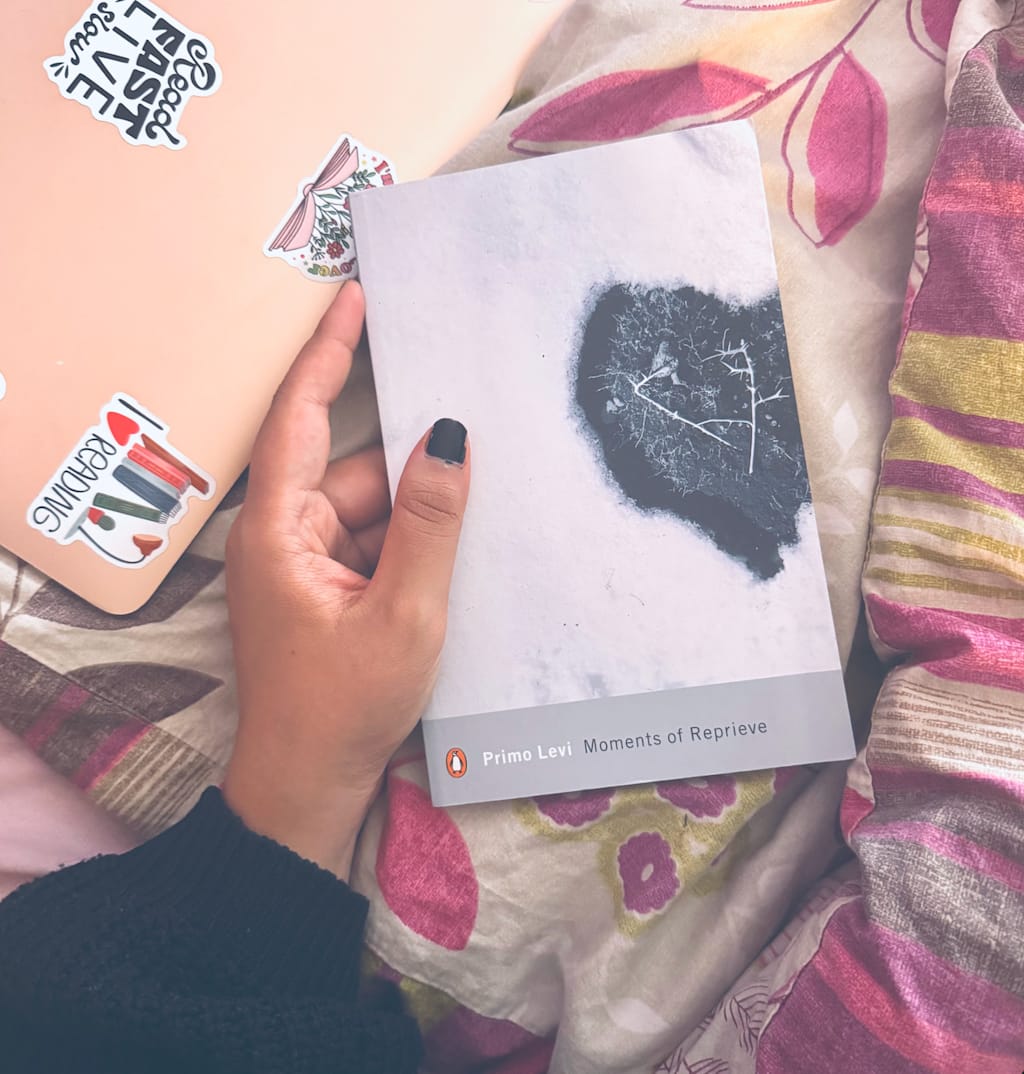
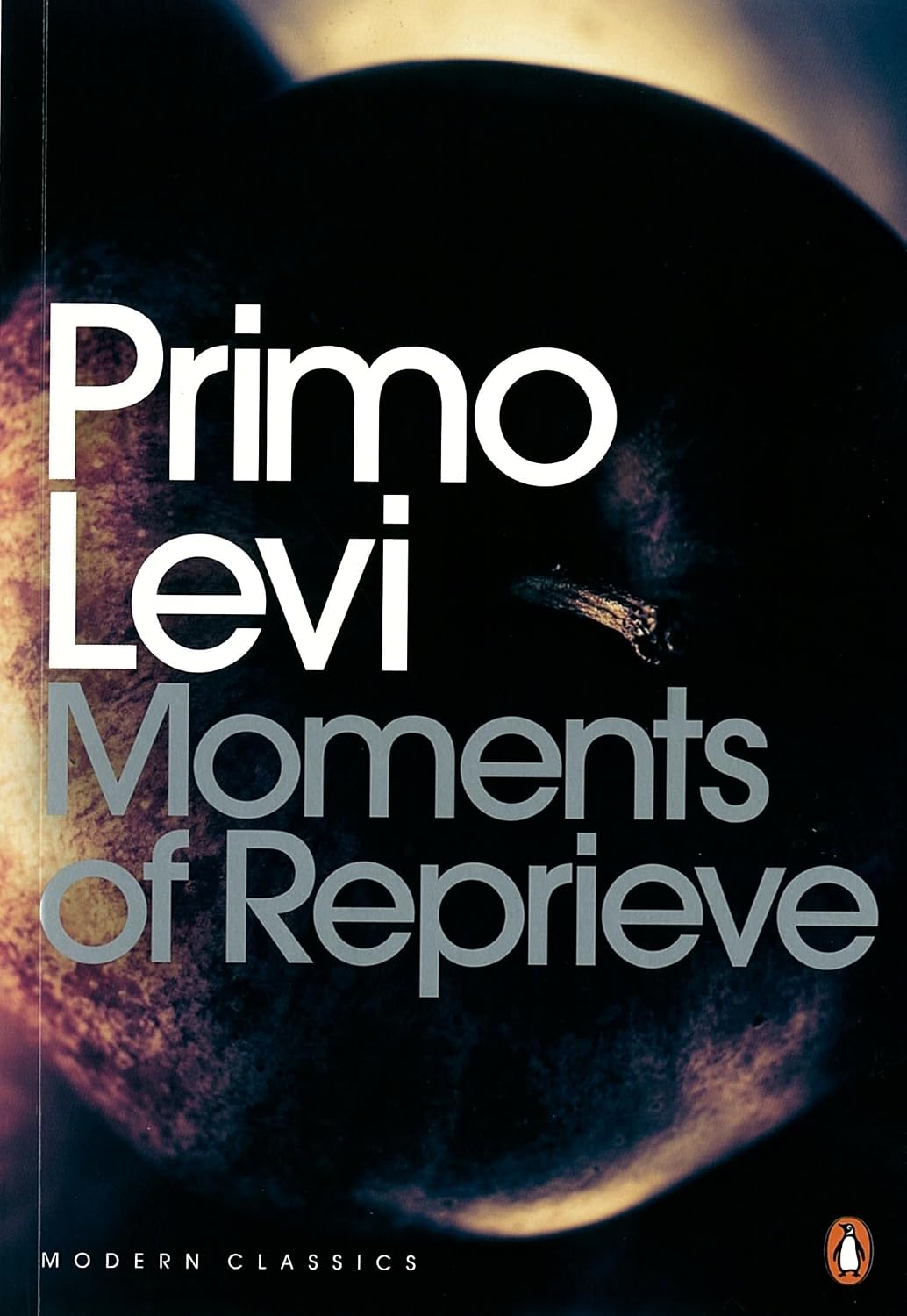
I don't think anyone can explain Primo Levi like Primo Levi himself though, purely because of what his books cover. In Moments of Reprieve, we see him recite almost perfectly the way in which he felt and what he saw during his time within the concentration camp. From the mud on his shoes to the rations provided to him by someone who was willing to share with him through his lower moments - something he admitted that without this extra food, he would have probably died. He looks at the camaraderie within which, seems to have kept certain people alive, but he also looks at how the camaraderie was primarily caused by the common ground of great suffering. But these people were also not the famous or the notable prisoners, they were regular people who were overlooked by history.
Sharing hidden bowls of soup and playing a violin are just some of the things that apparently kept the human spirit in the camp alive through these horrific conditions. The absolute dehumanising conditions of living are interspersed with these moments of people still trying to gain access to normalcy, whatever that may be in a place like that. Characters are depicted not as just the numbers on their arms, but as actual human beings. They have flaws and families, they have boots and papers, they have deep and meaningful personalities and then, some of them are simply gone. A lineage simply wiped out. It is really quite something. It definitely reminds you that these people were more than just the items left in the museum - they were actual real people. They had entire lives and histories, they had people who loved and cared for them, there were conversations that many would remember having with them. Then they were simply gone. It's terrifying.
I understand that because the author was a trained chemist, he was perhaps seen as more useful to the Nazis than the typical prisoner, but I also believe that our author doesn't lose empathy during that possible realisation as well. His analysis of human behaviour under horrific and extreme amounts of stress and suffering are testament to that. He never really makes out as though he is suffering more than anyone else, or even less than anyone else, but in fact everyone is suffering together. The commonality they share is the suffering and thus, that is what binds them in friendship. As I have already said, it is this suffering that creates the bonds but also ensures survival. Primo Levi discusses some of the niceties other prisoners give upon him such as food rations. When you are giving extra food rations to someone to try and keep them alive whilst you are both in a concentration camp then you are probably a very, very reliable and kind human being. And to be kind in those conditions is a virtue, of course. It is also showing that even though there is suffering, there is still an understanding of strength in numbers.
Written as a collection of accounts, I am often surprised at how much the author remembers, but then I think about how he suffered from survivor's guilt for the rest of his life and I'm not surprised at all. In the preface, he talks about how he can remember every detail, instead of repressing the trauma of the events like other people might - drawing on the two types of memory. His vivid depictions relative to suffering a strong strain of complex post-traumatic stress disorder show that he is not only suffering survivor's guilt but he is also trying to keep the stories of these people alive as long as he is. Of course, Primo Levi's death is shrouded in question about whether it was suicide or not. But that doesn't mean that this book is not a great achievement of literature and remembrance. People who would have been lost to history have their names and stories immortalised within.
Join in on my writing challenge!
Winners announced on Halloween...
About the Creator
Annie Kapur
"Et in Arcadia Ego"
***
I am:
🙋🏽♀️ Annie
📚 Avid Reader
📝 Reviewer and Commentator
🎓 Post-Grad Millennial (M.A)
***
I have:
📖 300K+ reads on Vocal
🫶🏼 Love for reading & research
🦋/X @AnnieWithBooks
🔗 PrancingPonyBakery.com
***
🏡 UK
Enjoyed the story? Support the Creator.
Subscribe for free to receive all their stories in your feed. You could also become a paid subscriber, letting them know you appreciate their work.
Comments
There are no comments for this story
Be the first to respond and start the conversation.