
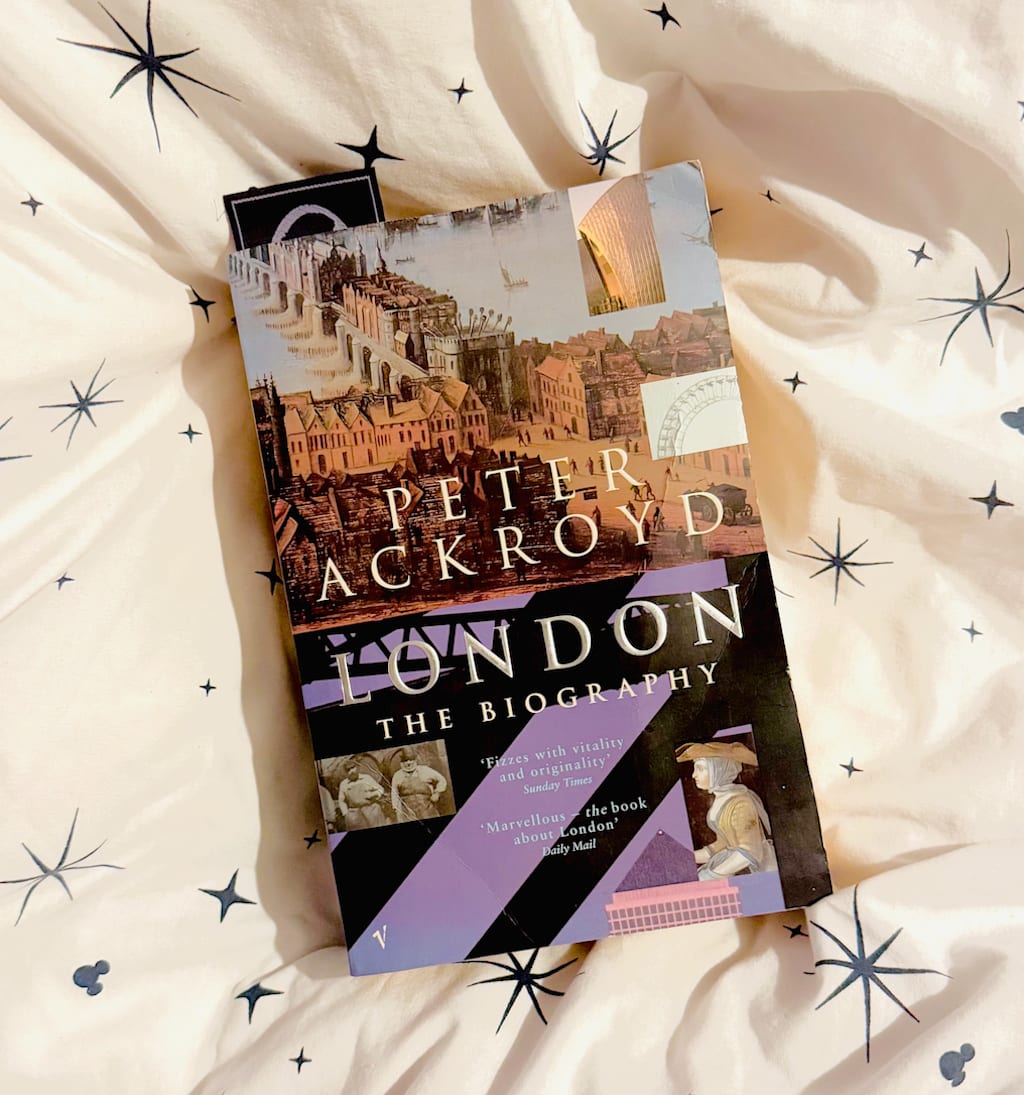
Book Review: "London" by Peter Ackroyd (Pt. 6)
Chapter 43 to Chapter 59

It's true that London was filled with horrors, gambling and drink, drug addiction and prostitution. But it's also true that London was once filled to the brim with beautiful gardens as well. Gardens still dotted around London include the famed Hampton Court Gardens, which I love and of course, Kew Gardens - which is beautiful too. But the secret gardens that come from the age when Industrialisation was first beginning to take hold that have happened to survive are some of the most intriguing and, according to the author, tell us the most about the history of the city.
This is coupled with the fact that the London fog perhaps didn't come from the Victorian age like we would want to think. Instead, the London fog had been around for ages and ages. A constant for many years, it had only become more popular with the hidden deceits within it according to the Victorian Gothic. The author gives us several instances of when and where London's blackening fog has been mentioned in times before perhaps the creation of books like Dr Jekyll and Mr Hyde by Robert Louis Stevenson.
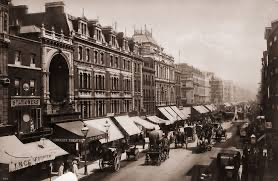
The author then takes us through the days and nights of London because of course, there is a big difference between what happens when the sun is out to what happens when it goes down. The day seems to be unthreatening as it is annoying with all the noise and pollution yes, but the night, in a poem entitled The City of Dreadful Night, is scary and simply awful to some. The author details people carrying or sleeping with weapons, not paying attention to curfews and often becoming rowdy and violent. The time after sunset therefore is one of the scariest times in the city, and probably still is for some. I don't know why but when I'm in London I prefer the night to the day mainly because there's more to do at night time.
We then move on to the fact that certain parts of London hae disappeared through the ages and not everything has stayed the same, as we gain access to how London has changed, we go from the city being a voracious and obnoxious place to quite a violent one. We see more violence as we see political rioting around London as well, the more people there are the more uprisings there are. Mentions of George Gordon in the 1780s and the ways in which the people used violence to their own advantage through intimidations and even through random acts of terror are all covered. Peter Ackroyd's main message seems to be that the levels of unparalleled violence in London are not a new phenomenon, we just think they are.
Each area in London seems to have its own character. In the chapter Nothing Quite Like It, Ackroyd details these different personalities in the geographical and cultural importance of the city. He doesn't ignore their shortfalls though and in the pictures, he shows us how London's personalities have been detailed in paintings, showing us how people thought about these different parts. From the Cockney folk theatres to the coffee houses and taverns, there are so many things to pay attention to in the city. Honestly, I have never seen London as this vast and brilliant. It's quite eye-opening.
When it comes to the Thames, the nickname of the River of the Dead was not lost on people. Ackroyd explains that in the grand old days, the river was used to dump dead bodies and so, tons of skulls have been located beneath places like Chelsea. Whilst reading this book I realised that sometimes as I have been out in the late night, I perhaps saw the Thames in the same way. Joseph Conrad, according to the author of this book, called it one of the darkest rivers on earth. And it is. If you stand there at night, it looks like a large black blanket flowing through the city. It can be quite intimidating and well, as the author discusses, there are things to appreciate about it but it doesn't take away the fact that night and day are again, two very different things.
As we move on through the book, there are still more things to appreciate about London. From the funny, to the dark, to the trade and all the way through to the clubs and societies. There's something more disconnected about the city now and honestly, I thank god for it because I don't think I could've dealt with how social the city was in the old days.
About the Creator
Annie Kapur
"Et in Arcadia Ego"
***
I am:
🙋🏽♀️ Annie
📚 Avid Reader
📝 Reviewer and Commentator
🎓 Post-Grad Millennial (M.A)
***
I have:
📖 300K+ reads on Vocal
🦋/X @AnnieWithBooks
📸 ThePrancingPonyBakery
🔗 PrancingPonyBakery.com
***
🏡 UK
Enjoyed the story? Support the Creator.
Subscribe for free to receive all their stories in your feed. You could also become a paid subscriber, letting them know you appreciate their work.
Comments
There are no comments for this story
Be the first to respond and start the conversation.