
Book Review: "London" by Peter Ackroyd (Pt. 4)
Chapter 20 to Chapter 31

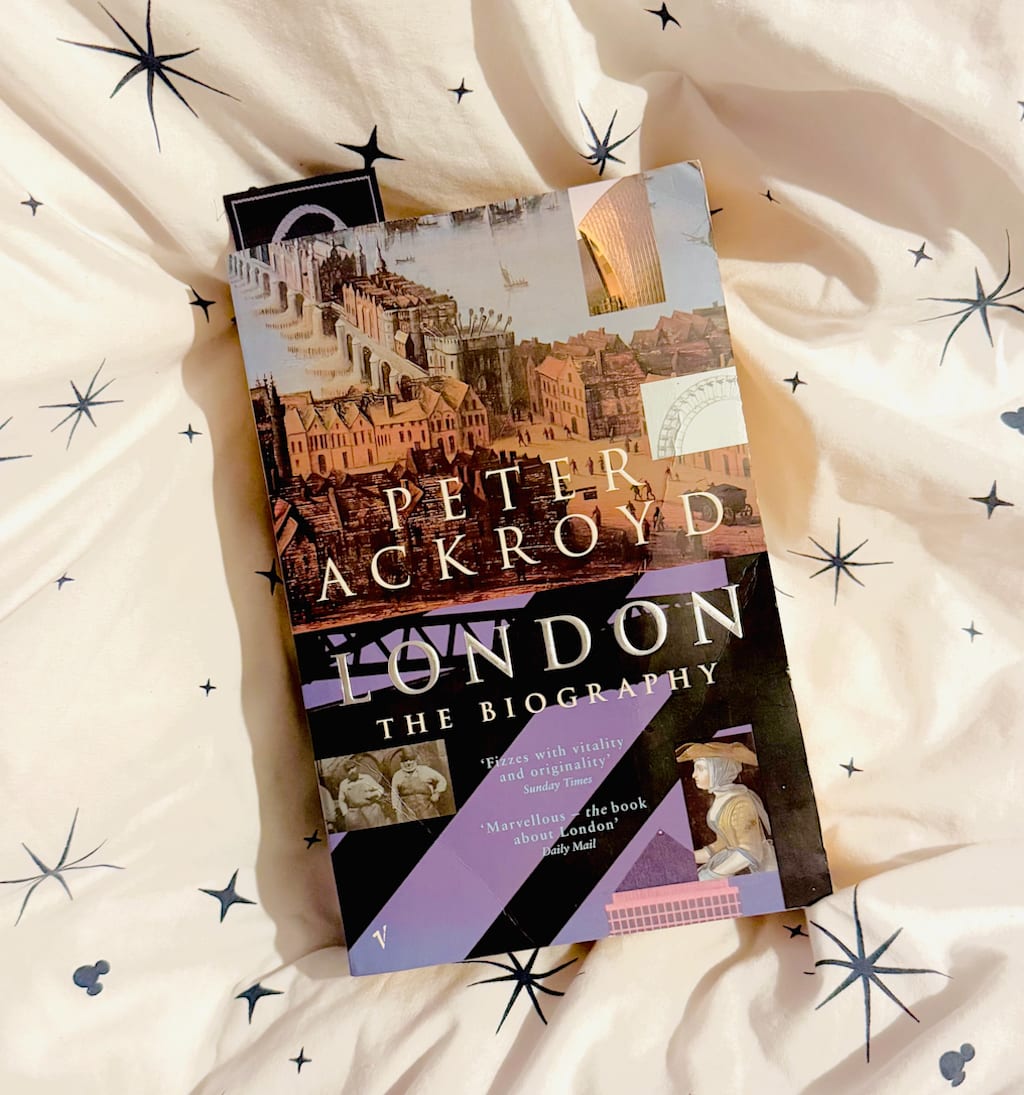
It was only a little later when I realised there were going to be quite a few parts to this review but here we go. London is not only a place of theatre and trade, unfortunately because of the overcrowding it is also a place of plague. Plagues come in and out of London for many, many years and perhaps one of the most devastating was that of 1664. Peter Ackroyd looks at the apocalyptic nature of the city during this same decade as only a couple of years later the horrific Great Fire of London breaks out and consumes much of the landscape. I guess it was a blessing too because at least it got rid of the plague. However, it would take years to rebuild even with everyone helping out in the effort and one thing we can definitely learn from Ackroyd's book is that there were issues when it came to recording just how many people had actually died in the fire.
Is that because prisoners weren't recorded? Ackroyd explains that many of the prisons in the city were below the ground and thus, would have been subjected to the same horrors that the rest of London was. Ackroyd suggests that maybe the prisoner deaths were not recorded - and maybe even some prisoners escaped from their bounds as the fire's heat would've melted the iron of the gates. But it is thought that many of them would have either burned to death or suffocated on the smoke. This paints a horrific image of London but it also leads nicely into the next chapters which mainly concern criminality and the punishments available. I am just going to also leave the fact that London is apparently the suicide capital of the world hanging in this mid-air moment.
Ackroyd's book takes us through the fact that many prisoner's would get rid of themselves when thrown into Newgate prison. However, the ones that did stick around could either await life imprisonment in the equivalent of hell or they could be executed. Charles Dickens writes about the horror of the public execution but it really was a day out for these people. With Ackroyd stating that foreigners would often state that Londoners were perhaps not afraid to die, there was definitely an air of hapiness that came from the top when chopping someone's head off, burning someone alive or hanging them in the town square. We are told that there isn't any real way of knowing how many people were executed during the Roman and Saxon times but I'm going to guess that it was probably quite a lot considering these were the same people who would torture you for not believing in the same religion as them.
It is said by Ackroyd that though this is the case, London was a particularly onerous place to live and even though that is the case, the city was never blamed for its overcrowding, its lack of opportunity for upward mobility, its nightmarish dirty streets, its loud terrible noises all throughout the day nad sometimes even at night, and the way in which crime was possibly more rampant here than anywhere else in the western world. Therefore, the fact that London was the suicide capital of the world should come as no surprise really. Even Dostoevsky once said of London that it was probably the most depressing city to live in (paraphrased). When it came to crime and punishment, Ackroyd investigates everyone from Jack the Ripper to the Monster of Muswell Hill, Denis Nilsen.
The writing of this part of the book has still kept me interested and intrigued and honestly, I am very glad I picked up this book (because I almost didn't). I have unfortunately found myself though distracted by rereading The Pickwick Papers and so, you should also see a 'rereading review' for that as well. As we move on through London we are perhaps going to see (hopefully) some positives. Everything had been very gloomy so far and with the Great Fire and the plagues over, it would be nice to see something that the city is known for apart from, as I have read amidst these chapters, everything being painted red.
About the Creator
Annie Kapur
"Et in Arcadia Ego"
***
I am:
🙋🏽♀️ Annie
📚 Avid Reader
📝 Reviewer and Commentator
🎓 Post-Grad Millennial (M.A)
***
I have:
📖 300K+ reads on Vocal
🦋/X @AnnieWithBooks
📸 ThePrancingPonyBakery
🔗 PrancingPonyBakery.com
***
🏡 UK
Enjoyed the story? Support the Creator.
Subscribe for free to receive all their stories in your feed. You could also become a paid subscriber, letting them know you appreciate their work.
Comments
There are no comments for this story
Be the first to respond and start the conversation.