
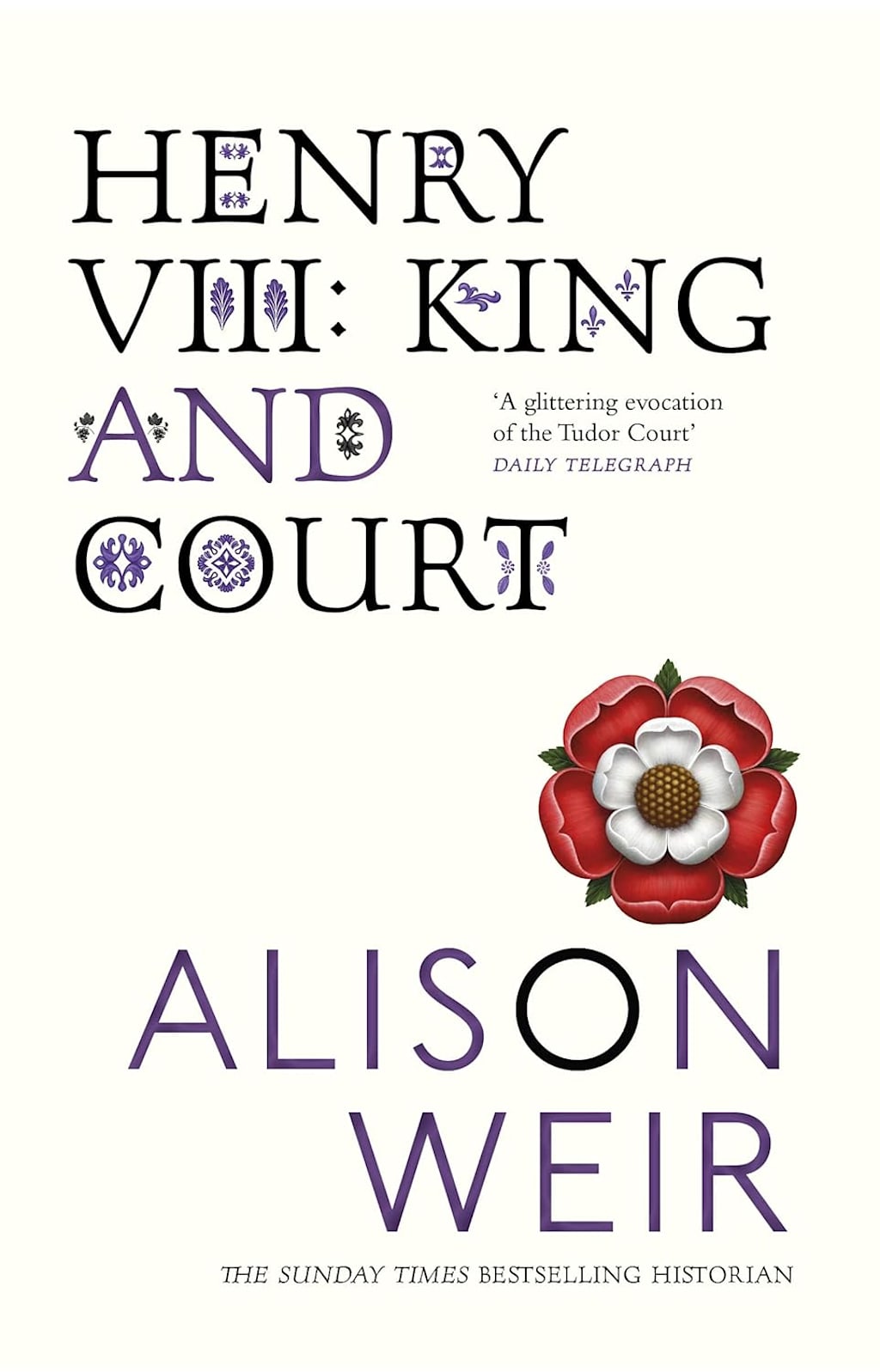
Book Review: "Henry VIII: King and Court" by Alison Weir (Pt. 9)
Chapter 55 to the End of the Book

Across Europe, Henry VIII is being called "The English Nero" and is getting on in his years. No longer is he the youthful diplomat, but now he's a paranoid and obese man who is getting old and no longer able to move the country as he once was. He's arresting people for speaking wrong of him, yes speaking, and he's basically now full sociopath. But he's also an emotional human and that's not only counting his rage. He can still be moved by art and sentimentality.
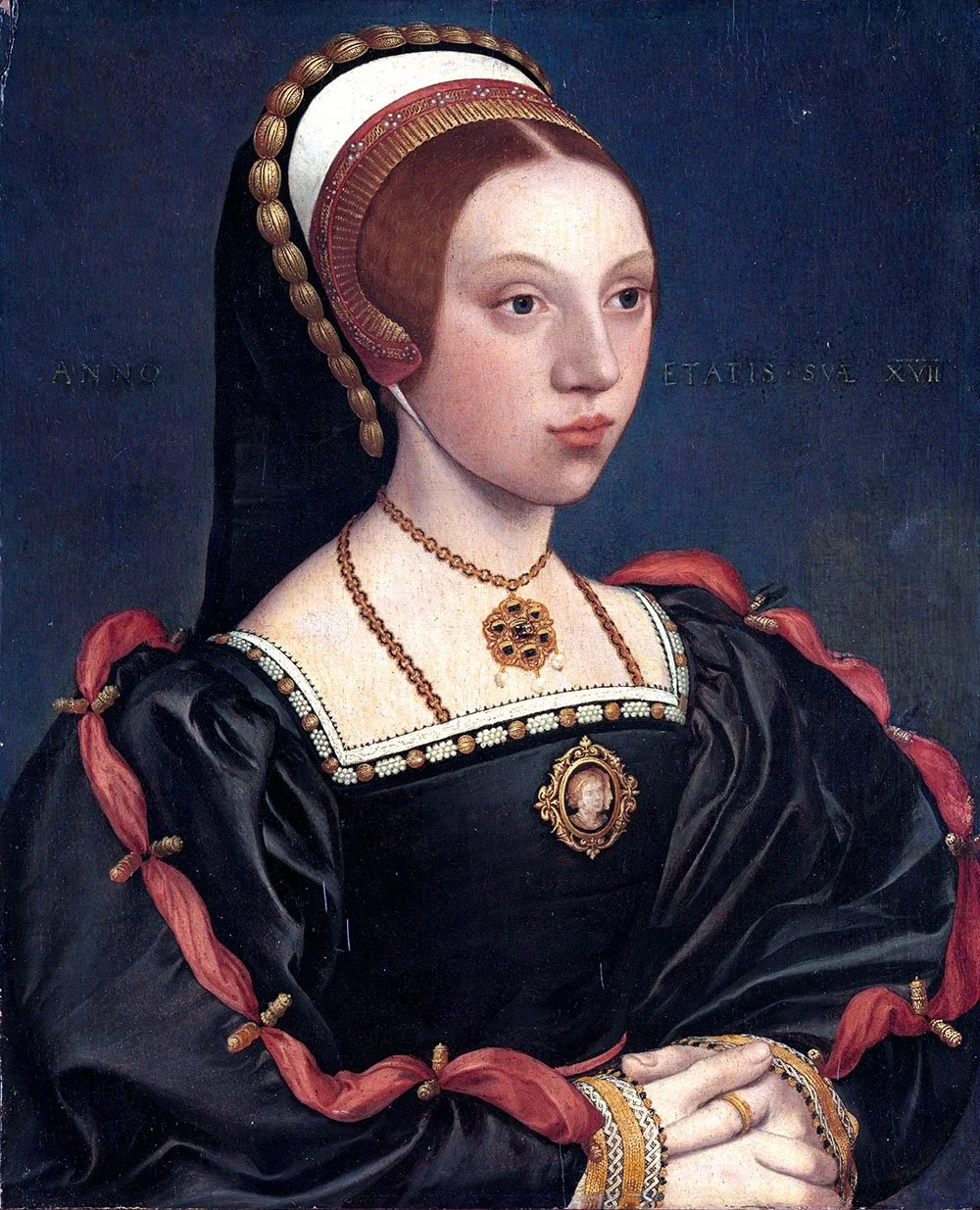
We learn about his sociopathy as he would rather be feared than loved and we get to see into his library. Catherine Howard doesn't seem to have had anything to do other than dance and party. Though Catherine's coronation wasn't really a planned affair, she still made a stately entrance. Alison Weir definitely presents this particular time as part of Henry's undoing but also the time at which we can see him take advantage of a young woman (who was barely a woman).
Catherine's family - the Howards - were now the most politically powerful people in the Tudor Court. Everyone hated them of course because what else is going to happen in a court of intrigue? The King may have suffered from another illness and got better, but he wanted to change the way he lived because he was a hypochondriac. He felt like he wanted to lose weight, but he also wanted to spend more on his Queen.
Whitehall is also getting repaired. It's 1540 and it doesn't look like the King is cutting down on any spending since Queen Catherine Howard would be the most expensive in terms of spending on her clothes and jewels - of all of his wives. I'm not going to lie, this doesn't look like she's being unfair and forcing him to spend money, rather that he is buying her loyalty and fairness by gifting her stuff. It's what a sociopath does. They make you upset and then buy you gifts to placate you. I actually feel sorry for her because we must remember: she was basically a teenager.
When it comes to arrests for subversive views, something that we read over and over again is that the King was "persuaded" to throw people in prison. Yes, we've made it even further into the paranoia. One of the men is told his hand was going to be cut off. But at the end of the day, the man was pardoned. Again, this is a sociopathic move to show what kind of power he could yield. When Henry was sick though, he was frustrated and angry, his rage was clear in the fact that he did not even listen to music. He even regretted the fact that Cromwell was executed. I'm not going to lie, the "persuaded" thing is really showing here. Even he has admitted his thoughts have not been entirely his own. In fact, whilst others are trying to get into power, Henry is trying to keep certain people close to him. Cromwell was one of them and look what happened to him.
It wouldn't take long before Catherine Howard's ex-lovers turned up seeking employment. Of course, they were going to blackmail her and boast that they were going to be married to the Queen if the King should die. Jealousy and intrigue tighten around Catherine Howard and so, Henry has received a letter. A letter that would completely destroy the young Queen. There was so much evidence and Henry broke down, blamed the council and arrested Catherine. In the book The Palace by Gareth Russell, there is a story of Catherine Howard trying to escape through the now 'haunted gallery' and thus she is dragged kicking and screaming back to her lodgings.
Fun Fact: It's called 'haunted' because they say that to this day, if you listen closely, you can still hear the doomed teenager screaming as she is rearrested.
Catherine is interrogated and multiple people are blamed including the Queen herself. She forfeits her title, her stuff is placed under guard, her jewels are taken and her emblems are removed. The men she had affairs with were arrested and beheaded with swiftness. Literally all of the Howards go to prison but are pardoned, except for Catherine. Catherine did not escape no matter how hard she begged for the King's forgiveness. Alison Weir explains that Henry was restless, but was also a kind of melancholy. He spent time hunting but also ate himself into an earlier and earlier grave. So much for wanting to lose weight. He actually gained weight massively over this time. Many were actually scared of how much weight he gained.
It is 1542 and everything is going so south that Henry has taken to not believing anyone about anything. Catherine Howard is taken to the tower, practices placing her neck on the block, and thus terrified when she was executed. She was around 19 years' old.
Once she was buried though, Henry was pretty much back to normal and feasting, banqueting and partying yet again. I mean, I feel like none of these women meant very much to him and that Catherine Howard, especially, he didn't feel anything for at all. But in walks Catherine Parr, the final wife. As people are getting fired, executed, imprisoned and pushed around left, right and centre, Catherine Parr needs to work her way through court carefully.
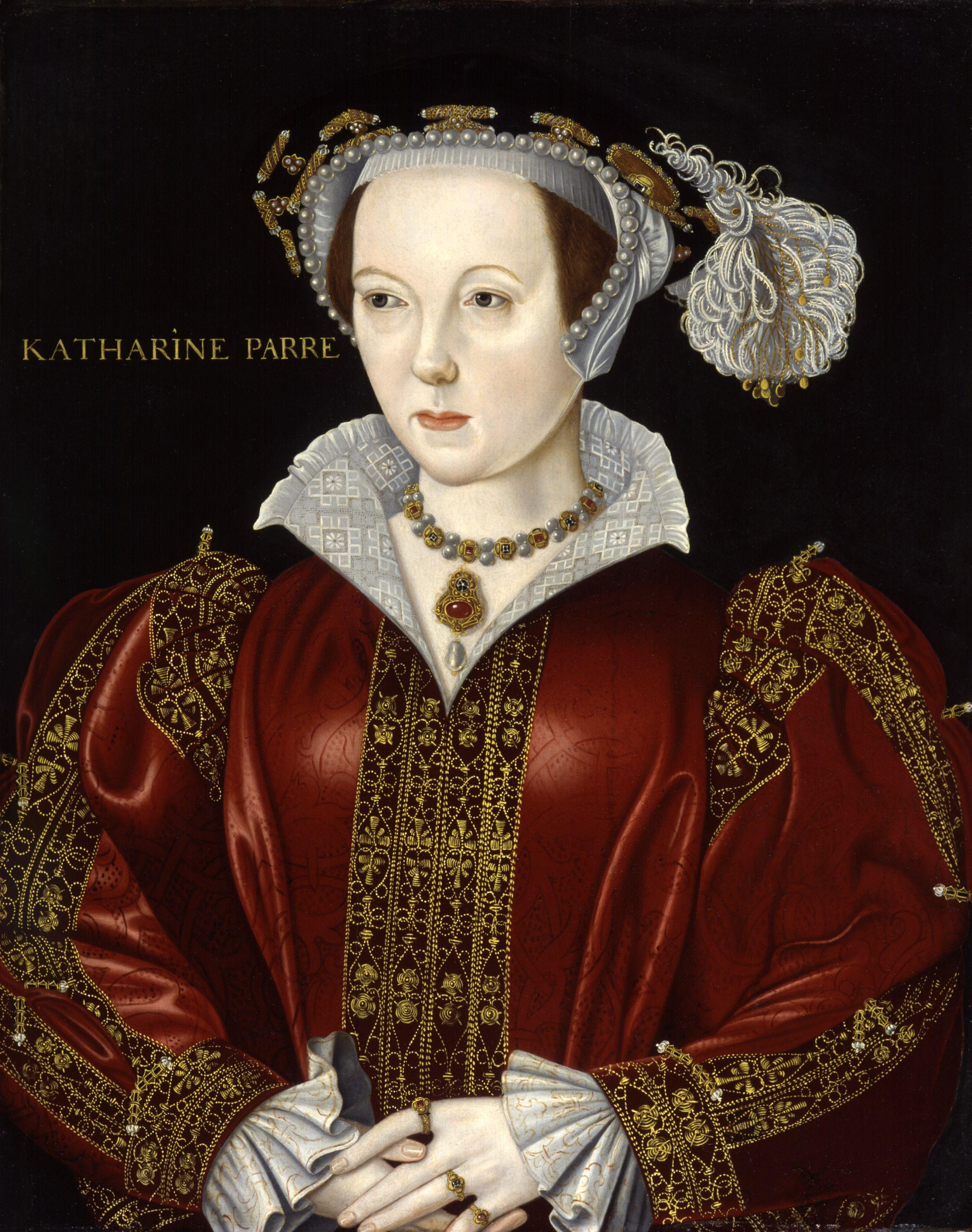
Alison Weir describes Catherine Parr as a woman who was good at conversation and yet, had her own host of personal problems. Cranmer is now being accused, but Henry is on his side. Why? Cranmer is allowed to investigate himself. Yes, you read that correctly. For some reason he is allowed to investigate himself. Everyone seemed to wish to destroy Cranmer and yet, the King doesn't seem to give in. Catherine Parr on the other hand, is getting ready to get married to a King who is old, obese, sick and worse of all for a King, he is broke. She proves to be calm and smart, but she also wants to get her own family into the court - so there's another motivation to marry the King there. I mean, why else would someone marry this man now that he is completely destroyed? Exactly.
But there seems to be no evidence, according to Alison Weir, that Catherine Parr hated Henry. In fact, she didn't even find him disagreeable in any way. Many people of the time seem to say that she and Henry made a great couple and she was lovely and modest, very much involved with Henry and his life. Now, this is something that I thought was weird: Catherine Parr made sure she was an active mother to all three of the royal children, encouraging Henry to reinstate the girls. She tried to arrange them all to be together as often as possible and contrary to popular belief, Henry actually really liked all of his children - even the girls.
England was crippled by debts caused by wars with France and Scotland but Henry is still living quite large. There are paintings still being done and of course, that means the Whitehall Mural. This must be a very expensive one because it is large and based on the Holbein depictions of the King - not what he looks like in his later life. Henry gets through another illness but not quite emerging as lively as before. He is now a semi-invalid and incredibly obese, in excruciating pain, he is fleeting in his feelings. Alison Weir describes the paintings from this time of the King are depicting a man who is dangerously overweight to the point that he can no longer actually walk and even though he is in horrific debt, there is something about his clothes that cries that he doesn't care.
The sore leg made his whole life a lot more difficult. The doctors are always in attendance and thus, become more and more powerful in court. Be that as it may, the people who were once in favour at court start dropping dead. Not because they have been arrested and beheaded, but simply because they are old, sick and in some cases, insane. But now that things are being taken care of by Catherine Parr, Henry focuses on founding Trinity College at Cambridge University. The country is going down the pan and nobody can save it, but the King is also getting sicker and sicker, with fevers and sorenesses. His sickness is not only getting worse, he knows he is getting closer to death.
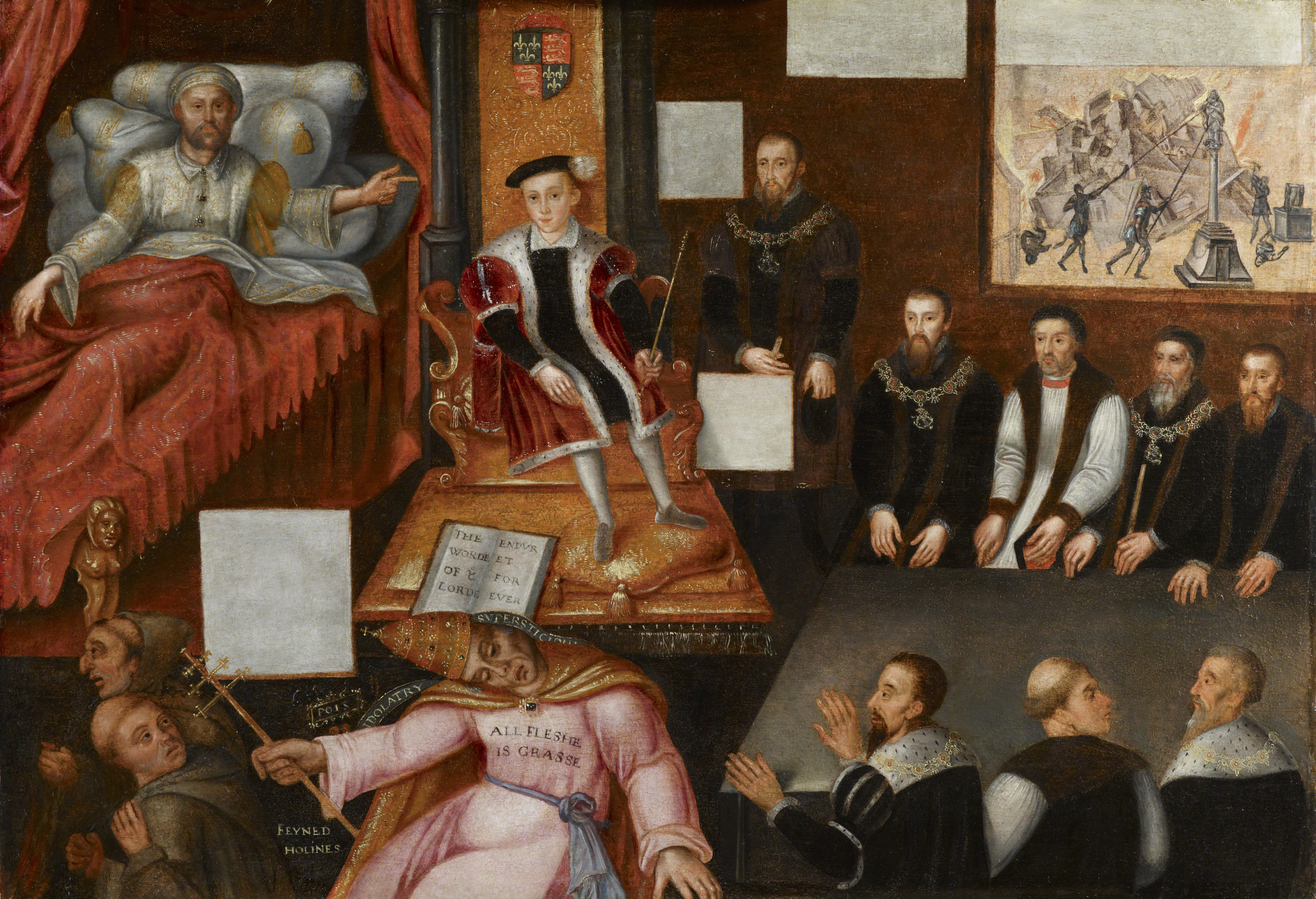
For 30 hours, Henry was ill with a fever and his doctors were trying to keep him alive. Alison Weir tells us that he was definitely dying now and so, there are all kinds of things breaking out at court. I think it is kind of sick that there were so many people counting on him to die. There were people even arrested for conspiring to take the throne as soon as he died. There's a whole problem with the will, in which it isn't actually signed and there's so little information about Henry's condition to the outside world that we don't actually know what was happening to him. When he died, Alison Weir explains, we don't know how he died but we think it might have been a pulmonary embolism.
Edward VI is proclaimed King and though the terror might be over, the nightmare is not. There's heaps of debt, there's countries at war, there's a court with a ton of in-fighting. A tyrant, a sociopath, a ruler who broke with Rome, and also a lover of philosophy and art. He continues to be, as Alison Weir will show you, a divisive yet intimidating figure.
About the Creator
Annie Kapur
"Et in Arcadia Ego"
***
I am:
🙋🏽♀️ Annie
📚 Avid Reader
📝 Reviewer and Commentator
🎓 Post-Grad Millennial (M.A)
***
I have:
📖 300K+ reads on Vocal
🫶🏼 Love for reading & research
🦋/X @AnnieWithBooks
***
🏡 UK
Enjoyed the story? Support the Creator.
Subscribe for free to receive all their stories in your feed. You could also become a paid subscriber, letting them know you appreciate their work.
Comments
There are no comments for this story
Be the first to respond and start the conversation.