
Book Review: "Freely Determined" by Kennon M. Sheldon
3.5/5 - a difficult book to reason with, but ultimately it makes a good argument...

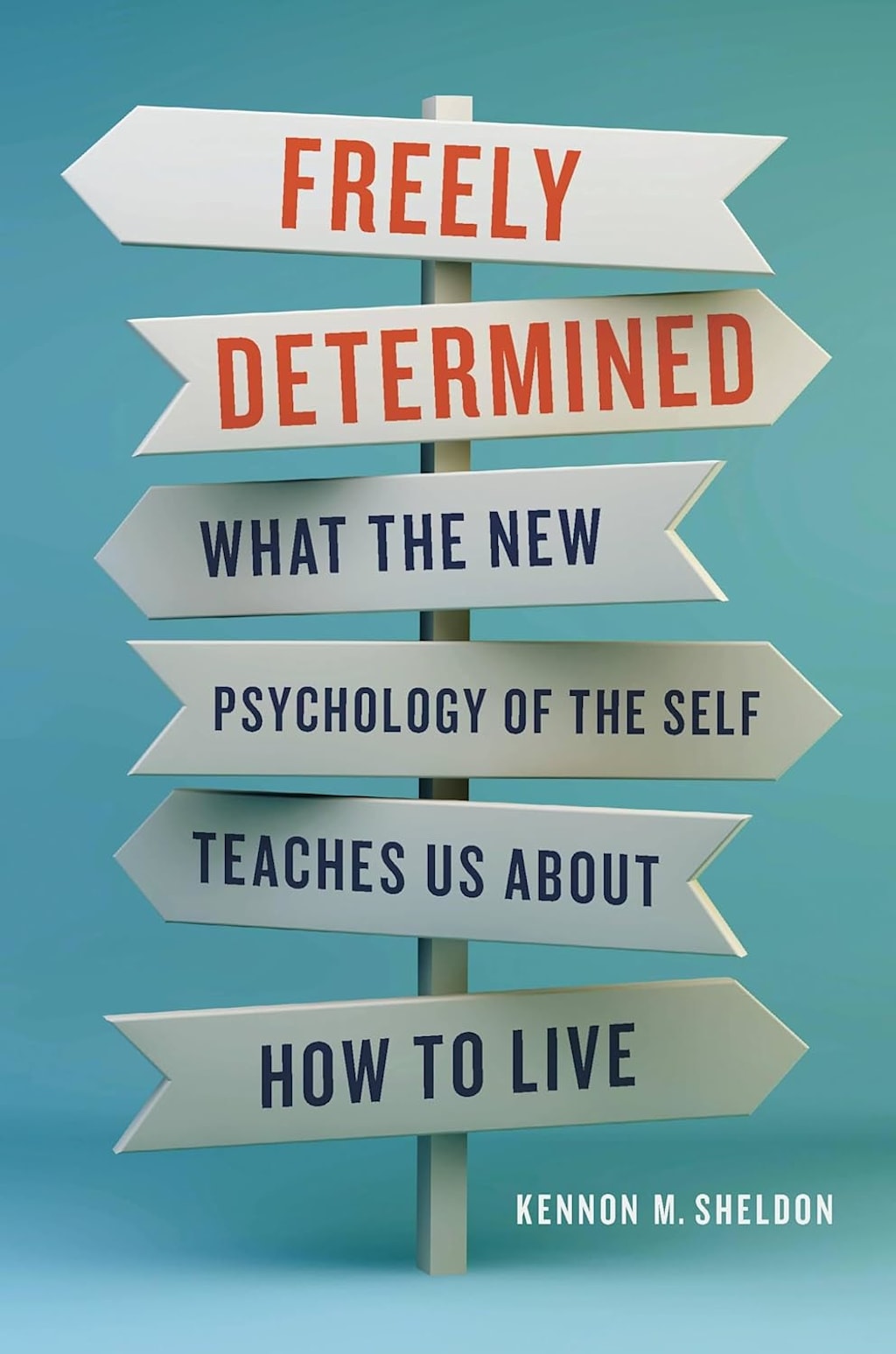
I was genuinely missing my books about the human mind. I am planning to write quite a controversial article regarding my thoughts on mental health but I'm not sure on whether to publish it. It could make some people not like me at all but, that's also why it's called 'unpopular opinions'. Be that as it may, I really just wanted to read something about the human mind and how it works. In Freely Determined we get some of the ideas made popular by Robert Sapolsky's Determined. A theory regarding determinism is always a good way to show us how free will not only doesn't exist, but human behaviour is massively more predictable than we realise. Doesn't that simply mean that all our choices mean nothing? How do you interpret that? It's interesting.
Authentic values and interests as we know, have a huge impact on how we perceive our options when it comes to free will and this is something that the author argues too. I quite like the fact that he outlines what free will is before trying to dismantle it and instead of regarding it as non-existent, he tries to get us to think about the meaning of the term 'free will' differently. Instead of thinking about free will as simply being given a choice between options, we are told that perhaps we need to look at the intrinsic value of those choices and what they cultivate for us - as that may be the real meaning of what free will is. It was definitely interesting to see this idea in action as the author provides quite a few worked examples though they may be hypothetical (or not, I never assume anecdotes are real, even when they are stated/implied as factual), they are still able to be understood in the context of the argument.
Self-determination theory is something that the writer focuses on to be able to show us how we might connect determinism to free will, using our newer more honed meaning of the latter term. Actions may not be entirely free will or entirely determinism but in fact, be 'freely determined'. These decisions rely on the basic psychological needs of an average human which will either maintain or improve their wellbeing: autonomy, competence and relatedness. Once these are fulfilled and the individual begins to navigate themselves, they will be more motivated to make what are intrinsically better decisions that have a more positive effect on their lives. Unfortunately, the opposite is true as well. It is refreshing to learn about this new and insightful perspective on determinism in which we don't dismiss free will but we reframe it instead.

Free will is often resigned as a 'cosmic' feeling by those who heavily imply determinism is the only way to understand choice and autonomy. But, the author instead tells us to think not about this reductive view of free will but rather again, reframing it as the feeling of actually being free in one's daily life. The pursuit of goals is an example - there may be a reasoning behind it that links it into the determinist argument, but it is whether those decisions are made under the emotion linked most to the autonomy (and thus to the improved wellbeing) of the person making those decisions. Free will is not therefore something distant and cosmic, it is a feeling that leads us to understand the 'why' behind deterministic decisions. Is there something emotional there and does it have an impact on how well those determined decisions change the life of the individual?
Social environments can foster or break down autonomy, leading to a differing understanding and perspective on free will and thus, leading to a different emotional response when making decisions. Controlling environments such as traditional/patriarchal families, toxic workplaces and government school systems undermine the autonomy of an individual and thus, don't encourage 'good' decision making skills making the understanding of free will warped. They don't encourage choice and don't enhance motivation or critical thinking. This leads to bad deicision making that will lead to a lower quality of life due to the harsher and often lesser outcomes of those decisions.
From what I understand of this book is that free will is not just an emotional understanding of one's own autonomy but also the practice that one has had to make their own decisions and do as they please in their lives. If say, someone's autonomy has been undermined for most of their life and their decisions have been made for them, they often display worse decision making skills because free will implies that there should have been constant decision making there in order to foster healthy outcomes through practice. This can lead to a massive feeling of listlessness or emptiness, a purposelessness that pervades one's entire life. From what I understand it is basically an unfixable problem, but atop of this - that free will is latched on to determinism, not something determinism should undermine as an idea.
About the Creator
Annie Kapur
"Et in Arcadia Ego"
***
I am:
🙋🏽♀️ Annie
📚 Avid Reader
📝 Reviewer and Commentator
🎓 Post-Grad Millennial (M.A)
***
I have:
📖 300K+ reads on Vocal
🦋/X @AnnieWithBooks
📸 ThePrancingPonyBakery
🔗 PrancingPonyBakery.com
***
🏡 UK
Enjoyed the story? Support the Creator.
Subscribe for free to receive all their stories in your feed. You could also become a paid subscriber, letting them know you appreciate their work.
Comments
There are no comments for this story
Be the first to respond and start the conversation.